Key Points
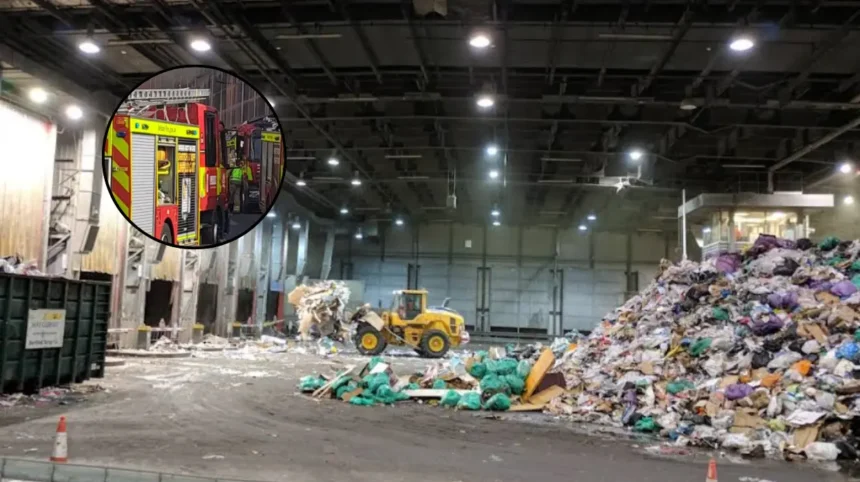
- Hornsey Street Waste Transfer Station in Islington reopened on Saturday, August 1, after closing because of a fire on Tuesday, July 28.
- Around 15 fire engines and 100 firefighters were sent to tackle the blaze, and the North London Waste Authority said the damage cost at least £1 million.
- No injuries were reported, but the fire triggered fresh warnings about the disposal of rechargeable items such as smartphones, laptops, electric toothbrushes and vapes.
- The North London Waste Authority said damaged lithium-ion batteries can ignite under pressure or heat and become “as hot as molten lava”.
- The London Fire Brigade has confirmed four fires at the site since June 2025, with two incidents recorded as undetermined and one linked to unsafe cigarette disposal.
- Islington Council leader Una O’Halloran said a similar Christmas Eve 2025 fire was caused by a battery being wrongly placed in household waste and crushed by a loading vehicle.
- The North London Waste Authority has renewed calls for government action on what it calls the “zombie battery” crisis, saying batteries are linked to about 200 fires a year at UK recycling centres.
- The authority says batteries should be taken to dedicated recycling points, council collections, or retailer take-back schemes rather than placed in general household waste.
Islington (North London News) August 5, 2026 – Bin warnings have been issued to North London households after repeated fires at Hornsey Street Waste Transfer Station in Islington, where officials say improper battery disposal is contributing to a growing safety risk for staff, residents and waste services. The warning follows a fire on Tuesday, July 28, which shut the site until Saturday, August 1, after firefighters spent hours bringing the incident under control.
What happened at Hornsey Street Waste Transfer Station?
Roughly 15 fire engines and 100 firefighters were called to the waste transfer station when the blaze broke out, and the North London Waste Authority said the incident caused at least £1 million worth of damage. No injuries were reported, but the facility was forced to close for several days, affecting waste operations in north London.
The North London Waste Authority said the fire was part of a troubling pattern at the site. The London Fire Brigade has confirmed four fires there since June 2025, although not every case has been definitively linked to batteries; one was linked to a refuse lorry, another to a cigarette, and two, including the July 28 fire, were recorded as undetermined.
Why are batteries being blamed?
The North London Waste Authority said the rise in fires appears to be driven largely by damaged lithium-ion batteries, which can ignite when crushed, punctured or exposed to heat. The authority said these batteries can become “as hot as molten lava”, creating a danger to staff and forcing sites to shut down for days.
The authority’s guidance says rechargeable lithium-ion batteries should not go in household rubbish or recycling bins because they can cause chemical burns or fires if they are broken or leaking. It says batteries should be taken to designated collection points or one of the authority’s reuse and recycling centres instead.
What have local officials said?
Islington Council leader Una O’Halloran said the latest fire followed a similar incident on Christmas Eve 2025, when a battery placed incorrectly in household waste was crushed by a loading vehicle and combusted. This earlier incident involved around 60 firefighters and caused an extensive clean-up operation after essential equipment was damaged.
O’Halloran urged residents to separate batteries from general rubbish, use dedicated recycling points for small electrical items and return vapes through retailer take-back schemes where possible. The North London Waste Authority also said the cost of repairs and disruption is ultimately borne by local council taxpayers.
What is the wider policy response?
The North London Waste Authority has called for government intervention over what it describes as the “zombie battery” crisis. The authority says batteries are behind around 200 fires a year at UK recycling centres, and that existing rules need stronger enforcement.
The article also notes that batteries placed on the UK market are already supposed to carry instructions warning against disposal in general household waste. It added that the Lithium-ion Battery Safety Bill, introduced to the House of Lords in 2024, aims to tighten rules on the storage, sale and disposal of lithium-ion batteries and improve product compliance checks.
How should residents dispose of batteries?
The North London Waste Authority says used lithium-ion batteries can be taken to nearby battery collection points or to one of its reuse and recycling centres. It also says damaged batteries should be placed in a sealed container before being taken in for safe handling.
Residents can also use retailer collection points or on-street e-waste banks, according to the authority’s guidance. The NLWA has asked people to recycle batteries separately, keep small electrical items out of general waste, and use council collection services where available.
Background of this development
The current warnings sit within a longer pattern of concern over battery-related fires in waste systems across north London and the wider UK. The North London Waste Authority says it launched its Lead the Charge campaign to encourage safer battery disposal, while earlier figures cited by the authority showed a sharp rise in fires linked to lithium batteries at local waste and recycling facilities.
The issue has also drawn parliamentary attention. House of Lords committee evidence said lithium-ion batteries do not currently have their own hazardous waste code, which can make them harder to separate and manage safely in mixed waste streams.
Prediction: how could this affect North London households?
For North London households, the most immediate effect is likely to be more bin warnings, stronger public messaging and continued pressure to separate batteries and electrical items from ordinary waste. If fires continue, residents may also see more service disruption, higher clean-up costs and tighter recycling rules across boroughs served by the North London Waste Authority.
For people who regularly dispose of phones, vapes, laptops and other rechargeable devices, the development is likely to mean greater scrutiny of how these items are thrown away and more reminders from councils about using dedicated drop-off points. If government action follows, manufacturers and online sellers could face stronger safety and labelling requirements as well.