Key Points
- More than 1,500 Arriva North London bus drivers are set to strike over working conditions in hot weather.
- The industrial action will affect eight garages: Barking, Edmonton, Enfield, Grays, Palmers Green, Stamford Hill, Tottenham and Wood Green.
- Strikes are planned for multiple dates between 14 August and 20 October.
- Unite says drivers have faced cab temperatures of more than 40C, with some reporting heat exhaustion, heat stroke and dehydration.
- The union says Arriva has not acted on complaints about the conditions and has also accused management of bullying and union busting.
- Arriva says it is investing in short- and long-term measures, including cab upgrades and air conditioning.
- TfL says the action is expected to affect local routes in north and some central London areas, while most of the bus network should continue to run.
- Some strike dates will overlap with planned Piccadilly Line closures, increasing the likelihood of wider travel disruption.
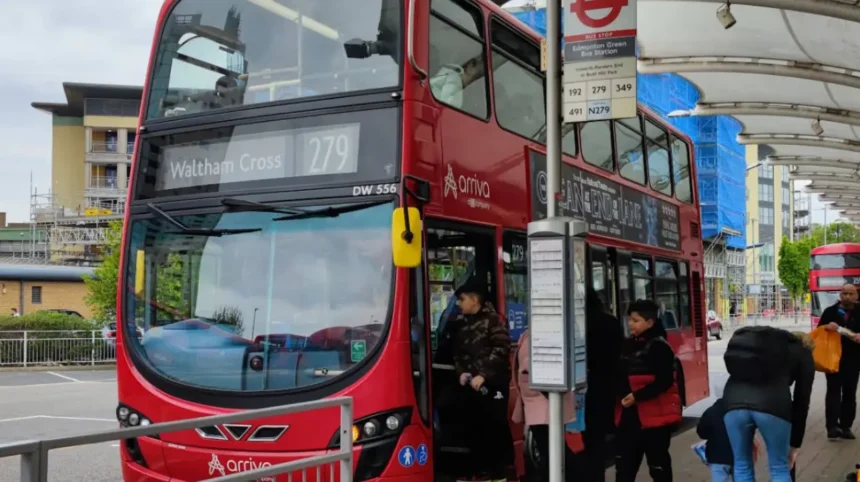
North London (North London News) August 5, 2026 – More than 1,500 bus drivers employed by Arriva North London are due to take strike action over working conditions in hot weather, in a dispute that is expected to cause major disruption across parts of north London and Essex. The walkouts will take place on several dates from mid-August through to October, after talks failed to resolve long-running concerns about heat inside drivers’ cabs.
Unite said the dispute affects drivers based at eight garages: Barking, Edmonton, Enfield, Grays, Palmers Green, Stamford Hill, Tottenham and Wood Green. The union said passengers should expect delays and cancellations on strike days, particularly because some of the industrial action will coincide with planned Piccadilly Line closures in August and September.
Why are Arriva drivers striking over hot weather?
According to Unite, the core issue is the temperature inside the buses and driver cabs during heatwaves. The union said most Arriva North London buses use air cooling systems rather than full air conditioning, and that the system has only lowered temperatures by around two or three degrees during recent hot spells, leaving some cabs at 40C or above.
Drivers have experienced heat exhaustion, heat stroke and dehydration during recent heatwaves, with Unite warning that hot working conditions can worsen fatigue and increase the risk of crashes. The union argues this is not simply a comfort issue but a safety issue for both staff and passengers.
Unite general secretary Sharon Graham said drivers had repeatedly complained to Arriva North London about dangerous working conditions but the company had “failed to act”, which she described as unacceptable. She also said a profitable company could invest in better conditions instead of prioritising “greed”.
What dates are the strikes planned?
The strikes are scheduled for 14 to 15 August, 18 to 21 August, 25 to 28 August, 4 to 5 September, 7 to 8 September, 18 to 19 September, 21 to 22 September, 2 to 3 October, 5 to 6 October, 16 to 17 October and 19 to 20 October. The action will stretch across more than two months, raising the prospect of repeated travel problems for passengers using Arriva services in the affected area.
The planned action is likely to affect local bus routes in north London and parts of central London, although TfL said the majority of the capital’s bus network should continue to operate as normal. That means the impact is expected to be concentrated rather than citywide, but still significant for people who rely on the garages involved.
What has Arriva said in response?
Arriva North London has said it is working with Transport for London to support staff and passengers during hot weather. The company said it has already introduced short-term measures to protect drivers and is investing in longer-term changes, including cab air conditioning upgrades and new fleet investment.
The company’s response is important because the dispute is not only about comfort but also about whether the existing measures are adequate in extreme heat. Unite’s position is that Arriva has had time to respond to repeated complaints but has not done enough to protect staff or reduce operational risk.
How serious is the disruption likely to be?
The dispute is expected to cause delays and cancellations on the affected dates, especially for passengers travelling to work, school, hospitals and transport interchanges in north London and Essex. Because the strike days are spread across August, September and October, the disruption may not be confined to a single week, but instead arrive in repeated waves.
The timing could be more difficult for commuters because some of the strikes overlap with Piccadilly Line closures. That means alternative travel options may also be strained, placing extra pressure on buses that remain in service and on nearby rail and Underground routes.
What is the wider labour dispute about?
Alongside the heat issue, Unite said the dispute also involves allegations of union busting by Arriva North London management, including bullying of Unite representatives and members. Those allegations add another layer to the conflict, because they suggest the breakdown in relations is not limited to workplace temperature but extends to how the company has dealt with union representation.
Unite regional officer Steven Stockwell said the industrial action was the fault of Arriva, arguing that the company had “completely failed to listen” to members. He said the disruption could be prevented if Arriva entered meaningful discussions with Unite on how to improve working conditions in hot weather.
Background of this development
This dispute sits within a wider debate about working conditions for London bus drivers during increasingly hot summers. Recent coverage has highlighted similar concerns among bus workers who say driver cabs can become dangerously hot, especially where air cooling systems are used instead of full air conditioning.
The issue has also drawn attention from London’s political and transport leadership. The Mayor of London, Sadiq Khan, has vowed to update regulations intended to protect bus drivers, acknowledging that current rules are not strong enough for extreme heat conditions. That suggests the Arriva dispute is part of a broader policy discussion, not just a company-specific row.
Prediction: what could this mean for passengers and workers?
For passengers, the most immediate effect is repeated service disruption on the affected routes, especially on strike days that fall alongside other transport works. People who depend on Arriva buses in north London and Essex may need to allow extra travel time, plan for cancellations and consider alternative routes where available.
For bus drivers and other transport workers, the dispute could sharpen pressure on operators to improve in-cab cooling, rest arrangements and heat safety policies. If Arriva and Unite do not reach an agreement, the conflict may also strengthen calls for wider industry standards on maximum workplace temperatures and better protection during heatwaves.