Key Points
- Transition to Voluntary-Aided Status: Barnet Hill Academy in West Hendon is transitioning from an independent fee-paying school to a council-maintained, voluntary-aided Islamic primary school and nursery.
- Expanded Educational Access: The shift removes tuition fees, opening primary education for children aged four to eleven to a wider segment of the local population.
- Addressing Faith-Based Provision Gaps: According to local authority assessments, Barnet currently lacks state-funded Islamic education despite housing 47,700 Muslim residents (over 12% of the borough’s population).
- Projected Enrolment Growth: Student enrolment is projected to double from the 2026/27 academic year, reaching approximately 400 pupils by the early 2030s.
- Financial Restructuring and Safeguards: Following years of budget pressures at the independent institution, Barnet Council has required a ‘deed of indemnity’ to manage pre-existing liabilities prior to public funding commencement.
- Unanimous Community Support: A statutory four-week consultation period yielded unequivocal local backing for the council-maintained framework.
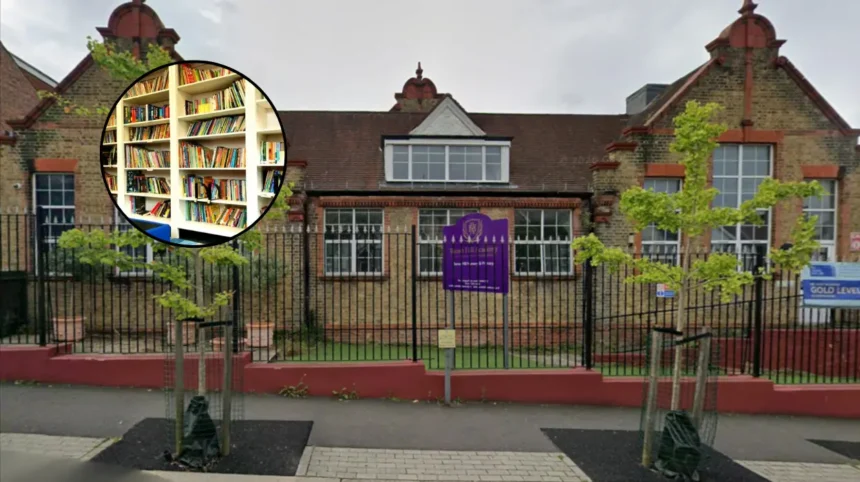
West Hendon (North London News) August 12, 2026 – Barnet Council has formally approved a landmark transition that will see Barnet Hill Academy drop its tuition fees and become the borough’s first council-maintained Islamic faith school. As reported by Joe Ives, Local Democracy Reporter, the decision was signed off by John Anthony, Barnet Council’s Executive Director of Children’s Services. Under the new arrangement, the primary school and nursery in West Hendon will shift from an independent, fee-paying model to a voluntary-aided status at the beginning of the autumn academic term. This structural change ensures that state-funded faith education is accessible to a broader demographic of primary school pupils aged four to eleven across the borough.
- Key Points
- What Key Changes Are Coming to Barnet Hill Academy?
- Why Is Barnet Council Expanding Faith-Based State Education?
- How Will the Financial Restructuring and Growth Projections Be Managed?
- How Did the Local Community Respond to the Council Consultation?
- What Is the Background of This Particular Development?
- Prediction: How Will This Development Affect Local Families and the Education Sector?
What Key Changes Are Coming to Barnet Hill Academy?
As reported by Joe Ives of the Local Democracy Reporting Service, Barnet Hill Academy, located in Montagu Road, West Hendon, has operated as an independent fee-paying Islamic faith school for the past 20 years. Under the newly approved framework, the school will transition into a voluntary-aided institution fully integrated into the local authority’s state-funded education system.
Despite the significant shift in administrative oversight and funding streams, the local authority confirmed that no modifications are planned for the school’s nursery provision.
As stated in official council records highlighted by Joe Ives, “no changes are proposed to the age range, capacity, accommodation or operating arrangements of the nursery provision” as a consequence of the council assuming its new governance role.
Voluntary-aided schools within the English educational system are established by voluntary bodies, predominantly religious organisations.
Funding for these institutions is drawn from a combination of the local authority, the school’s governing body, and the Department for Education. Consequently, the instruction provided at Barnet Hill Academy will form a recognized component of Barnet Council’s statutory educational delivery.
Why Is Barnet Council Expanding Faith-Based State Education?
The decision to integrate Barnet Hill Academy into the state sector addresses a long-standing disparity in local educational options. Data from the 2021 Census reveals that Barnet is home to 47,700 Muslim residents, representing slightly over 12 per cent of the total population of the borough.
As reported by Joe Ives of the Local Democracy Reporting Service, an internal council report noted that while the borough’s existing state-funded school network reflects major religious demographics—including Church of England, Roman Catholic, and Jewish faith schools—Islamic education has remained entirely absent from the state sector.
The council report stated:
“Islam is not represented within the state-funded education sector in Barnet. As a result, Muslim families do not have the same opportunity as those of other faiths to access a school aligned with their religious ethos.”
Previously, attendance at Barnet Hill Academy was restricted to families capable of meeting independent tuition costs. As detailed in the local authority’s findings, this financial barrier “restricted provision for the majority of the borough’s Muslim community.” By bringing the school into the voluntary-aided framework, the council aims to fulfill its legal obligation
“to secure diversity in the provision of schools, increase opportunities for parental choice and consider parental representations,”
while responding directly “to a clear and evidenced demand from residents.”
How Will the Financial Restructuring and Growth Projections Be Managed?
The operational transition follows a detailed review of Barnet Hill Academy’s financial accounts over recent years. As reported by Joe Ives, audited financial statements for the past three financial years “indicate” that the independent school had experienced ongoing difficulties balancing its budget, with annual revenues failing to consistently cover operational costs.
To safeguard public funds ahead of the transition to state funding on 1st September, Barnet Council sought and secured a ‘deed of indemnity’ from Barnet Hill Academy.
This legal agreement indemnifies the local authority against any financial liabilities incurred by the school prior to its formal entry into the council-maintained system.
With tuition fees removed, local authority forecasts anticipate a substantial increase in student enrolment. Council projections indicate that pupil intake is expected to double from the 2026/27 academic year onwards, eventually reaching approximately 400 pupils by the early 2030s.
How Did the Local Community Respond to the Council Consultation?
Before finalizing the integration, Barnet Council conducted a statutory four-week “representation period” between 8th May and 5th June.
The consultation provided local residents, parents, and community stakeholders an opportunity to submit formal feedback regarding the proposed change in status.
As reported by Joe Ives of the Local Democracy Reporting Service, council documentation confirms that every submission received during the consultation period reflected “unequivocal support for the proposal.”
Local authority officials emphasised that the transition will
“better reflect the borough’s demographic profile and respond to a clear and evidenced demand from residents for provision that aligns with the religious, cultural and ethnic diversity of the community.”
Furthermore, municipal leaders maintained that the new structure will
“support inclusive access to education and contribute positively to social value by promoting equality of opportunity and reflecting the needs of the local community.”
Explore More West Hendon News
Silk Stream Expansion Approved by Barnet Council in West Hendon 2026
Mr Mills Wins Plot of the Year with West Hendon Allotment Arch Garden
What Is the Background of This Particular Development?
The integration of Barnet Hill Academy into Barnet’s maintained school network marks the conclusion of a two-decade era during which state-funded Islamic education was entirely absent from the borough. Established as an independent primary school in Montagu Road, West Hendon, Barnet Hill Academy catered exclusively to families who could afford private tuition fees.
Over the past decade, demographic growth across North London expanded Barnet’s Muslim population to nearly one-eighth of the borough’s total residents.
While local faith-based schooling options expanded across Anglican, Catholic, and Jewish denominations to match community proportions, Muslim families seeking faith-aligned primary education were obliged to choose between private fee-paying establishments or standard secular state schools.
Financial pressures on independent faith schools across the United Kingdom have heightened in recent years due to rising operational costs and shifts in household income.
For Barnet Hill Academy, consecutive financial years with expenditure exceeding income rendered the independent model increasingly precarious. The transition to voluntary-aided status aligns the school’s long-term operational viability with Barnet Council’s statutory duty to offer diversified, accessible educational options for all religious communities in the borough.
Prediction: How Will This Development Affect Local Families and the Education Sector?
The conversion of Barnet Hill Academy to a council-maintained, voluntary-aided school will directly impact local families, primary school admissions, and the wider educational sector across Barnet.
For families residing in West Hendon and surrounding districts, the primary effect will be immediate financial relief and expanded access.
The elimination of tuition fees removes barrier entry, enabling lower- and middle-income Muslim families to access primary education aligned with their religious ethos without financial hardship. The transition also guarantees that instruction at the academy adheres strictly to national curriculum standards and local authority oversight.
As enrolment is projected to scale up to 400 pupils by the early 2030s, the addition of state-funded places will relieve pressure on local primary school admissions across West Hendon.
By establishing parity between Islamic faith education and existing Christian and Jewish state-maintained institutions, the borough’s educational infrastructure will more accurately mirror its multi-faith demographic structure.
For Barnet Council and the wider education sector, the successful implementation of the deed of indemnity sets a administrative precedent for integrating struggling independent faith schools into the state-maintained sector.
Providing stable public funding in exchange for rigorous local authority governance resolves the institution’s historic deficit risks while fulfilling the council’s statutory obligation to maximize parental choice and social inclusion.