Key Points
- Cycle Islington is celebrating 50 years of cycling advocacy through a dedicated historical exhibition in the London Borough of Islington.
- Founded in 1976, the local pressure group initially used typewritten newsletters, pamphlets, and protest marches to advocate for safer street design.
- Historic campaign efforts took a decade to secure a cycle lane along Seven Sisters Road, illustrating long-standing local governance challenges.
- Regional coordination improved following the establishment of Transport for London (TfL) in 2000, though local local authority boundaries continue to impact continuous route planning.
- Historical items on display include early transport publications, a 1980 safety report submitted to the local council, and a “ghost bike” commemorating cyclists killed on local roads.
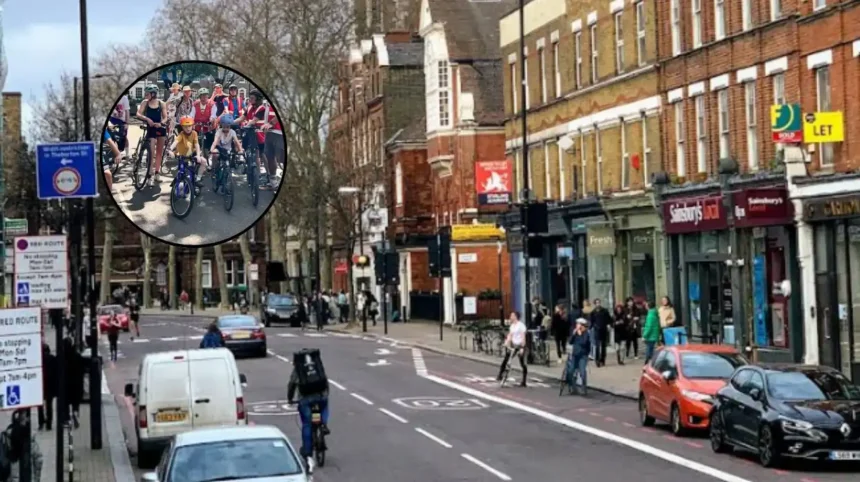
Islington (North London News) August 12, 2026 — An exhibition celebrating 50 years of local cycling campaigns has opened in the London Borough of Islington, documenting the history of community action for safer streets since the mid-1970s. The showcase highlights the evolution of the local advocacy group, now known as Cycle Islington, from its origins in 1976 through to contemporary transport debates. The display features historical archives, early publications, and memorials that reflect both the triumphs and tragic milestones of urban cycling activism.
- Key Points
- What Can Visitors Expect to See at the Islington Exhibition?
- How Did Early Campaigns Shape Local Cycling Infrastructure?
- How Has Governance Changed for London Cyclists Since 1976?
- What Historical Artifacts Highlight the Everyday Concerns and Risks of Cyclists?
- What Is the Background to Local Cycling Campaigns in Islington?
- How Could This Development Affect Local Cyclists and Transport Planning?
What Can Visitors Expect to See at the Islington Exhibition?
The collection presents a selection of original artifacts from the founding era of the campaign group. Displayed across two main exhibition cases, the items include early typewritten newsletters, handmade flyers, and campaign pamphlets that served as the primary communication tools for grassroots community groups during the 1970s.
Archive photographs and documents also document the visual identity of early street protests in the borough. Historical notes within the exhibition record that early demonstration marches were often led by a bagpiper, reflecting the distinct cultural methods used by activists to draw public attention to road safety issues at the time.
How Did Early Campaigns Shape Local Cycling Infrastructure?
The exhibition details the long-term effort required to secure dedicated cycling infrastructure within the borough. According to exhibition records, the campaign group spent a decade advocating for the installation of a cycle lane along Seven Sisters Road.
The historical notes highlight the challenges faced by borough-based pressure groups when navigating cross-boundary infrastructure. Although the initial lane was secured, the route fell short of the broader target extending towards Manor House.
The delay underscored the structural difficulties of local lobbying prior to systemic London-wide governance, as an Islington-focused campaign group faced diplomatic and administrative hurdles when requesting infrastructure modifications from neighbouring authorities such as Hackney Council.
How Has Governance Changed for London Cyclists Since 1976?
The display contextualises the administrative evolution of London transport over the past five decades. The establishment of Transport for London (TfL) in 2000 marked a significant shift in how strategic road networks were managed across municipal boundaries.
Prior to TfL’s creation, individual local councils maintained disparate control over road management, complicating the delivery of continuous long-distance cycle routes.
While the creation of TfL enabled more joined-up infrastructure planning across borough lines, the exhibition notes that TfL directly controls only a small percentage of London’s overall road network, leaving the majority of street design under the jurisdiction of individual local authorities.
What Historical Artifacts Highlight the Everyday Concerns and Risks of Cyclists?
Alongside broader infrastructure demands, the exhibition illustrates the day-to-day practical concerns of 20th-century cyclists. An early edition of the Daily Cyclist publication on display includes editorial commentary lamenting a perceived lack of technological innovation in preventing tyre punctures.
The archive also features a formal 1980 report on cycling safety and access within Islington, which was directly submitted to the local council to prompt policy reform.
In addition to policy documents, the exhibition addresses the human cost of road collisions. A “ghost bike” — a bicycle painted entirely white and placed as a roadside memorial — forms a key part of the display alongside reports documenting historical mass cycle rides organised to demand safer infrastructure following fatal incidents.
Explore More Islington News
Islington Council Planning Applications Near Charterhouse Square 2026
Wandsworth and Islington Set Up Housing Boards in London, 2026
What Is the Background to Local Cycling Campaigns in Islington?
Grassroots cycling activism in Islington emerged during the mid-1970s, coinciding with a broader national resurgence in environmental awareness and transport reform. Following the 1973 global oil crisis, local residents across London increasingly turned to bicycles as an affordable, sustainable mode of urban transport.
However, London’s road infrastructure in the 1970s was predominantly designed around motorized traffic, leaving cyclists with minimal dedicated space and elevated safety risks.
The formation of the Islington campaign in 1976 was part of a movement that eventually led to the establishment of the London Cycling Campaign (LCC) in 1978. Over the subsequent decades, these voluntary groups relied on hyper-local activism to pressure municipal councils for incremental changes, such as advanced stop lines, traffic-calming measures, and protected lanes.
The historical timeline depicted in the exhibition underscores how community-led lobbying eventually shifted public policy from viewing cycling as a niche recreational activity to recognizing it as an essential component of urban public transport.
How Could This Development Affect Local Cyclists and Transport Planning?
This historical exhibition is likely to serve as an educational touchpoint for local residents, active travel advocates, and urban planning policymakers in North London. For current cyclists and campaign groups, the showcase provides historical context to ongoing debates surrounding low-traffic neighbourhoods, cycle superhighways, and pedestrianisation schemes across the borough.
By highlighting the decades-long timelines required to achieve baseline infrastructure changes, the exhibition offers contemporary campaigners a benchmark for evaluating modern transport policy negotiations.
For local authorities and transport planners, the retrospective highlights the enduring challenge of cross-borough infrastructure coordination.
As Transport for London and local councils continue to work toward target networks for active travel, the historical precedent outlined in the exhibition underscores the necessity of multi-agency cooperation. Ultimately, highlighting fifty years of community advocacy reinforces the role of civil society in shaping London’s ongoing urban mobility strategies.