Key Points
- Mikel Arteta has publicly stated that his current Arsenal squad is “weaker” than the one that finished second last season, despite a convincing 3-0 Community Shield win over Manchester City.
- The Arsenal manager emphasized an urgent need for further reinforcements before the summer transfer window closes.
- Arteta cited the ongoing challenge of managing player departures, injuries, and the physical demands of the upcoming campaign as primary reasons for his concern.
- The club has already invested significantly in high-profile arrivals, but the manager remains focused on squad depth and tactical flexibility.
- The squad faces a long season involving Champions League football, requiring a larger pool of reliable rotation options to sustain a title challenge.
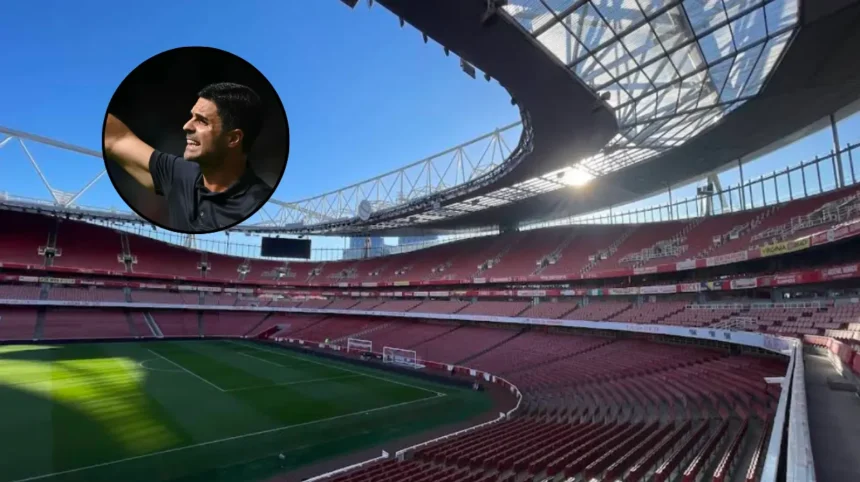
Arsenal (North London News) August 17, 2026 — Arsenal manager Mikel Arteta has issued a stark warning regarding the composition of his current squad, insisting that the club remains “weaker” than last term despite securing a dominant 3-0 Community Shield victory against reigning Premier League champions Manchester City. While the result at Wembley served as a psychological boost and a statement of intent to the rest of the division, Arteta utilised his post-match press conference to pivot towards the transfer market, demanding further acquisitions before the window concludes.
- Key Points
- Why does Mikel Arteta believe Arsenal are weaker despite their recent win?
- Which areas of the pitch is Mikel Arteta prioritising?
- How are the players reacting to the manager’s transfer demands?
- What is the club’s current stance on the transfer market?
- Background of the development
- Prediction: How this development will affect the squad and the fans
Why does Mikel Arteta believe Arsenal are weaker despite their recent win?
The Arsenal manager’s assessment stems from a pragmatic evaluation of squad turnover and the brutal realities of a congested fixture list. As reported by Sam Blitz of Sky Sports, Arteta addressed the discrepancy between his team’s performance on the pitch and his internal assessment of their depth, stating:
“We are weaker. We have to be realistic. We have lost players, we have had injuries, and we have players who need time to adapt.”
Arteta’s comments highlight a technical concern regarding the attrition rate within professional football. The departure of experienced personnel combined with long-term injury setbacks has left the squad feeling thin in specific areas. While new signings have integrated well, the manager maintains that the overall balance of the dressing room has shifted, necessitating a proactive approach in the final weeks of the market to regain the stability required for a sustained title charge.
Which areas of the pitch is Mikel Arteta prioritising?
Although the manager refrained from naming specific transfer targets, his tactical setup at Wembley provided clues regarding his requirements. The integration of versatile players who can operate in multiple positions appears to be the primary objective. According to Nick Ames of The Guardian, Arteta is acutely aware that relying on a fixed starting eleven is a strategy fraught with risk given the return of Champions League football to the Emirates Stadium.
Arteta noted that the intensity demanded by his system requires players who can maintain high standards over 50-plus games. The club’s recruitment team is currently evaluating options to bolster the defensive line and attacking midfield depth. The manager believes that without internal competition for every position, the standards set during the previous campaign will inevitably drop as fatigue settles in during the winter months.
How are the players reacting to the manager’s transfer demands?
The Arsenal playing staff has publicly backed their manager’s drive for improvement. Captain Martin Ødegaard, speaking to James McNicholas of The Athletic, acknowledged that the squad shares the boss’s ambition to evolve.
“We know where we want to be. The manager is always pushing us to be better, and if he feels we need more bodies to reach those levels, then we trust him completely,” Ødegaard stated.
This alignment between the manager and the squad is viewed as a vital component of the club’s current culture. Rather than viewing Arteta’s comments as a critique of existing players, the squad reportedly interprets the plea for new signings as a necessity for collective success. The atmosphere at London Colney remains focused, with players noting that the competition for places—even from new arrivals—is what drove their improved performance against Manchester City.
What is the club’s current stance on the transfer market?
The Arsenal hierarchy, led by sporting director Edu Gaspar, is reportedly working in lockstep with Arteta to identify high-value targets who fit the club’s rigorous profile requirements. Reporting for The Telegraph, Sam Dean indicated that while Arsenal have already spent heavily this summer, the financial parameters remain flexible enough to accommodate one or two strategic additions if the right profile becomes available.
The club is exercising caution to ensure they do not compromise their long-term wage structure or strategic goals for the sake of short-term fixes. The emphasis remains on quality over quantity, with the club willing to wait until the final days of the window if it means securing a player who significantly elevates the starting XI or provides elite-level cover.
Background of the development
Arsenal’s current transfer strategy is the culmination of a three-year structural rebuild initiated by Mikel Arteta and the ownership group. Since the 2023-24 season, the club has shifted its focus from clearing out underperforming high-earners to building a young, hungry core capable of challenging at the summit of European football.
The previous season saw Arsenal push Manchester City to the final weeks of the title race, proving that their tactical identity—based on high pressing and fluid possession—is viable against the best teams in the world. However, the drop-off in performance during the spring months, often attributed to player burnout and lack of experienced rotation options, served as a catalyst for the current recruitment drive. The Community Shield victory was an outlier in terms of early-season rhythm, but it confirmed that the team’s ceiling is high if they can maintain physical parity with their rivals.
Prediction: How this development will affect the squad and the fans
For the Arsenal squad, this public stance from the manager acts as a safeguard against complacency. By identifying the team as “weaker,” Arteta effectively resets the baseline, ensuring that the victory at Wembley is treated as a starting point rather than a destination. Expect the players to remain hyper-focused during training, knowing that their positions are under active review by the recruitment staff.
For the supporters, this development likely signals a frantic end to the transfer window. While fans are buoyed by the win over Manchester City, they share the manager’s anxiety regarding depth. The anticipation surrounding potential “late-window” arrivals will dominate the discourse in the coming weeks. If the club secures their desired targets, the optimism surrounding a genuine title challenge will likely reach a fever pitch; however, failure to bolster the ranks could lead to early-season tension should the squad suffer from even minor injury clusters. Ultimately, Arteta’s candor creates a “win-win” environment: if new players arrive, the squad is strengthened; if they do not, the existing players are challenged to prove their manager’s assessment wrong.