
The London Borough of Barnet, situated in North London, spans an area of 86.79 square kilometres and supports a population exceeding 393,000 residents. The geography of Barnet transitions from dense urban environments in the south to semi-rural green belts in the north. Historically, the territory functioned as an ancient route connecting London to northern England via the Great North Road. Modern cultural identity in Barnet is defined by a unique synthesis of aviation history, medieval battlefields, aristocratic estates, and early 20th-century suburban expansion.
As you explore the modern site, you are crossing land with a deep heritage. Read about the full [Insert Anchor Text for History Article Here] to understand its origins. The area features numerous structures designated as Grade I and Grade II listed buildings, alongside extensive conservation areas protecting its architectural integrity.
What Makes the Royal Air Force Museum Hendon a Premier Landmark?
The Royal Air Force Museum Hendon is an internationally significant aviation museum housed on a former historic aerodrome site, displaying over 100 aircraft across multiple hangars to preserve Britain’s military flight heritage.
The museum occupies part of the historic Hendon Aerodrome, which played a foundational role in early British aviation and military defense. Established and opened to the public in November 1972 by Queen Elizabeth II, the institution preserves the site where pioneering flights and crucial air defence operations occurred. The infrastructure utilizes historic fighter hangars built during World War I alongside modern exhibition spaces.
The collection includes 3 types of legendary aircraft: iconic interceptors like the Supermarine Spitfire and Hawker Hurricane, heavy bombers such as the Avro Lancaster, and Cold War jets like the English Electric Lightning. Research data from the museum indicates that it attracts over 400,000 visitors annually, functioning as a primary cultural asset for North London. The site utilizes interactive flight simulators and chronological galleries to document the evolution of military aviation technology from biplanes to modern stealth systems.

How Did Trent Country Park Shape North London’s Heritage?
Trent Country Park is a 413-acre green space and historic estate that functioned as a royal hunting ground, a World War II prisoner-of-war interrogation centre for high-ranking officers, and a premier recreational landscape.
The park originates from medieval royal hunting forests established under the Crown, later evolving into an aristocratic estate owned by the Bevan family before passing into public ownership in the 20th century. During World War II, Trent Park Mansion served as a top-secret MI9 interrogation facility under the command of Colonel Alexander Scotland. British intelligence secretly bugged the luxurious quarters, capturing vital conversations among captured German generals regarding secret weapons like the V2 rockets.
The estate comprises 3 distinct ecological components: ancient woodlands featuring oak and hornbeam trees, ornamental lakes like Camlet Moat, and open grassland fields. Statistical evaluations by the local authority record millions of recreational visits per year to the grounds. The landscape design incorporates historic carriage drives, formal gardens, and ecological habitats designated as part of the Metropolitan Green Belt.
Explore More Area Guide
Balancing Urban Living and Open Countryside in Barnet
Best Libraries and Study Spaces in Barnet, North London 2026
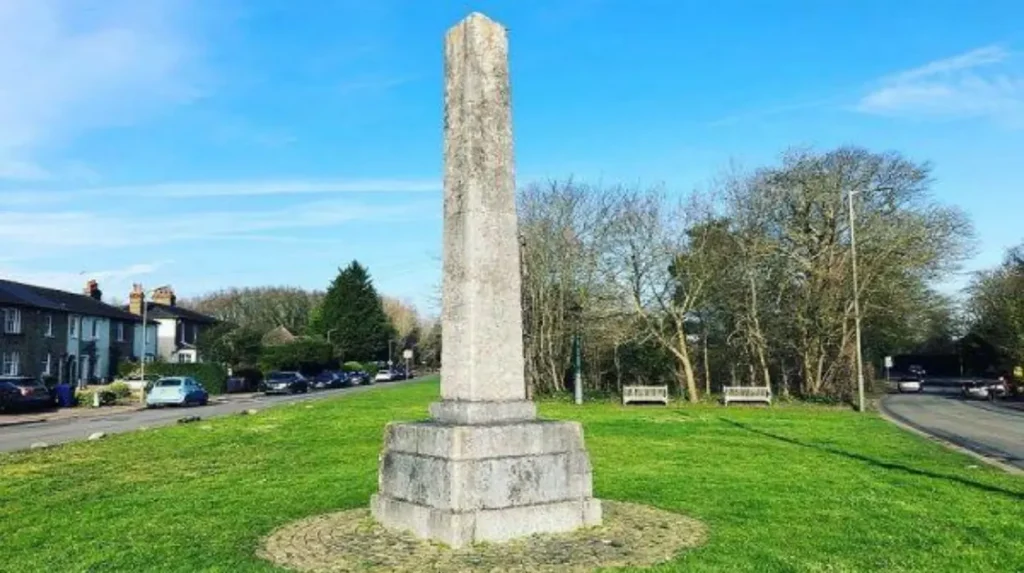
What Is the Historical Significance of the Battle of Barnet Monument?
The Battle of Barnet Monument marks the site of the pivotal 1471 Wars of the Roses engagement where the Yorkist army defeated the Lancastrians, resulting in the death of Richard Neville, Earl of Warwick.
The monument, an obelisk erected in 1740 by Sir John Barnard at Hadley High Stone, commemorates the clash that occurred on April 14, 1471. Historical records maintained by the Crown confirm that King Edward IV led the House of York against the Lancastrian forces commanded by the Earl of Warwick, known as the Kingmaker. Heavy morning fog during the engagement caused confusion, leading the Lancastrian wings to fire upon one another.
The tactical outcome resulted in a decisive Yorkist victory that restored Edward IV to the English throne and eliminated the principal Lancastrian military leadership in the region. The monument stands near Hadley Green, an open common measuring approximately 55 acres that remains protected under common land legislation. Archaeological surveys of the surrounding soil continue to yield medieval lead shot and weapon fragments, cementing the site’s status as a scheduled ancient monument.
Why Is Golders Green Crematorium an Architectural and Cultural Landmark?
Golders Green Crematorium, opened in 1902, is Britain’s first municipal crematorium and a major architectural landmark featuring extensive memorial gardens and Neo-Palladian design elements.
The facility was designed by architect Ernest George and registered as a pioneering development in British funerary architecture when cremation was legally formalised following the Cremation Act of 1902. The structural design incorporates cloisters, chapels, and brick columbaria constructed to house the ashes of notable historical figures. The grounds span 12 acres of meticulously landscaped memorial gardens maintained by the Cremation Society of Great Britain.
Prominent historical individuals interred or memorialised at the site include Sigmund Freud, author Enid Blyton, musician Marc Bolan, and actor Peter Sellers. Research data from cultural heritage bodies highlights the crematorium as a catalyst that shifted public and religious attitudes toward cremation across the United Kingdom. The architecture relies on classical symmetry, stained glass artistry, and stone masonry to create an environment tailored for reflection and remembrance.
What are the most iconic landmarks to visit in Barnet?
Barnet’s most iconic landmarks include the Royal Air Force Museum Hendon, Trent Country Park, the Battle of Barnet Monument, and Golders Green Crematorium. These sites represent aviation history, royal landscapes, medieval battles, and architectural heritage.