Key Points
- Industrial Action Continues: More than 1,500 Arriva North London bus drivers have voted to go on strike as a result of their rejection of a negotiated offer.
- 42 Routes Disrupted: This action will lead to disruption of 42 bus routes in North London, East London, Central London, and parts of Essex including important Superloop, night and school buses.
- The Heat Wave Issue: According to the union workers, in-cabin temperatures often rise above $40^\circ\text{C}$ ($104^\circ\text{F}$) in extreme weather conditions.
- Inefficient Cooling Systems: The existing air-cooling system in Arriva buses cools the cabin by only two to three degrees which causes heat exhaustion, heat stroke and dehydration.
- Unite the Union Demands: Unite the Union demands installation of proper air conditioning systems for Arriva North London buses for the safety of the drivers and passengers.
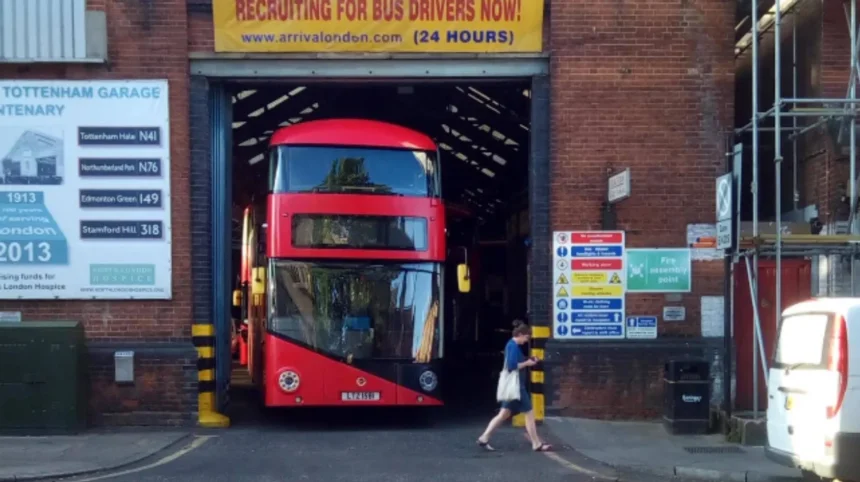
- Locations of Garages: The strike will disrupt operations at eight different garages: Barking, Edmonton, Enfield, Grays, Palmers Green, Stamford Hill, Tottenham and Wood Green.
- Scheduled Strike Period: In addition to the first four days of strikes from Tuesday, 25 August, there are nine more strikes scheduled in September and October.
North London (North London News) August 24, 2026 — As reported by MyLondon, around 1,500 bus drivers represented by Unite the Union are resuming industrial action this week after formally rejecting an revised settlement proposed by operator Arriva North London. The walkout, affecting 42 transport routes, follows a temporary pause in industrial action between 19 and 21 August, during which union members were balloted on proposals to address dangerous working conditions during high temperatures. The ballot resulted in a majority rejection, with members deciding the offer failed to provide adequate structural solutions to excessive heat in driver cabs.
- Key Points
- Why did drivers reject the latest offer from Arriva North London?
- What are union leaders and Arriva saying about the dispute?
- Which dates, garages, and bus routes are affected by the strike action?
- Background of the particular development
- Prediction: How this development can affect commuters, businesses, and local infrastructure
Why did drivers reject the latest offer from Arriva North London?
As reported by ITV News London, the dispute centres on prolonged exposures to dangerous temperature levels in bus cabs during summer heatwaves. Unite the Union highlighted that the majority of buses operated by Arriva North London are fitted with standard air-cooling systems rather than full air-conditioning units.
As detailed by regional reporting in Time Out London, these air-cooling units lower internal cab temperatures by a marginal two to three degrees Celsius. Independent temperature checks carried out by London Bus Forums recorded cab temperatures reaching up to $43^\circ\text{C}$ to $44^\circ\text{C}$ ($109^\circ\text{F}$ to $111^\circ\text{F}$) during period heat events.
As reported by photographer Tom Jeffreys and covered by MyLondon, veteran Arriva driver Peter Crane demonstrated temperature readouts from inside his cab showing $44^\circ\text{C}$ during previous picket actions at Wood Green Bus station. Speaking on the picket line in Tottenham, an Arriva driver identified as “JD” stated to reporters that cab conditions were akin to “an oven”:
“When you are inside, there’s no cool air, not even fresh air. Just the air cycling inside the cab. You have to open the cab door all the time and open the front door… Your safety and the safety of the passengers is more important than anything.”
What are union leaders and Arriva saying about the dispute?
As stated by Sharon Graham, General Secretary of Unite the Union:
“London bus drivers do a vital job, but are putting themselves at risk due to these appalling conditions. Arriva can fully afford to make meaningful changes our members can accept. Until that happens, strike action will continue and our members at Arriva North London will continue to have the full backing of Unite.”
Financial figures released by parent company Arriva in mid-2025 revealed an operating profit of €127 million and a pre-tax profit of €156 million, which the union points to as proof that fleet upgrades are financially viable.
As reported by Steven Stockwell, Regional Officer for Unite the Union:
“There is still time for Arriva to stop this disruptive action, but it relies on it coming back to the table with a deal our members believe will solve the serious problems with conditions once and for all.”
In addition to thermal safety concerns, union representatives have raised grievances regarding alleged union-busting and the intimidation of workplace representatives during the ongoing negotiations. Arriva North London maintains that it remains committed to finding a workable solution while ensuring continuous transport services across the regional capital network.
Which dates, garages, and bus routes are affected by the strike action?
Walkouts involve 1,500 staff stationed across eight depots in North London and Essex:
- Barking Garage
- Edmonton Garage
- Enfield Garage
- Grays Garage
- Palmers Green Garage
- Stamford Hill Garage
- Tottenham Garage
- Wood Green Garage
Scheduled Strike Dates
As confirmed by Unite the Union, industrial action is staged across the following 2026 calendar dates:
| Month | Scheduled Strike Days |
| August | 25 August (04:00) to 28 August (04:30) |
| September | 4–5 Sept, 7–8 Sept, 18–19 Sept, 21–22 Sept |
| October | 2–3 Oct, 5–6 Oct, 16–17 Oct, 19–20 Oct |
Full List of Affected Bus Routes
Transport for London (TfL) cautions passengers that 42 bus routes will operate with little to no service during industrial action windows:
- Day Services: 19, 29, 34, 41, 102, 121, 123, 141, 144, 149, 150, 175, 191, 192, 221, 242, 243, 259, 279, 313, 318, 329, 341, 349, 377, 675, W4, W6
- Superloop Express Services: SL1, SL2
- Night Bus Services: N19, N29, N41, N279
Background of the particular development
The current dispute between Unite and Arriva North London originates from multi-year complaints regarding occupational health and safety standards inside public transport vehicles during severe weather events. Over successive summer seasons, increasing global ambient temperatures have led to repeated instances where enclosed glass-cab environments create a greenhouse effect. Drivers operating older vehicle series without standard air conditioning have frequently reported symptoms of thermal distress, severe fatigue, and heat-induced medical emergencies.
While Transport for London has mandated environmental standards for newer additions to the capital’s fleet, existing franchise contracts with private operators such as Arriva allow older vehicles featuring basic air-cooling units to remain in active service. Negotiations over retrofit installations and temporary summer shift alterations reached a deadlock earlier in August 2026, leading to initial strike days on 14 and 18 August. Although brief pauses were negotiated to allow union members to review pay and conditions frameworks proposed by management, the overwhelming rejection of the draft agreement has reignited full-scale industrial action.
Prediction: How this development can affect commuters, businesses, and local infrastructure
The resumption of extended strike action across August, September, and October is expected to disrupt multiple sectors across the capital:
- Commuters and Travelers: Passengers relying on major arterial routes into Central London—such as the 29, 149, and 243—face severe overcrowding on alternative transport networks. Because several planned strike dates coincide with scheduled engineering closures on TfL’s Piccadilly Line, multi-modal transport options in North and East London will be heavily constrained.
- Local Businesses and Retail: Reduced service frequency on key routes connecting high-density commercial centers (such as Wood Green, Tottenham, and Edmonton) is likely to lower footfall for local retail, hospitality, and service businesses during peak morning and evening trading hours.
- Students and Families: With school-specific routes (such as the 675) and primary local transit routes affected heading into September, school reopenings and daily educational trips across North London will face delays, forcing parents onto alternative, congested road networks.
- Policy and Industry Precedent: A victory for Unite in forcing mandatory air-conditioning retrofits could set a legally binding occupational health standard across all private bus franchises operating under TfL contracts, accelerating fleet modernisation across the United Kingdom.