Key Points
- Grounds of Transport Network Disruption: Services on the London Underground continue with three consecutive days of serious transport disruption due to an extensive fire in an industrial waste site.
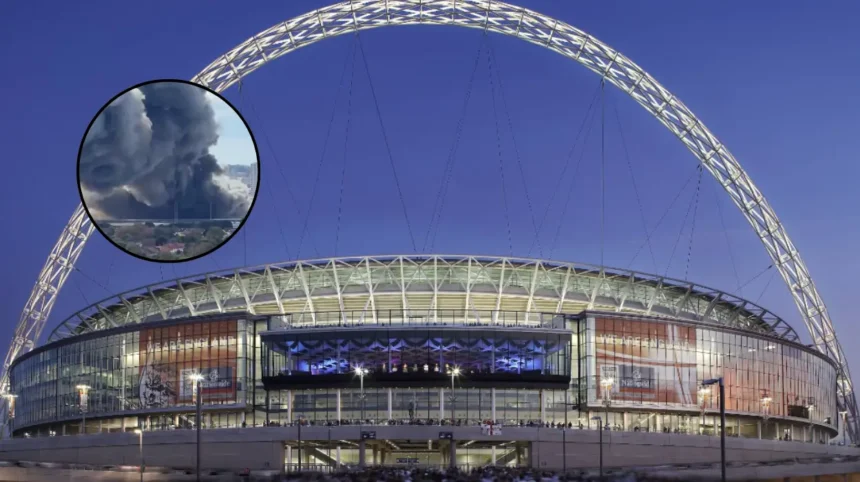
- Fire Brigade: Approximately 125 firefighters together with 20 fire trucks were called to put out the fire that broke out in Hannah Close, which is located near the Wembley stadium area.
- Dangerous Atmosphere: Due to the toxic air conditions around the railway tracks, it has become unsafe to continue running trains on that line since the atmosphere is not safe to operate for TfL workers at the train depot.
- Metro and Jubilee Lines Affecting: Serious disruptions on the Metropolitan lines along with partial closures between the Baker Street and Aldgate stations.
- No Immediate Return to Normal: Fire brigade continues to battle with pockets of fire, thus hindering normalisation of the underground rail system schedules.
Neasden (North London News) August 31, 2026 – As reported by transport correspondents covering the capital, a major industrial fire broke out at a mixed waste recycling facility on Hannah Close in Neasden, north-west London, just after 11:30 am on Friday. The incident escalated rapidly, prompting the London Fire Brigade (LFB) to mobilise approximately 125 firefighters and 20 fire engines to the site adjacent to major railway lines near Wembley Stadium. Huge plumes of dense black smoke rose into the London skyline, visible for miles across the city and forcing nearby residents to close windows and doors.
- Key Points
- Why Are Trains Unable to Run and How Is Toxic Air Affecting TfL Depot Operations?
- What Statements Have Been Issued by Emergency Services and Transport Officials?
- Background of the Particular Development
- Prediction: How This Development Can Affect London Commuters and the Public Transport System
Emergency service crews fought the blaze continuously into the weekend. However, the proximity of the waste plant to critical rail infrastructure meant that both the Metropolitan and Jubilee lines were immediately caught up in the fallout. The sustained intensity of the flames, coupled with the combustible nature of the mixed waste material, transformed the incident from an industrial fire emergency into a protracted regional transit crisis.
Why Are Trains Unable to Run and How Is Toxic Air Affecting TfL Depot Operations?
As reported by media sources following statement updates from Transport for London (TfL), the disruption persisted into its third day on Sunday due to lingering atmospheric hazards. The primary issue preventing the safe restoration of train services is the presence of residual “toxic air” and lingering, concentrated smoke hovering over the Metropolitan line tracks and surrounding infrastructure.
Engineers and safety inspectors determined that running passenger trains through affected open-air sections near Neasden was unsafe due to severe air quality risks. Furthermore, hazardous fumes and poor air quality surrounding a nearby major London Underground train depot prevented TfL operational staff from physically entering the site. Because staff could not safely enter the depot to inspect, prepare, and dispatch rolling stock, TfL was left unable to introduce the additional train units needed to clear backlogs and run a full scheduled service.
As reported by local transport reporting services, the Metropolitan line suffered a complete suspension between Baker Street and Aldgate, alongside severe delays across the remainder of the network. Passengers traveling through north-west London were advised to seek alternative travel arrangements as disruption was expected to remain in place until the end of service.
What Statements Have Been Issued by Emergency Services and Transport Officials?
As reported by news outlets tracking official operational dispatches, the London Fire Brigade confirmed the scale of the deployment involved high-reach aerial appliances alongside traditional crews. As documented in public updates from LFB operational commanders, four of the Brigade’s 32-metre turntable ladders were dispatched to pour water from height onto an industrial unit measuring roughly 100 metres by 150 metres.
As reported by safety correspondents monitoring the emergency response, LFB representatives stated that while the fire was brought under control from spreading to neighboring commercial properties, firefighters faced an extended operation dampening down deep-seated hotspots embedded deep within tons of recycled waste.
Simultaneously, spokespersons for Transport for London stated in public service bulletins that the safety of passengers and operational employees remained the absolute priority. Transport officials stated that service restoration on the affected stretches could only occur once fire crews declared the immediate environment clear of harmful toxic emissions and safe for technical personnel to re-enter the Neasden depot facility.
Background of the Particular Development
The Neasden industrial area, located in the London Borough of Brent, is a dense hub of commercial units, industrial recycling plants, and rail facilities situated directly adjacent to one of the busiest rail corridors in the United Kingdom. Neasden Depot itself is historic and central to London’s underground transit system; it serves as the primary maintenance hub and stabling yard for the Metropolitan line’s S8 Stock fleet and plays an essential role in daily network deployment.
Industrial fires in waste management facilities present notorious challenges for urban emergency planners. Waste sites often store dense quantities of plastics, rubber, timber, and mixed refuse, which burn at extremely high temperatures and generate dangerous particulates, toxic gases, and chemical-heavy smoke. Because the Neasden facility is positioned immediately next to the open-air tracks leading into Wembley Park and Neasden Underground stations, any significant smoke plume directly impacts visibility, track signal sensors, overhead power lines, and air quality inside passenger carriages and operational staff buildings.
Prediction: How This Development Can Affect London Commuters and the Public Transport System
This prolonged disruption is likely to have immediate and medium-term impacts on tens of thousands of everyday London commuters, local businesses, and regional transport planners:
- Severe Commuter Congestion on Alternate Routes: With the Metropolitan line partially suspended and operating at severely reduced capacity, commuters across north-west London and the home counties (such as Buckinghamshire and Hertfordshire) will continue to overwhelm alternative routes. The Jubilee line, Chiltern Railways surface trains, local bus routes, and neighboring highways will experience heightened congestion during upcoming peak travel hours.
- Economic Losses for Local Businesses: Reduced footfall around major transit interchanges like Wembley Park and Baker Street, combined with delayed workers across Central London, will create short-term economic friction for retail, hospitality, and corporate sectors relying on punctually delivered workforces.
- Heightened Scrutiny on Zoning and Industrial Safety: Following this event, local authorities such as Brent Council, the Environment Agency, and TfL are likely to face pressure from political representatives and resident groups to review safety regulations surrounding waste facilities located adjacent to critical national infrastructure. Strict environmental controls or mandatory buffer zones around railway yards may be proposed to prevent localized industrial fires from paralyzing urban transport infrastructure in the future.