
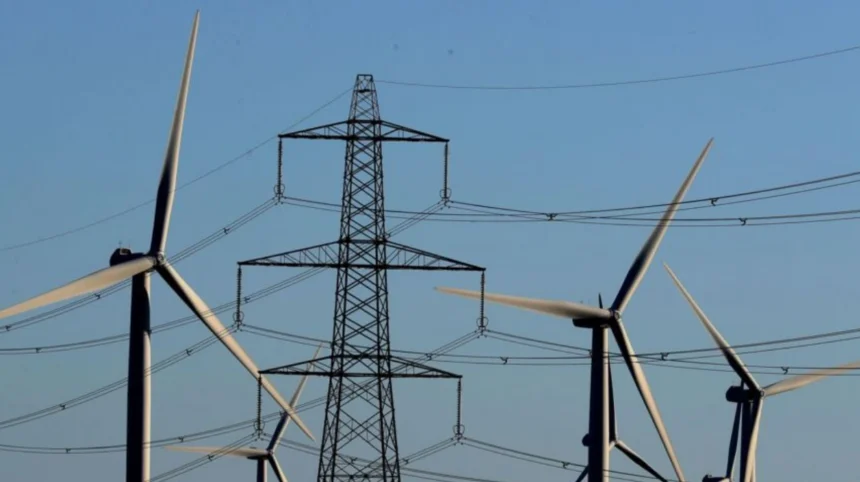
Britain is producing record amounts of renewable electricity, yet households are still facing higher energy bills. The problem is increasingly less about how much clean power the country generates and more about how the energy market determines what consumers pay for it.
Ofgem will raise the energy price cap by 4% from 1 October, taking the typical annual bill for a Direct Debit household from £1,663 to £1,723. The increase will affect around 22 million households.
The rise comes despite the government’s decision to temporarily remove VAT from domestic electricity between October 2026 and March 2027. The measure is expected to save an average household about £45, but higher wholesale costs will more than wipe out that saving.
Ofgem has linked much of the increase to higher wholesale gas prices and volatility in global energy markets, partly connected to the continuing conflict in the Middle East.
The pressure could continue into next year. Analysts have suggested bills could rise by another 9% in January 2027 if wholesale prices remain high. Ofgem will announce the next price cap on 25 November.
But this raises a basic question: if Britain is generating increasingly large amounts of cheap renewable electricity, why are households still so exposed to gas prices?
The gas-price problem
The answer lies partly in Britain’s marginal-pricing system.
Under the current market structure, the wholesale electricity price is generally set by the most expensive generator required to meet demand. Gas-fired power stations are frequently that marginal generator. As a result, gas prices can influence the price of electricity even when substantial amounts of cheaper renewable electricity are available.
That creates a strange situation for consumers. Britain can increase its supply of wind and solar power without necessarily seeing the same reduction in household electricity prices.
The scale of renewable generation is significant. Solar supplied a record 14.4% of Great Britain’s electricity in July 2026, with the growth described as strengthening energy security and potentially helping to reduce bills.
Yet the benefits of that cheaper generation are not automatically passed directly to households.
This is the central weakness in Britain’s current approach: building more renewables does not, by itself, guarantee cheaper electricity for consumers.
The other costs on the bill
Wholesale energy is also only part of what households pay.
EDF has argued that wholesale electricity now accounts for about 30% of the bill, with the rest made up of “non-commodity costs”. These include investment in electricity networks, renewable-energy contracts, carbon taxes and social-support schemes such as the Warm Home Discount.
Britain needs much of this investment if it is to build a cleaner and more secure energy system. But the costs are increasingly appearing in household bills.
EDF has also called for greater transparency over Ofgem’s £70bn transmission-network investment programme, arguing that consumers need a clearer picture of how infrastructure spending will affect future energy costs.
This makes the government’s promise of lower bills harder to achieve. Ed Miliband’s pledge of £300 off bills by 2030 has been described as increasingly unrealistic. Even measures such as extending VAT relief or moving some green levies into general taxation would only reduce part of the projected cost.
Consumers are caught between two systems
The political difficulty is that Britain needs to encourage investment in renewable energy while also protecting households from high prices.
Energy companies have made substantial profits during periods of high energy prices. Eight major oil companies — including Saudi Aramco, BP, Shell and ExxonMobil — made almost $93bn in combined profits over three months, according to The Guardian.
At the same time, renewable generators have faced proposals for measures targeting exceptionally high profits from elevated electricity prices. Companies warned that additional taxes or revenue caps could discourage investment in new renewable generation.
The result is a difficult balancing act. Tax energy companies too heavily and investment could suffer; leave the market unchanged and consumers may continue paying prices that do not reflect the falling cost of renewable generation.
A market problem, not simply an energy problem
For households, the immediate outlook remains uncomfortable. The £1,723 price-cap figure is an estimate for a typical household rather than a maximum bill, with actual costs depending on consumption, location, payment method and meter type. From October, average rates will be 26.32p per kWh for electricity and 7.97p per kWh for gas.
And with another possible increase in January, families face further uncertainty over winter heating costs.
Britain’s energy crisis therefore exposes a specific market failure: the country is becoming better at producing cheap renewable electricity, but the pricing system means households can remain exposed to the cost of expensive gas.
If ministers want renewable energy to deliver genuinely lower bills, building more wind and solar will not be enough. They will also need to change how electricity is priced and decide how the costs of upgrading Britain’s energy system should be shared.
Until then, the paradox will remain: more clean power on the grid, but no guarantee of cheaper energy at home.