Key Points
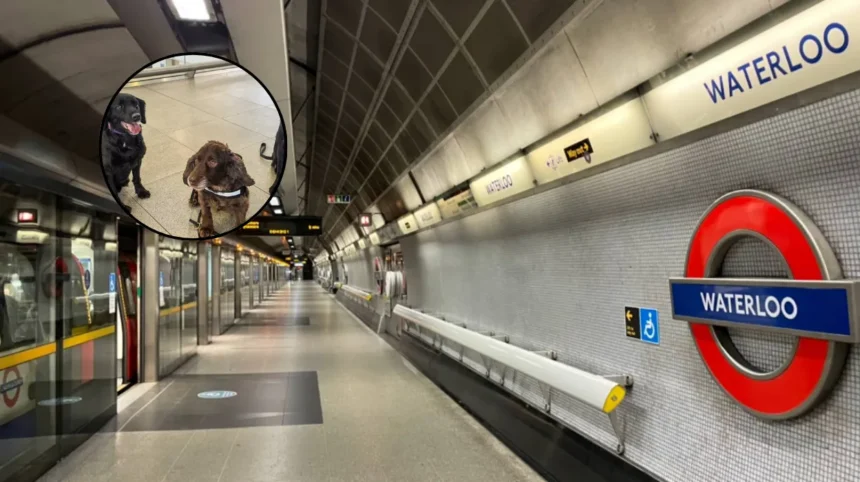
- New Security Trial: South Western Railway (SWR) has introduced specially trained security dogs to patrol London Waterloo Station.
- Canine Team Members: The security team features three dogs: Riley, an 11-year-old Cocker Spaniel; Buster, a nine-year-old Cocker Spaniel; and Flo, a 10-year-old Labrador.
- Core Responsibilities: The dogs are professionally trained to perform large-area patrols, detect hidden threats, and assist in apprehending suspects.
- Deterrence and Safety Goal: The initiative aims to offer visual deterrence and provide additional reassurance to both rail staff and passengers.
- No Heightened Risk: Station management confirmed the initiative is part of broader safety measures and not a response to any elevated security threat.
- Pioneering Station Deployment: London Waterloo is believed to be the first major railway station in Britain to regularly deploy dogs as part of an integrated security programme.
- Final Service Ahead of Retirement: This trial represents the final working deployment for Riley, Buster, and Flo before they transition into retirement.
London Waterloo (North London News) August 24, 2026 –Security operations at London Waterloo Station have been expanded following the introduction of a dedicated canine patrol unit for the first time in the station’s history. As reported by rail operators and local news outlets covering the trial, South Western Railway (SWR) has integrated three professionally trained working dogs into its existing station security teams. The trio—comprising two Cocker Spaniels named Riley, 11, and Buster, nine, alongside a 10-year-old Labrador named Flo—have been deployed across the main concourse and surrounding areas as part of an ongoing safety trial.
The specially trained dogs are capable of patrolling expansive areas, detecting hidden security threats, and assisting security staff with the apprehension of potential suspects.
SWR confirmed that London Waterloo is believed to be the very first major railway terminal in Britain to routinely deploy security dogs within a broader, continuous station security scheme.
Why Have Security Dogs Been Introduced at This Time?
According to statements provided by South Western Railway station manager Dan Harrison, the introduction of the security team is intended to act as a visible preventative measure rather than a reactive measure. Station Manager Dan Harrison stated that the main objective of the deployment was to provide “more visual deterrence” and offer “customers some additional reassurance.”
Harrison clarified that the canine patrol trial was not initiated in response to any specific security incident or heightened threat level across the transport network. Instead, the initiative forms part of an overarching customer-facing security upgrade. Comparing the trial to other recent station safety updates, Harrison noted,
“In the same way, we recently equipped all our colleagues with new hi-vis tabards to make them more easily identifiable to customers in the station who might need their help.”
What Roles Do Riley, Buster, and Flo Perform During Station Patrols?
The three operational dogs bring specialized search and patrol training to the high-traffic environment of London Waterloo. Spaniels Riley and Buster, together with Labrador Flo, carry out targeted searches across busy public zones and restricted station areas.
Their duties involve identifying potentially dangerous items, scanning large crowds, and supporting human security colleagues in maintaining order.
According to updates shared by South Western Railway, this operational assignment holds special significance for the canine team.
The current deployment at London Waterloo will serve as the final active working duty for Riley, Buster, and Flo before all three dogs officially retire from security service.
Explore More UK News
Coventry City Beat Espanyol 3-1: Match Report, North London 2026
UK Clears Paramount Acquisition of Warner Bros Discovery London 2026
Background of the Particular Development
The implementation of canine security teams reflects a broader evolution in public transport safety strategies across the United Kingdom. Major rail terminals, particularly those in Central London, process tens of millions of passenger journeys annually, making visible staff presence a central component of crowd management and crime prevention.
Historically, detection dogs at major UK transport hubs were primarily deployed periodically by specialist units, such as the British Transport Police (BTP), for targeted counter-terrorism operations or drug enforcement drives.
South Western Railway’s move to integrate working dogs directly into regular, station-level security operations marks a shift toward continuous visual deterrence.
This follows similar initiatives across UK public infrastructure, where high-visibility uniforms, enhanced CCTV monitoring, and clear staff identification measures have been rolled out to improve passenger confidence and deter anti-social behaviour on public transport networks.
Prediction: How This Development Can Affect Passengers and Station Staff
The routine presence of trained security dogs at London Waterloo is expected to directly impact daily rail commuters, station staff, and the wider security framework of the UK transport sector.
- For Commuters and Passengers: The visible presence of Riley, Buster, and Flo is likely to enhance perceived personal safety, particularly during late-night hours or peak travel periods. While some passengers may initially wonder whether the deployment signals an increased threat level, clear communication regarding the preventative nature of the trial is expected to maintain public confidence without causing alarm.
- For Station Staff and Security Operations: Security personnel are likely to experience improved support when managing large crowds or resolving security incidents. The presence of trained dogs often de-escalates tense situations before physical intervention becomes necessary.
- For the Wider UK Rail Network: If the trial at London Waterloo demonstrates measurable success in reducing anti-social incidents and boosting passenger satisfaction, rival train operating companies (TOCs) and major Network Rail stations across Britain may adopt similar permanent canine security programmes.