Key Points
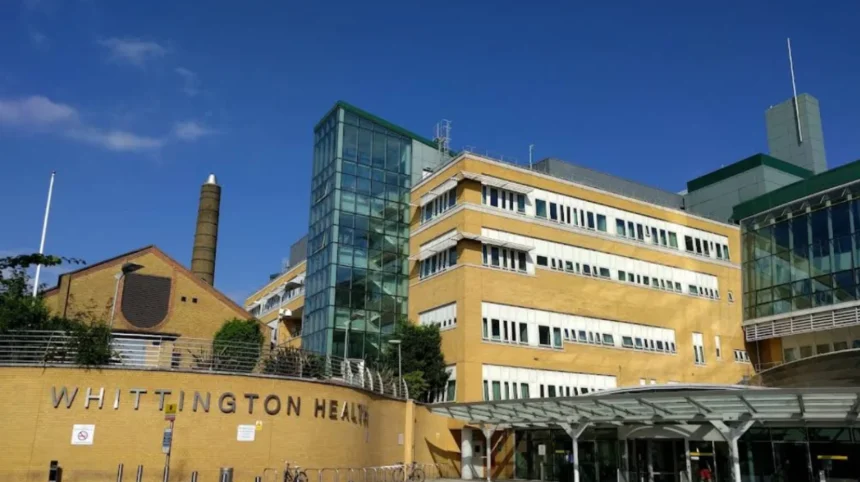
- Project Scale and Investment: Construction is set to commence on an £84 million redevelopment of the maternity and neonatal facilities at Whittington Hospital in Archway, North London.
- Board Approval and Funding Release: Whittington Health NHS Trust’s board has approved the outline business case for the maternity and neonatal estate programme, releasing the initial £34.6 million in capital funding for construction.
- Enabling Works Phase: The initial phase delivers vital enabling works, including temporary relocations, following preliminary preparatory efforts such as the demolition of the former energy centre and relocating the hospital chapel to the historic Jenner Building.
- Service Continuity Measures: Temporary neonatal facilities are being created to allow the existing Neonatal Intensive Care Unit (NICU) and Special Care Baby Unit (SCBU) to operate away from construction noise and vibration during the overhaul.
- Service Upgrade Scope: The overarching project features single en-suite rooms across the Labour Ward, an expanded combined neonatal unit, a redesigned triage area, a refurbished Women’s Day Unit, Early Pregnancy Assessment Unit, postnatal ward, and a dedicated bereavement suite.
- Infrastructure Context: The maternity developments follow a separate £80 million green energy infrastructure overhaul to triple site electrical capacity while cutting carbon emissions by 80 per cent.
Archway (North London News) September 10, 2026 – As reported by local media outlets, Whittington Health NHS Trust has confirmed that the first major construction work on the £84 million maternity and neonatal redevelopment at Whittington Hospital is due to begin shortly.
The confirmation follows the formal approval by the trust’s board of the outline business case for its maternity and neonatal estate programme. This decision has released the initial £34.6 million of capital funding required to commence construction work on new physical infrastructure at the Archway hospital site, which serves the western half of the London Borough of Haringey as well as neighbouring Islington.
Preliminary foundational works linked to the comprehensive site restructuring had already been initiated. These preparatory actions included the structural demolition of the hospital’s former energy centre and the physical relocation of the hospital chapel into the historic Jenner Building.
The incoming construction phase will deliver the primary enabling works required before the core maternity and neonatal care environments undergo transformation. According to statement disclosures from the trust, the multi-phase scheme aims to construct modern facilities, expand neonatal unit capacity, and enhance overall clinical environments for women, pregnant individuals, neonates, and visiting families.
To ensure operational continuity throughout the construction timeline, temporary neonatal facilities will be established. This setup will permit both the Neonatal Intensive Care Unit (NICU) and Special Care Baby Unit (SCBU) to transition away from their existing locations while permanent structures are erected, ensuring vulnerable care operations remain isolated from heavy construction noise and ground vibration.
What steps are involved in the construction and clinical transformation phases?
As reported by Haringey Community Press, the full redevelopment program is being delivered in distinct stages to accommodate continuous clinical operations within a functioning hospital environment.
As detailed by local reports and trust documentation, Phase 1A will feature the construction of a permanent combined neonatal unit, bringing previously separate intensive care and special care baby units into one cohesive environment. This phase also encompasses targeted refurbishments of the Women’s Day Unit, the Early Pregnancy Assessment Unit, and the postnatal ward, alongside interim maternity triage spaces and upgraded staff accommodation.
Later phases of the estate master plan will incorporate extensive work on the main Labour Ward, where all delivery rooms will be converted into individual units with private en-suite bathrooms. Plans further detail a permanent, redesigned maternity triage area located at the front of the hospital, an expanded main entrance designed to improve patient arrival flows, and a dedicated bereavement suite offering enhanced privacy.
As reported by Alex Marsh of the Ham & High, Selina Douglas, Chief Executive of Whittington Health NHS Trust, stated:
“Our top priority is that everyone who gives birth with us has a positive experience. That will remain our focus at every stage.”
Addressing the logistical constraints of the build, Ms Douglas stated:
“Carrying out a redevelopment of this scale within a working hospital will be challenging. But I want to reassure people thinking about having a baby with us that we have carefully planned the programme to minimise disruption to ensure that everyone can continue to book their birth with us, with confidence.”
Ms Douglas added:
“I am looking forward to seeing the plans we have been developing with our clinical teams begin to become a reality.”
As reported by Haringey Community Press, Isabelle Cornet, Director of Midwifery at the trust, previously noted during the layout unveiling:
“Until then, and throughout construction, our services remain open. Our top priority is that everyone who gives birth with us has a positive experience.”
Service user representation was also reflected during the planning stages. As reported by London Post, Mayani Muthuveloe, Joint Lead of the independent Whittington Maternity and Neonatal Voices Partnership group, stated:
“Seeing these images makes the future feel real for local families. The plans clearly focus on privacy, dignity and calmer spaces for birth and neonatal care, it is reassuring to see service user voices reflected so strongly in the design.”
Background to the Whittington Hospital site developments
The physical estate supporting maternity and neonatal care at Whittington Hospital dates back in part to the former Highgate Hill Workhouse Infirmary, opened in 1900. Over subsequent decades, ad-hoc extensions created an irregular layout that health officials identified as increasingly incompatible with modern clinical standards. Planning documents filed by the trust previously noted that existing neonatal spaces were operating out of legacy building stock no longer fit for purpose due to spatial constraints.
In response to structural deficiencies across regional healthcare facilities, NHS North Central London Integrated Care Board (ICB) initiated the ‘Start Well’ strategic review in November 2021. The regional review evaluated maternity, neonatal, and children’s surgical provision across North London to optimize clinical outcomes and consolidate care standards.
During the Start Well review, the future of maternity provision at Whittington Hospital became subject to public debate, following proposals that considered the closure of one North London maternity unit. In early 2024, regional NHS leaders formally determined to preserve and expand maternity services at Whittington Hospital while opting to close the maternity unit at the Royal Free Hospital in Camden. That decision consolidated long-term maternity care for the catchment area at Archway, paving the way for large-scale capital investment.
To support the expanded physical footprint, major site infrastructure works were required prior to commencing building construction. As reported by Building Better Healthcare, engineering firm GRAHAM executed a £100 million site-wide infrastructure project, which included an £80 million power grid upgrade. Completed in mid-2025, the power infrastructure enhancement connected the hospital to a new high-voltage supply, boosting electrical capacity from 2,600 kVA to 8,500 kVA. Trust disclosures confirm the upgrade was essential to support the upcoming maternity expansion while reducing overall site carbon emissions by approximately 80 per cent.
What are the long-term implications for local families and healthcare users?
The release of funding and commencement of phase-one construction will directly impact expectant parents, neonatal patients, and healthcare staff across Haringey, Islington, and the broader North Central London region.
Impact on Patient Experience and Clinical Outcomes
For pregnant women and service users, the physical transition to single en-suite rooms during labor aims to enhance privacy, dignity, and infection control during delivery. The integration of a enlarged, combined NICU and SCBU addresses spatial restrictions that previously constrained family visits and bedside care. Furthermore, the introduction of a dedicated bereavement suite provides isolated, quieter spaces for families experiencing pregnancy loss.
Capacity and Service Accessibility
Following the consolidation of maternity services within North Central London, birth volume at Whittington Hospital is projected to scale up toward 4,000 deliveries annually. The redesigned entrance and modernized triage areas are structured to alleviate operational bottlenecks, reducing patient wait times during emergency admissions.
Operational Continuity During Construction
Throughout the multi-year project—expected to run through to completion near 2030—the trust must manage construction disruption adjacent to active wards. While enabling works and temporary relocations are designed to shield vulnerable neonatal infants from noise and vibration, service users can expect temporary route alterations and ongoing site development across the Archway campus during the build period.