Key Points
- Mikel Arteta’s recruiting policy for Arsenal is a good example of how the club still faces problems with big and expensive transfers, even after winning the league domestically.
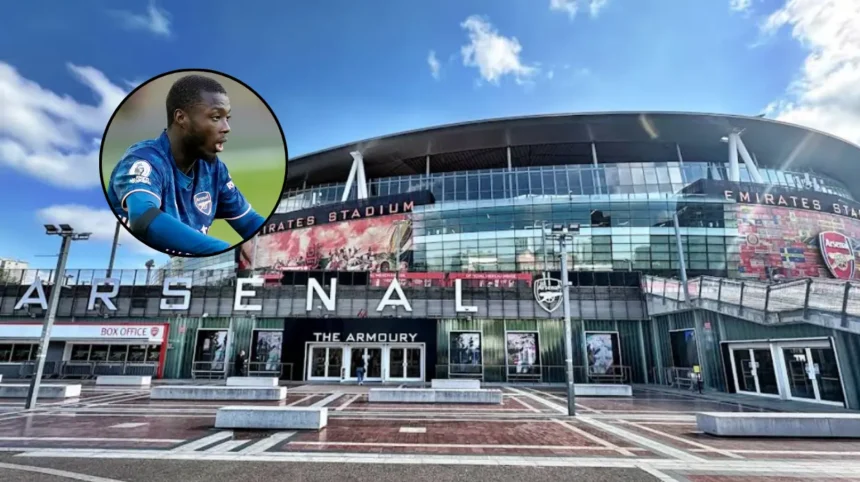
- Commentaries in the media draw a parallel between the recently recruited player costing £67m, Eberechi Eze, and the previous record signing, Nicolas Pépé, as well as £63m forward Viktor Gyökeres.
- The lack of game minutes and the poor performances of Eze have prompted many football experts to ask questions about the place of the new player in the team.
- Arsenal have to keep finding ways to rotate their players to defend their position in the Premier League.
Arsenal (North London News) September 14, 2026 – During the Mikel Arteta era at Arsenal, the North London club has been widely commended for its strategic restructuring and recruitment, which eventually helped secure their first Premier League title in two decades. In the early stages of Arteta’s tenure, the management made several controversial or temporary signings, including Willian, Pablo Marí, and Cédric Soares. While the Gunners built a formidable squad through astute market moves, high-value transfers continue to draw scrutiny when immediate tactical integration proves challenging.
- Key Points
- What is the current situation regarding Eberechi Eze’s role under Mikel Arteta?
- How do Eze’s recent performances compare to historical squad selections?
- What are the wider squad dynamics affecting Arsenal’s attacking options?
- Background of Arsenal’s Recruitment Strategy Under Mikel Arteta
- Prediction: Impact on Arsenal’s Squad Dynamics and First-Team Players
What is the current situation regarding Eberechi Eze’s role under Mikel Arteta?
As reported by Harry Mail of Football FanCast, the acquisition of £67 million attacking midfielder Eberechi Eze from Crystal Palace has drawn comparative scrutiny to previous big-money transfers, such as Nicolas Pépé and Viktor Gyökeres. Mail noted that “spending big-money on new additions certainly does not guarantee success,” referencing Eze’s initial struggles to establish himself as an indispensable starter in Arteta’s tactical setup.
Despite arriving with significant expectation, Eze’s involvement during the early stages of the 2026/27 campaign has been restricted largely to rotational and substitute roles. In the opening domestic fixtures, the 28-year-old managed limited minutes off the bench, recording 59 total minutes across two league appearances without registering a chance created.
How do Eze’s recent performances compare to historical squad selections?
As highlighted by football content creator and writer Connor Humm, quoted by Football FanCast, Eze’s relaxed posture on the pitch previously drew comparisons to former Arsenal playmaker Mesut Özil, with Humm noting that the midfielder “walks around like Mesut Ozil” during periods of low team tempo.
During Arsenal’s UEFA Champions League fixture against Napoli, Eze was handed a starting opportunity by Arteta to stake his claim for a regular position. However, detailed match data reported by Football FanCast showed that Eze struggled to influence the match, failing to complete either of his two attempted dribbles, failing to place a shot on target, and losing 67% of his ground duels before being substituted.
Mail further argued that Eze’s trajectory at the Emirates is drawing parallels to Nicolas Pépé, who joined Arsenal for a then-record £72 million fee from Lille in 2019. While Pépé produced individual moments of brilliance—such as key goals in cup competitions—he ultimately struggled to adapt to Arteta’s strict tactical demands and high-intensity pressing structure, eventually losing his place to emerging talents like Bukayo Saka and Gabriel Martinelli.
What are the wider squad dynamics affecting Arsenal’s attacking options?
In addition to Eze, media attention has focused on Swedish international striker Viktor Gyökeres, who arrived at Arsenal for £63 million following a prolific 54-goal season at Sporting CP. As detailed by Football FanCast, Gyökeres netted 14 top-flight goals during his debut season but has recently seen his starting role usurped by Kai Havertz.
In the domestic campaign, Gyökeres saw just 12 minutes of Premier League action across the opening three matches. During his start against Napoli, he recorded nine touches in 73 minutes before being replaced by Havertz, who registered more touches in a 17-minute cameo. Meanwhile, summer arrival Christos Tzolis has made an immediate impression, registering four assists in his first five appearances to intensify competition for attacking places.
Background of Arsenal’s Recruitment Strategy Under Mikel Arteta
Since Mikel Arteta took charge at Arsenal in late 2019, the club’s transfer philosophy has undergone a complete transformation. In the initial transition phase under former technical director Edu Gaspar and the club’s executive team, Arsenal relied on experienced short-term fixes alongside expensive heritage signings like Nicolas Pépé. Pépé’s inability to secure a regular starting berth despite his heavy price tag served as a catalyst for a shift towards recruiting younger, adaptable profiles who aligned strictly with Arteta’s high-pressing, non-negotiable standards.
Subsequent transfer windows saw successful investments in players such as Martin Ødegaard, Ben White, Aaron Ramsdale, and later Declan Rice, establishing a core structure that pushed Arsenal back into European elite status and culminated in domestic silverware. However, as expectations have risen to maintaining top-tier European competitiveness, the pressure on major marquee signings to deliver immediate returns has magnified, leading to rigorous tactical evaluations of players like Eze and Gyökeres when they experience adaptation periods.
Prediction: Impact on Arsenal’s Squad Dynamics and First-Team Players
The intense competition for starting spots and Arteta’s willingness to bench high-cost acquisitions are expected to significantly impact both the immediate squad hierarchy and player morale at Arsenal.
For first-team players like Eberechi Eze and Viktor Gyökeres, failure to adapt swiftly to tactical demands may result in prolonged periods on the bench or limited exposure to cup competitions. This dynamic reinforces Arteta’s meritocratic approach, signaling to the wider squad that transfer fees do not guarantee priority selection over in-form alternatives like Kai Havertz or Christos Tzolis.
For the broader fanbase and club operations, maintaining expensive assets in secondary roles risks creating external media scrutiny and potential transfer speculation in upcoming windows. Conversely, this internal competition provides Arsenal with necessary squad depth across a multi-front campaign in the Premier League and UEFA Champions League.