Key Points
- Conviction and Sentence: Former church deacon and youth group leader John Grant, 77, of Colney Hatch Lane, Hornsey, north London, has been sentenced to eight and a half years in prison at Wood Green Crown Court.
- Specific Offences: Grant was found guilty of three counts of sexual assault, six counts of indecent assault, and two counts of causing another person to engage in non-penetrative sexual activity, relating to four victims between 1970 and 2008.
- Custodial Conditions: Her Honour Judge Emma Deacon KC ruled that Grant will serve up to half of his eight-and-a-half-year custodial term in prison, with the remainder served on licence.
- Grooming and Exploitation: The court heard how Grant targeted vulnerable teenagers and young men—including those experiencing financial hardship—using coercive control and his stature as a benevolent religious figure to facilitate sexual abuse.
- Investigation Genesis: The Metropolitan Police initiated inquiries in 2023 when a victim-survivor reported repeated sexual abuse spanning nearly 20 years, beginning in 1994 after moving into a shared house with Grant.
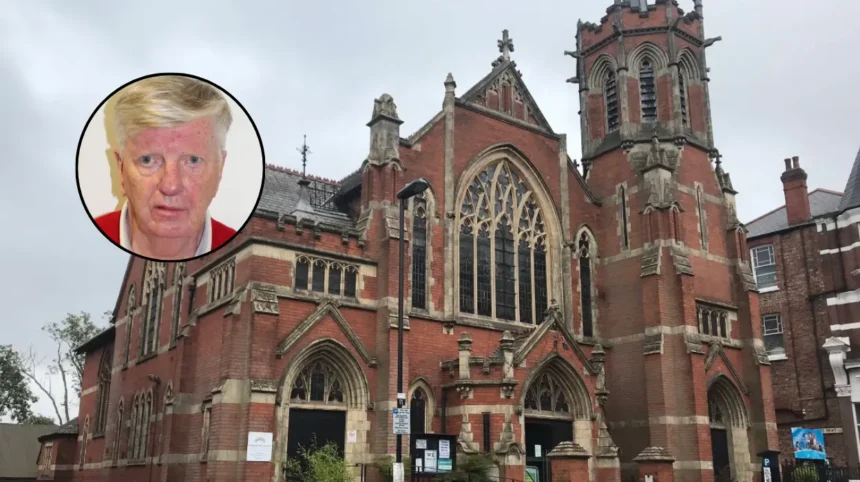
- Wider Geographical Links: Detectives traced Grant’s ties to multiple religious organisations across the United Kingdom, including Muswell Hill Baptist Church in north London, Billingham Baptist Church in Stockton-on-Tees, Ward Green Baptist Church in Barnsley, and Broomknoll Church of Scotland in Airdrie.
- Active Police Appeal: Metropolitan Police detectives have issued a renewed public appeal for potential further victim-survivors to come forward, believing more individuals may have been targeted due to Grant’s extensive role as Moderator for the London Baptist Association.
North London (North London News) September 15, 2026 – A 77-year-old former church deacon and youth leader who used his respected standing in religious communities to groom and sexually abuse vulnerable young men over nearly four decades has been jailed for eight and a half years at Wood Green Crown Court. John Grant, of Colney Hatch Lane, Hornsey, north London, was convicted of 11 non-recent sexual offences targeting four victim-survivors between 1970 and 2008 following an extensive investigation by the Metropolitan Police. Her Honour Judge Emma Deacon KC sentenced Grant to an eight-and-a-half-year prison sentence, noting that he would serve up to half the term in custody before being released on licence.
- Key Points
- Why did the court condemn John Grant’s actions?
- How was the decades-long abuse uncovered by police?
- What were John Grant’s links to churches across the UK?
- How did prosecutors and police describe the predator’s methods?
- What is the background of this particular development?
- What is the prediction for how this development will affect the affected communities and institutions?
Why did the court condemn John Grant’s actions?
As reported by Press Association Crime Correspondent Margaret Davis and Joshua Nichol of The Northern Echo, Judge Emma Deacon KC stated during sentencing that Grant had carried out “a sustained manipulation of two young men” whom he “knew to be vulnerable, and to whom you presented yourself as a benevolent figure, well respected in the community”. The trial revealed that Grant constructed an image of piety and public service across several decades to isolate and abuse young men who had placed their full trust in him through his religious appointments.
The legal proceedings at Wood Green Crown Court detailed how Grant’s offending stretched across multiple jurisdictions and institutional settings. Grant was convicted of three counts of sexual assault, six counts of indecent assault, and two counts of causing another person to engage in non-penetrative sexual activity. Prosecutors outlined how Grant manipulated his access to local youth groups, residential settings, and church leadership structures to target teenagers and young adults.
How was the decades-long abuse uncovered by police?
As reported by Donna Birrell of Premier Christian News, the Metropolitan Police first became aware of Grant’s crimes in 2023 after a victim-survivor came forward to report that he had been repeatedly sexually assaulted over nearly 20 years. The survivor detailed that the abuse began in 1994 after he moved into a shared residential property with Grant, where Grant coerced him into massages that systematically escalated to inappropriate sexual touching.
Following this initial disclosure, detectives from the Metropolitan Police launched wide-ranging inquiries into organisations, youth clubs, and religious bodies associated with Grant over his adult life. This targeted investigative push led to the identification of three additional victim-survivors who gave evidence detailing Grant’s coercive and controlling behavior.
What were John Grant’s links to churches across the UK?
As detailed by reporting in Teesside Live, Grant maintained a prominent presence in numerous Christian institutions and youth organisations across England and Scotland over a 40-year period. In north London, Grant held his most senior role at Muswell Hill Baptist Church, where he served as Moderator for the London Baptist Association. In this capacity, Grant acted as an interim leader and standing moderator for various churches throughout the district and frequently preached at local congregations, granting him widespread access to churchgoers and community members.
Beyond north London, police identified extensive historic links to several other congregations:
- Billingham Baptist Church in Stockton-on-Tees, where he was a senior figure.
- Ward Green Baptist Church in Barnsley, South Yorkshire, where he was an active member between 1973 and 1984.
- Broomknoll Church of Scotland in Airdrie, North Lanarkshire, where he held membership between 1965 and 1970.
How did prosecutors and police describe the predator’s methods?
As reported by Margaret Davis of the Press Association, Dominique Burrell of the Crown Prosecution Service (CPS) stated:
“The way John Grant abused his position as a trusted religious leader to prey on young men in his community was calculated and predatory. He targeted teenagers through youth groups, and befriended vulnerable young men in financial hardship – all to create opportunities so that he could assault them”.
Ms Burrell added that Grant “manufactured these relationships for his own gratification and it would have been clear that none of the victims consented to his sexual touching and inappropriate behaviour”. She praised the survivors for their courage, noting:
“Grant’s offending has had a lasting impact on the victims in this case, and I would like to commend them all for speaking about what happened to them… I hope his conviction sends a clear message that the CPS will pursue justice and prosecute those who commit sexual offences, no matter how long ago the abuse took place”.
Investigating officer Detective Constable Liam Levy of the Metropolitan Police emphasised the significance of the victim-survivors stepping forward. DC Levy stated:
“This is a deeply distressing case involving a number of non-recent sexual offences, and I would like to recognise the courage and bravery shown by the victim-survivors in coming forward and putting their trust in us. This conviction would not have been possible without their accounts that were provided in the early stages of the investigation, which helped identify the scale of Grant’s prolific offending across more than four decades”.
DC Levy further noted:
“The victim-survivors were vulnerable young men who put their trust in Grant through his church association, and it is devastating they could be taken advantage of in this way. As this case demonstrates, the Met is firmly committed to investigating all reports of rape and sexual offences, even if they occurred many years ago. Any victim-survivor that comes forward will be treated with dignity, compassion and sensitivity at every step of the way”.
Metropolitan Police detectives continue to appeal for anyone with information or potential further victims to contact police on 101 quoting reference CAD3277/08JUL26, or to contact Crimestoppers anonymously.
What is the background of this particular development?
The sentencing of John Grant represents a significant milestone in the ongoing scrutiny of historical safeguarding failures within religious institutions across the United Kingdom. Over the past two decades, faith-based organisations—including the Baptist Union of Great Britain, the Church of Scotland, and the Church of England—have faced intense public, statutory, and legal pressure to address non-recent allegations of abuse perpetrated by clergy, deacons, and volunteer youth leaders.
Grant’s positions as a deacon, youth leader, and Moderator for the London Baptist Association granted him considerable autonomy and authority within local churches. Historically, independent and congregational church governance structures often lacked centralized safeguarding oversight, relying heavily on local trust and personal reputation. This structural vulnerability allowed figures like Grant to operate across different regional settings—ranging from Scotland to Yorkshire, Teesside, and London—without triggering coordinated cross-regional background checks or centralized allegations monitoring.
The formal investigation into Grant began amidst enhanced safeguarding protocols adopted by UK police forces, specifically tailored to handle historical allegations. The Metropolitan Police’s dedicated sexual offences units have increasingly focused on institutional grooming patterns, enabling investigators to cross-reference historical records, church directories, and residential history to uncover broader networks of victim-survivors once a primary complaint is made.
What is the prediction for how this development will affect the affected communities and institutions?
The conviction and custodial sentencing of John Grant are expected to have widespread structural, psychological, and institutional ramifications for religious communities, safeguarding authorities, and victim-survivor advocates.
Impact on Faith Communities and Congregations
For the congregations directly linked to Grant—such as Muswell Hill Baptist Church, Billingham Baptist Church, Ward Green Baptist Church, and Broomknoll Church of Scotland—this case will likely trigger deep institutional reflection and demand for immediate internal reviews. Parishioners and church members may experience a profound disruption of trust, particularly given Grant’s prominent public role as an association moderator and guest preacher. Church leadership bodies will likely face heightened calls from their members to audit historic ministry personnel files and re-examine historical complaints or red flags that may have been overlooked during Grant’s active decades.
Impact on Victim-Survivors and Reporting Mechanisms
The public exposure of Grant’s sentence and the active appeal by the Metropolitan Police are highly likely to encourage additional victim-survivors to come forward. In historic abuse cases involving religious authority, the public validation of a conviction often acts as a catalyst for individuals who previously felt isolated, fearful, or disbelieved. Specialized support services and faith-based helplines (such as Premier Lifeline and the 24/7 Rape & Sexual Abuse Support Line) may see an increase in disclosures from individuals affected by Grant or other figures operating in similar environments during the 1970s–2000s.
Policy Reforms and Institutional Safeguarding
Statutorily, this case reinforces the necessity for rigorous, standardized safeguarding standards across autonomous and independent church networks. It is anticipated that regional Baptist associations and inter-denominational bodies will accelerate reforms regarding candidate vetting, mandatory safeguarding training, and clear protocols for reporting allegations directly to civil law enforcement rather than handling them internally. Furthermore, law enforcement agencies are expected to maintain public-facing appeals in similar historical cases, utilizing public disclosures to dismantle long-standing institutional barriers to justice.