Key Points
- Market Scale and Structure: Camden Market, located in Camden Town along Regent’s Canal, hosts over 1,000 independent shops, stalls, bars, and cafés across distinct interconnected hubs, including Camden Lock, Stables Market, and Hawley Wharf.
- Operating Hours: The main market operates daily from 10:00 am to 7:00 pm. Hawley Wharf food halls remain open from 11:30 am to 11:00 pm, while North Yard restaurants trade late into the evening.
- Historical Origins: Established in 1974 as a small Sunday arts and crafts fair with just 16 stalls in the backyard of Dingwalls, the venue evolved into London’s largest continuous street market system.
- Commercial and Cultural Diversity: Features vintage apparel, artisan jewellery, handcrafted goods, alternative fashion, and global street food stalls catering to millions of international and local visitors annually.
- Infrastructure and Access: Accessible via Camden Town and Chalk Farm Underground stations on the Northern Line, with ongoing 2025–2026 pedestrianisation trials on Camden High Street designed to improve public safety and visitor flow.
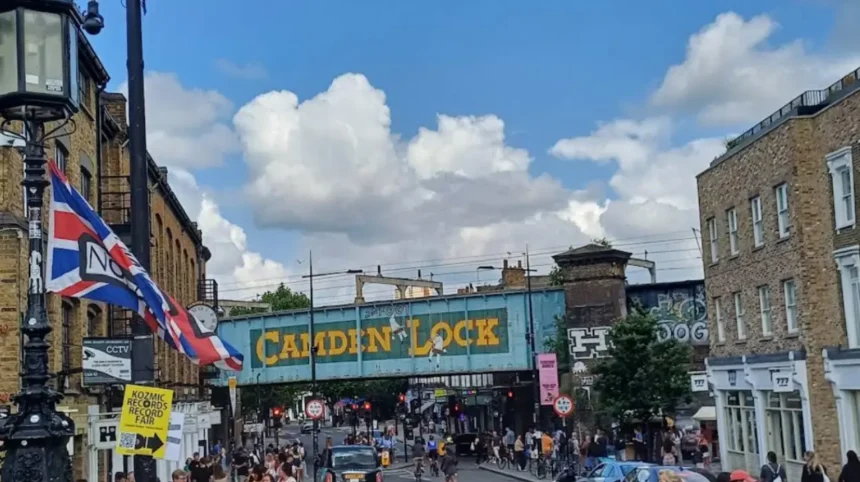
Camden Town (North London News) September 16, 2026 – One of London’s most famous markets is home to more than 1,000 shops, stalls, bars, and cafés – but there is plenty to know before visiting. As reported by local media outlets and confirmed by site management, Camden Market, set beside Regent’s Canal in Camden Town, continues to draw millions of international tourists and domestic patrons annually for its eclectic street food, vintage clothing, independent shops, and alternative fashion scene. The market complex is divided into primary distinct areas – including Camden Lock, Stables Market, and Hawley Wharf – each offering a unique shopping, dining, and cultural experience along the historic canal bank.
- Key Points
- What Are the Main Opening Times and Hours for Camden Market?
- What Types of Stalls, Vintage Shops, and Food Outlets Operate in the Market?
- How Do Visitors Reach Camden Market via Public Transport?
- What Is the Historical Background of the Market Complex?
- What Is the Future Outlook for Camden Market and the Surrounding Area?
What Are the Main Opening Times and Hours for Camden Market?
As detailed by site management and published via local operational releases, the central Camden Market site operates seven days a week throughout the year, closing only on Christmas Day. Standard core trading hours run from 10:00 am to 7:00 pm daily. Because individual vendors function as independent micro-businesses, retail stall hours can fluctuate, with most traders fully operational between 10:00 am and 6:00 pm.
The broader venue features staggered schedule zones for evening entertainment and dining:
- Camden Lock and Stables Retail Stalls: Open daily from 10:00 am to 6:00 pm or 7:00 pm.
- Hawley Wharf Waterside Dining & Food Halls: Open daily from 11:30 am to 11:00 pm.
- North Yard Bars and Dining: Trade continuously from midday into late evening hours.
Visitors seeking to avoid peak congestion around Camden Town station are advised by tourism bodies to attend during weekday mornings. Average visit durations range from two to three hours for general browsing, though visitors frequently extend their stays across the wider borough.
What Types of Stalls, Vintage Shops, and Food Outlets Operate in the Market?
As documented in comprehensive commercial surveys, the three primary market divisions offer specialized retail and culinary sectors:
1. Camden Lock Market
Positioned immediately adjacent to the Regent’s Canal, Camden Lock forms the original core of the site. It predominantly hosts hand-crafted goods, fine art prints, handmade jewellery, bespoke leather items, and independent designer apparel. It also features street food kiosks offering international cuisines ranging from Indian fusion to artisan bakery goods.
2. Stables Market
Constructed within converted grade-II listed 19th-century railway stables and horse hospitals, the Stables Market contains hundreds of permanent shopfronts. The area is globally recognised for vintage clothing traders, antique dealers, gothic and punk subculture fashion houses, rare vinyl record stockists, and sustainable alternative goods.
3. Hawley Wharf
The newest multi-level canal-side development integrates modern retail units, indoor play and entertainment venues, and extensive multi-national food halls. Hawley Wharf focuses heavily on family-friendly experiences, craft food traders, organic producers, and lifestyle brands.
How Do Visitors Reach Camden Market via Public Transport?
As reported by Transport for London (TfL), Camden Market is served primarily by the London Underground Northern Line. Camden Town station is located a short four-minute walk south of the market entrance. To alleviate heavy weekend foot traffic at Camden Town station, passengers are frequently redirected to Chalk Farm station, located a five-minute walk north along Chalk Farm Road.
Additional access routes include London Overground services arriving at Camden Road station (a six-minute walk to the east) and multiple central TfL bus routes—including the 24, 27, 31, and 168—which stop directly along Camden High Street and Chalk Farm Road.
What Is the Historical Background of the Market Complex?
Before establishing its reputation as a global retail destination, Camden Town functioned as an industrial transport hub focused on rail freight, canal logistics, and gin distillation throughout the 19th and early 20th centuries. The decline of industrial activities along Regent’s Canal during the mid-20th century left numerous Victorian warehouses, stables, and yards derelict.
The transformation commenced in March 1974 when co-founders Dr John White and Eric Reynolds established a small temporary arts and crafts market in the backyard of the former Dingwalls timber yard. Initially comprising just 16 individual stalls operating exclusively on Sundays, the market gained rapid popularity among local artisans, musicians, and youth subcultures. By the late 1970s and 1980s, trading expanded across all seven days of the week, absorbing adjacent railway land and historic stable blocks to create the multi-zone retail complex operating today.
What Is the Future Outlook for Camden Market and the Surrounding Area?
The ongoing operational developments at Camden Market reflect wider urban regeneration initiatives across Camden Town. Strategic planning measures launched across 2025 and 2026—including extended pedestrianisation trials along segments of Camden High Street—aim to enhance pedestrian movement, reduce vehicle emissions, and expand outdoor street culture.
Potential Impact on Stakeholders and Key Audiences:
- Independent Retailers and Food Traders: Pedestrianisation measures and extended operational hours at Hawley Wharf provide higher footfall and longer trading windows, helping stallholders capture evening economy revenue. However, rising commercial rents and competition from commercial food halls continue to put pressure on traditional micro-vendors.
- Local Residents and Community Groups: Increased tourist traffic and late-night venue operations place ongoing demands on local infrastructure, refuse management, and residential noise controls, balancing economic benefits against urban livability concerns.
- Tourists and Regional Visitors: Enhanced public realm spaces, clearer zone divisions, and safer walking routes between Camden Town station and Hawley Wharf improve accessibility, offering a cleaner, more navigable market environment.