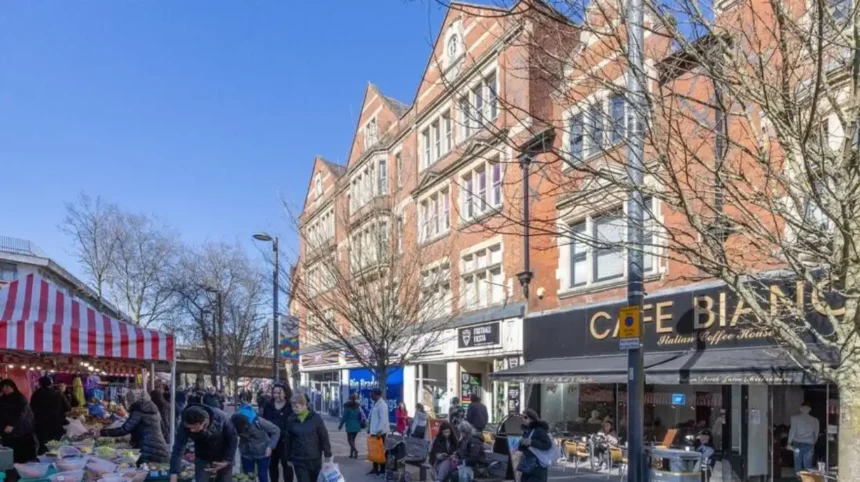
Barnet is one of North London’s largest boroughs and contains a wide range of neighbourhoods, town centres, conservation areas, parks, cultural venues and historic streets. For a first visit, the most useful areas are those combining straightforward transport with recognisable attractions and walkable local centres.
- Which Barnet neighbourhood is best for a first-time visitor?
- What makes Chipping Barnet a good first-stop neighbourhood?
- Why should visitors consider Golders Green for a first Barnet visit?
- Is Hampstead Garden Suburb worth visiting from Barnet?
- What can visitors see around Finchley Central?
- What makes Hendon a useful neighbourhood for visitors?
- Is East Finchley a good area for first-time visitors?
- What can visitors experience in Mill Hill?
- Which Barnet neighbourhoods are easiest to combine in one day?
- Which Barnet neighbourhoods are best for history and architecture?
- Which Barnet neighbourhoods are best for green spaces?
- How should visitors choose a Barnet neighbourhood based on their interests?
- What is the most practical Barnet itinerary for a first visit?
- What should first-time visitors know about travelling around Barnet?
- How can visitors make the most of a first trip to Barnet?
The borough includes established visitor areas such as Chipping Barnet, Golders Green, Hampstead Garden Suburb, Finchley, Hendon and Mill Hill. Barnet Council identifies seven main town centres, including Chipping Barnet, Edgware, Finchley Central, Golders Green and North Finchley, alongside district centres such as East Finchley, Hendon Central and Mill Hill.
The Northern line provides an important transport spine through several Barnet neighbourhoods. Its stations include East Finchley, Finchley Central, West Finchley, Woodside Park, Totteridge & Whetstone, High Barnet, Golders Green, Brent Cross, Hendon Central, Colindale, Burnt Oak and Edgware, as well as Mill Hill East on its separate branch.
This makes Barnet particularly suitable for visitors who want to combine London sightseeing with a more local North London experience.
Which Barnet neighbourhood is best for a first-time visitor?
Chipping Barnet is the strongest starting point for visitors focused on Barnet’s history, traditional town-centre atmosphere and local identity. Golders Green suits visitors prioritising transport, food and access to southern Barnet, while Finchley and Hendon provide practical bases with varied attractions.
Chipping Barnet, also known as High Barnet, has the clearest connection with the borough’s historic identity. Barnet Council describes it as a historic town centre on the edge of London. Barnet Market dates from 1199 and continues to operate in the modern town centre.
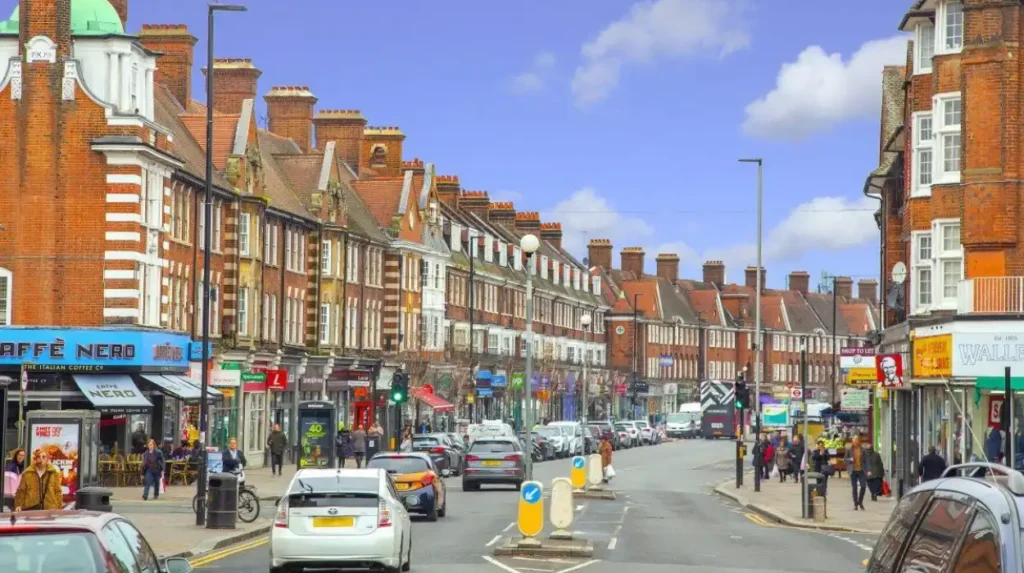
Golders Green provides a different experience. Its town centre combines shops, restaurants, transport connections and access towards Hampstead Garden Suburb and Hampstead Heath. The Golders Green conservation area includes the town centre and its railway and bus station.
Finchley is useful for visitors who want a central position within northern Barnet. Finchley Central has a Northern line station and provides connections towards High Barnet and Mill Hill East. North Finchley adds arts, entertainment, cafés and shopping around Tally Ho Corner.
Hendon works well for visitors interested in aviation history, shopping and transport. The Royal Air Force Museum London is one of the borough’s major visitor attractions and gives Hendon a strong cultural focus.
Mill Hill offers a quieter suburban experience with open spaces and connections to the Northern line through Mill Hill East.
What makes Chipping Barnet a good first-stop neighbourhood?
Chipping Barnet combines a historic market centre, independent shops, restaurants, cafés and heritage buildings within a compact area. Barnet Market dates from 1199, making the neighbourhood especially relevant for visitors who want to understand Barnet’s historic identity.
Chipping Barnet is the traditional historic centre of Barnet. The name “Chipping” refers to a market, and Barnet Market has operated since 1199. The modern town centre includes the market, The Spires shopping centre, independent businesses, restaurants, cafés and bars.
The High Street provides a useful starting point for exploring the area on foot. Visitors can combine shopping and food with historic buildings and nearby religious heritage.
The Parish Church of St John the Baptist is one of the most important historic buildings in Chipping Barnet. Historic England lists it at Grade I. The church stands close to the historic market area and provides a direct connection with the town’s medieval development.
The neighbourhood also connects with the wider history of the Battle of Barnet in 1471. The battle formed part of the Wars of the Roses and took place in the wider Barnet area.
As you explore the modern town centre, you are crossing land with a deep heritage. Read about the full [Insert Anchor Text for Barnet History Article Here] to understand its origins.
Chipping Barnet is also practical for visitors arriving by Underground. High Barnet station is on the Northern line. From the station, visitors can travel south towards central London or explore other parts of northern Barnet.
The area suits visitors who prefer a traditional town centre rather than a purely residential neighbourhood.
Why should visitors consider Golders Green for a first Barnet visit?
Golders Green is particularly useful for first-time visitors who value transport, food, shopping and access to nearby green spaces. Its Northern line station connects it with central London, while Hampstead Garden Suburb and Hampstead Heath are accessible from the surrounding area.
Golders Green occupies the southern part of Barnet and sits close to Hampstead Garden Suburb. Barnet Council identifies Golders Green as one of the borough’s main town centres.
The local centre developed around Finchley Road, Golders Green Road and North End Road. These roads create a busy commercial hub containing shops, restaurants, cafés and services.
Transport is one of Golders Green’s main visitor advantages. Golders Green Underground station sits on the Northern line. The route connects the neighbourhood with stations including Hampstead, Camden Town, King’s Cross St Pancras and central London destinations.
Golders Green also provides access to several significant green and heritage locations. Hampstead Garden Suburb lies immediately nearby, while Hampstead Heath is accessible to the south.
The Golders Green conservation area has a defined architectural and townscape character. Barnet Council states that the conservation area includes the town centre and railway and bus station. The area contains purpose-built commercial parades with residential accommodation above.
Food is another important part of the neighbourhood’s visitor appeal. The commercial centre contains a broad range of restaurants and cafés, giving visitors options for breakfast, lunch, coffee and evening meals.
Golders Green therefore works particularly well for a first visit that combines sightseeing with everyday North London life.
Is Hampstead Garden Suburb worth visiting from Barnet?
Hampstead Garden Suburb is worth including for visitors interested in architecture, planned communities, gardens, open space and conservation. Developed between 1907 and 1938, it contains distinctive residential streets, Central Square and substantial areas of publicly significant landscape.
Hampstead Garden Suburb is one of Barnet’s best-known planned residential areas. Barnet Council records that development took place between 1907 and 1938 on a greenfield site.
The area was planned around existing landscape features. Its design includes residential streets, open spaces and community facilities.
Central Square is an important architectural focus. The wider conservation area also includes several distinct character areas, including the Artisans’ Quarter, Temple Fortune Lane, Meadway and the Heath Extension.
Barnet Council records the total Hampstead Garden Suburb area at 1,009 acres, including roughly 136 acres of open space.
This combination of architecture and landscape gives visitors a different experience from the commercial centres of Chipping Barnet or Golders Green.
The neighbourhood also connects naturally with Hampstead Heath and the Heath Extension. Hampstead Heath is a major London open space with grassland, ancient woodland, sports facilities, ponds and viewpoints.
Visitors interested in architectural history should allow time to walk rather than treating Hampstead Garden Suburb as a single attraction. Its character is distributed across streets, squares, houses, gardens and community buildings.
The area is primarily residential, so visitors should treat it as a living neighbourhood rather than a conventional tourist attraction. Respect for residential privacy is important when walking through the streets.
What can visitors see around Finchley Central?
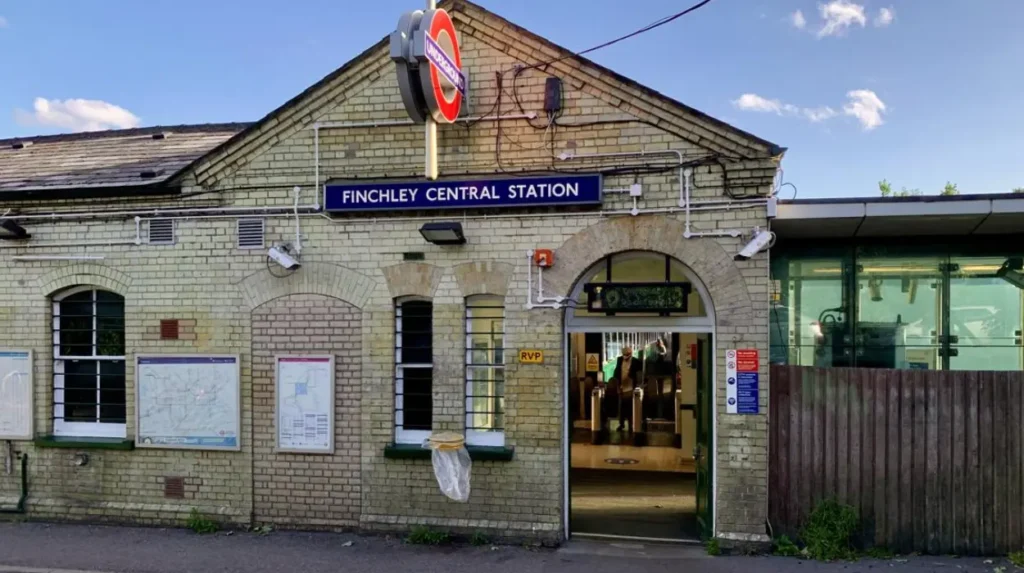
Finchley Central provides a practical base for exploring central Barnet, with Northern line access, local shops, restaurants and nearby cultural attractions. Its position between southern and northern Finchley makes it useful for visitors planning several neighbourhood stops during one day.
Finchley Central is one of Barnet’s main town centres. Its location on the Northern line provides direct connections along the High Barnet branch.
Transport for London lists Finchley Central as a Northern line station with services towards High Barnet and Mill Hill East and south towards central London and the southern branches.
The neighbourhood is primarily useful as a transport and local-services hub. Visitors can use the station to move between Golders Green, East Finchley, High Barnet, Mill Hill East and central London.
Nearby Finchley Church End contains historic buildings and a defined conservation area. The wider Finchley area also provides access to parks, independent businesses and residential streets.
Finchley Central is suitable for visitors who want flexibility rather than a single concentrated tourist attraction.
North Finchley extends the visitor experience further north. Tally Ho Corner is home to artsdepot, a major multi-art-form cultural venue presenting theatre, dance, music, comedy, circus, visual arts and family programming.
artsdepot is located at 5 Nether Street and sits between West Finchley, Finchley Central and Woodside Park Underground stations. Its public areas include a café and family facilities.
This makes Finchley particularly useful for visitors who want to combine local exploration with an organised cultural activity.
What makes Hendon a useful neighbourhood for visitors?
Hendon is a strong choice for visitors interested in aviation, museums, shopping and practical transport connections. Its major attraction is the Royal Air Force Museum London, while Hendon Central provides Northern line access and connects the area with other Barnet neighbourhoods.
Hendon has a distinct identity within Barnet. The neighbourhood includes residential districts, commercial areas, historic sites and major visitor attractions.
The Royal Air Force Museum London is the most significant visitor attraction in the area. It presents the history of the Royal Air Force through aircraft, collections and exhibitions.
The museum gives visitors a focused reason to travel to Hendon. It also creates an itinerary that differs from the architectural and market-based experiences available in Chipping Barnet and Hampstead Garden Suburb.
Hendon Central Underground station is on the Northern line. It provides a practical connection to Golders Green, Brent Cross, Colindale and central London.
The Hendon area also contains the Hendon The Burroughs conservation area. Barnet Council identifies it among the borough’s designated conservation areas.
Visitors interested in local history can therefore combine the museum with a wider exploration of Hendon’s streets and historic environment.
Hendon is particularly suitable for travellers who want one substantial indoor attraction during a Barnet day trip.
Is East Finchley a good area for first-time visitors?
East Finchley suits visitors who want a quieter residential setting with access to parks, independent businesses and the Northern line. Its position between Hampstead and central Barnet makes it useful for combining local exploration with nearby attractions.
East Finchley is one of Barnet’s district town centres. It sits on the Northern line between Highgate and Finchley Central.
The station provides an important link for visitors travelling between central London and northern Barnet. The neighbourhood also offers a more residential atmosphere than the larger commercial centres.
East Finchley connects with the wider Hampstead Garden Suburb area and nearby green spaces. Visitors can use it as part of a walking itinerary rather than treating the town centre as a single attraction.
The area is also close to the northern side of Hampstead Heath and its extensive network of paths and open spaces.
For visitors interested in local life, East Finchley provides cafés, shops and everyday services without the scale of a major central London shopping district.
Its main strength is location. Travellers can move between East Finchley, Hampstead, Golders Green and Finchley Central using the Northern line and local buses.
What can visitors experience in Mill Hill?
Mill Hill offers a greener and quieter side of Barnet, with open spaces, historic character and Northern line access through Mill Hill East. It suits visitors who prefer suburban landscapes, walking and local heritage to busy commercial centres.
Mill Hill is one of Barnet’s district town centres and contains a mixture of historic streets, residential areas, green spaces and local businesses.
Mill Hill East Underground station provides Northern line access. Transport for London identifies the station as the terminus of the Mill Hill East branch, with services connecting towards Finchley Central and the wider Northern line network.
The neighbourhood also contains Mill Hill conservation area, one of Barnet’s designated conservation areas.
Visitors interested in landscape and historic architecture can explore parts of the neighbourhood on foot. Mill Hill has a noticeably greener setting than the borough’s larger commercial centres.
Mill Hill is therefore more suitable for visitors with time for slower exploration. It works particularly well as part of a wider North London itinerary rather than as a short stop between major central London attractions.
Which Barnet neighbourhoods are easiest to combine in one day?
Golders Green, Hampstead Garden Suburb, East Finchley and Finchley Central form a practical southern and central Barnet itinerary. Chipping Barnet works as a separate historic stop, while Hendon and Mill Hill suit visitors pursuing specific museums, heritage sites or quieter landscapes.
The Northern line makes several Barnet neighbourhoods easy to connect.
A visitor can start at Golders Green and explore the commercial centre before continuing towards Hampstead Garden Suburb. The itinerary can then move towards East Finchley and Finchley Central.
Another route begins at Finchley Central and continues north towards High Barnet. This route works well for visitors focused on Chipping Barnet and Barnet Market.
Hendon provides a different itinerary because the Royal Air Force Museum London creates a specific destination. Visitors can dedicate several hours to the museum before exploring nearby Hendon.
Mill Hill East is also distinct because it sits on a short Northern line branch. It suits visitors who want a quieter experience and have additional time.
Transport planning is important because Barnet covers a large geographical area. A first-time visitor should group nearby neighbourhoods rather than attempting to cover every part of the borough in one day.
Which Barnet neighbourhoods are best for history and architecture?
Chipping Barnet is the strongest historic focus, while Hampstead Garden Suburb provides planned twentieth-century architecture and Golders Green offers distinctive suburban townscape. Hendon, Finchley and Mill Hill also contain conservation areas and listed buildings.
Barnet has a substantial historic environment. Historic England records listed buildings and archaeological heritage across the borough, including sites connected with medieval Barnet and later suburban development.
Chipping Barnet provides the clearest historic town-centre experience. Barnet Market dates from 1199, while the Parish Church of St John the Baptist is a Grade I listed building.
Hampstead Garden Suburb represents a different period. Its planned development between 1907 and 1938 created a distinctive combination of housing, landscaping and communal spaces.
Golders Green contains a designated conservation area centred on its town centre. The area demonstrates the development of North London suburban commercial streets and transport infrastructure.
Mill Hill and Hendon also contain designated conservation areas. These areas protect locations recognised for special architectural or historic interest.
Barnet Council states that conservation areas are identified because of their special architectural or historic interest. Special planning controls apply within these areas.
Visitors should therefore distinguish between a historic attraction and a conservation area. A conservation area is a wider protected townscape rather than a single building.
Which Barnet neighbourhoods are best for green spaces?
Hampstead Garden Suburb, Golders Green, Mill Hill and East Finchley provide strong access to green spaces. Hampstead Heath is the major regional attraction, while Barnet’s suburban neighbourhoods contain smaller parks, landscaped areas, woodland and open spaces.
Hampstead Heath is the largest and most significant green attraction associated with southern Barnet. Visit London describes the heath as a major London green space containing grassland, ancient woodland, sports facilities, swimming ponds and viewpoints.
The Heath also includes Parliament Hill and Golders Hill Park. These spaces create opportunities for walking, sightseeing and outdoor recreation.
Hampstead Garden Suburb provides another important landscape setting. Barnet Council records approximately 136 acres of open space within the wider 1,009-acre conservation area.
Mill Hill provides a quieter alternative for visitors who want suburban green space and local walking routes.
East Finchley also works as a base for accessing the northern parts of Hampstead Heath and surrounding green areas.
For a first visit, green-space choices therefore depend on the type of experience required. Hampstead Heath provides major London-scale landscapes, while Mill Hill and Hampstead Garden Suburb offer more residential and neighbourhood-focused environments.
How should visitors choose a Barnet neighbourhood based on their interests?
Visitors should match the neighbourhood with their main activity. Choose Chipping Barnet for history and markets, Golders Green for food and transport, Hampstead Garden Suburb for architecture, Hendon for aviation, Finchley for culture and Mill Hill for quieter green surroundings.
Visitors focused on history should begin with Chipping Barnet. The market, historic high street and listed church provide concentrated heritage.
Visitors focused on food and local shopping should consider Golders Green. Its town centre contains a broad commercial mix and strong transport connections.
Visitors focused on architecture should explore Hampstead Garden Suburb. Central Square, residential streets and planned open spaces form the core of its architectural interest.
Visitors focused on aviation and museums should choose Hendon because of the Royal Air Force Museum London.
Visitors focused on arts and entertainment should consider Finchley, particularly North Finchley and artsdepot.
Visitors focused on green space and quieter walking should consider Mill Hill or the Hampstead Garden Suburb area.
Digital nomads and business travellers can also use these neighbourhoods differently. Golders Green and Finchley provide cafés, transport links and commercial centres suited to combining work with local exploration. artsdepot also provides public areas and a café where visitors can work during opening hours.
What is the most practical Barnet itinerary for a first visit?
A practical first-day itinerary combines one historic centre with one green or cultural destination. Chipping Barnet can provide the historic element, while Golders Green, Hampstead Garden Suburb, Hendon or Finchley can provide food, culture, architecture or outdoor space.
Start with the neighbourhood that matches the main purpose of the visit.
For a heritage-focused day, begin in Chipping Barnet. Explore Barnet Market, the High Street and the historic church before continuing through the surrounding streets.
For a food-and-green-space day, start at Golders Green. Explore the town centre, then continue towards Hampstead Garden Suburb and the Heath.
For an architecture-focused day, spend longer in Hampstead Garden Suburb. Focus on Central Square and the surrounding planned streets before continuing towards the Heath Extension.
For a museum-focused day, begin at the Royal Air Force Museum London in Hendon. Allow enough time for the museum before exploring the local area.
For an arts-focused itinerary, visit Finchley and North Finchley. artsdepot provides a dedicated cultural venue with theatre, dance, music, comedy, exhibitions and family programming.
The most efficient approach is to avoid crossing the whole borough repeatedly. Barnet’s size makes geographic grouping more useful than trying to visit every neighbourhood.
Explore More Area Guide
What Is Golders Green Known For? Culture, History & Attractions
What Is Edgware Known For? History, Shops and Transport
What should first-time visitors know about travelling around Barnet?
Barnet is best explored through a combination of Underground services, buses and walking. The Northern line links many major neighbourhoods, while local buses connect town centres and attractions beyond walking distance from stations. Journey planning is important for multi-area itineraries.
The Northern line is the main Underground route for many Barnet visitors. Stations include Golders Green, Brent Cross, Hendon Central, Colindale, Burnt Oak, Edgware, East Finchley, Finchley Central, West Finchley, Woodside Park, Totteridge & Whetstone and High Barnet.
Mill Hill East has a separate Northern line branch connection from Finchley Central.
This network allows visitors to create north-south itineraries without relying on taxis or private cars.
Walking remains important because attractions are not always directly beside Underground stations. artsdepot, for example, advises visitors that it is between West Finchley, Finchley Central and Woodside Park stations and provides bus and walking options from Finchley Central.
Visitors should check current Transport for London service information before travelling. First and last train times, accessibility arrangements and temporary service changes vary.
Accessibility also differs between locations. Visitors who require step-free access should check the current TfL accessibility information for the station and route they plan to use.
How can visitors make the most of a first trip to Barnet?
The most effective first visit combines a clear primary interest with two nearby neighbourhoods. Chipping Barnet suits heritage, Golders Green suits food and transport, Hampstead Garden Suburb suits architecture, Hendon suits museums and Finchley suits arts and local culture.
Barnet is not a single tourist district. It is a large London borough containing distinct town centres and neighbourhoods.
That structure is central to planning a successful visit.
Visitors looking for historic identity should prioritise Chipping Barnet. Its market history gives the area a direct connection with Barnet’s medieval development.
Visitors looking for a convenient southern base should consider Golders Green. Its commercial centre and Northern line station make it a useful starting point.
Visitors interested in architectural history should include Hampstead Garden Suburb.
Visitors seeking a major museum should travel to Hendon.
Visitors looking for arts and entertainment should explore Finchley and North Finchley.
Visitors wanting quieter landscapes should consider Mill Hill and the wider green areas around Hampstead Garden Suburb and Hampstead Heath.
The strongest first-visit itinerary is therefore determined by purpose rather than by attempting to see every neighbourhood. Barnet rewards visitors who choose a focused route and allow enough time to explore each area properly.
Barnet’s combination of historic market heritage, conservation areas, transport links, cultural venues, museums, green spaces and local town centres gives first-time visitors several distinct ways to experience North London. Its neighbourhoods provide different perspectives on the borough, from medieval market history in Chipping Barnet to twentieth-century planned development in Hampstead Garden Suburb and contemporary cultural activity in Finchley.
Which Barnet neighbourhood is best for a first visit?
Chipping Barnet is the main choice for visitors interested in Barnet’s history, traditional market and historic town centre. Golders Green suits visitors seeking food, shopping and transport connections. Finchley, Hendon and Mill Hill provide different cultural, museum and green-space experiences.