Key Points
- Haringey Council leaders from the Haringey Green Party are pressuring Tottenham Hotspur to surrender 0.1 per cent of their turnover (approximately £565,000 annually) for a community investment fund.
- A club spokesperson for Tottenham Hotspur hit back at claims that Spurs defaulted on planning obligations, branding the accusation as “wholly inaccurate”.
- Local politicians claim the previous Labour-run administration permitted the Premier League club to “default on its planning obligations,” including local social housing and employment initiatives.
- Chief Executive Vinai Venkatesham has held constructive initial talks with local authority leaders, with additional formal discussions scheduled.
- Spurs point to over £1.2 billion in local infrastructure investments, affordable housing, a primary school, and heritage restoration projects already delivered in the borough.
- Non-football events at the £1 billion stadium generated £32.5 million during the 2024-25 period, while annual major event licenses have expanded from 16 to 30.
- The proposed fund, named the “popular assets commission,” would be co-administered by local residents and Haringey Council to directly benefit Northumberland Park.
Tottenham Hotspur (North London News) September 24, 2026 – Tottenham Hotspur have mounted a firm defense against claims made by local authority political leaders that the club defaulted on community planning commitments linked to their stadium, while Chief Executive Officer Vinai Venkatesham prepares for further high-level negotiations regarding local revenue sharing.
- Key Points
- Why are Tottenham Hotspur facing demands to share local stadium revenue?
- How has Tottenham Hotspur responded to allegations over planning obligations?
- What is the economic scale of Tottenham Hotspur Stadium’s commercial operations?
- Background of the particular development
- Prediction: How this development can affect the local community and football club operations
Why are Tottenham Hotspur facing demands to share local stadium revenue?
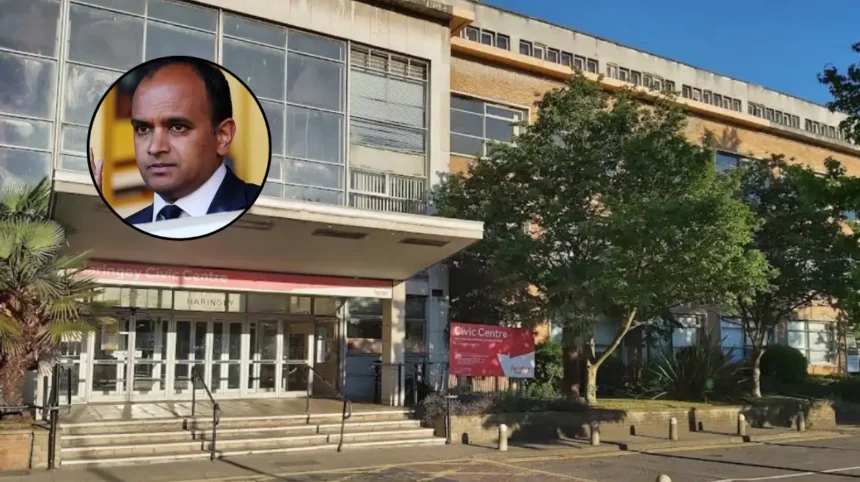
As reported by sports business correspondent Callum Williams of City A.M., Tottenham Hotspur are under growing political pressure from Haringey Council’s leading Green Party administration to allocate a fixed annual percentage of their turnover directly to residents residing near the venue.
The council leadership proposes that the club surrender approximately 0.1 per cent of its annual turnover. Based on the Premier League club’s most recent documented financial statements, this proposed mechanism would equate to a yearly contribution of roughly £565,000.
The designated funds would be placed into a newly conceptualised “popular assets commission”—a localized community investment fund structured to be co-administered jointly by neighborhood residents and municipal representatives. The political push specifically addresses conditions in Northumberland Park, the immediate ward housing the £1 billion arena, which remains listed among the most economically deprived areas in the country.
According to statement disclosures provided by a Haringey Green Party spokesperson to City A.M., local representatives argued that
“The record-breaking events it hosts seem to be a good deal for Spurs, but a bad deal for Tottenham”.
The spokesperson further asserted that
“The previous Labour-run Haringey Council allowed the club to default on its planning obligations, including social housing and employment support, all while residents adapt to growing numbers of non-football events, generating tens of millions in revenue”.
How has Tottenham Hotspur responded to allegations over planning obligations?
In a official statement released to address the allegations, a spokesperson for Tottenham Hotspur firmly rejected claims of unfulfilled commitments.
“Any suggestion that Tottenham Hotspur has defaulted on its planning obligations, or was allowed by Haringey Council to do so, is wholly inaccurate,”
the club spokesperson stated.
“All relevant planning obligations were formally agreed with Haringey Council and the club has complied with them”.
Outlining the club’s extensive contributions to the immediate physical and social landscape, the club representative added:
“The club has invested more than £1.2bn in the stadium and surrounding area, delivering new affordable homes; a new primary school; restoring heritage buildings; and investing in local infrastructure”.
The spokesperson acknowledged the economic realities of the immediate surroundings, noting:
“We recognise the challenges facing Northumberland Park, but it is important that any discussion about the club’s contribution to the area is based on an accurate account of the planning history and the significant contribution the club already makes”.
Addressing current governance and future negotiations, City A.M. confirmed that Tottenham Chief Executive Officer Vinai Venkatesham has held initial discussions with representatives of the Haringey Green Party. Sources close to both sides indicated that talks are being conducted in good faith, with a follow-up meeting scheduled before the end of the month to formally assess the 0.1 per cent revenue proposal.
What is the economic scale of Tottenham Hotspur Stadium’s commercial operations?
The venue—which cost an estimated £1 billion to construct and opened its doors over seven years ago—has established the North London outfit among the global elite in terms of sports commercialization and arena utilization.
The club currently ranks within the top 10 globally for football club revenue generation, with the state-of-the-art arena serving as the primary anchor for this financial growth. Over the period since transitioning from their former home at White Hart Lane, Tottenham’s commercial revenue streams—including branding, retail, and general matchday operations—have increased by over 300 per cent.
A major factor behind this surge in non-matchday yield is the expansion of non-football events. During the 2024-25 financial period, major music concerts starring international artists such as Beyoncé, combined with major international sporting spectacles like the National Football League (NFL), yielded £32.5 million in revenue from non-football events alone. In 2024, municipal authorities formally granted the club an updated operating license, raising the permitted limit of major non-football events at the 62,850-capacity stadium from 16 to 30 annually.
Conversely, local figures highlight the contrast between stadium revenues and neighborhood prosperity. Social research metrics compiled by charitable research body Place Matters indicate that the child poverty rate in Northumberland Park sits at 27 per cent, with local benefit claimant rates remaining among the highest in Greater London.
In terms of quantifiable economic contributions, an independent analysis produced by financial services firm EY in 2023 estimated that Tottenham Hotspur and their stadium generated £296 million in Gross Value Added (GVA) to the Haringey economy within a single financial year, while directly supporting approximately 2,800 full-time jobs. Furthermore, the Tottenham Hotspur Foundation delivered £3.25 million across community health, employment, and youth programs during the past year, supported by £500,000 in direct cash contributions from the club.
Background of the particular development
The friction surrounding Tottenham Hotspur Stadium’s local obligations traces back to early planning agreements made over a decade ago. In 2012, prior to physical construction commencing on the venue, the club was formally released by the local authority from approximately £16 million worth of Section 106 community contributions to ensure the financial viability of the stadium build.
Over the subsequent decade, the political dynamic within Haringey Council shifted substantially. The Green Party gained substantial council seats and ultimately took control of the local authority, replacing the long-standing Labour administration. Armed with a local political mandate, the council’s current leadership revisited the early planning dispensations, arguing that while the club’s financial profile expanded dramatically, neighborhood infrastructure did not experience a commensurate improvement.
When former Arsenal executive Vinai Venkatesham assumed executive management duties at Spurs, he inherited both a complete restructuring of the club’s administrative model following Daniel Levy’s executive departure and an evolving political relationship with the local council. With the recent license expansion permitting up to 30 major non-football events each year, local resident associations and council representatives intensified calls for a modernized agreement that guarantees localized revenue sharing alongside the physical disruption caused by major events.
Prediction: How this development can affect the local community and football club operations
Should the proposed 0.1 per cent revenue-sharing model be formalized between Vinai Venkatesham and Haringey Council, it will establish a significant regulatory precedent across the English Premier League and global sports venue operations.
For local residents of Northumberland Park and Haringey:
- Direct Financial Injection: Establishing the “popular assets commission” would secure an immediate, dedicated stream of over £500,000 annually, isolated exclusively for neighborhood initiatives, youth facilities, and employment training.
- Greater Local Governance: Giving residents co-administrative rights over the commission’s expenditure will give local taxpayers direct input into how major event disruptions are compensated.
- Mitigation of Event Friction: Increased funding targeted at local infrastructure could alleviate recurring community grievances regarding crowd congestion, road closures, and localized public transport pressures on non-match days.
For Tottenham Hotspur and broader sports stadium operations:
- Financial Impact: A annual commitment of £565,000 represents a manageable percentage of Spurs’ top-line turnover, posing minimal risk to their overall compliance with profitability and sustainability regulations.
- Reputational and Operational Goodwill: Reaching a voluntary consensus will help de-escalate friction between the club’s executive board and municipal authorities, securing political support for future stadium precinct developments and licensing applications.
- Industry Precedent: A formal agreement could prompt host councils across the UK to demand similar turnover-percentage community contributions from other major stadium operators hosting high-yield commercial events.