Key Points
- Major Road Blockage: A traffic collision on the A503 Tollington Road in North London has completely blocked the arterial route, restricting vehicular access and creating widespread traffic delays.
- Severe Bus Disruptions: Multiple London bus services serving the Islington and Haringey corridors face diversions, delays, and shortened routes as a direct result of the carriageway obstruction.
- Traffic Tailbacks to Finsbury Park: Heavy tailbacks and congestion have extended along connected routes, reaching back towards Finsbury Park and the surrounding local road networks.
- Emergency Services On Scene: Metropolitan Police and emergency response teams were dispatched to manage the scene, process collision details, and clear the carriageway for public safety.
- Commuter Delays: Transport authorities are advising commuters and motorists traveling across North London to avoid the area and allow extra travel time.
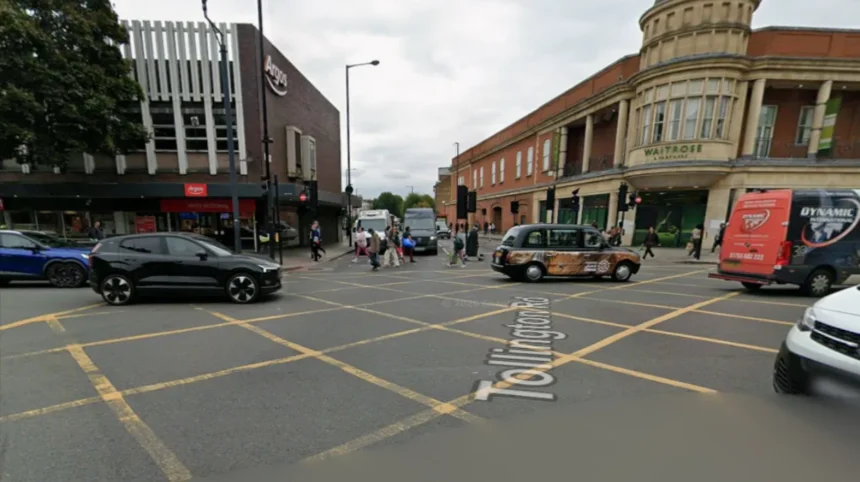
Holloway (North London News) September 25, 2026 – A collision on the A503 Tollington Road has brought traffic to a standstill in North London today, causing extensive bus diversions and severe congestion tailing back to Finsbury Park.
- Key Points
- What Caused the A503 Tollington Road Blockage and Traffic Chaos?
- How are Public Transport and Local Bus Routes Affected by the Incident?
- What Actions Are Emergency Services and Authorities Taking at the Scene?
- Background of the Particular Development After the News
- Prediction: How This Development Can Affect North London Commuters, Local Businesses, and Regional Transport Networks
What Caused the A503 Tollington Road Blockage and Traffic Chaos?
As reported by local traffic monitoring feeds and regional reporting teams, the incident occurred along the busy A503 Tollington Road stretch, restricting movement across a primary east-west corridor in the Borough of Islington. Emergency services responded to the scene following reports of a road traffic collision that left vehicular wreckage blocking active lanes of the carriageway. Metropolitan Police officers established local cordons to facilitate emergency access and protect passing motorists and pedestrians.
The immediate consequence of the road closure was a sharp increase in traffic volume across adjacent thoroughfares. Vehicles traveling towards Holloway and Seven Sisters Road faced rapid gridlock, with queues stretching backwards toward Finsbury Park interchange during peak operational hours.
How are Public Transport and Local Bus Routes Affected by the Incident?
Transport for London (TfL) issued real-time service updates following the obstruction on the A503 Tollington Road, confirming that key public transport corridors have been directly compromised. As detailed by regional news reporters covering London transport updates, multiple bus services operating through Islington and Haringey have been forced onto emergency diversions to bypass the blocked segment.
Bus routes running between Nag’s Head, Holloway Road, and Finsbury Park Station experienced substantial delays. Commuters at local bus stops reported extended waiting times as operators rerouted vehicles via alternative arterial roads, including Isledon Road and Seven Sisters Road, to maintain regional connectivity. Transport managers recommended that passengers check live status updates before departing or consider alternative travel options, such as the London Underground network at Highbury & Islington or Finsbury Park.
What Actions Are Emergency Services and Authorities Taking at the Scene?
Emergency services personnel, including Metropolitan Police traffic officers, arrived at the location to manage collision recovery and ensure public safety. Standard collision investigation procedures were initiated to establish the circumstances surrounding the crash, assess any involved vehicles, and manage casualty treatment if required.
Contractors and recovery teams were tasked with clearing vehicle debris and removing damaged transport from the carriageway to facilitate a prompt reopening of the route. Transport officials maintained active communication with regional traffic management systems to adjust signal timings on surrounding diversion routes, attempting to alleviate the heavy congestion spreading towards Finsbury Park.
Background of the Particular Development After the News
The A503 Tollington Road represents one of North London’s most vital transport links, connecting major commercial hubs across Islington, Holloway, and Finsbury Park. Owing to its high density of traffic, commercial activity, and residential frontage, any temporary road closure or vehicle collision on this arterial route invariably causes immediate knock-on effects across the broader Transport for London road network.
Over recent years, the A503 corridor has faced multiple localized disruptions due to both traffic incidents and infrastructure repairs, highlighting the fragility of urban traffic flow in inner North London. Because key surrounding thoroughfares—such as Holloway Road (A1) and Seven Sisters Road (A503)—operate near maximum capacity during normal operational hours, any sudden diversion quickly overwhelms secondary local roads, resulting in systemic gridlock throughout surrounding postal districts like N7 and N4.
Prediction: How This Development Can Affect North London Commuters, Local Businesses, and Regional Transport Networks
In the immediate short term, the disruption along the A503 Tollington Road is expected to cause ongoing commuter delays across the evening travel period. Passengers relying on local TfL bus services will likely encounter extended journey times, overcrowding on diverted routes, and potential bus cancellations as service schedules recover from daytime delays. Local residents in Holloway and Finsbury Park may also experience increased noise, air pollution, and traffic volume on secondary residential streets as drivers attempt to bypass primary road closures.
For local retail and commercial operators along Tollington Road and around the Nag’s Head shopping district, temporary carriageway blockages can reduce footfall and complicate commercial delivery deliveries. Looking further ahead, recurrent closures along critical North London arteries are likely to increase pressure on Transport for London and local councils to review emergency traffic routing plans, enhance rapid-response clearance protocols, and consider additional infrastructure resilience measures along key east-west transit routes.