Key Points
- Seventeen Suspects Arrested: Police have taken 17 individuals into custody following major coordinated dawn raids across five English counties.
- Massive Multi-Agency Operation: Over 800 police officers executed warrants at 24 residential and commercial properties in London, Essex, Hertfordshire, Cambridgeshire, and Suffolk.
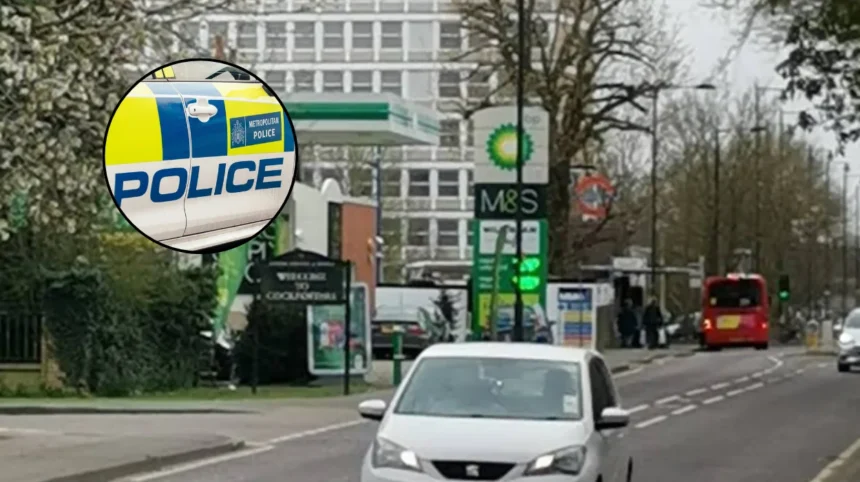
- Police Officer Injured: A Metropolitan Police officer was stabbed in the leg during a raid at an address in Cockfosters, Barnet. He was treated at the scene before being hospitalised with non-life-changing injuries.
- Regulatory and Tax Authorities Involved: The intelligence-led investigation was conducted jointly by Metropolitan Police detectives, HM Revenue and Customs (HMRC), and the Financial Conduct Authority (FCA).
- Significant Financial Enforcement: As part of the wider operation, the Financial Conduct Authority has disrupted seven commercial firms and is actively pursuing an additional 30 entities.
- Extended Police Presence: Forensic searches and operational activities are expected to continue at several search locations over the coming days.
Barnet (North London News) September 29, 2026 – In a major multi-agency operation involving more than 800 law enforcement officers, 17 people have been arrested across London and the Home Counties in connection with an extensive investigation into a suspected high-level organised crime group. The early-morning raids, which targeted 24 properties across five counties, resulted in the injury of a police officer who was stabbed in the leg while executing a search warrant in Barnet. Supported by HM Revenue and Customs (HMRC) and the Financial Conduct Authority (FCA), the coordinated action represents a major crack-down on complex financial crime and street-level criminality.
What Happened During the Coordinated Dawn Raids Across Five Counties?
As reported by law enforcement correspondents at Sky News and Daily Express, the joint enforcement effort was initiated in the early hours of Tuesday morning, involving simultaneous entries into 24 distinct properties located throughout London, Essex, Hertfordshire, Cambridgeshire, and Suffolk. Over 800 officers from the Metropolitan Police Service, working alongside specialist teams from HMRC and the FCA, were deployed to execute search warrants aimed at dismantling the senior tier of an organised crime syndicate.
During the execution of a warrant at a residential address in Cockfosters, within the London Borough of Barnet, an officer participating in the entry was stabbed in the leg. As detailed in operational updates published by local media, the officer received immediate emergency medical assistance at the scene from colleagues and paramedics before being transferred to a nearby hospital. Metropolitan Police representatives subsequently confirmed that the officer’s injuries were assessed as non-life-changing.
Police authorities confirmed that forensic examinations and searches remain ongoing at multiple properties. As reported across major news outlets, local communities can expect a visible police presence at several targeted addresses over the next few days as evidence gathering continues.
What Role Did Financial Regulators and Tax Authorities Play in the Investigation?
As reported by senior crime reporters covering the operation, the arrests were the culmination of months of close inter-agency intelligence sharing between Metropolitan Police detectives, HMRC officers, and FCA investigators. The investigation specifically targeted complex network structures responsible for laundering illicit profits and facilitating large-scale financial offending.
In an official statement released by a spokesperson for the Metropolitan Police, the force underscored the significance of the arrests and the scope of the alleged network:
“These arrests mark a significant point in this investigation. Those arrested are suspected of leading or being involved at a senior level in serious and organised crime and related financial offending. We know the impact of serious and organised crime stretches well beyond those at senior levels of the organisations involved. Lines can often be drawn from the top, all the way to those involved in the criminality that blights communities, including serious violence and exploitation. Investigating these groups is among the most complex work the Met undertakes.”
Complementing the criminal enforcement action, regulatory bodies have executed parallel enforcement measures to neutralise corporate vehicles allegedly linked to the crime group. As reported by Daily Express reporter Luke O’Reilly, a spokesperson for the Financial Conduct Authority highlighted the regulatory enforcement actions and multi-agency cooperation, stating:
“Tackling financial crime requires the type of partnership shown by today’s joint action and the many months of close cooperation leading to it. We’ll continue to work with the police and others to identify and disrupt organised crime groups who abuse our financial system to launder dirty money.”
The Metropolitan Police confirmed that as part of this wider regulatory enforcement, the FCA has already disrupted seven commercial firms and is actively pursuing regulatory or legal interventions against a further 30 businesses linked to the criminal network.
Background of the Development
Serious and organised crime in the United Kingdom represents a persistent threat to economic stability and public safety, prompting law enforcement agencies to pivot towards multi-agency interventions that combine traditional policing with specialized financial intelligence. Organised crime networks frequently operate across regional boundaries, using legitimate corporate structures, money laundering services, and regulatory loopholes to conceal illicit revenues generated through drug trafficking, modern slavery, and fraud.
Over recent years, the UK Home Office and National Crime Agency (NCA) have prioritized “following the money” as a core doctrine of modern policing. By integrating regulatory authorities like the Financial Conduct Authority and tax agencies like HM Revenue and Customs directly into police investigations, law enforcement aims to systematically strip organised crime groups of their financial assets alongside arresting key leaders. Multi-county operations of this magnitude highlight a growing reliance on large-scale, simultaneous enforcement actions designed to disrupt whole criminal networks simultaneously rather than targeting isolated individuals.
Prediction: How This Development Can Affect the Financial Sector and Local Communities
This development is likely to have immediate and long-term implications for two primary audiences: the regulated financial services sector and local suburban communities across the Home Counties.
For the Regulated Financial Services Sector and Businesses:
The direct intervention by the FCA against 37 commercial entities signals an intensified regulatory crackdown on professional enablers and shell businesses used for money laundering. Financial institutions, banks, legal firms, and corporate service providers will face heightened scrutiny regarding their Know Your Customer (KYC) and Anti-Money Laundering (AML) compliance procedures. Regulators are anticipated to issue strict compliance directives, prompting banks to conduct rigorous audits on small-to-medium enterprises operating within high-risk sectors across London and the South East. Business entities found to have lax oversight risk swift regulatory sanctions, frozen accounts, or formal winding-up proceedings.
For Local Communities and Residents:
In the immediate term, residents across London, Essex, Hertfordshire, Cambridgeshire, and Suffolk will observe an elevated police presence as forensic searches and neighborhood reassurance patrols continue. In the longer term, the disruption of senior leadership within this criminal network is expected to stem the flow of secondary crimes—such as local drug distribution, extortion, commercial fraud, and street-level violence—that rely on top-tier funding and logistics. However, local authorities will remain alert to potential power vacuums in peripheral illicit markets that often emerge following major arrests of upper-tier syndicate leaders.