Key Points
- Traffic wardens in Camden, north London, have commenced an eight-week strike demanding an increase in pay and improved working conditions.
- The workers are calling for a pay rise of £2 per hour, an additional seven days of annual leave, and sick pay entitlement from the first day of illness.
- Outsourced employees currently receive 20 days of statutory annual leave while working 42.5 hours per week—4.5 hours more per week than directly employed council staff.
- The traffic wardens are employed by private contractor NSL, a subsidiary of Marston Holdings, which offered a pay increase of £1.05 per hour despite reporting over £11 million in profits after tax last year.
- Striking staff report experiencing routine safety risks, including physical assaults on the job, while operating without parity in pay or benefits compared to direct Camden Council employees.
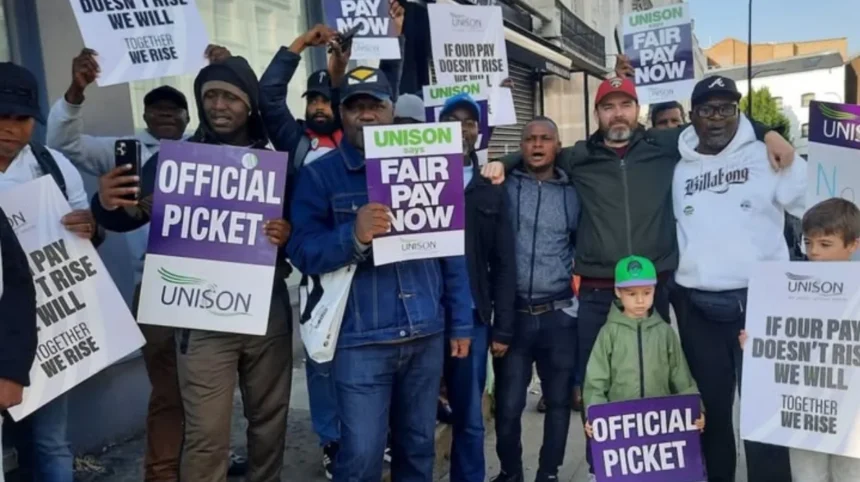
Camden (North London News) September 29, 2026 – Traffic wardens operating across the London Borough of Camden have initiated an eight-week walkout in a dispute regarding remuneration, sick pay, and annual leave allowances. As reported by the news team at Socialist Worker, workers assembled on the picket line near Kentish Town station on the opening day of the strike, chanting slogans including “Low pay? No way,” and “No slave labour,” to highlight their grievances against their employer, private contractor NSL.
- Key Points
- Why Are Camden Traffic Wardens Striking for Eight Weeks?
- What Has NSL Offered to the Striking Traffic Wardens?
- How Have Previous Strikes Influenced the Current Walkout?
- What Operational Hazards Do Outsourced Traffic Wardens Face?
- How Does Rest and Recoverability Impact the Workforce?
- Background of the Camden Traffic Warden Dispute
- Prediction: How Will This Development Affect Camden Residents and Local Businesses?
Why Are Camden Traffic Wardens Striking for Eight Weeks?
The industrial action centers on a series of demands aimed at closing the gap between outsourced wardens and directly employed local government staff. Speaking to Socialist Worker, one striker with 16 years of service in the borough explained the financial and contractual motivations behind the walkout. As reported by the publication, the worker stated:
“We are fighting for a pay rise of £2 an hour. We also want seven extra days of annual leave so that we have the same annual leave that council employees start with.”
The disparity in working hours and leave entitlements forms a primary pillar of the workforce’s complaint. The traffic wardens currently receive 20 days of annual leave per year, which represents the statutory minimum requirement. However, their standard contractual obligations require them to work 42.5 hours per week. According to calculations highlighted by the striking workers, this schedule demands almost a full extra working day each week compared to directly employed Camden Council workers, totaling approximately 50 additional days of work annually.
What Has NSL Offered to the Striking Traffic Wardens?
The employer at the center of the dispute is NSL, an outsourcing firm operating as a subsidiary of Marston Holdings. According to coverage by Socialist Worker, Marston Holdings recorded post-tax profits exceeding £11 million in the previous financial year. In response to union representations, NSL put forward a proposed wage increase of £1.05 per hour.
This offer was rejected by the workforce as inadequate. Commenting on the financial proposal, the 16-year veteran striker told Socialist Worker:
“It’s not enough. It’s not even in line with inflation. Everything is going up from mortgages to bills.”
In addition to base pay adjustments, the workers are seeking structural changes to the company’s sick pay policies. Under current operational terms, staff members do not qualify for sick pay until after their third consecutive day of absence. Outlining the impact of this policy, the striker added:
“We also want sick pay from day one. We are currently not paid sick pay until after our third day. That means many people just cannot afford to get sick.”
How Have Previous Strikes Influenced the Current Walkout?
This eight-week strike is not the first instance of industrial action taken by traffic enforcement personnel in Camden. The workforce has previously engaged in extended walkouts to secure contractual improvements.
Reflecting on the history of industrial disputes at the depot, the senior striker told Socialist Worker:
“Three years ago we were on strike for 56 days over pay and won our demands for a proper pay rise.”
The worker further noted:
“This is the fourth strike I have known in 10 years and every time we have won. We just have to stay united and focused and we’ll win again. We know we can do it, we’ve done it before.”
What Operational Hazards Do Outsourced Traffic Wardens Face?
Workers stationed on the picket lines have highlighted the physical demanding nature and safety hazards associated with civil enforcement work in London. A significant portion of the workforce comprises Black and migrant workers operating on behalf of the Labour-run Camden Council through the NSL contract.
As reported by Socialist Worker, one employee alleged that the contractor was “trying to keep themselves rich and us poor,” while describing the daily environment encountered on the streets. The worker explained:
“We walk the streets of London which isn’t always pleasant. Everyone’s on edge in this job because it’s enforcement. We’re issuing tickets to people so you get all sorts of reactions. You don’t know if your safety is guaranteed.”
The worker detailed personal experiences of physical violence encountered during shift hours, stating:
“I’ve been punched in the face as well on the job. Realistically, that should never happen to anyone when they’re at work.”
Describing the institutional response to the incident, the employee added:
“And afterwards, do you know what they did? They put me back in the same place the next day. This is what we deal with every day on the street and then we don’t get looked after.”
How Does Rest and Recoverability Impact the Workforce?
The combination of long hours, high stress, and minimal holiday allowance has led to concerns regarding employee wellbeing and burnout among the enforcement team.
Speaking on the subject of annual leave, a striker explained to Socialist Worker:
“For me, and for a lot of people here, because we get so little holiday you never get enough time to recover. We try to use it and make it meaningful but there’s not enough days to rest.”
Detailing the cumulative effect of the role, the worker continued:
“Dealing with all the anxiety at work and all the worries that you have to worry about on the street, and our safety. And then we don’t get enough holidays, and we don’t get enough pay. Compared to council workers, they get better treatment, they get better holiday. They get more pay. And they get sick pay. It’s not fair that we aren’t getting the same.”
Despite concerns regarding the duration of the strike, workers expressed a commitment to seeing the eight-week action through to completion. The worker stated:
“A lot of people here are scared to strike because they don’t know what will happen. But the thing is, NSL takes so much of our lives away. And we don’t get that life back, we don’t get that livelihood back. We have to win. There’s no other way.”
Background of the Camden Traffic Warden Dispute
Outsourcing civil enforcement services to private contractors has been a common practice among London local authorities since the deregulation of parking enforcement under the Road Traffic Act 1991. NSL, formerly known as NCP Services, maintains numerous contracts across the United Kingdom to deliver parking control, street management, and enforcement operations on behalf of public sector bodies.
In Camden, the delivery of parking enforcement is managed via a contract between the Labour-led local council and NSL. Because the traffic wardens are direct employees of NSL rather than Camden Council, their terms of service, base pay, sick leave structures, and annual leave allowances are governed by private sector employment contracts rather than the National Joint Council (NJC) terms that cover direct local government staff. Over the past decade, this structural division has led to multiple prolonged labor disputes, including a 56-day strike three years prior, as the outsourced workforce continually seeks parity with directly employed municipal workers.
Prediction: How Will This Development Affect Camden Residents and Local Businesses?
The eight-week walkout by traffic enforcement officers is expected to have immediate practical implications for residents, local businesses, and motorists across the London Borough of Camden:
- Impact on Parking Enforcement and Traffic Flow: With civil enforcement officers absent from their routes, routine monitoring of controlled parking zones (CPZs), bus lanes, and loading bays will be substantially reduced or suspended. This may lead to increased parking non-compliance, obstruction of residential bays, and potential traffic congestion in busy commercial hubs such as Kentish Town, Camden Town, and Hampstead.
- Impact on Council Revenue: Camden Council relies on parking enforcement income and Penalty Charge Notices (PCNs) to fund local transport initiatives and infrastructure projects. An eight-week disruption in ticket issuance will temporarily reduce revenue generation from parking enforcement mechanisms.
- Impact on Local Businesses: Retailers and delivery drivers may experience logistical difficulties if loading bays become blocked due to an absence of active monitoring, potentially affecting stock replenishment and curb-side access during peak business hours.
- Precedent for Outsourced Public Sector Staff: A successful outcome or prolonged disruption could encourage similar industrial actions among outsourced municipal workforces across other London boroughs, pressuring local councils to reconsider contract terms or bring public enforcement services back under direct local authority management.