Key Points:
- Prominent Support: Islington North MP Jeremy Corbyn and acclaimed children’s author Michael Rosen have backed public demonstrations protesting potential library budget cuts in Islington.
- Funding at Risk: Union representatives claim Islington Council plans to reduce library funding by up to £1 million following an ongoing service review.
- Consultancy Expenses: Campaigners raised concerns over the council allocating up to £110,000 to external management firm The Activist Group Ltd to assess library operations.
- Council Denial: Islington Council disputes claims of covert cuts, maintaining that the review aims to ensure long-term sustainability and was publicly documented in official strategy reports.
- Legal and Community Mandate: With 10 public libraries serving 97% of residents within a 15-minute walk, local leaders and trade unionists warn against compromising statutory local services.
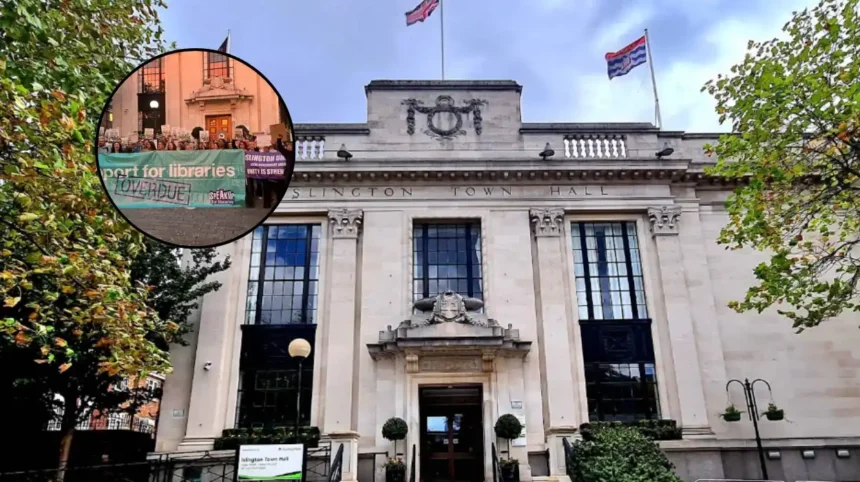
Islington (North London News) October 3, 2026 – Campaigners, trade union representatives, and prominent public figures have united to protest against potential funding cuts of up to £1 million to Islington’s public library network. During a public demonstration held on Thursday, 24 September, written statements from Islington North MP Jeremy Corbyn and renowned children’s author Michael Rosen were presented to attendees. Both figures strongly condemned any potential reductions to service budgets, describing public libraries as a fundamental pillar of local community life and safe spaces for thousands of residents.
What Are the Key Arguments Raised by Protesters and Trade Unions?
As reported by local campaign groups and UNISON representatives, the demonstration was organised in direct response to internal discussions regarding a comprehensive review of library services across the borough. Statements from both Jeremy Corbyn and Michael Rosen emphasised the social and educational value provided by municipal library branches.
In their joint messaging read during the demonstration, Corbyn and Rosen declared that public libraries represent a “foundation of our community” and provide “a safe and welcoming environment for thousands of people in our community.” They urged local authority leaders to protect existing funding levels and halt any actions that could lead to branch closures, reduced operating hours, or diminished staff capacity.
Protest organiser Alan Wylie, serving as the UNISON union representative for Islington libraries, expressed concern over how news of the proposed financial adjustments reached library personnel. According to Wylie, a senior council official only recently disclosed plans detailing potential spending reductions.
Addressing the crowd, Wylie stated:
“Islington Council are trying to sneak through the budget cuts despite no statement and no consultation.”
Trade union members further raised questions regarding financial transparency, pointing to external expenditure linked to the council’s ongoing service assessment. Wylie highlighted that the local authority had committed significant public funds to external management consultants, alleging that Islington Council had paid up to £110,000 to The Activist Group Ltd. The private consultancy firm has previously been engaged in restructuring initiatives for local authorities across London, including Hammersmith & Fulham, Croydon, and Lewisham councils.
How Has Islington Council and External Consultants Responded to the Allegations?
Islington Council has formally disputed the claims that library budget reductions are being implemented secretly without public knowledge or oversight. Municipal representatives clarified that the requirement to re-examine and refresh the borough’s libraries strategy was publicly documented well in advance of the recent protests.
According to statements issued by the local authority, the strategic review was explicitly outlined within the Homes and Communities Scrutiny Committee report published on 12 May 2025, as well as within the council’s broader medium-term financial strategy released in February 2026.
Regarding the appointment of third-party advisors, local authority officials confirmed the engagement of external management, stating:
“Funding has been allocated with a maximum budget of £110,000, although final expenditure may be lower.”
When asked to clarify the nature of their contract and operational scope within the borough, a representative from The Activist Group Ltd provided a written statement maintaining client confidentiality:
“Activist Group is proud to have helped dozens of library services around the country, but we do not comment about our work for our individual clients.”
Political opposition within the borough has also weighed in on the controversy. Councillor Benali Hamdache, leader of the Green Party opposition group in Islington, addressed attendees at the protest, warning of the broader consequences associated with municipal austerity measures.
As noted by local meeting reports, Councillor Hamdache stated:
“The hidden cost of cutting library services should not be underestimated. Local government is the best way to put this country back together, and we will fight this every step of the way.”
In response to political debate and union concerns, Councillor James Potts, Executive Member for Inclusive Economy and Planning, defended the rationale behind the ongoing review, asserting that the administration remains committed to resident engagement.
Outlining the council’s perspective, Councillor Potts stated:
“The purpose of this work is to understand how libraries can continue to meet changing resident needs, build on their strengths and remain sustainable for the future. Our priority is to gather evidence, listen to those who use and deliver the service, and develop a long-term vision for libraries in Islington.”
What Is the Background of Library Provision in Islington?
Under United Kingdom law, local authorities operate under a statutory obligation laid out in the Public Libraries and Museums Act 1964, which requires councils to provide a “comprehensive and efficient” library service for all individuals living, working, or studying within their administrative boundaries.
Islington Council currently maintains a network of 10 public libraries spread across the inner-London borough. According to statistical data published by the Office for National Statistics (ONS) in 2024, the borough boasts one of the most accessible branch networks in the capital, with 97% of Islington residents living within a 15-minute walk of their nearest public library.
Despite high accessibility metrics, local authorities across the United Kingdom have faced severe budgetary pressures over the past decade due to rising operational costs, inflation, and reductions in core central government grant allocations. To manage fiscal deficits, numerous local councils have resorted to restructuring public services, outsourcing management operations, reducing branch opening hours, or introducing co-located community hubs. The current dispute in Islington mirrors broader national tensions between municipal financial management and community-led campaigns seeking to preserve core statutory services.
What Is the Prediction for How This Development Will Affect the Local Community?
The ongoing review and potential implementation of up to £1 million in library budget reductions stand to directly impact multiple key stakeholder groups across the London Borough of Islington:
- Library Users and Local Residents: If funding reductions result in reduced opening hours, diminished book stock, or staff redundancies, thousands of residents who rely on libraries for quiet study, free internet access, and community support groups will face restricted access. Vulnerable demographics—including elderly residents, job seekers, and lower-income families—are likely to feel the primary impact, as local libraries serve as essential warm spaces and free digital inclusion hubs.
- Students and Young Learners: With major educational advocates like Michael Rosen championing the service, any scale-back in children’s literacy programs, early-years reading groups, or quiet study zones could affect learning resources for local school pupils and young adults preparing for national examinations.
- Frontline Library Staff and Trade Unions: Operational restructures typically risk staff reorganisations, altered working hours, or potential job losses. Continued friction between UNISON and local authority executives may lead to further organized industrial actions, public demonstrations, or formal grievance proceedings if consultation processes are deemed insufficient by union leadership.
- Islington Council Leadership: The administration faces heightened political pressure from both opposition representatives and high-profile campaigners. Council leaders must balance their legal obligations to deliver a balanced municipal budget against intense public demand to preserve popular frontline services, shaping public perception ahead of upcoming local policy decisions.