Key Points
- The historic Magdala Tavern in South Hill Park, Hampstead, has officially reopened its doors to patrons following a temporary forced closure.
- Camden Council environmental health officers ordered the pub’s closure on August 20, 2026, after discovering a severe pest issue involving mice and cockroaches.
- Hygiene inspectors issued a hygiene emergency prohibition order after assessing that the pest presence posed an immediate health risk to the public.
- Management confirmed the pub’s reopening on social media, stating that pest eradication efforts were successful, the kitchen is fully operational, and food and drink service has resumed.
- Local customers expressed support and relief across digital platforms following the announcement.
- The reopening occurs alongside an ongoing planning dispute regarding the alleged unlawful conversion of the pub’s historic upper-floor function room into a residential flat.
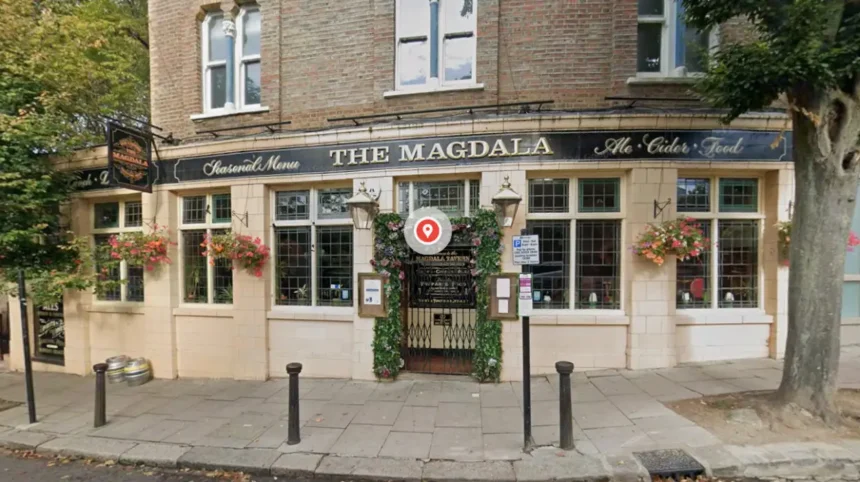
Hampstead (North London News) October 5, 2026 – The Magdala Tavern, a landmark public house located in South Hill Park, Hampstead, has officially reopened after environmental health officers with Camden Council forced its closure over a severe mice and cockroach infestation.
- Key Points
- Why did Camden Council force the closure of The Magdala Tavern?
- How did management announce the venue’s reopening?
- What secondary planning disputes surround the historic venue?
- Background of the particular development
- Prediction: How this development can affect the local community and business operators
As reported by Bridget Galton, Features Editor and Associate Editor at Ham & High, the venue was served a formal hygiene emergency prohibition notice by local authority inspectors on August 20, 2026, forcing management to shutter operations to rectify significant sanitary breaches. Following extensive pest remediation, thorough deep-cleaning protocols, and verification from municipal enforcement teams, the establishment welcomed customers back to the bar.
Why did Camden Council force the closure of The Magdala Tavern?
As detailed by Bridget Galton in Ham & High, the environmental health team at Camden Council initiated regulatory action on August 20, 2026, after discovering evidence of active pest activity within the venue premises. Inspectors detected both mice and cockroach contamination, determining that the conditions posed a active risk to food preparation and consumer health.
The issuance of a hygiene emergency prohibition order required the business to immediately cease all operations, including kitchen preparation and beverage services, until local authority officers could verify that the infestation had been entirely eradicated and standard hygiene standards restored.
How did management announce the venue’s reopening?
As noted by Bridget Galton of Ham & High, the pub team addressed patrons directly via social media to declare that the venue had cleared all health inspections and was ready to operate.
In a public statement released by the establishment, the team announced:
“Marco, Herlindo, Jess and the whole team are ready and waiting … the pints are pouring, the kitchen’s fired up, and we’ve missed you see you at the bar.”
Local patrons reacted positively to the update, with customers posting messages such as “Hurrah” and “Great news” in response to the announcement.
What secondary planning disputes surround the historic venue?
As reported by Bridget Galton of Ham & High, the environmental health shutdown occurred against the backdrop of a prolonged, separate legal dispute concerning the physical structure of the venue. The property has been the focal point of a planning enforcement action over the alleged unauthorized conversion of its upper-floor function room into a private residential flat.
As documented by Harry Taylor for the Islington Tribune, community groups and local residents had previously waged a decade-long campaign to protect the historic function room, asserting its status as an essential cultural and social space that served Hampstead residents for generations.
According to reports by Bridget Galton in Ham & High, Camden Council has formally pledged to enforce statutory planning regulations regarding the structure. Enforcement of these directives would legally require the landlord, Mr Calif, to dismantle the unauthorized residential conversion and restore the space to its original layout.
Background of the particular development
The Magdala Tavern holds a prominent position within British social and cultural history. The public house gained international notoriety in April 1955 as the site where Ruth Ellis shot her lover, David Blakely, outside its doors. Ellis was subsequently convicted of murder and became the last woman to be executed by hanging in the United Kingdom, rendering the venue a site of historical interest.
In recent years, the pub has faced significant commercial and operational hurdles. Following a prolonged closure that lasted roughly seven years, community campaigners successfully secured Asset of Community Value (ACV) status from Camden Council to protect the site from permanent commercial redevelopment. The ground floor of the establishment subsequently reopened to the public in December 2021.
However, regulatory scrutiny from local authorities has remained consistent, encompassing both structural planning integrity regarding the upper floor conversion and statutory public health compliance within the kitchen and bar premises.
Prediction: How this development can affect the local community and business operators
The resolution of the health inspection closure and subsequent reopening of The Magdala Tavern directly impacts several key stakeholder groups within the Hampstead area:
- Local Residents and Patrons: The prompt reopening guarantees the retention of an essential neighborhood amenity and historic gathering space. However, residents are likely to maintain high scrutiny over food safety standards and kitchen hygiene following the publicized temporary closure.
- Pub Management and Staff: The resumption of trade restores revenue streams for operators Marco, Herlindo, Jess, and their team. Nonetheless, management faces the immediate task of rebuilding consumer trust, mitigating brand damage associated with the hygiene prohibition order, and managing ongoing operational overheads.
- Property Ownership and Camden Council: The resolution of the pest issue allows municipal authorities to re-focus regulatory attention on the outstanding planning enforcement case. If Camden Council executes its pledge requiring the landlord to strip out the unlawful residential flat, the property owner faces financial liabilities and structural alterations, while the local community may eventually see the restoration of the long-contested public function space.