Key Points
- The Error: A final push campaign letter sent to voters in Holborn and St Pancras misspelled Reform UK as ‘Refrom UK’ on candidate Pete Newman’s official literature.
- The High-Stakes By-Election: The polling takes place on Thursday, 8 October 2026, triggered by former Prime Minister Sir Keir Starmer stepping down as MP following his resignation as Prime Minister.
- The Contenders: Labour’s Sagal Abdi-Wali faces Green Party leader Zack Polanski, Reform UK’s Pete Newman, Workers Party candidate George Galloway, and Liberal Democrat candidate Patrick Stillman.
- Campaign Focus: Pete Newman, a former Metropolitan Police detective, anchored his platform on law and order, promising to increase police visibility and keep local stations open.
- Political Impact: Political rivals and local voters mocked the oversight, calling it an unnecessary self-inflicted error at a critical moment in a nationally watched election.
Holborn and St Pancras (North London News) October 8, 2026 – A campaign letter sent to residents across north London has misspelt the party’s name as ‘Refrom UK’ just days before voters go to the polls in the high-stakes Holborn and St Pancras by-election.
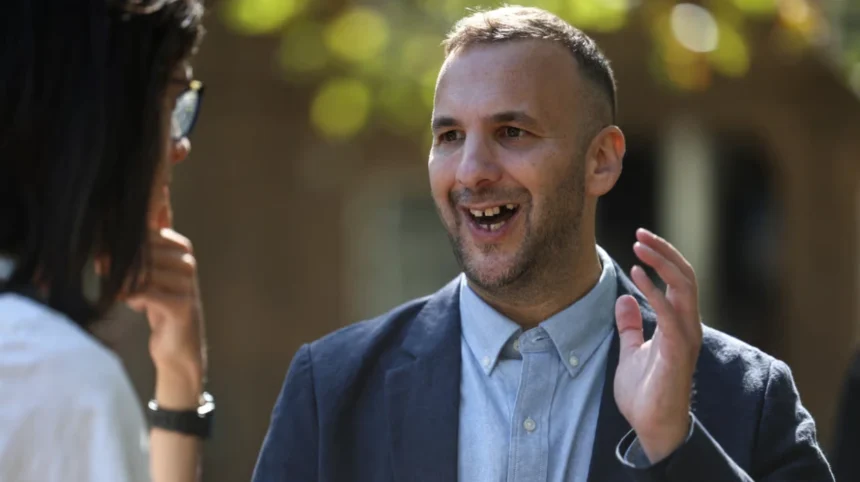
The typographical error appeared in official election material distributed by the campaign of candidate Pete Newman, a former Metropolitan Police counter-terrorism detective standing for Nigel Farage’s party. The letter outlined Mr Newman’s policy platform on local crime and policing, but inadvertently introduced him to residents as the ‘Refrom UK Candidate’.
The blunder was quickly identified by local residents and circulated widely across political circles and social media platforms, drawing immediate criticism from rival campaigns during the final 48 hours of canvassing.
How did candidates and voters react to the campaign blunder?
The oversight prompted widespread mockery across the constituency, where candidates are locked in a heavily contested race to succeed former Prime Minister Sir Keir Starmer.
As reported by local political reporters, community members in Camden expressed surprise that a national political party failed to catch a basic spelling error on its literature. Local residents noted that while typos occur in high-volume political communications, misspelling a party’s core brand on a primary voter piece undermines the professional image required for parliamentary representation.
Opponents were quick to seize on the mistake. Representatives from rival parties pointed to the error as evidence of an uncoordinated campaign effort in north London, arguing that an organization unable to spell its own name on election literature raises questions about its attention to detail on complex governance matters.
Campaign officials for Reform UK have not issued a formal operational retraction regarding the distribution, with field workers continuing doorstep leafleting ahead of polling station openings.
Who is standing in the Holborn and St Pancras by-election?
The contest in Holborn and St Pancras presents a crowded ballot featuring candidates from across the political spectrum:
- Sagal Abdi-Wali (Labour Party): Defending the seat for Labour following months of party turmoil in Westminster.
- Zack Polanski (Green Party): The Green Party leader positioning himself as the primary progressive alternative to Labour.
- Pete Newman (Reform UK): The former Metropolitan Police commander focusing his campaign on public safety and policing.
- George Galloway (Workers Party of Britain): Campaigning on anti-establishment and foreign policy platforms.
- Patrick Stillman (Liberal Democrats): Focusing on local health services, transport, and community infrastructure.
- Ewan Cameron (Conservative Party): Campaigning on fiscal accountability and local services.
Mr Newman had established his platform around law and order, citing his previous career in law enforcement and his involvement in the emergency response to the 7 July 2005 London bombings. His manifesto promised to keep local police stations operational and increase visible patrolling across Camden’s high-crime areas. However, media coverage in the final hours leading to the vote shifted focus from his crime initiatives to the literature error.
What is the political background behind the Holborn and St Pancras by-election?
The Holborn and St Pancras by-election was triggered following the formal resignation of Sir Keir Starmer from Parliament. Starmer, who had represented the seat since 2015, announced his departure after stepping down as Prime Minister and Labour Party leader amid prolonged internal party disputes and plummeting approval ratings.
Holborn and St Pancras has historically been regarded as a safe Labour stronghold, remaining in the party’s hands since its creation in 1983. In the July 2024 general election, Starmer retained the seat with 18,884 votes (48.9%), though his majority was significantly squeezed by independent candidate Andrew Feinstein.
The decision by Starmer to vacate his seat created a high-profile opening in central London, converting what would normally be a routine local contest into a national test of public sentiment toward Labour under new management. For challenger parties, including the Greens and Reform UK, the vacancy provided an opportunity to challenge Labour’s historic dominance in urban constituencies.
How will this development affect the political parties and local voters?
The misspelling blunder and the outcome of this by-election carry distinct implications for the key political groups involved:
Impact on Reform UK
For Reform UK, the publicity surrounding the typographical error risks damaging the party’s credibility among undecided voters in urban seats. While Reform UK has expanded its support in rural and industrial constituencies, establishing a presence in metropolitan London seats requires a polished operation. A high-profile error on basic campaign materials reinforces narratives from opponents that the party’s local infrastructure lacks organizational discipline.
Impact on the Labour Party
For Labour, the contest serves as a critical indicator of post-Starmer electoral strength. A reduced majority or a narrow victory would signal continued voter dissatisfaction and confirm that progressive voters in metropolitan centers are willing to defect to alternative parties. Conversely, securing the seat comfortably despite recent leadership upheaval would provide stability for the new party leadership in Westminster.
Impact on the Green Party and Opposition
For Green Party leader Zack Polanski, any erosion of Labour or Reform UK credibility offers a direct path to consolidating the left-leaning vote. If progressive voters view Labour as compromised by recent Westminster turmoil and Reform UK as organizationally unready, the Green Party stands to gain ground as a cohesive alternative in urban constituencies.
Impact on Local Constituents
For residents of Holborn and St Pancras, the campaign highlight underscores concerns over how effectively their local interests will be represented in Parliament. As the constituency faces challenges in housing affordability, public transport funding, and community safety, voters must balance national political narratives against the practical competence of the candidates seeking to represent them in Westminster.