Key Points:
- Residents of the South Kilburn estate in North London report enduring persistent noise and dust pollution caused by the multi-decade South Kilburn Regeneration Scheme.
- The local community faces ongoing operational issues, including power tool reverberations inside homes, traffic congestion on Granville Road, and continuous dust accumulation on personal belongings and clothing.
- Brent Council leads the multi-phase masterplan, which aims to deliver 2,400 new high-quality homes, alongside new public parks, primary schools, and health facilities.
- Construction timelines across the redevelopment area remain subject to phased completion dates extending well into the 2030s, prolonging the exposure of current occupants to major structural works.
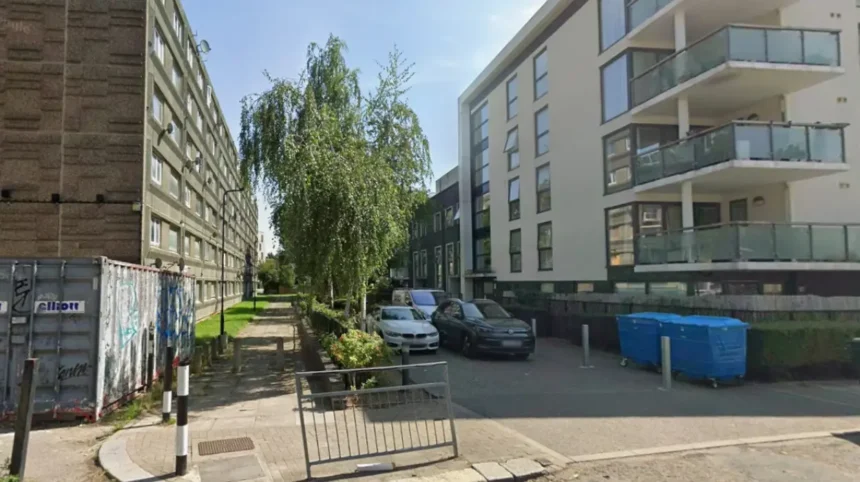
Granville Road (North London News) October 17, 2026 – Residents living within the South Kilburn estate in North West London face prolonged disruptions from ongoing heavy construction work associated with one of the largest residential regeneration initiatives in the capital. As reported by Grant Williams of the Local Democracy Reporting Service (LDRS), local inhabitants on Granville Road have voiced concerns regarding relentless environmental dust, heavy vehicle traffic, and the low-frequency noise of power tools echoing directly into their residences during the phased execution of the South Kilburn Regeneration Scheme. The long-term municipal programme, designed to completely overhaul the post-war urban landscape, is scheduled to continue construction across various phases for well over a decade, leaving current occupants situated directly adjacent to active construction sites.
- Key Points:
- What Environmental and Daily Operational Challenges Are Residents Experiencing?
- What Does the South Kilburn Regeneration Scheme Entail?
- How Are Municipal Authorities and Construction Partners Managing Site Disruption?
- What Is the Background of the South Kilburn Regeneration Scheme?
- What Is predicted for the Future of the South Kilburn Community?
What Environmental and Daily Operational Challenges Are Residents Experiencing?
The physical impact of constant construction activity has created sustained daily inconveniences for those residing amidst the redevelopment parcels. As documented by Grant Williams of the LDRS, individuals residing along Granville Road report that dust emissions generated by site excavation, structural demolition, and material transport settle constantly across clothes, windows, and domestic interiors.
Alongside atmospheric dust, structural vibrations and low-frequency acoustic transfer from heavy industrial plant machinery present ongoing friction. Residents detailed how power equipment noise penetrates residential walls, interfering with daily routines, remote working conditions, and household quiet hours. In addition to internal acoustic disruption, the movement of heavy construction vehicles, material lorries, and site equipment along local roads such as Granville Road has heightened traffic congestion, reduced street-level parking availability, and created temporary access blockages within the neighborhood.
What Does the South Kilburn Regeneration Scheme Entail?
The South Kilburn Regeneration Scheme represents a major municipal overhaul managed under the strategic planning authority of Brent Council. Designed to replace outdated post-war housing blocks, high-density tower structures, and inefficient spatial layouts, the comprehensive masterplan seeks to fundamentally reconstruct the urban environment of South Kilburn.
Under the framework established by Brent Council, the comprehensive scheme proposes to deliver approximately 2,400 modern, energy-efficient residential units upon final completion. The masterplan dictates a mixed-tenure model, incorporating replacement social housing homes alongside affordable tenures and private market dwellings. Beyond residential structures, the broader scheme integrates extensive social infrastructure enhancements, including:
- The construction of newly landscaped public open spaces and local parks.
- The development of modernised primary school facilities and early years education spaces.
- Integrated community health centers, retail units, and improved pedestrian connectivity across the district.
However, owing to the overall scale of the project, construction execution is arranged in distinct sequential phases. While several completed phases have delivered new housing units to relocated tenants, remaining sites require extensive site clearance, utility realignments, and multi-year construction cycles, extending active site footprints directly adjacent to occupied properties.
How Are Municipal Authorities and Construction Partners Managing Site Disruption?
The management of large-scale urban regeneration projects in high-density London boroughs requires adherence to statutory environmental control frameworks and municipal codes of construction practice. Brent Council, alongside appointed primary contractor partners, operates under obligations to mitigate environmental nuisance to nearby residents.
Standard mitigation guidelines across major Brent Council construction zones mandate the deployment of localized dust suppression equipment, including continuous water sprays, boundary monitoring systems, and covered haulage vehicles to limit airborne particulates. Additionally, works are strictly confined to permitted working hours, typically restricted to standard weekday hours and half-days on Saturdays, to prevent evening and overnight disturbance.
Despite these established operational standards, the proximity of legacy residential blocks to active development boundaries means that localized dust dispersion and structural noise transfer remain prevalent during intensive civil engineering phases.
What Is the Background of the South Kilburn Regeneration Scheme?
The origin of the South Kilburn Regeneration Scheme traces back to municipal assessments in the late 1990s and early 2000s, which identified significant physical degradation, structural defects, and social isolation within the post-war system-built estates of South Kilburn. Constructed largely during the mid-20th century to address post-war housing shortages, the original residential blocks progressively suffered from systemic concrete deterioration, inefficient thermal insulation, high maintenance overheads, and layout configurations that impeded modern community policing and access standards.
In response, Brent Council formulated a comprehensive, multi-phase masterplan aimed at total urban renewal rather than piecemeal refurbishment. Formally initiated in the mid-2000s, the masterplan was structured across multiple distinct delivery phases spanning over two decades. The central objective was to facilitate a “single decant” strategy where possible, moving existing tenants directly from legacy council structures into newly built homes within the immediate neighborhood.
Over the course of its execution, the scheme has navigated changing national housing policies, fluctuating macroeconomic conditions, inflationary pressure within the UK construction sector, and complex procurement cycles. While thousands of residents have transitioned into newly built apartments delivered during earlier phases, the extended timeline has required remaining residents to reside inside active construction zones for prolonged periods, highlighting the multi-generational friction inherent in major urban reconstruction.
What Is predicted for the Future of the South Kilburn Community?
The continued progression of the South Kilburn Regeneration Scheme carries direct, long-term implications for local residents, municipal housing applicants, and the broader North West London urban ecosystem.
For the current residents of South Kilburn, particularly those situated on Granville Road and adjoining streets, the immediate future entails continued exposure to site logistics, periodic traffic diversions, elevated ambient noise levels, and environmental dust as remaining construction parcels undergo demolition and structural builds through the late 2020s and into the 2030s.
From an urban planning perspective, the ultimate completion of the remaining phases is expected to deliver modern housing stock featuring higher energy efficiency standards, lower running costs, and improved security design. The introduction of integrated public parks, medical facilities, and improved transport corridors will eventually enhance the quality of life across the neighborhood. However, the transitional period requires continuous municipal monitoring, proactive contractor compliance enforcement, and responsive local community liaison channels to ensure that the living conditions of current residents are protected while the long-term transformation of South Kilburn proceeds toward final completion.