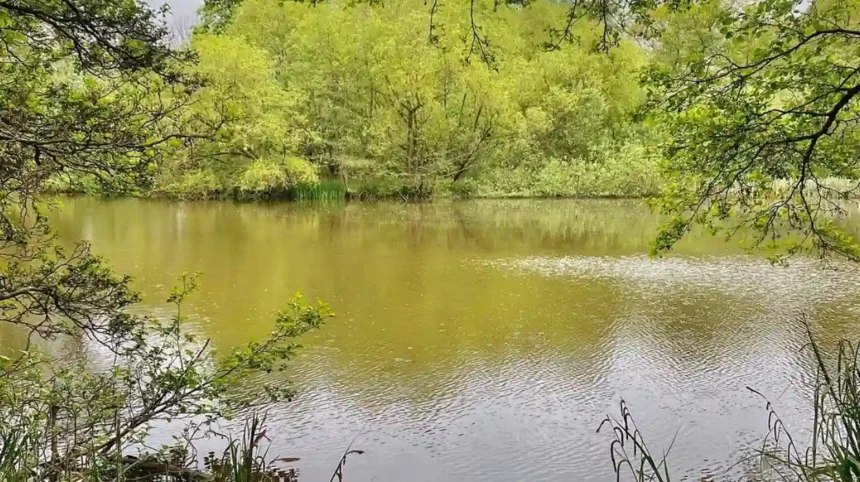
Barnet, in North London, contains a connected network of freshwater habitats, including ponds, lakes, streams, reedbeds and marshy grassland. These environments support aquatic plants, breeding birds, amphibians, insects and other wildlife. They also help manage rainfall, improve local biodiversity and connect green spaces across the borough.
- What types of wetland habitats can you find in Barnet?
- Ponds and small freshwater pools
- Lakes and larger standing-water habitats
- Streams and flowing-water habitats
- Reedbeds and marshy grassland
- Where can you explore pond habitats in Barnet?
- What makes Darlands Lake an important wetland habitat in Barnet?
- Which animals live around Darlands Lake?
- Why are dragonflies significant at the lake?
- How should visitors explore Darlands Lake?
- Where can you find reedbeds and wetland birds near Barnet?
- How do Barnet’s streams connect its wetland habitats?
- Which wildlife depends on Barnet’s wetland habitats?
- How do wetlands benefit Barnet’s environment and local communities?
- How do wetlands help manage rainfall?
- How do wetlands support biodiversity?
- How do wetlands improve everyday access to nature?
- When is the best time to visit Barnet’s wetland habitats?
- How can visitors protect Barnet’s ponds and wetlands?
- Follow responsible wildlife-watching practices
- Prevent pollution and the spread of invasive species
- Support local conservation
- How does Barnet’s wetland landscape connect with its history?
- Why are Barnet’s wetland habitats important for the future?
According to Barnet Council, approximately one-third of the borough’s total area is classified as green space. Its natural environment includes ancient woodland, traditional hay meadow and watercourses, creating opportunities to explore wildlife beyond conventional parks and gardens.
The most useful places to investigate wetland habitats include Darlands Lake, Glebelands Nature Reserve, Coppetts Wood and the Welsh Harp Reservoir on Barnet’s western boundary. Each location demonstrates a different relationship between freshwater, vegetation and wildlife.
What types of wetland habitats can you find in Barnet?
Barnet contains several freshwater habitat types, including ponds, lakes, streams, reedbeds and marshy grassland. Examples include Darlands Lake, ponds at Glebelands, the Dollis Brook watercourse and reedbed habitats at the Welsh Harp Reservoir. These environments support different wildlife communities according to water depth, flow, vegetation and seasonal conditions.
Wetlands are areas where water influences the soil, plants and animals for at least part of the year. Some remain underwater throughout the year, while others become waterlogged after rainfall or flood events.
Barnet’s wetlands form part of a wider ecological network connecting residential neighbourhoods, public parks, open countryside and river catchments. The borough’s planning documents identify streams, lakes, ponds, wetlands and bogs among its recognised habitat categories.
Ponds and small freshwater pools
Ponds are relatively small bodies of standing freshwater. Their shallow margins allow sunlight to reach aquatic vegetation, creating feeding and breeding areas for wildlife.
Ponds at Glebelands and Coppetts Wood demonstrate how freshwater features coexist with woodland, scrub and grassland. These mixed environments provide different shelter and feeding opportunities within a single nature reserve.
Lakes and larger standing-water habitats
Lakes provide larger areas of open water, with habitat conditions varying between the centre, shoreline and surrounding vegetation.
Darlands Lake in Whetstone is a notable example. Its woodland setting and established freshwater environment support wildfowl, amphibians, fish and dragonflies. The lake illustrates how a historic ornamental water feature also functions as a wildlife habitat.
Streams and flowing-water habitats
Streams carry freshwater through the landscape, linking upstream springs and drainage areas with larger rivers and reservoirs.
Dollis Brook and the Silk Stream form part of Barnet’s wider freshwater network. Their channels, banks and adjoining vegetation create movement routes for wildlife and connect habitats that would otherwise remain isolated.
Reedbeds and marshy grassland
Reedbeds consist of dense water-loving plants growing in shallow water or saturated ground. Marshy grassland contains grasses and other vegetation adapted to wet soil.
The Welsh Harp restoration project includes plans for more than one hectare of habitat creation across reedbeds, marshy grassland and wildflower meadow. These habitat types provide additional cover, feeding areas and ecological diversity.
Where can you explore pond habitats in Barnet?
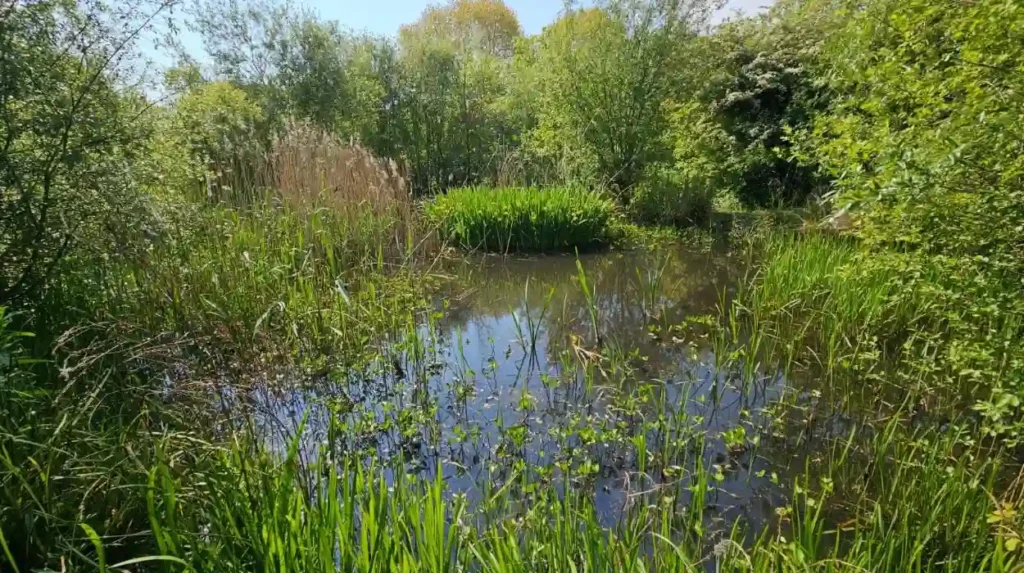
Glebelands Nature Reserve in Finchley and Coppetts Wood near Friern Barnet are useful locations for exploring pond habitats. Both contain ponds alongside woodland, scrub and grassland, allowing visitors to observe how freshwater features support wildlife within a wider natural environment.
Ponds are particularly valuable because their shallow margins create conditions for aquatic plants, insects and amphibians. A pond’s ecological importance depends on water quality, vegetation, surrounding land and the availability of safe breeding areas.
Glebelands Nature Reserve
Location: Summers Lane, Finchley, N12
Glebelands is a nature reserve containing woodland, scrub, grassland and ponds. Barnet Council identifies the reserve as a place where wildlife and visitors find a green retreat close to major roads and urban development.
The reserve’s combination of habitats makes it suitable for observing how pond edges interact with land-based ecosystems. Insects use vegetation around the water, while birds forage across the surrounding scrub and grassland.
A nature trail takes approximately one hour to complete. A small visitor car park is available off Colney Hatch Lane, just south of the reserve entrance, according to the council’s visitor information.
Visitors should examine the water’s edge from established paths and avoid disturbing vegetation. Quiet observation offers better opportunities to notice movement among aquatic plants and surrounding trees.
Coppetts Wood Nature Reserve
Location: Colney Hatch Lane, Friern Barnet, N10, N11 and N12
Coppetts Wood contains ponds, woodland, scrub and grassland. Its position near built-up neighbourhoods demonstrates how small wetland features contribute to urban biodiversity.
The reserve forms part of the wider natural landscape associated with the former Finchley Common. Its varied vegetation provides habitat for wildlife that uses both damp ground and drier woodland edges.
The council lists a nature trail taking around one hour and a small car park off Colney Hatch Lane. Local conservation volunteers also organise practical activities at the site.
Pond habitats at both reserves are particularly interesting during spring and early summer, when amphibian activity and insect emergence increase. Seasonal sightings vary with weather, water conditions and vegetation management.
What makes Darlands Lake an important wetland habitat in Barnet?
Darlands Lake in Whetstone is a woodland-surrounded lake that supports wildfowl, amphibians, fish and dragonflies. Its recorded wildlife includes mallards, moorhens, common frogs, toads and smooth newts, making it a useful location for understanding the ecological value of standing freshwater.
Darlands Lake lies on Totteridge Lane in Whetstone, N20. Barnet Council describes it as a secluded nature reserve with considerable natural-history interest.
The lake was originally developed as an ornamental feature for a nearby country house. It was later used as a duck decoy, a traditional arrangement designed to attract wildfowl. Its history demonstrates how a water feature created for human use can develop additional ecological value over time.
Which animals live around Darlands Lake?
The council records several groups of wildlife associated with the lake.
Mallards and moorhens use the water and its margins. Mallards feed in shallow water and along the shoreline, while moorhens forage among vegetation and often nest close to cover.
Amphibians include common frogs, toads and smooth newts. These animals depend on suitable freshwater breeding conditions and nearby terrestrial habitat. Adults of several amphibian species spend substantial periods away from water outside the breeding season.
The lake also supports fish, including carp and rudd, as well as goldfish. Fish communities influence aquatic food webs through their feeding behaviour and interactions with other organisms.
Why are dragonflies significant at the lake?
Barnet Council records twelve dragonfly species at Darlands Lake, including black, ruddy and common darters.
Dragonflies spend their immature stages underwater before emerging as flying adults. Their presence therefore reflects the relationship between freshwater conditions, submerged habitat and suitable vegetation near the shoreline.
For visitors, summer provides an opportunity to watch dragonflies patrol sunny areas around the lake. Identification is easier when individuals settle on vegetation, allowing their body shape and colour patterns to be observed without approaching or handling them.
How should visitors explore Darlands Lake?
The lake is best approached as a wildlife-watching destination rather than a place for entering the water. Visitors should remain on accessible routes, avoid feeding wildlife and leave aquatic vegetation undisturbed.
Its woodland setting also provides opportunities to observe the transition between freshwater and land-based habitats. Trees provide shade and shelter, while fallen leaves and other organic material contribute to the ecological processes occurring around the lake.
Where can you find reedbeds and wetland birds near Barnet?
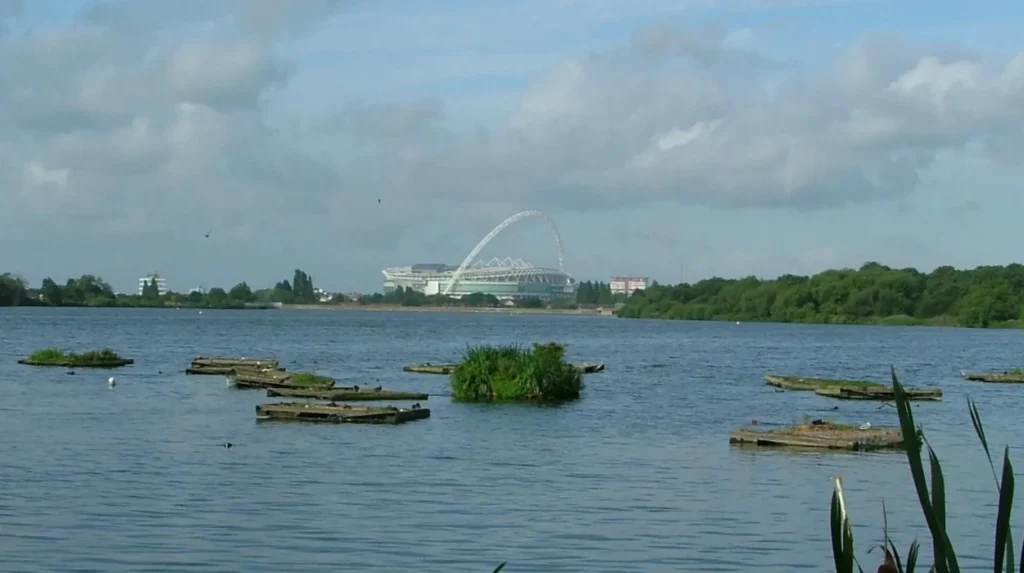
The Welsh Harp Reservoir, also known as Brent Reservoir, is a major wetland wildlife destination on the boundary between the London boroughs of Barnet and Brent. Its open water and reedbed habitats support waterbirds, including great crested grebes and common terns.
The Welsh Harp is a designated Site of Special Scientific Interest (SSSI), a formal conservation designation for land recognised for its special wildlife or geological importance. The reservoir is particularly significant for breeding wetland birds and wintering waterfowl.
Although the reservoir lies on Barnet’s western boundary, it is an important part of the area’s wider wetland network. Its wildlife value extends beyond the open water into vegetated channels, marshy margins and connected green spaces.
What wildlife can you see at the Welsh Harp?
Barnet Council reported in November 2025 that 253 bird species had been recorded at the Welsh Harp. This figure reflects the site’s significance for birdwatching and habitat conservation.
Birds associated with the reservoir include common terns and great crested grebes. Common terns catch fish and use suitable nesting areas, while great crested grebes feed on aquatic prey and display distinctive courtship behaviour during the breeding season.
The council’s reporting also highlights pressures on breeding birds. Recorded common tern nesting pairs declined from 44 in 2000 to four in 2022. Great crested grebe nests fell from 55 in 1987 to 27 in 2022. These historical figures demonstrate why protecting suitable breeding habitat remains important.
Birdwatchers should bring binoculars and observe birds from established paths or designated viewing locations. Nesting birds require particular care during spring and summer, when repeated disturbance affects their ability to feed and raise young.
How do reedbeds improve wetland habitats?
Reedbeds are dense stands of emergent plants rooted in shallow water or saturated soil. Their stems and foliage provide cover for wildlife and create sheltered areas around otherwise exposed water.
Reedbeds also contribute to water quality by trapping suspended material and absorbing some nutrients and pollutants. Their effectiveness depends on the pollutants involved, water flow, vegetation health and the design of the wetland.
At the Welsh Harp, the Wings on Water project brings together Barnet Council, the Canal and River Trust and Kusuma Trust UK to improve habitat conditions. The project includes clearing blocked water channels, removing contaminated silt where required, controlling invasive plants and establishing additional vegetation.
These activities demonstrate how wetland management combines habitat restoration with measures to improve resilience to flooding and pollution.
How do Barnet’s streams connect its wetland habitats?
Barnet’s streams connect springs, ponds, river valleys and larger water bodies across the borough. Dollis Brook and the Silk Stream belong to the River Brent catchment, while Pymmes Brook and its tributaries drain towards the River Lea catchment, creating connected freshwater corridors.
A catchment is the area of land from which rainfall drains into a particular stream, river or other water body. Water flows downhill through the landscape, carrying sediment, nutrients and organic matter along the way.
Barnet’s position across parts of two river catchments makes its watercourses important for both drainage and wildlife movement.
What role does Dollis Brook play?
Dollis Brook is a watercourse associated with North London’s network of green corridors. Its channel and surrounding vegetation provide a connection between different sections of the landscape.
The ecological value of a stream extends beyond the water itself. Bankside plants provide cover, while damp ground supports invertebrates and other organisms. Overhanging vegetation also creates shade and helps moderate water temperature in suitable locations.
Streamside paths provide opportunities for walking and nature observation. Visitors should avoid entering the channel, damaging the banks or leaving waste that washes downstream during rainfall.
What is the role of the Silk Stream and Pymmes Brook?
The Silk Stream forms part of the River Brent catchment, while Pymmes Brook belongs to the River Lea catchment. Both contribute to the wider drainage network and connect water-dependent habitats with the surrounding urban landscape.
Watercourses can support ecological movement when suitable vegetation and habitat remain connected along their banks. Culverts, hard surfaces, pollution and development interrupt these connections and reduce the availability of suitable habitat.
Maintaining vegetated banks and improving water quality therefore benefit more than individual stretches of stream. They help sustain the broader network of freshwater and land-based habitats.
Which wildlife depends on Barnet’s wetland habitats?
Wetland habitats in Barnet support several wildlife groups, including waterbirds, amphibians, dragonflies and other invertebrates. Examples include mallards and moorhens at Darlands Lake, smooth newts in freshwater habitats, and dragonflies recorded around the lake.
Wetland wildlife depends on water quality, food availability, suitable vegetation and places to shelter or reproduce. Different species use different parts of the same habitat.
Birds and waterfowl
Waterfowl are birds that depend heavily on aquatic environments for feeding, resting or breeding. Mallards and moorhens are recorded at Darlands Lake, while the Welsh Harp supports a wider range of wetland birds.
Some birds feed in open water, while others forage among vegetation or along muddy margins. The availability of shallow feeding areas and sheltered nesting sites affects how well a wetland supports breeding populations.
Amphibians
Amphibians include frogs, toads and newts. They generally require freshwater breeding habitats and nearby land environments that provide shelter and feeding opportunities.
Common frogs, toads and smooth newts are recorded at Darlands Lake. Protecting these animals involves maintaining suitable water conditions and avoiding unnecessary disturbance to the vegetation around breeding sites.
Visitors should never transfer amphibians, spawn or pond water between sites. Moving wildlife introduces disease and can disrupt local populations.
Dragonflies and other invertebrates
Dragonflies and other aquatic invertebrates contribute to wetland food webs. Many spend part of their life cycle in water and later emerge as flying adults.
Darlands Lake’s recorded dragonfly diversity demonstrates the value of maintaining aquatic vegetation and suitable freshwater conditions. Insects also provide food for fish, amphibians and birds.
Observing insect activity from the shoreline helps visitors understand how a wetland supports wildlife beyond the species that are easiest to see.
How do wetlands benefit Barnet’s environment and local communities?
Wetlands support Barnet by providing wildlife habitat, storing or slowing some rainfall, contributing to water quality and connecting green spaces. Examples include reedbeds at the Welsh Harp, ponds at Glebelands and vegetated streams that form part of the borough’s freshwater corridors.
Wetlands are important in urban areas because hard surfaces such as roads, roofs and pavements accelerate rainwater runoff. Vegetated ground and suitable water features help manage water movement, although their capacity depends on local conditions and design.
How do wetlands help manage rainfall?
Ponds, marshy ground and connected floodplain habitats provide space for water to collect or move more slowly. Wetland vegetation also helps stabilise soil and trap some sediment.
These functions are relevant to Barnet because the council identifies more frequent heatwaves and flash floods among the environmental pressures affecting the borough. Natural spaces form part of its wider approach to climate adaptation.
Wetlands do not eliminate flood risk. Their effectiveness depends on rainfall intensity, soil saturation, available storage, drainage infrastructure and the location of the watercourse.
How do wetlands support biodiversity?
Biodiversity means the variety of living organisms, including plants, animals, fungi and microorganisms. A healthy wetland supports species with different feeding, breeding and shelter requirements.
Barnet Council’s biodiversity reporting records 4,414 species reported through Greenspace Information for Greater London. These include 263 bird species, 1,391 higher plant species and 2,309 invertebrate species. The figures describe records across the borough, not species found exclusively in wetlands.
Protecting wetlands therefore contributes to a broader conservation network involving woodland, grassland, hedgerows and other habitats.
How do wetlands improve everyday access to nature?
Wetlands provide opportunities for walking, wildlife observation and outdoor learning. Locations such as Darlands Lake and Glebelands combine nature interest with access to established routes.
For residents and visitors, these sites offer a way to explore freshwater ecology without travelling beyond North London. They also provide opportunities for local conservation groups to undertake habitat-management work and encourage environmental awareness.
When is the best time to visit Barnet’s wetland habitats?
Spring and summer offer opportunities to observe breeding birds, amphibians and active dragonflies, while autumn and winter provide different conditions for watching waterbirds and studying wetland vegetation. Examples include spring bird activity at the Welsh Harp and summer dragonflies at Darlands Lake.
Wetland wildlife changes throughout the year. Water levels, weather, plant growth and breeding cycles influence which species visitors observe.
Spring wildlife watching
Spring brings increased activity around freshwater habitats. Birds establish territories and nest, while amphibians use suitable ponds for breeding. New growth around the water creates additional shelter for insects and other wildlife.
Visitors should keep their distance from nests and avoid trampling damp ground or emerging vegetation. Binoculars provide a practical way to observe animals without approaching them.
Summer pond and dragonfly observation
Summer is a useful period for observing dragonflies and other flying insects around suitable freshwater habitats. Aquatic vegetation becomes more established, and warmer conditions support increased activity among many invertebrates.
Darlands Lake is particularly relevant because the council records twelve dragonfly species there. Visitors should look for insects resting on vegetation around the shoreline rather than attempting to catch them.
Autumn and winter birdwatching
Autumn and winter offer opportunities to observe waterbirds using larger water bodies. Seasonal changes in food availability and weather influence how birds use wetlands.
The Welsh Harp is particularly important for wintering waterfowl, alongside its role as a breeding habitat. Visitors should check local access information and observe birds from established viewing areas.
Wet weather also changes the character of smaller wetland sites. Paths become muddy, vegetation dies back and water levels fluctuate. Suitable footwear and careful route planning make visits more comfortable.
How can visitors protect Barnet’s ponds and wetlands?
Visitors can protect Barnet’s wetlands by staying on established paths, keeping dogs under control where required, avoiding wildlife disturbance and taking litter home. Examples include watching birds from a distance, leaving pond vegetation intact and never releasing pets or non-native species into freshwater habitats.
Responsible behaviour helps maintain the ecological value of ponds, streams and lakes. Even small disturbances affect wildlife when they occur repeatedly in the same location.
Follow responsible wildlife-watching practices
Observe birds, amphibians and insects without handling them. Avoid approaching nests, entering reedbeds or walking through shallow water where wildlife breeds.
Do not feed waterbirds unless a site explicitly permits an appropriate activity. Uncontrolled feeding creates waste and can contribute to poor water quality.
Keep to signed routes and follow any seasonal restrictions. These measures help protect sensitive areas while allowing other visitors to enjoy the site.
Prevent pollution and the spread of invasive species
Litter, contaminated runoff and inappropriate disposal of liquids threaten freshwater habitats. Even small quantities of pollutants can affect aquatic organisms.
Do not release aquarium fish, pond plants, frogs or other captive animals into local water bodies. Non-native species introduce competition, disease and ecological disruption.
Clean mud and plant material from footwear and equipment when moving between freshwater sites. This reduces the risk of transferring invasive organisms or pathogens.
Support local conservation
Barnet has established programmes for improving biodiversity and managing green spaces. The council reports initiatives involving reduced mowing, habitat enhancement and the development of its Local Nature Recovery Plan.
Visitors interested in practical conservation can investigate volunteer opportunities through local nature groups. At Glebelands and Coppetts Wood, the council identifies local conservation involvement as part of site management.
Explore More Area Guide
Butterflies and Pollinators in Barnet | North London Guide
Where to Spot Birds in Barnet: Best Birdwatching Locations
How does Barnet’s wetland landscape connect with its history?
Barnet’s wetland landscape reflects changing relationships between water, land management and settlement. Darlands Lake began as an ornamental lake before serving as a duck decoy, while streams, ponds and reservoirs continue to shape the borough’s wildlife and open spaces today.
Historic water features often served practical purposes alongside their appearance. Ornamental lakes formed part of designed landscapes, while duck decoys supported traditional methods of attracting wildfowl. Over time, these places also developed ecological functions.
Darlands Lake provides a documented local example of this transition. Its original association with a nearby country house and later use as a duck decoy connect its present wildlife value with earlier land use.
Understanding the past helps explain why present-day wetlands differ in shape, location and vegetation. Some developed naturally along watercourses, while others originated through human intervention or later restoration.
As you explore Barnet’s ponds, streams and lakes, you are also encountering a landscape shaped by centuries of land use. Read the full to understand how historic land management influenced the area’s present-day natural environment.
Why are Barnet’s wetland habitats important for the future?
Barnet’s wetlands are important for future biodiversity, climate adaptation and access to urban nature. Examples include the Welsh Harp restoration project, protection of freshwater corridors and the continued management of ponds at local nature reserves.
Urban development increases the importance of protecting existing habitats and improving connections between them. A pond surrounded by suitable vegetation provides different ecological benefits from an isolated water feature bordered entirely by hard surfaces.
Barnet’s planning framework recognises the importance of preserving and enhancing streams, lakes, ponds, wetlands and bogs. It also identifies the Welsh Harp as a valuable refuge and breeding site for waterbirds.
The Welsh Harp’s restoration work demonstrates one approach to improving wetland conditions through habitat creation, reedbed planting and the management of water channels. Barnet’s wider biodiversity initiatives also focus on improving green spaces and monitoring ecological conditions.
Future progress depends on maintaining water quality, protecting sensitive breeding areas and ensuring that development does not sever important habitat connections.
For visitors, exploring Barnet’s wetlands offers a practical introduction to urban ecology. Darlands Lake provides a documented example of a wildlife-rich freshwater lake, Glebelands and Coppetts Wood demonstrate the value of ponds within mixed habitats, and the Welsh Harp illustrates the importance of larger wetlands for birds.
Together, these places show how freshwater environments contribute to North London’s natural heritage. Protecting them supports wildlife while preserving valuable opportunities for walking, learning and experiencing nature within an urban borough.
Which wetland habitats can you find in Barnet?
Barnet contains freshwater ponds, lakes, streams, reedbeds and marshy grassland. Examples include Darlands Lake, ponds at Glebelands Nature Reserve, Coppetts Wood and the Welsh Harp Reservoir.