Key Points
- Record A&E Attendances: North Middlesex University Hospital in Edmonton recorded 10,393 paediatric respiratory A&E attendances last year, making it the busiest emergency department in England for children with breathing difficulties.
- National Impact: Freedom of Information (FOI) data obtained by campaign group Mums for Lungs revealed that 213,341 children across eleven major English cities were hospitalised with respiratory issues last year.
- Vulnerable Age Group: Infants and young children aged up to three years accounted for 57 per cent of all paediatric respiratory hospital admissions.
- Legal Air Quality Breaches: A compliance assessment for 2025 confirmed that London has once again breached legal limits for toxic nitrogen dioxide (NO2) air pollution, reversing progress made in 2024.
- Calls for Systemic Action: Campaigners and medical professionals are urging central government and London leaders to introduce stricter vehicle emission rules, phase out non-essential wood burning, and tackle pollution hotspots such as the A406 North Circular.
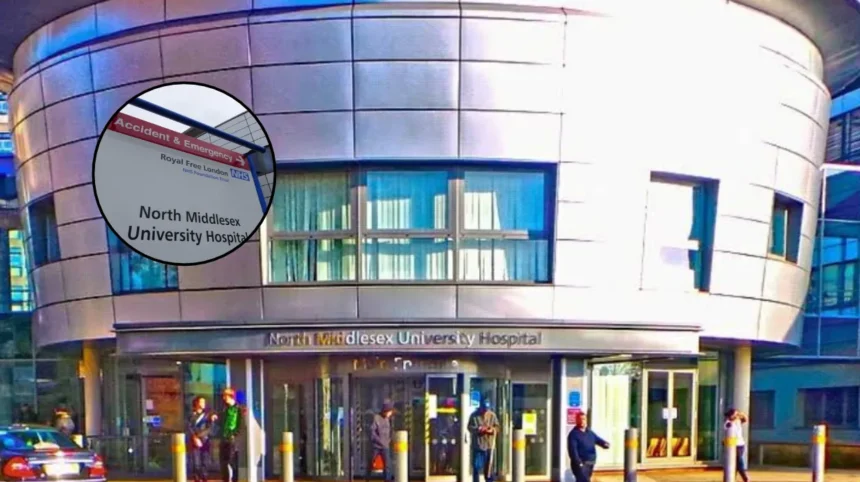
Edmonton (North London News) October 22, 2026 – North Middlesex University Hospital has been identified as having the highest number of child emergency admissions for breathing difficulties in England, following the publication of new data obtained through Freedom of Information requests by environmental campaign group Mums for Lungs.
- Key Points
- What Do the Latest Figures Reveal About Child Respiratory Admissions at North Mid?
- How Are Campaigners and Local Residents Responding to the Data?
- What Is the Medical Response From Healthcare Professionals at North Mid?
- Why Has London Failed Recent Air Quality Limits?
- Background of the Particular Development
- Prediction: How This Development Can Affect the Particular Audience
What Do the Latest Figures Reveal About Child Respiratory Admissions at North Mid?
As reported by environmental campaigners from Mums for Lungs, North Middlesex University Hospital in Edmonton recorded 10,393 paediatric respiratory accident and emergency (A&E) attendances over the past year. This figure places the North London trust at the top of the national table for children requiring urgent medical attention for respiratory conditions.
By comparison, Alder Hey Children’s Hospital in Liverpool recorded 9,525 paediatric respiratory attendances during the same period, while University Hospital of Derby and Burton recorded 7,891 attendances.
Across eleven major English cities analysed in the FOI investigation, a total of 213,341 children were admitted to hospital or attended emergency departments due to acute breathing problems. The data highlighted that the youngest demographic remains the most severely affected, with babies and toddlers aged up to three years representing 57 per cent of the total admissions.
How Are Campaigners and Local Residents Responding to the Data?
Campaign group Mums for Lungs, which represents parents advocating against air pollution in urban areas, expressed severe concern over the findings and urged immediate policy interventions from both local and national government authorities.
As reported by Ruth Fitzharris, a campaigner for Mums for Lungs who resides in Haringey, the statistics demonstrate a growing public health issue affecting families. Ruth Fitzharris stated:
“These figures are truly shocking. We need urgent action from central government to fix this situation, our children’s health is at stake. Parents across the country are deeply worried by this issue and deserve to see significant improvements in air quality as soon as possible. I’ve cared for my son through multiple serious asthma attacks, it’s been so difficult to deal with. Young lungs need clean air.”
Highlighting the physiological risks, campaigners noted that children are particularly susceptible to airborne toxins because their lungs are still in development, and they inhale a larger volume of air relative to their body weight compared to adults. Prolonged exposure to nitrogen dioxide (NO2) and fine particulate matter (PM2.5) is directly linked to chronic respiratory illnesses and the aggravation of pre-existing asthma conditions.
What Is the Medical Response From Healthcare Professionals at North Mid?
In response to the publication of the A&E attendance data, clinical leads at North Middlesex University Hospital detailed the compounding factors that contribute to respiratory admissions in the borough.
As reported by Dr Dhruv Rastogi, clinical lead for paediatric asthma at North Mid, the hospital manages one of the busiest emergency services for young patients in the capital. Dr Dhruv Rastogi stated:
“North Mid has one of the busiest children’s emergency departments in London. Many of the children we see with breathing difficulties are babies and toddlers with viral infections, which air pollution, poor housing and smoke exposure can make worse.”
Dr Rastogi outlined the clinical interventions and preventive measures currently being deployed across North London to manage patient care outside of high-pressure emergency wards:
“We work with families, schools and GPs to keep children well at home. This includes personalised asthma care plans, support from community asthma nurses, and moving suitable children onto newer single-inhaler Smart [single maintenance and reliever] therapy, which reduces serious asthma attacks. We also encourage vaccines that protect young children, such as RSV vaccination in pregnancy and the children’s flu vaccine.”
Addressing environmental factors, Dr Rastogi highlighted specific local infrastructure challenges:
“Our hospital is smoke-free and we support greener travel, but tackling pollution from roads like the A406 [North Circular] needs action across the whole system.”
Local clinical practitioners have also added their support to calls for cleaner air regulations across London boroughs. As reported by Dr Elizabeth Wan, a resident doctor in North London and mother to a child diagnosed with asthma, the high attendance figures reflect widespread distress among local families. Dr Elizabeth Wan stated:
“As a local doctor and a mum, these numbers represent so much anxiety, pain and sadness for so many families. Children in London deserve better – they should not be punished with poor health simply because of where they live. We need cleaner air for all of us, and we need it urgently.”
Why Has London Failed Recent Air Quality Limits?
The release of the hospital attendance figures coincides with official findings confirming that London has once again breached legal limits for toxic nitrogen oxide (NO2) air pollution during compliance assessments for 2025.
This development follows the previous 2024 compliance assessment, in which City Hall reported meeting legal limits for the first time—an achievement attributed by Mayor of London Sir Sadiq Khan to the expansion and implementation of the Ultra Low Emission Zone (ULEZ). The 2025 failure marks a setback for regional environmental targets.
As reported by Jemima Hartshorn, spokesperson for Mums for Lungs, the recent compliance breach underscores the need for continued policy enforcement. Jemima Hartshorn stated:
“London being declared to be illegally polluted again – failing to comply with limits that should have been met 15 years ago. This has to be a wake-up call for our mayor to continue the work he started which has seen pollution levels fall. We need to ensure we can swap the most polluting diesel vehicles for cleaner options: cars, vans and buses. And government needs to stand up to industry and ensure non-essential wood burning is phased out without any further delay.”
Background of the Particular Development
Air quality management and paediatric respiratory health have remained prominent public health priorities across Greater London over the past decade. The expansion of the Ultra Low Emission Zone (ULEZ) to cover all London boroughs in August 2023 was designed to lower ambient levels of nitrogen oxides (NOx) and fine particulate matter (PM2.5) by imposing daily charges on non-compliant motor vehicles.
Despite measurable overall reductions in vehicle emissions across the capital, specific transport corridors—such as the A406 North Circular, which borders Edmonton and directly feeds traffic past North Middlesex University Hospital—continue to experience dense commercial and commuter vehicular movement. Combined with socio-economic factors in North London, including higher rates of high-density housing, dampness, and localized domestic wood-burning stoves, paediatric emergency departments in the area consistently experience elevated attendances for acute respiratory infections, bronchiolitis, and asthma exacerbations during peak winter periods.
Prediction: How This Development Can Affect the Particular Audience
This development is likely to exert direct impacts on local residents, families with young children, local health services, and regional policymakers across Greater London:
- Increased Demand for Community Paediatric Care: Families residing in Edmonton, Haringey, and broader North London are likely to see an expansion in community-based healthcare initiatives. As hospitals seek to reduce A&E overcrowding, National Health Service (NHS) trusts and integrated care boards may shift resources toward primary care interventions, including home asthma management plans, expanded health visitor visits, and targeted vaccination drives for Respiratory Syncytial Virus (RSV) and influenza.
- Accelerated Regional Transport and Emission Policies: The confirmation of legal limit breaches for NO2 in 2025 will increase pressure on City Hall, Transport for London (TfL), and local councils to introduce further vehicle mitigation policies. This may include stricter enforcement on diesel freight vehicles, localized low-traffic neighbourhood (LTN) expansions, or heightened restrictions surrounding major arterial roads like the A406.
- Heightened Public Scrutiny on Domestic Heating Regulations: Environmental groups will likely step up campaigns aimed at central government to introduce stricter statutory limits or localized bans on domestic wood-burning stoves, which contribute significantly to fine particulate matter (PM2.5) in residential urban zones.
- Housing Standards Integration: Given the link established by clinical leaders between poor housing conditions and aggravated childhood respiratory illnesses, local authorities may face heightened obligations to enforce damp and mould remediation standards across social and private rented housing sectors in North London.