Barnet, in North London, offers families a range of educational attractions covering aviation, local history, astronomy, nature and outdoor learning. From the free Royal Air Force Museum in Colindale to Barnet Museum in High Barnet, these destinations combine family leisure with opportunities to explore science, technology, heritage and the natural environment.
- Which educational attractions in Barnet are best for families?
- Why is the Royal Air Force Museum London a valuable educational attraction for children?
- What can children learn from the aircraft collections?
- Which facilities make the museum suitable for families?
- How does Barnet Museum help families understand North London’s history?
- Can families visit UCL Observatory in Mill Hill to learn about astronomy?
- Where can families explore nature and environmental learning in Barnet?
- What can children learn at Stephens House and Gardens?
- Where can families study wildlife and habitats?
- How can parents turn a park visit into a learning activity?
- How can families combine educational attractions with local heritage in Barnet?
- Why is High Barnet useful for historical exploration?
- What can families learn from historic buildings?
- How can local history support school learning?
- What practical information should families know before visiting Barnet’s educational attractions?
- Which attractions offer free educational activities?
- How can families reach educational attractions in Barnet?
- How much time should families allocate?
- How can families choose the right educational attraction in Barnet for different ages?
- Which attractions suit younger children?
- Which destinations suit older children and teenagers?
- How can families make visits accessible and affordable?
- Why are educational attractions in Barnet valuable for family travel?
Educational attractions are places where visitors develop knowledge through exhibitions, historical collections, demonstrations, guided visits and practical activities. For families travelling with children, these destinations provide opportunities to connect school subjects with real objects, buildings, landscapes and scientific discoveries.
The London Borough of Barnet covers a large area of North London, including Colindale, Mill Hill, Hendon, Finchley and High Barnet. Its attractions suit different age groups, from younger children discovering aircraft to older pupils investigating local history or learning about astronomy. Several options also offer free admission, making educational days out accessible to families managing travel budgets.
Which educational attractions in Barnet are best for families?
Families visiting Barnet can explore aviation at the Royal Air Force Museum, local heritage at Barnet Museum, astronomy at UCL Observatory, and outdoor learning in the borough’s parks. These destinations introduce children to history, science, engineering, geography and environmental awareness through accessible experiences.
The best destination depends on children’s ages, interests, available time and the type of learning experience a family wants. An aviation museum provides a structured indoor visit, while a local history collection encourages closer examination of artefacts and historical evidence. An observatory introduces scientific research, and a park offers opportunities to study habitats and landscapes.
Royal Air Force Museum London
The museum displays historic and modern aircraft, explores the development of flight, and provides family activities. General admission is free, making it a strong option for a full educational day.
Barnet Museum
This volunteer-run museum explores the development of Barnet through photographs, artefacts, maps and material connected with the Battle of Barnet. Admission is free.
UCL Observatory
This University College London research facility offers public and school visits, tours and lectures through its outreach programme. Families should check availability before travelling.
Stephens House and Gardens
The historic house and gardens provide opportunities to explore landscape design, plants, seasonal changes and the relationship between buildings and their surroundings. Check current exhibitions and access arrangements before visiting.
These attractions represent different forms of informal education. Museums support object-based learning, astronomy introduces observation and scientific investigation, and gardens help children understand living systems and landscape management.
For families planning a first visit, the Royal Air Force Museum offers a broad range of subjects in one location. Barnet Museum is particularly suitable for a shorter visit focused on the area’s heritage. Combining either museum with an outdoor destination creates a varied family itinerary.
Why is the Royal Air Force Museum London a valuable educational attraction for children?
The Royal Air Force Museum London in Colindale teaches children about aviation, engineering, military history and technological development. Its aircraft collections, themed hangars, family activities and outdoor aviation playground provide learning opportunities for different ages, with free general admission.
The Royal Air Force Museum London occupies the former Hendon Aerodrome site. It opened in 1972 and preserves the history of the Royal Air Force (RAF), the United Kingdom’s air force, alongside the wider development of aviation.
The collection connects historical events with practical engineering. Children can examine aircraft designs, compare different stages of flight technology and investigate how aircraft changed in response to military requirements, materials and aerodynamics. Displays also provide context for the First World War, the Second World War and developments in modern air power.
What can children learn from the aircraft collections?
Aircraft provide clear examples of how scientific principles become working machines. Families can use the exhibits to discuss lift, thrust, drag and weight, the four forces commonly used to explain flight.
Older children can compare propeller-driven aircraft with jet aircraft. They can identify changes in engines, wings, cockpit design and materials. Younger visitors can focus on aircraft shapes, colours, size and the differences between helicopters and fixed-wing aeroplanes.
The museum also connects aviation with social history. Exhibitions explain the roles of service personnel and the effects of conflict on people and communities. This gives parents an opportunity to discuss historical evidence, remembrance and how technology influences society.
Which facilities make the museum suitable for families?
The museum provides family trails and activities, an aviation-themed outdoor playground, picnic areas, toilets and baby-changing facilities. Its café offers refreshments during a visit. Some additional experiences, such as simulators and special activities, require separate bookings or charges.
General admission is free, although advance booking is recommended by the museum. Car parking is chargeable, so families travelling by car should include this expense in their budget. Visitors arriving by public transport can use Colindale Underground station and continue to the museum on foot or by local bus.
Allow at least two to three hours to explore several hangars without rushing. Families with aviation enthusiasts can allocate more time to the aircraft collections and additional experiences. Checking the official events calendar before visiting helps families identify workshops, seasonal trails and activities suitable for their children’s ages.
How does Barnet Museum help families understand North London’s history?
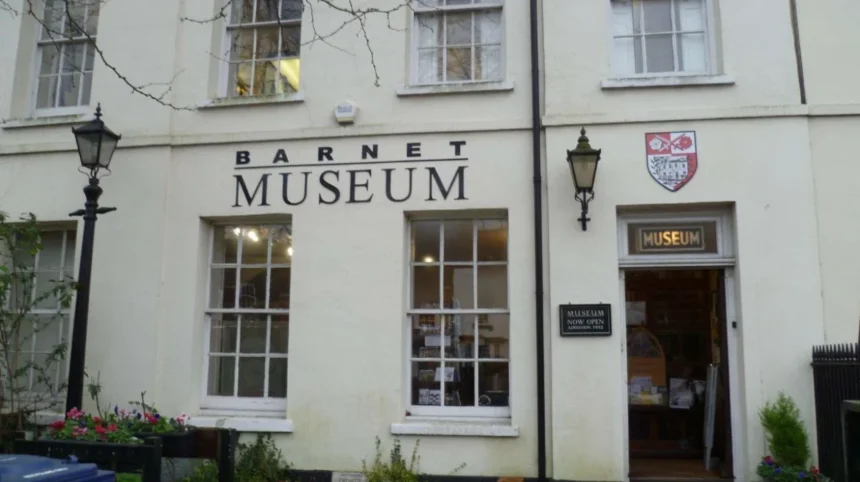
Barnet Museum introduces families to the history of High Barnet and surrounding districts through historical objects, photographs, maps, archives and displays. Its collection helps children understand local communities, everyday life, archaeology and significant events, including the medieval Battle of Barnet.
Located at 31 Wood Street, High Barnet, Barnet Museum is a small local history museum operated by volunteers. It opened in March 1938 to preserve and make available historical material collected by the Barnet Record Society, founded in 1927. Its collections cover the area’s history from the Bronze Age to the present day.
The museum’s educational value comes from its connection to the surrounding area. Rather than presenting history only through national events, it helps visitors investigate how people lived, worked and travelled in Barnet over time.
What historical subjects can families explore?
The museum’s collection includes photographs, maps, prints, domestic objects, clothing-related material and displays connected with the Battle of Barnet. The battle took place on 14 April 1471 during the Wars of the Roses, a series of conflicts over the English crown involving rival branches of the royal family.
The battle was fought between the forces of Edward IV and an army commanded by Richard Neville, Earl of Warwick, who was known as the Kingmaker. Warwick was killed during the fighting. The event provides a useful starting point for discussing medieval warfare, political power and how historians reconstruct events from surviving evidence.
Children can examine the differences between historical photographs and modern images, identify changes in buildings and streets, and consider why museums preserve objects. These activities introduce evidence-based thinking, chronology and the distinction between historical sources and modern interpretations.
How can parents make a museum visit more educational?
Parents can prepare a short list of questions before entering the museum. Asking children to identify an object, estimate its age and explain what it reveals about daily life encourages active observation.
A simple family activity involves selecting one photograph or artefact and discussing three points: what it shows, what it tells visitors about the past, and what information remains unknown. This method introduces historical interpretation without requiring advanced background knowledge.
Barnet Museum offers free admission and children’s quizzes. Its usual opening schedule is Tuesday to Thursday from 2.30 pm to 4.30 pm, Saturday from 10.30 am to 4 pm, and Sunday from 2.30 pm to 4.30 pm. It is closed on Mondays and Fridays. Check the official website before travelling because opening arrangements can change.
The building has stairs across its three floors and no public toilet, so families should consider access needs before visiting. Group visits outside normal opening hours can be arranged by appointment.
As you explore modern Barnet, you are also moving through a landscape shaped by centuries of settlement, trade and conflict. Read the full [History of Barnet and Its Development Through the Centuries] to understand the origins of the area’s historic streets, communities and landmarks.
Can families visit UCL Observatory in Mill Hill to learn about astronomy?
UCL Observatory in Mill Hill provides an introduction to astronomy, astrophysics and scientific research through organised public visits, school visits, tours and lectures. Families interested in space should check the university’s outreach programme because access depends on scheduled activities rather than unrestricted museum-style entry.
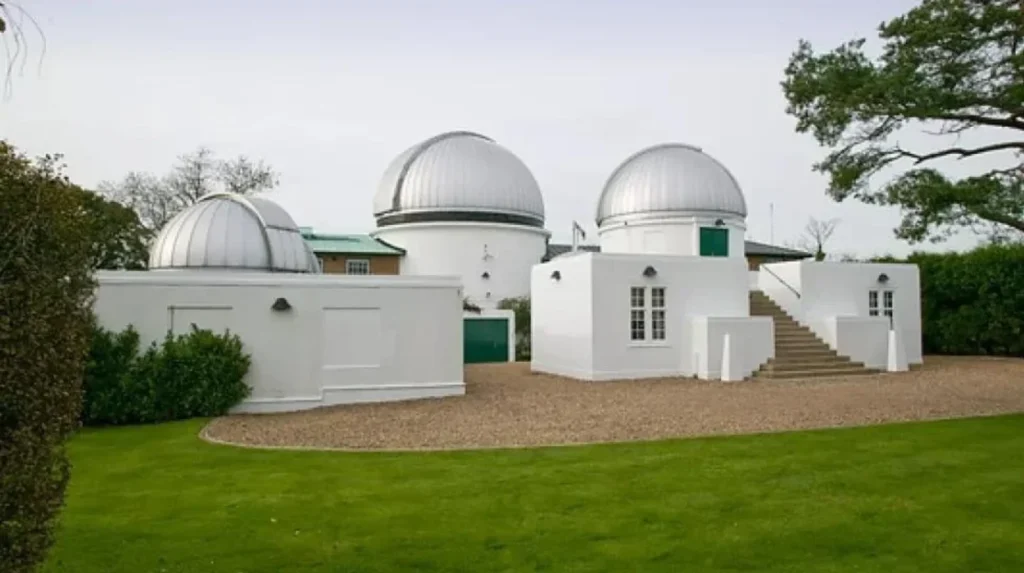
The UCL Observatory is an astronomical research facility operated by University College London (UCL). It opened in 1929 and supports astronomy teaching, undergraduate training and research. The site contains five domed astronomical telescopes used primarily for student education and scientific work.
For children who enjoy science, the observatory introduces astronomy as a discipline based on observation, measurement and evidence. It provides a connection between classroom subjects such as physics and mathematics and the study of stars, planets and other celestial objects.
What can children learn about space?
Astronomy introduces children to the scale and structure of the universe. Parents can use a visit to discuss planets, stars, galaxies, the Earth’s movement and the relationship between scientific observations and explanations.
Astrophysics applies principles of physics to astronomical objects. It helps researchers investigate how stars form, how celestial bodies emit light and how the universe changes over time. Older pupils can explore how telescopes collect light and how scientists use observations to study objects that are extremely distant.
The observatory’s public engagement programme includes tours and lectures designed to introduce visitors to astronomy and careers in science. The exact content depends on the event, so families should review the advertised age guidance and programme details before booking.
How should families plan an observatory visit?
UCL Observatory is located at 553 Watford Way, Mill Hill, London, NW7 2QS. The university provides contact details for enquiries about public visits, events and school visits. Families should contact the observatory directly to establish available dates, booking requirements and suitability for younger children.
Access also requires advance consideration. UCL states that ground-floor areas are accessible by ramps with handrails, while stairs are required to reach some teaching spaces and telescopes. Visitors with mobility requirements should confirm the arrangements for their particular event.
An observatory visit is particularly useful for school-age children who already show an interest in space or science. Families can extend the experience by observing the Moon from home, identifying constellations on a clear evening or keeping a simple record of changing lunar phases.
Unlike a large public museum, an observatory operates primarily as a research and teaching facility. Its educational value therefore comes from planned engagement with scientific work rather than an unrestricted walk-in exhibition.
Where can families explore nature and environmental learning in Barnet?
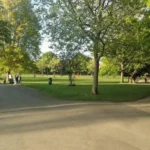
Barnet’s parks, gardens and green spaces provide outdoor learning opportunities involving plants, wildlife, habitats, geography and environmental conservation. Stephens House and Gardens, the borough’s public parks and the Welsh Harp reservoir area offer different settings for family walks and nature-based activities.
Barnet contains formal gardens, public parks, green spaces, parts of the Green Belt and river valleys. Barnet Council identifies these landscapes as important recreational and environmental assets for people living and working in the borough. They support activities including walking, play, sport and wildlife observation.
Outdoor learning complements museum visits because children can observe natural processes directly. They can examine leaves, compare habitats, identify bird behaviour and investigate how weather influences plants and animals. These activities encourage curiosity and introduce basic ecological concepts.
What can children learn at Stephens House and Gardens?
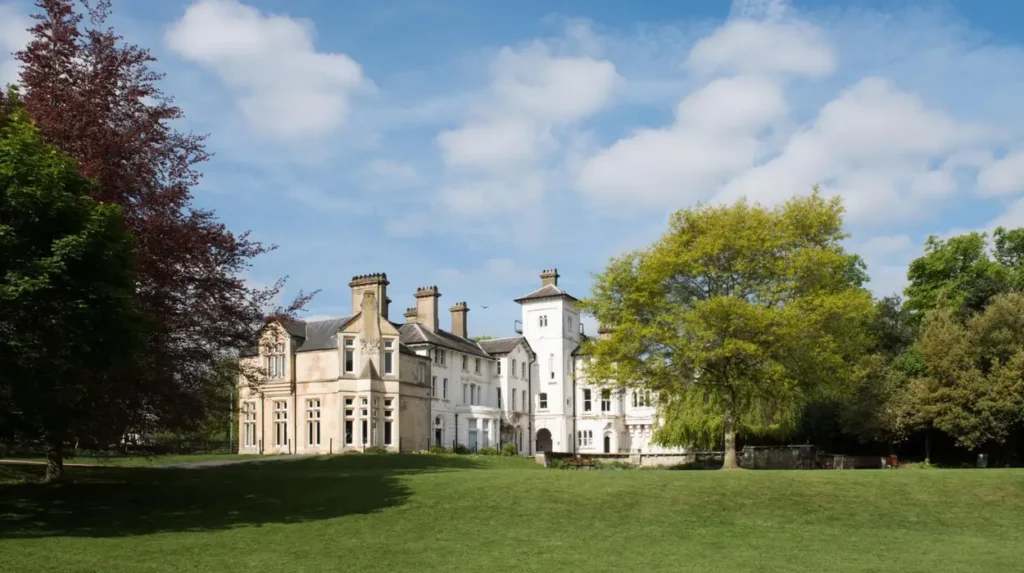
Stephens House and Gardens provides a combination of historic architecture and landscaped outdoor space. Families can use the setting to explore horticulture, garden design and the relationship between historic properties and their surrounding landscapes.
Garden visits provide practical examples of plant growth, seasonal change and biodiversity. Children can compare trees and shrubs, observe flowers and notice how different parts of a garden support insects and birds. Parents can introduce the concepts of pollination, soil, sunlight and water without needing specialist equipment.
The historic setting also creates opportunities to discuss how gardens were designed and maintained in different periods. Families should check the venue’s current access arrangements and event schedule before planning a visit.
Where can families study wildlife and habitats?
The Welsh Harp, also known as Brent Reservoir, is a waterbody on the western side of the borough near the Barnet–Brent boundary. Its reservoir, waterside vegetation and surrounding green spaces support opportunities for birdwatching and habitat observation.
A family nature walk can introduce the difference between aquatic and terrestrial habitats. Children can look for birds from suitable public paths, compare plants growing near water with those growing on drier ground, and observe how wildlife uses different parts of the landscape.
Visitors should remain on permitted paths, avoid disturbing nesting birds and never approach the water’s edge unnecessarily. Binoculars, a notebook and a basic bird identification guide make the visit more engaging.
How can parents turn a park visit into a learning activity?
Parents can organise a simple nature investigation around three tasks: identify three different leaf shapes, record two bird behaviours and observe one environmental feature, such as a pond, tree canopy or drainage channel.
Children can then compare their observations and explain how living things interact with their surroundings. Older children can investigate litter, habitat fragmentation and the importance of green spaces in urban areas.
These activities also develop geography skills. Children can use maps to identify walking routes, estimate distances and understand how green spaces connect with nearby streets and residential areas.
Park facilities and access arrangements differ by location. Families should consult Barnet Council’s parks directory before travelling, especially when seeking playgrounds, accessible paths, toilets or refreshments.
How can families combine educational attractions with local heritage in Barnet?
Families can combine museum visits, historic streets, religious buildings and outdoor spaces to investigate how Barnet developed over time. Connecting historical landmarks with preserved artefacts helps children understand settlement, transport, architecture, trade and the events that shaped North London.
Barnet’s heritage extends beyond museum displays. Its historic streets and surviving buildings provide evidence of changes in settlement patterns, religious life, commerce and transport. A family itinerary that combines indoor collections with outdoor exploration helps children connect historical information with real places.
Why is High Barnet useful for historical exploration?
High Barnet, also called Chipping Barnet, developed as a historic settlement on a route north from London. Its location contributed to the growth of markets, travel-related businesses and local services.
Families can use Barnet Museum as a starting point before exploring nearby streets. Comparing historic maps or photographs with the present-day street layout introduces the idea that towns change over time while retaining traces of earlier development.
The Battle of Barnet provides a further historical connection. Although the fighting took place in 1471, the event remains part of the area’s historical identity. Parents can explain how historians use written accounts, archaeological evidence and later interpretations to reconstruct medieval events.
What can families learn from historic buildings?
Historic buildings reveal information about construction materials, architectural styles and the needs of earlier residents. Children can compare the shape of windows, rooflines and entrances and consider how buildings served different purposes.
Churches and other historic structures also help explain how religion, community life and local institutions influenced settlement. Families should respect active places of worship, follow visitor guidance and check whether interior access is available.
A heritage walk does not require entry to every building. Observing external features, reading interpretation panels and comparing the streetscape with a map provide useful learning activities at little or no cost.
How can local history support school learning?
A visit to Barnet can support subjects across the school curriculum. History activities develop chronological understanding and the use of evidence. Geography activities explore settlement patterns and land use. Art activities examine architecture, while English tasks encourage children to describe objects and write short accounts of what they observed.
Parents can ask children to choose one building, street or artefact and explain why it matters to the area’s identity. Older pupils can develop a short research project using museum resources and reliable historical publications.
This approach also helps children understand that local history forms part of national history. Events, migration, changing transport links and economic activity influence how communities develop across generations.
What practical information should families know before visiting Barnet’s educational attractions?
Families should check opening times, booking requirements, accessibility, transport connections and additional costs before visiting educational attractions in Barnet. The Royal Air Force Museum and Barnet Museum offer free admission, while observatory events and special experiences follow individual booking arrangements.
Planning ahead helps families choose attractions that match their children’s interests, available time and travel budget. Opening schedules differ significantly between museums, research facilities, parks and historic properties.
Which attractions offer free educational activities?
The Royal Air Force Museum and Barnet Museum are two established options for families seeking free admission. The RAF Museum offers aircraft exhibitions, family activities and an outdoor playground, while Barnet Museum provides local historical displays and children’s quizzes.
Public parks also offer low-cost opportunities for outdoor education. Families can explore plants, observe wildlife and investigate local geography without purchasing museum tickets. However, parking, refreshments, special events and additional experiences can involve separate charges.
UCL Observatory operates differently because visits are organised through its public and educational engagement programme. Families should confirm event availability and any booking conditions directly with the university.
How can families reach educational attractions in Barnet?
Barnet is served by London Underground services, National Rail connections and local buses. The best route depends on the attraction and the family’s starting point.
The Royal Air Force Museum is located in Colindale, near Colindale Underground station on the Northern line. Barnet Museum is in High Barnet, while UCL Observatory is in Mill Hill on Watford Way. Families visiting several destinations should plan separate journeys rather than assume the attractions are within easy walking distance of one another.
Using public transport can reduce parking expenses and simplify visits to attractions close to stations. Families travelling with pushchairs or visitors with mobility requirements should check step-free access and walking distances before setting out.
How much time should families allocate?
The required time depends on the destination and the children’s interests. The following estimates are suggested planning allowances rather than official visit durations.
- Royal Air Force Museum: Allow two to four hours for aircraft displays, family activities and breaks.
- Barnet Museum: Allow 45–90 minutes for the collections and children’s quizzes.
- UCL Observatory: Follow the duration specified for the booked event.
- Stephens House and Gardens: Allow one to two hours for a garden walk and outdoor exploration.
- Welsh Harp: Allow one to two hours for a relaxed nature walk and birdwatching.
Families planning a full day should prioritise one major attraction and add a nearby outdoor activity if time permits. This reduces travel between locations and gives children time to engage with exhibits rather than simply move through them.
Explore More Area Guide
Where Can Children Learn About Nature in Barnet?
Which Shopping Areas in Barnet Have the Strongest Local Character?
How can families choose the right educational attraction in Barnet for different ages?
The most suitable educational attraction depends on a child’s age, interests, mobility and preferred learning style. Younger children benefit from visual displays and outdoor exploration, while older pupils gain more from historical research, scientific explanations and structured educational visits.
Educational visits work best when activities match children’s developmental stages. Parents can adapt the same destination to different ages by changing the questions they ask and the amount of detail they introduce.
Which attractions suit younger children?
Younger children often respond well to large aircraft, colourful displays, playgrounds and outdoor discovery. The Royal Air Force Museum combines aircraft exhibitions with an aviation-themed playground, providing opportunities to alternate between indoor learning and active play.
At a park or garden, parents can encourage children to identify shapes, colours, leaves and birds. Simple observation activities introduce science without requiring lengthy explanations.
Which destinations suit older children and teenagers?
Older children benefit from activities that require investigation, comparison and evidence-based reasoning. Barnet Museum provides a starting point for local history projects, while UCL Observatory introduces astronomy and scientific research through scheduled engagement activities.
At the RAF Museum, teenagers can explore the relationships between engineering, military strategy and technological change. They can compare aircraft designs and investigate how innovations affected aviation.
Families can extend these visits by asking children to prepare a short presentation, write a report or research one exhibit after returning home. These tasks strengthen reading, research and communication skills.
How can families make visits accessible and affordable?
Families should review accessibility information before booking. The RAF Museum provides visitor facilities, while Barnet Museum has stairs within the building and no public toilet. UCL Observatory has ramp access to ground-floor areas, but stairs are necessary for some spaces.
To manage costs, prioritise attractions with free admission, use public transport where practical, carry water and snacks where permitted, and check whether special activities require payment.
Parents should also consider children’s sensory needs, rest requirements and tolerance for walking. Shorter visits with focused activities often provide a more manageable experience than trying to cover several attractions in one day.
Why are educational attractions in Barnet valuable for family travel?
Educational attractions make family travel more purposeful by connecting leisure with practical learning. Barnet’s museums, aviation displays, astronomy programmes and green spaces introduce children to history, science, engineering and ecology while helping visitors understand the character of North London.
Learning outside the classroom gives children opportunities to observe real objects, environments and scientific facilities. Museums preserve historical evidence, observatories connect visitors with scientific research, and outdoor spaces provide direct encounters with nature.
These experiences also support family discussion. Parents can ask children what surprised them, which object they found most interesting and what questions they want to investigate further. Such conversations reinforce learning without requiring formal lessons.
Barnet’s combination of indoor attractions and outdoor environments makes it suitable for different interests and weather conditions. The Royal Air Force Museum provides a substantial indoor experience, Barnet Museum offers a focused introduction to local heritage, and parks provide space for informal environmental learning.
The most effective itinerary begins with a clear learning objective. Families interested in engineering can prioritise aviation, those exploring local heritage can visit Barnet Museum, and those interested in astronomy can investigate UCL Observatory’s scheduled public programme.
For tourists, these attractions provide a way to explore a less central part of London through its history, institutions and landscapes. For local residents, they offer opportunities to revisit familiar places with a new educational focus.
Before travelling, confirm opening hours, access arrangements and booking requirements through the official venue websites. With a little preparation, families can build an informative and affordable day out that combines discovery, recreation and a deeper understanding of Barnet.
What are the best educational attractions for families in Barnet?
The best educational attractions include the Royal Air Force Museum in Colindale, Barnet Museum in High Barnet, UCL Observatory in Mill Hill, and Stephens House and Gardens in Finchley.