Key Points
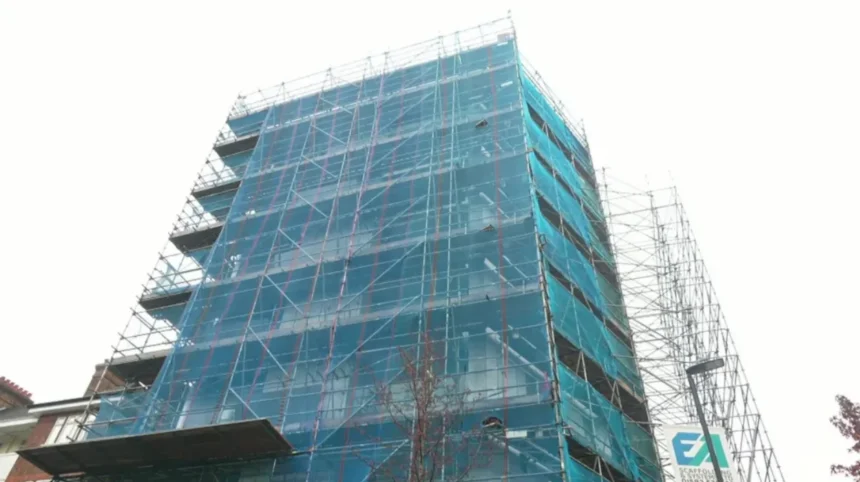
- Six-Year Scaffolding: Scaffolding has remained erected around Archway Heights, a nine-storey residential tower block in north London, since 2020.
- Intruder Security Risks: Residents report frequent security breaches, with unauthorized individuals climbing the framework and standing directly outside bedroom windows.
- Preventative Measure: The housing association, Places for People, originally put up the structure after a section of external cladding detached from the building.
- Regulatory Deadlock: Remediation work remains stalled because an application submitted to the Building Safety Regulator (BSR) in 2024 was invalidated due to missing compliance data.
- Extreme Living Conditions: Occupants report being unable to open windows during summer heatwaves, while key evidence such as CCTV footage of trespass incidents was wiped before inspection.
Archway (North London News) October 29, 2026 – Residents residing within Archway Heights, a nine-storey residential block situated in north London, have expressed growing outrage after being subjected to a six-year “nightmare” caused by pervasive external scaffolding that has left their homes vulnerable to continuous trespassers. According to statements gathered by BBC News reporting, the temporary structural framework was initially erected in 2020 by the site’s housing provider, Places for People, as a safety protocol following an incident where a section of external cladding fell off the façade. However, six years on, remediation work has made no practical progress, leaving occupants trapped in unsafe and unventilated conditions while an administrative deadlock persists between the landlord and the Building Safety Regulator.
What is causing the prolonged delay in removing the scaffolding?
As detailed in coverage by BBC News reporter Tim Whittome, the primary factor preventing the dismantling of the structure and the execution of essential building safety repairs is a regulatory impasse between the property owners and national building oversight bodies. In a formal statement issued by the housing association Places for People, the management confirmed that physical restoration cannot commence until full statutory clearance is granted by the official authority. Places for People stated:
“We are waiting for approval from the Building Safety Regulator (BSR) to begin repairs.”
However, as reported by BBC News, statements provided by the Building Safety Regulator offer a contrasting perspective regarding where responsibility for the stagnation lies. The BSR clarified that an official building work application lodged by Places for People in 2024 was rejected and deemed non-compliant. A spokesperson for the regulator stated:
“An application submitted in 2024 had been invalidated, with further information required to demonstrate compliance with building regulations.”
Because the submission failed to satisfy statutory safety protocols, the regulatory body was unable to authorize the requested works, leaving the project suspended indefinitely while updated documentation is compiled.
How are security breaches and scaffolding intruders impacting residents?
As highlighted in news accounts by Tim Whittome of BBC News, the presence of the multi-storey steel framework has drastically reduced physical security for individuals living inside the block, providing unauthorized intruders with unhindered access to private upper-floor flats.
Tenants residing in the property have detailed alarming encounters with trespassers scale-climbing the structure. As reported by Tim Whittome, Archway Heights tenant Natasha Dyett, who relocated to the nine-storey block two years ago when the scaffolding was already installed, described the continuous strain on daily living conditions:
“We’ve had the heatwave this summer; I’ve spent most of it with everything shut because we’ve had people breach the scaffolding all summer long.”
Ms Dyett further recounted a harrowing incident from July when an intruder appeared directly outside her upper-floor flat window late at night. As reported by BBC News, Ms Dyett stated:
“I climbed into bed, I turned over and I saw something outside. I rubbed my eyes because my vision is failing and I could still see it and it moved. I realised it was a person standing there.”
Upon discovering the trespasser, Ms Dyett shouted at the individual to leave before contacting her housing management for assistance. Management representatives instructed her to contact local law enforcement authorities. However, efforts to identify the intruder were stymied when the building’s closed-circuit television (CCTV) records were erased before police or security personnel could review the footage.
Emphasising the chronic nature of the security lapses across the block, Ms Dyett added:
“It seems that every week someone is reporting people on the scaffolding. They just walk around. I think they can get all the way up to the roof.”
What is the background of the Archway Heights development?
Archway Heights is a nine-storey residential apartment complex located in the London Borough of Islington, managed under the stewardship of Places for People, one of the UK’s largest housing associations. The building’s structural complications mirror wider systemic challenges observed across the United Kingdom’s high-rise residential sector in the aftermath of the 2017 Grenfell Tower disaster.
Following national legislative overhauls—most notably the passage of the Building Safety Act 2022—social housing landlords and private freeholders were mandated to conduct rigorous fire risk assessments of external wall systems (EWS1). When a fragment of external cladding detached from Archway Heights in 2020, emergency containment measures required the immediate installation of full-height perimeter scaffolding to mitigate falling debris risks.
The established statutory framework dictates that major remedial works on high-rise residential buildings (defined as structures over 18 metres or seven storeys) must undergo Gateway 2 review by the Building Safety Regulator before physical construction can proceed. The BSR operates as an independent body under the Health and Safety Executive (HSE) to enforce rigorous standards for structural safety and fire prevention. Because the 2024 application submitted by Places for People was marked invalid, the site has remained locked in regulatory limbo, leaving scaffolding standing as an unmaintained permanent fixture for six consecutive years.
What is the future prediction for residents and social housing providers?
The protracted crisis at Archway Heights carries substantial implications for both local residents and the broader UK housing sector:
Implications for Archway Heights residents
- Escalating Psychological Strain and Isolation: Residents face prolonged anxiety and claustrophobia, driven by the inability to open windows during seasonal heatwaves or maintain personal privacy.
- Persistent Security Vulnerabilities: Unsecured access routes to upper floors will continue to invite opportunistic crime and antisocial behavior until perimeter security is upgraded or scaffolding is dismantled.
- Potential Financial and Property Risks: Extended exposure to temporary scaffolding can lead to severe natural light deprivation, potential damp or condensation issues from unvented living space, and severe devaluation of leasehold properties.
Implications for housing associations and regulators
- Regulatory Rigour and Administrative Backlogs: The invalidation of the 2024 application underscores the strict compliance standards enforced by the Building Safety Regulator, signalling that social housing providers must submit flawless safety documentation to avoid years-long delays.
- Operational Reputation: Landlords like Places for People face mounting reputational risks and potential legal challenges from tenant advocacy groups over prolonged living disruption and ineffective evidence retention practices, such as overwritten CCTV logs.