Key Points
- Regulatory Failure: The Regulator of Social Housing has found that Haringey Council “very seriously failed” to meet consumer standards, issuing the local authority with its lowest possible grade.
- Overdue Safety Actions: Almost 4,000 remedial fire safety actions were identified as overdue, with 1,400 of these explicitly categorized as “high-risk.”
- Misleading Claims: In November, Haringey Council formally informed the regulator that all high-risk, overdue fire safety issues had been resolved—a claim contradicted by regulatory findings.
- Substandard Housing Conditions: Approximately 16% of council-managed homes failed to meet the Decent Homes Standard, compounded by backlogs in damp and mould repairs and inadequate communication.
- Tenant Concerns: Long-term residents have expressed frustration over unresolved combustible cladding panels and outdated fire doors, claiming the council continuously dismissed significant risks.
- Pattern of Negligence: This investigation follows a 2023 regulatory warning and a fire at the 17-storey Kenneth Robbins House, where residents reported unactivated smoke alarms and unresolved medium-priority maintenance actions.
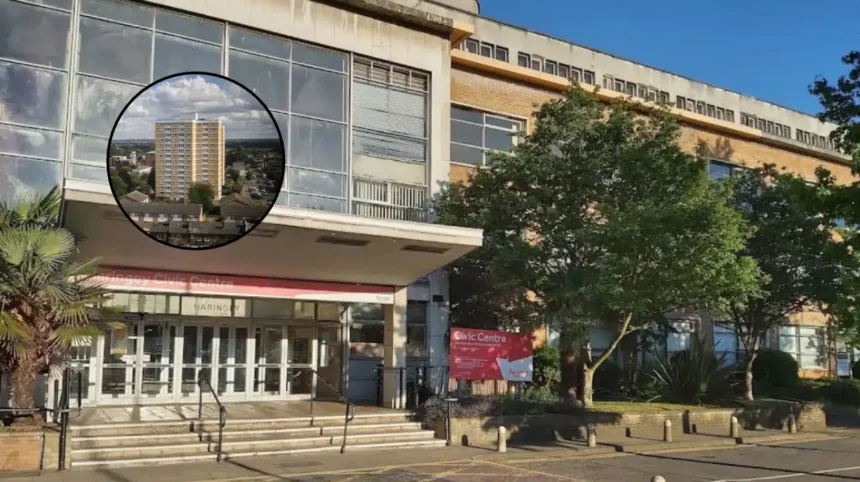
Haringey (North London News) October 29, 2026 – As reported by journalists at Metro, a former Haringey Council has been accused of misleading tenants regarding the severe fire risks present within their residential properties. The Regulator of Social Housing determined that the North London borough had “very seriously failed” to comply with consumer protection standards, ultimately awarding the local authority the lowest possible regulatory grade in its published report. The investigation uncovered nearly 4,000 overdue remedial actions identified during formal fire risk assessments, including 1,400 categorized as “high-risk.” Despite these outstanding issues, the council had written to the regulator in November asserting that every high-risk, overdue fire safety task had been successfully resolved. Additionally, 16% of the council’s housing stock failed to meet the Decent Homes Standard, plagued by extensive repair backlogs for damp and mould alongside persistent tenant communication breakdowns.
- Key Points
- Why Has the Regulator Awarded Haringey Council Its Lowest Safety Grade?
- How Are Local Residents Reacting to the Findings?
- What Previous Safety Incidents Have Occurred in Haringey Council Properties?
- Background of the Development
- Prediction: How Will This Development Affect Tenants and Social Housing Authorities?
Why Has the Regulator Awarded Haringey Council Its Lowest Safety Grade?
The judgment from the Regulator of Social Housing highlights systemic failures in maintaining essential health and safety protocols across municipal housing stock. As detailed by Metro, the inspection found that thousands of safety remediations were left incomplete well beyond designated operational deadlines.
Among the key deficiencies detailed in the regulatory review:
- Failure to meet consumer standards: Systematic breakdown in delivering required health, safety, and tenant care levels.
- Unresolved remedial actions: Nearly 4,000 overdue safety items identified across multiple inspections.
- High-risk hazards: 1,400 unresolved issues posing direct fire and structural safety risks.
- Contradictory reporting: Formal correspondence sent to the regulator in November falsely claiming all high-risk actions had been cleared.
How Are Local Residents Reacting to the Findings?
For individuals living inside the affected properties, the regulator’s findings confirm long-held fears regarding structural safety and administrative transparency.
As reported by Metro, Paul Burnham, a resident who has lived in Haringey for 25 years, stated that he has repeatedly raised alarms regarding combustible panels on the exterior of his building and “ancient fire doors” that leave residents feeling profoundly unsafe.
As reported by Metro, Paul Burnham stated:
“It has been 10 years since the Grenfell fire, and Haringey Council has learnt absolutely nothing. They have completely disengaged with tenants, and told us consistently there is no significant fire risk. This report proves that this is not true.”
What Previous Safety Incidents Have Occurred in Haringey Council Properties?
The latest regulatory judgment represents a continuation of safety concerns previously identified within the borough’s managed housing.
As reported by Haringey Community Press, the Regulator of Social Housing previously warned in 2023 that the council had “put thousands of tenants at potential risk by failing to meet health and safety requirements for fire and electrical safety.”
This warning followed a serious incident where a fire partially spread through Kenneth Robbins House, a 17-storey residential high-rise. During the incident, residents reported that communal smoke alarms failed to activate. Subsequent investigations revealed that eight medium-priority maintenance tasks—including critical checks on smoke alarm functionality—had been listed as “ongoing” for over a year, despite statutory requirements mandating completion within six months.
Background of the Development
The current regulatory enforcement against Haringey Council occurs against the backdrop of national building safety reform initiated after the 2017 Grenfell Tower tragedy in West London. The loss of 72 lives in high-rise social housing exposed widespread institutional oversights regarding combustible external cladding, inadequate compartmentation, failing fire doors, and systemic indifference to tenant complaints across local government bodies.
In response, the UK government enacted the Building Safety Act and upgraded the powers of the Regulator of Social Housing. Under the expanded framework, social housing landlords—including local authorities and housing associations—are subjected to strict consumer standards with legally binding timelines for identifying and mitigating fire hazards. Municipalities are required to maintain transparent safety records and actively address building defects, particularly regarding damp, mould, external wall cladding, and compartmentation integrity.
Haringey Council’s history of regulatory non-compliance reflects long-standing operational challenges in managing its public housing inventory, leading to recurring regulatory interventions over health and safety management.
Prediction: How Will This Development Affect Tenants and Social Housing Authorities?
This development will have direct, far-reaching impacts on local council tenants, local authority leadership, and the broader social housing sector across the United Kingdom.
Impact on Council Tenants
- Increased Scrutiny and Independent Audits: Tenants residing in Haringey Council properties are likely to see an immediate influx of independent surveyors and fire risk assessors inspecting communal areas, fire doors, and external cladding.
- Disruption from Urgent Works: The council will be forced to prioritize the 1,400 overdue high-risk remedial actions, leading to intrusive physical works, including the replacement of non-compliant fire doors and external wall repairs.
- Legal and Tenant Advocacy Actions: Local tenant groups may leverage the regulator’s findings to initiate legal challenges, demand compensation for substandard living conditions, or press for emergency rehousing where high-risk hazards remain unaddressed.
Impact on Local Government and Housing Authorities
- Enhanced Regulatory Oversight: Haringey Council faces direct administrative intervention from the Regulator of Social Housing, requiring the submission of legally binding recovery plans and regular progress reporting.
- Financial Strain: Resolving thousands of overdue fire safety measures and damp/mould backlogs will require significant emergency capital expenditure, straining council budgets and potentially forcing the diversion of funds from other municipal services.
- Sector-Wide Regulatory Warning: The public exposure of false assurances provided to the regulator sets a legal and administrative precedent. Other local authorities across the UK will likely conduct immediate internal audits of their fire risk assessment compliance to avoid similar downgrade rulings and potential legal liabilities.