Key Points
- Motorist Involved: Mahed Hassan, 30, residing at Asquith Road, Oxford.
- Vehicle Driven: Audi A3 S Line.
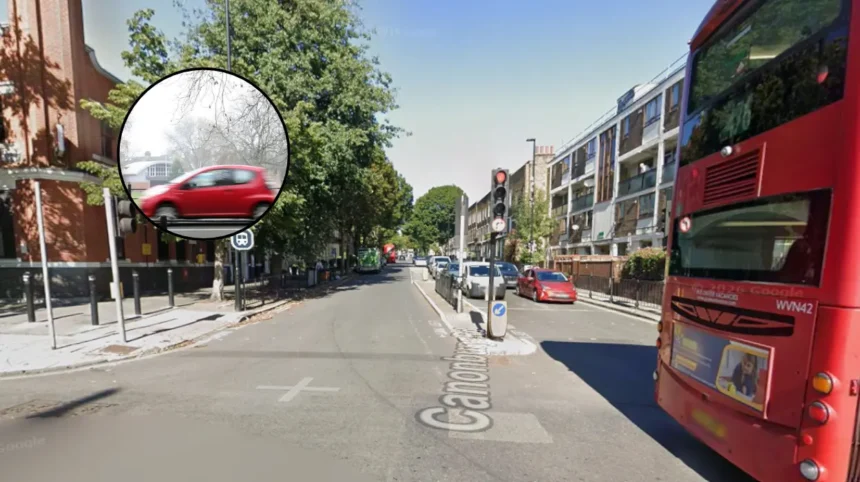
- Offence Location: New North Road (A1200) near Ecclesbourne Road, located in the London Borough of Islington.
- Nature of Offence: Exceeding the mandatory 20 mph speed limit, detected automatically by a roadside camera device in breach of a local traffic order.
- Legal Proceedings & Plea: Hassan entered a guilty plea at Willesden Magistrates’ Court on October 28.
- Financial Penalties: Ordered to pay a £100 fine, a £40 victim surcharge, and £85 in prosecution costs to the Crown Prosecution Service (totaling £225), alongside a structured payment collection order of £150 per month starting December 4.
- Licence Endorsement: Three penalty points added to his driving record.
Islington (North London News) November 4, 2026 –A motorist has been fined after exceeding a 20 mph speed limit on New North Road in Islington.
Why Was the Motorist Prosecuted in a London Court?
As reported by the Oxford Mail, Mahed Hassan, a 30-year-old resident of Asquith Road, Oxford, found himself facing legal action after driving his Audi A3 S Line past a roadside enforcement device. According to court particulars brought forward during the proceedings, the incident occurred on September 4 of the previous year along the A1200 section of New North Road, specifically near the junction with Ecclesbourne Road within the London Borough of Islington.
The speed infringement was automatically captured by a certified camera device installed across the metropolitan roadway network. Such automated traffic systems operate continuously to enforce local traffic orders, which have increasingly designated urban residential and commercial thoroughfares across Greater London as 20 mph zones to enhance pedestrian safety and minimise collision severities. By accelerating past this designated threshold, the vehicle triggered the automated enforcement mechanism, initiating a formal paper trail that culminated in a magistrates’ court appearance.
How Did the Defendant Plead at Magistrates’ Court?
Continuing the legal process, the case was heard at Willesden Magistrates’ Court, where Mahed Hassan formally entered a guilty plea to the charge of exceeding a local traffic order speed limit on October 28. Legal representatives and magistrates took the early guilty plea into formal consideration when deliberating the final financial penalties and administrative sanctions.
Pleading guilty at the earliest opportunity typically secures standard mitigation benefits in UK magistrates’ courts, reflecting cooperation with the justice system. Despite this mitigation, the bench proceeded to issue a structured penalty package designed to penalise the traffic breach while accounting for statutory guidelines associated with urban speeding violations.
What Financial Penalties and Licence Endorsements Were Imposed?
As detailed in the court records examined by the Oxford Mail, the magistrates imposed a direct financial penalty comprising multiple elements. Mahed Hassan was handed a £100 fine for the primary speeding offence. In addition to the principal fine, the bench ordered him to pay £85 in prosecution costs directly to the Crown Prosecution Service, alongside a statutory £40 victim surcharge, bringing the total monetary obligation to £225.
Furthermore, the court administered a formal endorsement on his driving record, adding three penalty points to his licence. To manage the settlement of these financial liabilities, a formal collection order was established by the court. Under the terms of this collection order, repayments were structured into monthly instalments of £150, with the first payment scheduled to commence on December 4.
Background of the Particular Development
The implementation and strict enforcement of 20 mph speed limits across London boroughs, including Islington, represent a broader nationwide initiative by local authorities and Transport for London (TfL) to curb traffic-related fatalities and serious injuries. Over recent years, miles of capital roads have seen reduced speed thresholds to protect vulnerable road users such as pedestrians, cyclists, and children. Automated speed cameras have become the primary mechanism for monitoring compliance, operating around the clock to detect infractions without requiring active police interception. For motorists travelling from outside London—such as drivers commuting or visiting from Oxfordshire—navigating these widespread urban restrictions frequently results in automated penalty notices if local signage and speed indicators are overlooked.
Prediction
This judicial outcome serves as a clear reminder for motorists, particularly those travelling between regions like Oxfordshire and Greater London, regarding the uncompromising nature of automated urban traffic enforcement. For the driving public and cross-border commuters, this development underscores the financial and administrative risks associated with non-compliance in low-speed zones. As local authorities continue to expand 20 mph limits across metropolitan districts, drivers can expect heightened scrutiny, making strict adherence to roadside signage essential to avoid unexpected magistrates’ court appearances, costly financial penalties, and accumulating penalty points that threaten driving privileges.