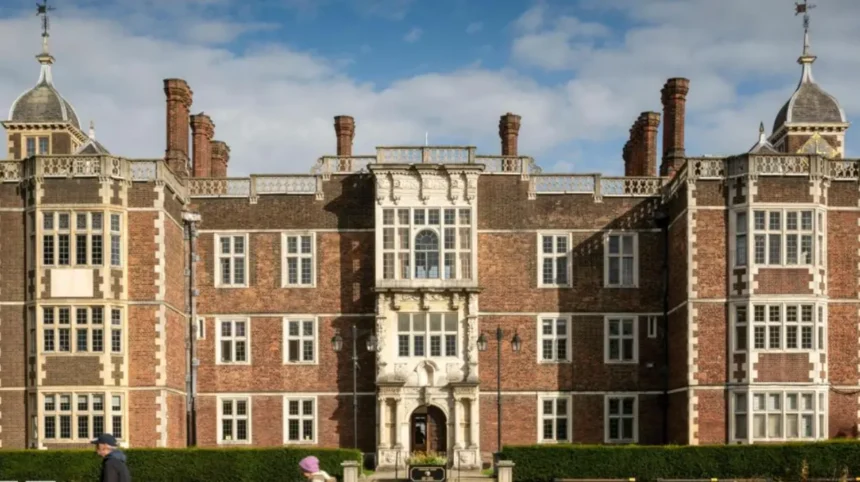
- Historic London landmarks added to danger list: King Edward Hall in Finchley and the Foreman’s House at College Farm have both been placed on Historic England’s Heritage at Risk Register on 5 November 2024.
- Severe structural decline reported: Both properties are officially classed as being in “poor” and “declining” condition, facing a high vulnerability of decay without intervention.
- Capital-wide conservation initiative: The sites are among 16 historic locations across London added to the register in a bid to spur local authorities and conservation bodies into taking urgent action.
- Edwardian assembly hall with wartime heritage: King Edward Hall, constructed in 1912, features a distinctive four-storey clock tower and served as a temporary hospital for wounded First World War servicemen.
- Pioneering Victorian dairy history: The Foreman’s House forms part of College Farm, the former model farm of the Express Dairy Company, which pioneered the production of foil-capped bottled milk and carton milk in the United Kingdom.
- Urgent call for preservation: Historic England warns that commercial ownership and previous failed restoration attempts leave both architectural treasures at immediate risk of further structural degradation.
Finchley (North London News) November 6, 2026 – Two prominent architectural gems in North London have been officially added to Historic England’s Heritage at Risk Register following findings that both structures are in poor, declining condition and face a high risk of structural decay. As reported by Joseph Reaidi of the Times Series, King Edward Hall on Regents Park Road and the Foreman’s House at College Farm in Fitzalan Road are among 16 historic sites across the capital added to the heritage body’s annual danger list on 5 November 2024. The official designation aims to trigger rapid conservation efforts and encourage local councils, heritage organisations, and private stakeholders to secure the necessary funding and repairs to save these historic landmarks from irreversible damage.
Which Finchley Buildings Have Been Designated At Risk?
As detailed by Joseph Reaidi of the Times Series, the first building added to the register is King Edward Hall, located at 331–343 Regents Park Road, Finchley. Built in 1912 and designed by the architectural firm Turner and Higgins, the three-storey red-brick structure is Grade II listed. The property features an Edwardian community hall, a parade of ground-floor shops, and a striking four-storey circular corner clock tower topped with a copper dome and a flagstaff. Originally commissioned as a private banqueting and assembly hall, the venue was repurposed shortly after its construction to function as a temporary military hospital, treating wounded British servicemen during the First World War.
According to Historic England’s assessment cited by Joseph Reaidi of the Times Series, the building retains substantial architectural significance. The exterior features “King Edward Hall” carved into its stone parapets, while the interior preserves extensive relief plasterwork incorporating decorative friezes with scroll, shell, and palm frond motifs. Although the original performance stage was removed during the 20th century, the proscenium arch remains intact alongside period balcony fronts, well staircases featuring cast-iron balustrading, and original doors. Furthermore, several original ground-floor shopfronts maintain their historical pilasters and brackets. However, because the site is currently under commercial ownership, Historic England warned that the property faces progressive deterioration unless formal conservation measures are promptly implemented.
As further reported by Joseph Reaidi of the Times Series, the second North London site placed on the list is the Foreman’s House on Fitzalan Road. The red-brick cottage is situated on the historic College Farm site, which remains the last surviving farm complex in Finchley. The property is currently assessed as being in a “poor” and “declining” state, leaving it highly vulnerable to environmental decay and structural failure.
What Is the Historical Significance of College Farm and the Foreman’s House?
As reported by Joseph Reaidi of the Times Series, the Foreman’s House represents a key component of Britain’s agricultural and industrial heritage. The original site, formerly known as Sheephouse Farm, was purchased in 1868 and comprehensively rebuilt in 1882 by George Barham, the founder of the Express Country Milk Supply Company (later known as the Express Dairy Company). Under Barham’s leadership, the location was transformed into an industrial model farm that introduced major innovations to the dairy trade, including the nation’s first foil-capped glass milk bottles and early commercial milk cartons.
According to historical records cited by Joseph Reaidi of the Times Series, College Farm operated as a major industry showpiece complete with a specialized dairy, grain silo, and main agricultural outbuildings, all of which share listed status alongside the Foreman’s House. Architecturally, the Foreman’s Cottage stands out as a classic example of late-Victorian domestic design, characterized by its distinctive steep roofs, prominent gables, and period tiling.
For generations, the site functioned primarily as a public visitor attraction, welcoming local families for cream teas and public viewings of its pedigree cattle herds. However, as noted by Joseph Reaidi of the Times Series, the farm entered a prolonged period of instability after it was compulsorily acquired by the Department for Transport to accommodate proposed road-widening works along the North Circular Road. The site subsequently fell into decline, and recent efforts to restore and manage the complex by the College Farm Trust charity ultimately ended in failure, leaving the Foreman’s House exposed to severe structural deterioration.
Background of the North London Heritage at Risk Developments
The Heritage at Risk Register is published annually by Historic England to draw public and institutional attention to Grade I and Grade II listed buildings, structural monuments, battlefields, conservation areas, and registered parks that face imminent danger due to neglect, decay, or inappropriate development. Inclusion on the list provides a framework for local authorities, heritage charities, and property owners to apply for specialized conservation grants, secure emergency repair orders, and coordinate long-term management plans.
In North London, suburban historic sites often face distinct conservation challenges compared to central London landmarks. Commercial properties, such as King Edward Hall, frequently struggle with competing financial priorities between private commercial tenants and the expensive specialist maintenance required for Grade II listed structures. Meanwhile, former agricultural and public assets, such as the Foreman’s House at College Farm, often suffer from complex ownership histories, infrastructure expansion projects—such as historic transport schemes along major arteries like the North Circular Road—and the financial fragility of local charitable trusts attempting to maintain historic land without sustained public subsidies.
Prediction: How Will This Development Affect Local Residents and Businesses?
The addition of King Edward Hall and the Foreman’s House to the Heritage at Risk Register is expected to directly impact the local community, property owners, and civic stakeholders across Finchley and the wider Borough of Barnet in several distinct ways.
For local business owners operating within the commercial parade of King Edward Hall, the register listing will likely increase scrutiny from Barnet Council’s planning officers. While this designation may require property owners to undertake costly, specialized restorations using traditional materials, it also opens avenues for historic preservation grants that could fund exterior structural repairs, stabilize the clock tower, and preserve the original shopfronts. Restoring the architectural prominence of Regents Park Road could boost local footfall and commercial vitality.
For Finchley residents and local heritage advocates, the listing provides formal leverage to demand action regarding College Farm. Given that previous charitable restoration initiatives failed, the public “at risk” status will likely pressure local government bodies and transport authorities to negotiate a viable future for the site. If successful, conservation interventions could convert the neglected Foreman’s House and surrounding model farm buildings into revitalized community spaces, educational centres, or protected heritage parks, preventing the loss of Finchley’s final connection to its 19th-century agricultural past.