Key Points
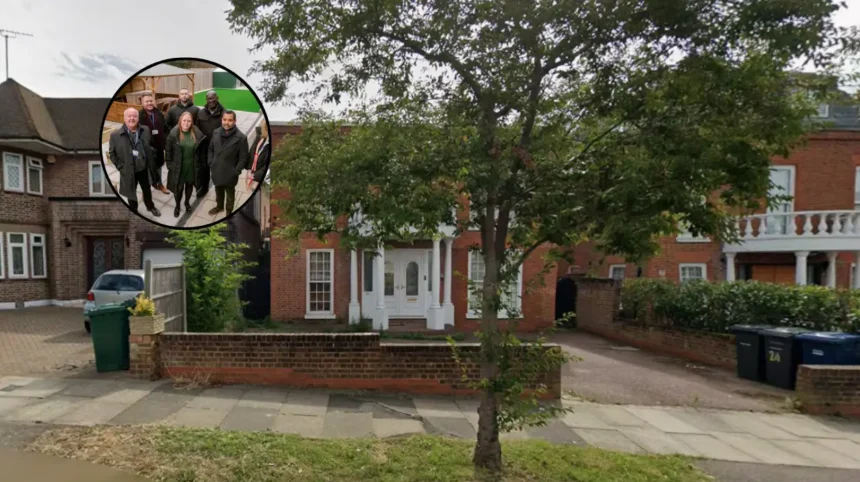
- Strategic Shift: A standard residential home at 22B Fairholme Gardens in Finchley faces a potential conversion into a children’s care home.
- Planning Framework: The formal application requests a shift from Use Class C3 (Dwellinghouse) to Use Class C2 (Residential Institution/Children’s Care Home) under Barnet Council reference 26/2135/FUL.
- Community Layout: Fairholme Gardens is traditionally a quiet, residential road, which means local property dynamics and localized traffic flows could see modifications.
- Wider Policy Drive: The initiative aligns with a broader London-wide push by local authorities to secure local, specialized placements for vulnerable young people closer to their domestic roots.
Finchley (North London News) June 17, 2026 — A routine-looking planning application submitted at 22B Fairholme Gardens to Barnet London Borough Council could significantly alter how the residential property operates, moving its legal designation away from a standard family dwelling into a structured community facility. Filed under the official planning database on June 17, 2026, the localized proposal seeks an explicit change of use from an everyday family home (Use Class C3) into a functional children’s care home (Use Class C2). The transition marks a distinct turning point for the residential street as the applicant aims to remodel the domestic infrastructure to look after young people requiring professional, non-secure localized care.
- Key Points
- What Changes Are Disclosed in the Official 22B Fairholme Gardens Planning Dossier?
- Why Is the Use Class C3 to Use Class C2 Transition Attracting Public Attention?
- What Context Do Regional Media Titles and Public Records Provide for This Care Facility?
- Background of the Particular Development
- Prediction: How This Development Can Affect the Local Community
What Changes Are Disclosed in the Official 22B Fairholme Gardens Planning Dossier?
As logged under council tracking data via reference 26/2135/FUL, the single-family brick property located at 22B Fairholme Gardens, London, N3 3EB, is slated to end its operations as a typical domestic house. Local tracking documents posted on the statutory public record portals reveal that the property will transition entirely out of the private residential rental or sales market to accommodate 24-hour communal support workers and adolescent care configurations.
According to data extracted from public planning alerts, the structural footprint of the building is not slated for immediate extensive expansion, but the internal operational mechanics will shift drastically.
Instead of private occupants managing their own household routines, the property will host rotating shift patterns for qualified care workers, professional evaluation meetings, and regulatory oversight visits from standard children’s services teams.
Why Is the Use Class C3 to Use Class C2 Transition Attracting Public Attention?
In the United Kingdom planning framework, shifting a property from Use Class C3 to Use Class C2 represents a definitive boundary crossing between private family life and institutional supervision. Under standard planning guidelines, a C3 classification dictates use by a single person, a family, or up to six people living together as a single household.
Conversely, a C2 designation allows for the provision of residential accommodation and care to people in need of it, explicitly including children’s homes.
Local residents on Fairholme Gardens face an adjustment to their local street dynamics, given that institutional uses naturally introduce different patterns of vehicle parking, waste management, and pedestrian movement than a static residential family setup.
What Context Do Regional Media Titles and Public Records Provide for This Care Facility?
As reported in community briefings published across regional networks, including updates summarized by reporters tracking the Barnet Public Notice Portal, minor planning applications like this often form the frontline of localized social development.
Journalists monitoring local government filings across North London have increasingly logged similar applications as local councils work behind the scenes to expand their social care capacity closer to urban centers.
By analyzing the application through the lenses of alternative local government documentation, including recent Freedom of Information responses issued by Barnet Council concerning C2 care home conversions, it is clear that boroughs are seeing an escalation in private and public care operators filing for similar residential conversions to help meet the regional demand for youth care beds.
Background of the Particular Development
To understand why a quiet street in Finchley is the subject of a children’s home application, one must look at the macro placement crisis currently confronting local authorities across Greater London. For several years, the Association of London Directors of Children’s Services (ALDCS) has continually highlighted a critical structural shortfall in regional youth infrastructure.
Local councils across the capital have faced severe logistical hurdles trying to place vulnerable children within their own boroughs due to high property costs and a lack of designated facilities.
Historically, this deficit has forced London boroughs to place highly vulnerable young people out-of-area, sometimes sending them to facilities hundreds of miles away from their native schools, support systems, and family ties. To remedy this geographical disconnect, the Department for Education and various London boroughs have instituted localized targets to incentivize smaller, residential-style care units within established suburbs.
By embedding smaller C2 care homes inside traditional residential streets like Fairholme Gardens, social services departments attempt to simulate standard domestic environments. This approach allows children who have suffered domestic trauma or instability to live a less institutionalized life, keeping them close to local community assets and educational provisions.
Explore More Finchley News
Woman, 19 Shot Dead in Finchley – Police Launch Murder Probe – Finchley, 2026
Teenage Woman Shot Dead Inside Home: Finchley Murder Investigation 2026
Prediction: How This Development Can Affect the Local Community
The conversion of 22B Fairholme Gardens into a Class C2 institution will directly affect nearby residents, local property owners, and the broader Finchley community.
- Immediate Neighbors and Homeowners: Property owners living on Fairholme Gardens will likely notice changes to ambient noise and traffic dynamics. Unlike a traditional family home, a care institution functions under structured shift changes, meaning staff cars, social worker visits, and Ofsted inspection vehicles will cycle through the street on a 24-hour rota. This shift can create localized friction over curbside parking space availability on narrow residential roads.
- The Planning and Local Authority Sector: If Barnet Council approves application 26/2135/FUL under delegated officer powers or via a planning committee decision, it will reinforce a vital legal precedent within North London. A successful conversion proves that suburban residential properties can be modified into institutional spaces without fundamentally ruining the visual character of a street, making it easier for future care operators to purchase and convert similar properties across the borough.
- Local Educational and Healthcare Services: A minor influx of children requiring structured care means local schools, primary practitioners, and youth mental health teams in Finchley will see a slight rise in localized casework. However, because these neighborhood homes usually hold a low occupancy threshold (typically hosting between three to six children at any given time), the operational strain on Finchley’s schools and clinics will remain manageable, fulfilling the council’s goal of subtle, decentralized social assimilation.