Key Points
- Claimant: Marcus Hunefalk-Franzen, a 60-year-old actor and professional tarot card reader residing in Camden, north London.
- Defendant: Vue Entertainment Ltd, one of the United Kingdom’s major commercial cinema chains.
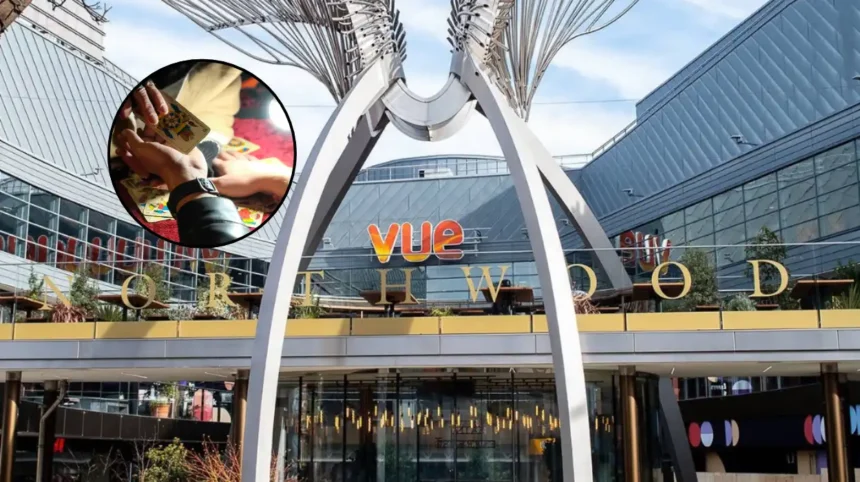
- Incident Details: The incident occurred in September 2015 during a matinee show at Islington’s Vue Cinema, when a cinema seat collapsed due to missing structural bolts, throwing the claimant forward.
- Injuries Alleged: Severe whiplash, chronic neck and back pain, and an impaired sense of taste, smell, and hearing.
- Financial Scale: Originally valued at £50,000, the damages claim rose to £200,000 before escalating to £12.7 million after 11 years without reaching trial.
- Lost Business Plans: Mr Hunefalk-Franzen alleges the accident destroyed lucrative ventures, including an acting coaching service and a projected online psychic platform called “MyPsychicEye”.
- Defendant’s Position: Vue Entertainment Ltd has admitted liability for the physical collapse of the seat but vigorously contests the quantum of damages, valuing the claim between £8,000 and £12,500 based on pre-existing medical history.
Islington (North London News) November 9, 2026 – A tarot card reader and actor who claims he was “catapulted” from a defective cinema chair in north London is suing cinema operator Vue Entertainment Ltd for £12.7 million in personal injury and financial loss damages. Marcus Hunefalk-Franzen, 60, alleges that the sudden collapse of an unbolted seat during a matinee screening at Islington’s Vue Cinema in September 2015 resulted in severe whiplash and permanent sensory impairment, effectively shattering his career and commercial ventures.
As reported by Stewart Carr, News Editor of The Standard, court documents filed on behalf of the claimant detail how the seating structure failed while Mr Hunefalk-Franzen was alighting. The legal filings state:
“The claimant sat on a chair to view a film within the auditorium. As he alighted, the chair collapsed in on itself and catapulted the claimant forward into the chair in front”.
Subsequent inspections revealed that essential bolts intended to anchor the chair frame securely to the auditorium floor were absent.
While Vue Entertainment Ltd has formally conceded legal liability for the seat collapse itself, the cinema chain strongly refutes the multi-million-pound valuation of the damages being sought. Over the 11 years since the incident took place, the claim has escalated significantly. Having originally been lodged with an estimated valuation of £50,000, it was later revised upward to £200,000 before reaching its current £12.7 million court submission.
Why Has the Compensation Claim Reached £12.7 Million?
According to reporting by Richard Gittins for The Independent (via Champion News Service), the dramatically increased financial figure stems primarily from projected commercial losses linked to spiritual and artistic business ventures. At the time of the September 2015 incident, Mr Hunefalk-Franzen was operating as a professional tarot reader based at Greenwich Market in south-east London.
In legal arguments presented to the court, the claimant maintains that physical injuries sustained during the fall prevented him from launching two planned commercial enterprises:
- MyPsychicEye: A specialized online psychic reading platform.
- Acting Coaching: An unconventional performance coaching method designed for actors.
As detailed in the legal submissions, Mr Hunefalk-Franzen asserts that “MyPsychicEye” and his coaching work would have yielded upwards of £1.5 million in revenue by the present date had the cinema accident not taken place. Furthermore, the claim incorporates over £10 million for projected future loss of earnings. The filings contend that the online psychic enterprise was projected to generate in excess of £1 million annually and could have achieved a commercial valuation of £3 million upon his retirement.
What Is Vue Entertainment’s Legal Defence?
Defence counsel representing Vue Entertainment Ltd told Central London County Court that the claimant’s £12.7 million assessment is wholly unreflective of the medical facts. As reported by The Independent, Vue’s barrister, David White, argued during pre-trial proceedings before Judge Yvette Genn that the true valuation of the injury claim remains between £8,000 and £12,500.
Vue’s defence team relies on an extensive analysis of the claimant’s historic medical records. Lawyers for the cinema chain highlighted that Mr Hunefalk-Franzen had documented medical issues prior to the 2015 auditorium collapse.
In formal court documents, Vue’s defence argues:
“A review of the claimant’s pre-accident medical records identified a significant pre-existing history of symptoms including fibromyalgia and chronic fatigue syndrome dating back to 2008 and neck pain dating back to 2009.”
The cinema operator further notes that contemporary accident logs from the date of the incident do not reflect the extensive immediate symptoms now cited in the legal claim. Defence filings maintain:
“On the day of the accident, the claimant reported to the defendant that he had suffered an injury to his back. There was no mention of immediate severe pain in the neck, in the feet and/or in the legs, nor of immediate moderate paraesthesia in the feet, nor of immediate mild loss of taste of the left side of the tongue.”
What Have the Courts Said About Pre-Existing Conditions?
The case is further complicated by prior medical trauma documented in court submissions. Presiding over a pre-trial hearing, Judge Yvette Genn characterized the litigation as a “complex claim – complicated by the fact that there was a previous brain injury suffered by the claimant in 2004”.
Mr Hunefalk-Franzen maintains that he had fully recovered from the 2004 brain injury by 2013, two years prior to the cinema seat collapsing beneath him. However, the complex overlap between prior health conditions, historical medical documentation, and current sensory loss claims has contributed to extensive pre-trial delays spanning more than a decade.
Background of the Particular Development
The legal dispute between Marcus Hunefalk-Franzen and Vue Entertainment Ltd highlights long-standing procedural and evidentiary aspects of personal injury litigation in the United Kingdom civil courts. Under English tort law, once an occupier or operator admits liability for a breach of duty—such as a defective chair in a place of public entertainment—the burden of proof shifts heavily toward establishing causation and quantum (the financial measure of loss).
In high-value personal injury litigation, claims involving loss of speculative or unlaunched business opportunities face rigorous legal standards. Courts require claimants to establish a direct causal chain between the tortious act and the financial loss, demonstrating that prospective business projects had a realistic, quantifiable prospect of success rather than being purely hypothetical. Additionally, the presence of pre-existing health issues—such as chronic fatigue syndrome, fibromyalgia, or previous neurological trauma—requires complex expert medical evidence to differentiate between pre-accident baseline symptoms and new or exacerbated impairments resulting directly from the incident.
Prediction: How This Development Can Affect Cinema Operators and Commercial Tenants
The progression of this £12.7 million lawsuit toward trial carries several operational, risk-management, and financial implications for commercial cinema chains, leisure operators, and public venues across the United Kingdom:
- Heightened Inspection Protocols for Public Fixtures: Commercial venues and leisure operators will likely re-examine routine facilities management protocols. The fact that an admitted liability arose from missing structural floor bolts could prompt leisure chains to implement stricter, documented inspection regimes for fixed seating, infrastructure, and auditorium fittings to prevent mechanical failures.
- Shift in Corporate Public Liability Insurance and Reserves: Claims that escalate from routine personal injury valuations (£8,000–£50,000) into multi-million-pound demands create extended financial exposure for commercial insurers. Insurers operating within the UK leisure sector may mandate stricter risk-assessment audits, higher policy deductibles, or specific policy exclusions related to prospective economic loss claims made by self-employed or non-traditional sole traders.
- Increased Scrutiny of Unlaunched Commercial Claims: A judicial determination on whether unlaunched, speculative business ventures (such as online niche platforms or proprietary coaching models) can substantiate multi-million-pound loss-of-earnings claims will set a visible precedent. A defense victory maintaining low valuation boundaries would reinforce strict legal limits against highly speculative damages, whereas any substantial court award for loss of projected business plans could broaden the scope of prospective loss claims against commercial property operators.