Key Points
- Brent Council’s Licensing Sub-Committee has imposed strict operational conditions on a local convenience store following Met Police reports of alleged drug dealing outside the venue.
- Metropolitan Police officers executed a search warrant at the premises in Dollis Hill; however, no illegal substances were discovered inside the shop during the raid.
- The shopkeeper informed committee members that he felt intimidated and frightened by individuals loitered near the storefront.
- Council licensing authorities opted against full licence revocation, choosing instead to mandate enhanced security measures and strict oversight conditions to curb anti-social behaviour.
Brent Council (North London News) November 10, 2026 – Brent Council’s Licensing Sub-Committee has determined the operational future of a North London convenience shop following a formal review prompted by Metropolitan Police concerns regarding suspected drug activity and anti-social behaviour in the immediate vicinity.
As reported by Grant Williams of North London News, local authority members resolved to allow the business to retain its premises licence, electing to impose a series of stringent conditions rather than ordering an immediate closure or full revocation of trading permissions.
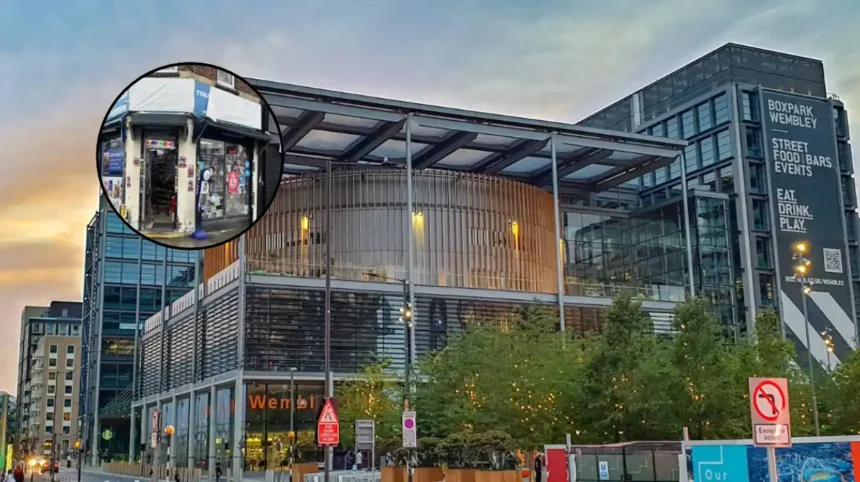
The regulatory review was triggered after Metropolitan Police officers carried out a targeted raid on the storefront located in Dollis Hill. The law enforcement action followed persistent community intelligence and police observations suggesting that illegal narcotics were being distributed by individuals gathering outside the commercial property.
What emerged during the Metropolitan Police raid and licensing hearing?
During the formal licensing proceedings held at the Brent Civic Centre, details regarding the police operation were presented to the sub-committee panel.
As reported by Grant Williams of North London News, Metropolitan Police representatives confirmed that officers executed a search warrant at the location following reports linking the immediate area to street-level drug dealing. However, law enforcement officials explicitly confirmed during the hearing that no illicit substances or paraphernalia were found inside the premises itself during the search.
Addressing the sub-committee, the shopkeeper provided direct testimony regarding the conditions surrounding his business operations. As reported by Grant Williams of North London News, the proprietor stated that he was personally scared of the group of individuals who routinely loitered outside the Dollis Hill establishment, explaining that he felt powerless to clear the pavement area directly in front of the shop front due to fear of intimidation.
The license holder asserted that he had not facilitated, condoned, or participated in any illegal activity taking place on the public footway outside his premises.
What specific licence conditions were imposed by the local authority?
To address the public safety concerns raised by the police while acknowledging that no illegal items were recovered inside the building, Brent Council’s licensing panel instituted mandatory operational changes.
As reported by Grant Williams of North London News, the sub-committee mandated that the venue implement upgraded High-Definition Closed-Circuit Television (CCTV) coverage capable of monitoring both internal trading zones and the immediate external entrance area.
Furthermore, the council stipulated that the licence holder must maintain explicit incident logs, enforce strict staff training regarding anti-social behaviour reporting, and actively liaise with local neighbourhood policing teams to disperse unauthorized gatherings outside the store frontage.
Background of the particular development
Commercial premises situated within suburban high streets frequently face complex regulatory challenges when public spaces immediately adjacent to their storefronts become focal points for anti-social behaviour or street criminality. Under the Licensing Act 2003, local authorities and licensing sub-committees are empowered to review premises licences when responsible authorities, such as the Metropolitan Police Service, raise concerns under the core licensing objectives: the prevention of crime and disorder, public safety, the prevention of public nuisance, and the protection of children from harm.
In Greater London boroughs such as Brent, licensing reviews serve as a primary regulatory mechanism to balance community safety with the commercial viability of small businesses. When police execute search warrants under the Misuse of Drugs Act, the absence of illicit materials inside a venue typically shifts the legal focus from criminal prosecution of business owners to administrative risk management. Local councils routinely utilise conditional compliance—requiring enhanced surveillance, altered operating hours, or professional security staff—to compel business operators to take proactive measures against public nuisance occurring on their perimeter, even when shopkeepers report being victims of intimidation themselves.
Prediction: How this development will affect local residents and business owners
The decision by Brent Council to implement enforceable licence conditions rather than revoking the store’s licence is expected to have direct consequences for both the surrounding residential community and local traders in Dollis Hill.
For nearby residents, the mandated installation of upgraded CCTV systems and mandatory police reporting protocols will likely lead to an increase in monitoring along the commercial parade. If the shopkeeper actively collaborates with local Metropolitan Police neighbourhood teams, the visible deterrent could reduce street-level loitering and curb anti-social behaviour near the shopfront. Conversely, should the measures prove insufficient to deter persistent loitering, residents may continue to experience public nuisance issues, potentially prompting further formal review applications from local ward councillors or community groups.
For small business owners and independent retailers across the borough, this outcome reinforces the legal precedent regarding proprietor responsibility for perimeter safety. Business operators will recognise that fear of intimidation does not completely exempt premises owners from regulatory obligations under local licensing frameworks. Retailers operating in areas affected by street anti-social behaviour are likely to proactively invest in external surveillance systems and formal reporting mechanisms to demonstrate compliance to council officers before formal police interventions occur.