Islington is an inner-London borough in North London, known for its historic residential streets, independent shops, cultural venues, green spaces and established commercial centres. Its geographical structure includes distinct neighbourhoods such as Angel, Canonbury, Barnsbury, Highbury, Holloway, Archway, Clerkenwell, Finsbury and Upper Street.
- How Islington Is Geographically Divided?
- What Are Islington’s Main Neighbourhoods?
- What Are Islington’s Most Important Commercial and Cultural Districts?
- Upper Street and Islington High Street
- Camden Passage
- Nag’s Head
- Exmouth Market
- Old Street and the Technology District
- Business Design Centre
- How Did Islington’s Neighbourhoods Develop Historically?
- What Is the Historical Importance of Angel and Upper Street?
- Why Does Clerkenwell Have a Different Historical Identity?
- How Did Transport Shape Modern Islington?
- Which Islington Neighbourhoods Are Best for Visitors?
- Best Neighbourhood for Shopping and Dining
- Best Neighbourhood for Historic Architecture
- Best Neighbourhood for Parks and Outdoor Activities
- Best Neighbourhood for Local Markets
- Best Neighbourhood for Business Travellers
- How Are Islington’s Neighbourhoods Connected by Public Transport?
- What Makes Islington’s Neighbourhoods Culturally Distinct?
- How Do Islington’s Administrative Boundaries Differ from Its Neighbourhood Names?
- How Can Visitors Explore Islington’s Main Neighbourhoods in One Day?
- What Is the Future Relevance of Islington’s Neighbourhoods?
Each district has a different identity, architectural character and transport network. Angel is a major shopping and dining destination, Highbury is known for residential streets and green spaces, while Clerkenwell has a strong architectural and creative-industry heritage.
Understanding Islington’s neighbourhoods helps visitors choose accommodation, plan walking routes, locate cultural attractions and explore areas beyond the main tourist streets. It also helps residents and business travellers understand how the borough’s residential, commercial and cultural districts connect.
How Islington Is Geographically Divided?
Islington is an inner-London borough positioned between the City of London, Camden, Hackney and Haringey. Its neighbourhoods extend from Clerkenwell and Finsbury in the south to Archway, Highbury and Tufnell Park in the north.
The London Borough of Islington forms part of Inner London. It covers approximately 15 square kilometres and occupies a strategically important position between Central London and the northern residential districts.
Islington Council describes the borough as extending from the edge of the City of London towards the Zone 2 and Zone 3 boundary around Archway and Tufnell Park. This geographical position gives Islington a combination of central commercial districts, established residential neighbourhoods and busy transport corridors. Islington Council+1
The borough borders several neighbouring London authorities. Camden lies to the west, Hackney to the east, Haringey to the north and the City of London to the south. These connections make Islington an important link between London’s financial centre, cultural destinations and residential communities.
Islington’s Administrative Structure
Islington has 17 electoral wards. Electoral wards are official local government divisions used for council representation, elections and the collection of demographic statistics.
The 17 wards are Arsenal, Barnsbury, Bunhill, Caledonian, Canonbury, Clerkenwell, Finsbury Park, Highbury, Hillrise, Holloway, Junction, Laycock, Mildmay, St Mary’s and St James’, St Peter’s and Canalside, Tollington and Tufnell Park. Islington Council+1
Neighbourhoods and electoral wards are not interchangeable. Angel, for example, is a recognised local district and statistical area rather than a separately named electoral ward. Similarly, Upper Street is a major commercial road that connects several parts of Islington rather than an administrative district.
This distinction matters when researching property, accommodation, local attractions and public services. Official ward boundaries provide accurate administrative information, while neighbourhood names describe the character and location of individual communities.
Where Does Islington Sit Within North London?
Islington occupies the transition between Central London and North London. Its southern districts connect directly with the City fringe, while its northern neighbourhoods provide access to residential areas around Archway, Finsbury Park and Tufnell Park.
The borough’s main north-to-south transport corridors include Holloway Road, Upper Street and routes through Highbury and Archway. These connections make it straightforward to explore several neighbourhoods during one visit.
What Are Islington’s Main Neighbourhoods?
Islington’s principal neighbourhoods include Angel, Barnsbury, Canonbury, Highbury, Holloway, Archway, Clerkenwell, Finsbury, Finsbury Park and Tufnell Park. Each has a distinct identity shaped by its streets, architecture, transport connections, shopping areas and local attractions.
These neighbourhoods form the main geographical and cultural structure of the borough. Some are established residential communities, while others function as commercial centres, entertainment districts or gateways to neighbouring parts of London.
The following areas provide a useful introduction to Islington’s geographical layout.
Angel
Angel is one of Islington’s best-known commercial and cultural districts. It centres on Angel Underground Station, Upper Street, Islington High Street and the surrounding streets.
Upper Street is a major destination for restaurants, independent retailers, pubs, cafés and entertainment venues. It connects Angel with Highbury and provides a central route through the borough.
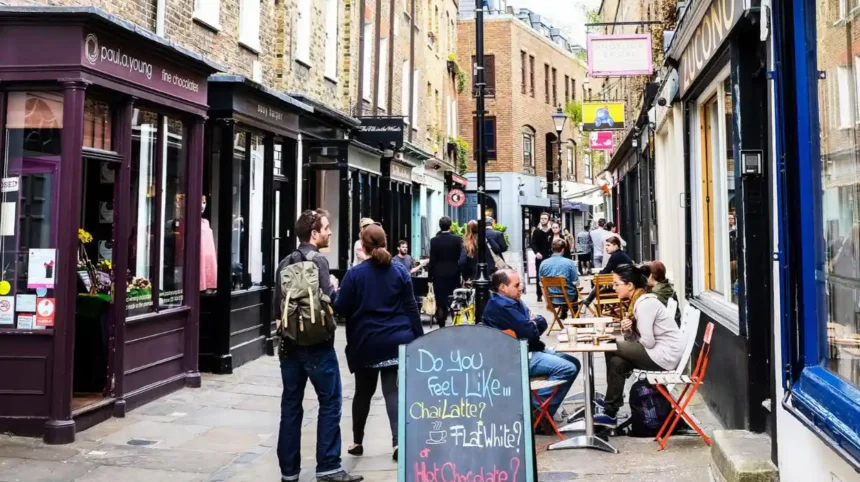
Camden Passage is another recognisable part of Angel. This pedestrian-friendly street is known for independent shops, antiques, vintage goods and specialist retailers. The area also provides access to markets and smaller shopping streets.
The Business Design Centre, a major exhibition and conference venue, stands near Upper Street. Its location makes Angel particularly relevant to domestic business travellers attending exhibitions and professional events.
Angel also provides access to Regent’s Canal, which offers waterside walking routes towards King’s Cross and other parts of London.
Barnsbury
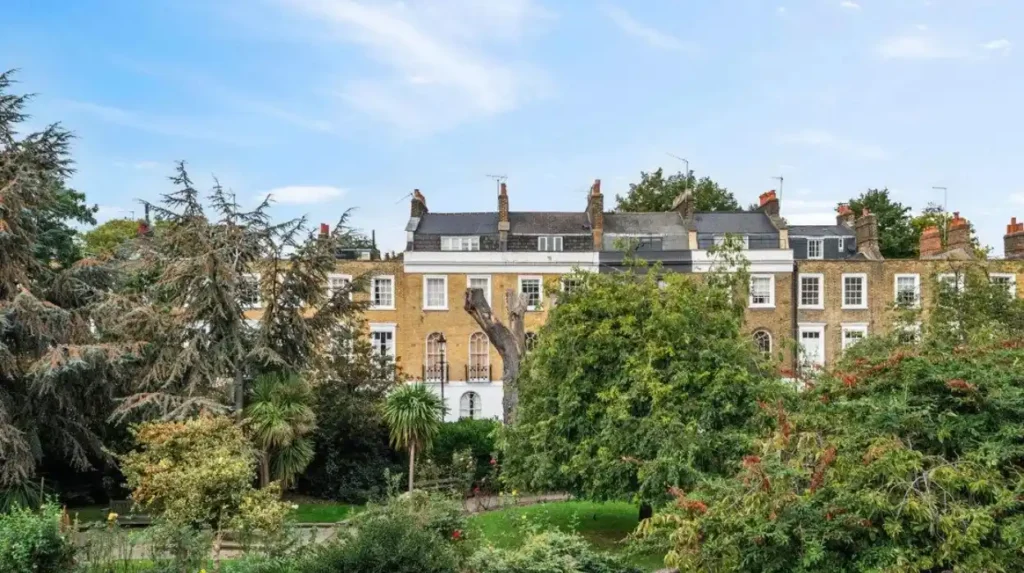
Barnsbury is a residential neighbourhood in south-western Islington. It is recognised for Georgian architecture, Victorian terraces, garden squares and traditional residential streets.
The area contains several conservation areas, which protect historically significant buildings and the character of established streets. Barnsbury’s architectural identity includes brick townhouses, period façades and residential squares.
Caledonian Road and Upper Street provide access to nearby shopping and transport facilities. Barnsbury is also close to King’s Cross, making it practical for visitors travelling through major national and international rail connections.
The neighbourhood offers a different environment from Angel’s busy commercial centre. Its residential streets provide a quieter setting while remaining within walking distance of restaurants, cultural venues and public transport.
Canonbury
Canonbury is an established residential neighbourhood in eastern Islington. Its geographical character includes period houses, attractive residential streets, historic buildings and green spaces.
Canonbury Square is one of its best-known locations. The square is surrounded by historic residential properties and represents the area’s architectural character.
Canonbury is also associated with Canonbury Tower, a historic building dating from the sixteenth century. It provides an important connection between the neighbourhood’s present-day residential identity and its earlier development.
Newington Green lies close to Canonbury’s eastern side. The surrounding streets provide access to independent businesses, cafés and local community facilities.
Canonbury appeals to visitors interested in architecture and residential London. Its streets also provide useful walking connections between Highbury, Dalston and Angel.
Highbury
Highbury occupies the north-eastern part of Islington. It is known for residential streets, period properties, green spaces and its connection with Arsenal Football Club.
Highbury Fields is one of the borough’s most important public open spaces. It provides walking paths, sports facilities and recreational areas for residents and visitors.
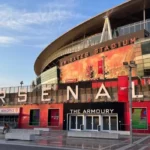
Highbury is also associated with Arsenal Stadium, now known as the Emirates Stadium. The football ground is located in the Arsenal district, close to Holloway Road and Drayton Park.
Highbury Corner is an important transport and commercial junction. It connects Upper Street, Holloway Road and routes towards Highbury and Islington station.
The neighbourhood combines residential character with sporting attractions, making it relevant to visitors exploring North London beyond the central tourist districts.
Holloway
Holloway is a large and well-established neighbourhood in western-central Islington. Its main commercial corridor is Holloway Road, which connects Highbury with Archway and other northern districts.
Nag’s Head is one of Holloway’s most recognisable local centres. It contains shopping facilities, cafés, restaurants, local services and transport connections.
The area has a mixture of residential streets, commercial properties and educational institutions. Its built environment includes Victorian terraces, post-war developments and contemporary housing.
Holloway Road Underground Station provides access to the Piccadilly line. This connection supports travel towards King’s Cross, Leicester Square and other central London destinations.
The neighbourhood is also close to Emirates Stadium, making it a practical base for football supporters attending Arsenal matches.
Archway
Archway is situated in north-western Islington. It functions as a transport hub and commercial centre connecting the borough with neighbouring parts of North London.
Archway Underground Station is served by the Northern line. The surrounding area contains shops, restaurants, local businesses and residential developments.
Archway’s geography is strongly influenced by its road junction and the elevated Archway Bridge. These transport features connect routes towards Highgate, Holloway and central London.
Whittington Park provides public green space within the wider district. The surrounding residential streets include traditional houses and modern developments.
Archway is particularly useful for visitors exploring Highgate and other northern neighbourhoods while remaining connected to Islington’s main transport network.
Clerkenwell
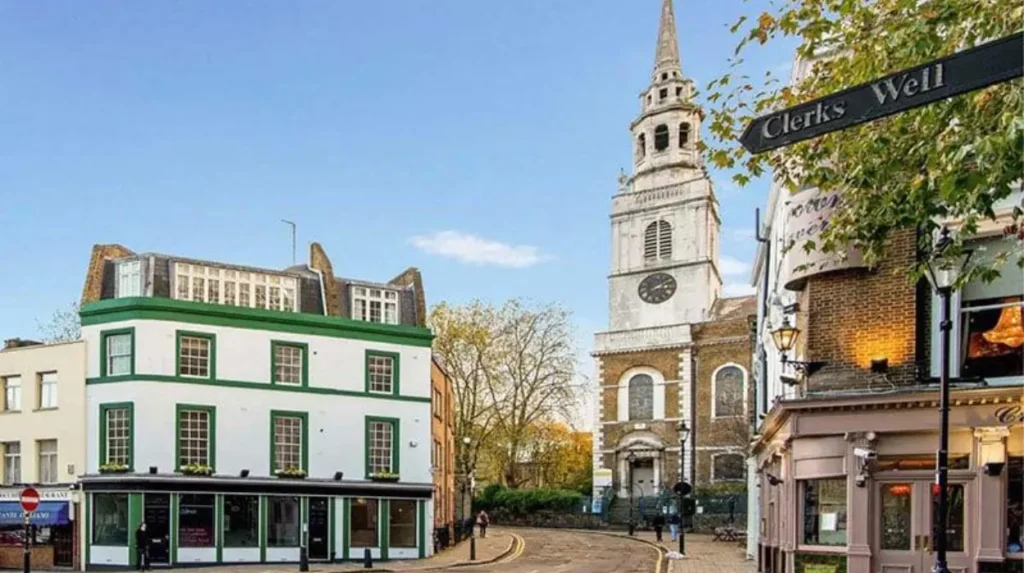
Clerkenwell is a historic district in southern Islington, close to the City of London and the Holborn area. It is recognised for its architectural heritage, design businesses, restaurants and professional workplaces.
The district contains historic churches, former industrial buildings, converted warehouses and contemporary office developments. Its streets reflect several periods of London’s commercial and architectural development.
Exmouth Market is one of Clerkenwell’s most recognisable destinations. It is known for independent food businesses, cafés and restaurants.
Farringdon is an important transport interchange serving the wider Clerkenwell area. Elizabeth line, Thameslink and Underground services connect the district with other parts of London.
Clerkenwell attracts business travellers, architecture enthusiasts and visitors interested in London’s historic commercial neighbourhoods.
Finsbury
Finsbury is a historic district in southern Islington, close to Clerkenwell, Bunhill and the City fringe. Its geographical identity is associated with historic streets, commercial development and public spaces.
Bunhill Fields Burial Ground is one of the area’s important historic sites. It contains the graves of notable historical figures, including the writer Daniel Defoe and the poet William Blake.
Finsbury Square provides an important public space surrounded by commercial buildings and offices. The wider area also connects with Old Street, which is recognised for technology companies, creative businesses and professional workplaces.
Finsbury’s southern location makes it particularly accessible for people visiting London’s financial and commercial districts.
Finsbury Park
Finsbury Park is a major residential and transport district in northern Islington and the surrounding area. The name also refers to the large public park situated close to the borough’s northern boundary.
Finsbury Park railway and Underground station provides access to Victoria line, Piccadilly line and national rail services. This makes the district an important transport gateway for North London.
Finsbury Park itself offers landscaped grounds, sports facilities, walking routes and recreational spaces. The wider neighbourhood contains restaurants, independent shops and residential streets.
The district connects Islington with neighbouring areas of Haringey and provides access to destinations further north.
Tufnell Park
Tufnell Park occupies the north-western part of Islington near the boundary with Camden. It is a residential neighbourhood with Victorian and Edwardian properties, local shopping streets and community facilities.
Tufnell Park Underground Station is served by the Northern line. It provides connections towards Camden Town, King’s Cross and central London.
The neighbourhood also has access to nearby green spaces and local commercial streets. Its location makes it useful for visitors exploring both Islington and neighbouring Camden.
Tufnell Park’s identity is primarily residential, although its local businesses and transport connections support a steady flow of visitors.
What Are Islington’s Most Important Commercial and Cultural Districts?
Islington’s main commercial and cultural districts include Upper Street, Camden Passage, Nag’s Head, Exmouth Market, Old Street and the Business Design Centre area. These locations concentrate shopping, dining, exhibitions, creative businesses and entertainment.
Neighbourhoods describe broader residential and geographical areas. Commercial districts are smaller destinations within or around those neighbourhoods. Understanding the difference helps visitors identify where to shop, eat, attend events and explore local culture.
Upper Street and Islington High Street
Upper Street is one of Islington’s principal shopping and entertainment corridors. It runs through Angel towards Highbury and contains restaurants, pubs, cafés, theatres and independent retailers.
Islington High Street connects the Angel area with the southern commercial streets. It provides access to transport facilities, shops and routes towards Clerkenwell and King’s Cross.
Together, these streets form an important commercial centre for visitors and residents. They also provide a useful starting point for walking tours through Angel, Barnsbury and Canonbury.
Camden Passage
Camden Passage is a historic shopping street near Angel Underground Station. It is particularly associated with antiques, vintage shopping, specialist retailers and independent businesses.
The passage has a different commercial character from the larger shops on Upper Street. Its smaller premises and pedestrian-friendly layout make it a recognised destination for visitors interested in independent retail.
Nag’s Head
Nag’s Head is Holloway’s main shopping and commercial centre. It serves the surrounding residential neighbourhoods through supermarkets, independent shops, cafés, restaurants and everyday services.
The district is located around Holloway Road and Seven Sisters Road. Its transport connections make it accessible from Archway, Highbury and other parts of Islington.
Exmouth Market
Exmouth Market is a pedestrian-focused street in Clerkenwell. It is known for food businesses, restaurants, cafés and independent commercial premises.
The market is particularly relevant to visitors interested in dining and exploring the creative character of southern Islington. Its proximity to Farringdon also makes it convenient for business travellers.
Old Street and the Technology District
Old Street occupies the south-eastern edge of Islington, close to the boundary with Hackney and the City fringe. It is associated with technology companies, digital businesses, creative agencies and flexible workplaces.
Old Street Roundabout became widely associated with London’s technology sector. The surrounding area developed a concentration of start-ups, offices and innovation-related businesses.
The district is useful for digital nomads and business visitors seeking access to professional networks and transport facilities.
Business Design Centre
The Business Design Centre is an exhibition and conference venue located in Islington’s Angel district. It hosts trade exhibitions, professional events, conferences and industry gatherings.
Its location near Upper Street and Angel station makes it one of the borough’s most important business destinations.
How Did Islington’s Neighbourhoods Develop Historically?
Islington developed from rural settlements and agricultural land into a densely populated London borough. Its growth followed the expansion of transport routes, residential construction, industrial activity, commercial development and London’s wider urban expansion.
The area’s historical development explains why its neighbourhoods have different architectural styles and urban layouts.
Before extensive urbanisation, much of Islington consisted of open land, villages, fields and country estates. The historic settlement of Islington developed along important roads connecting London with northern destinations.
During the seventeenth and eighteenth centuries, the area became increasingly associated with suburban settlement. Wealthier residents established houses outside the crowded City, while roads and commercial facilities supported growing communities.
The nineteenth century brought major changes. Population growth, railway construction, industrial activity and housing development transformed rural and semi-rural settlements into an increasingly continuous urban landscape.
Different neighbourhoods experienced this transformation in different ways. Barnsbury developed residential terraces and garden squares, Clerkenwell retained important commercial and industrial connections, while Holloway expanded around major roads and transport routes.
The twentieth century introduced further changes through redevelopment, public housing, commercial construction and improvements to public transport.
Today, historic buildings stand alongside modern offices, residential developments, cultural venues and shopping centres.
What Is the Historical Importance of Angel and Upper Street?
Angel developed around an important historic road junction and became a major commercial centre for Islington. Upper Street grew into a significant shopping and entertainment corridor serving the surrounding residential neighbourhoods.
The area’s development reflects the expansion of London beyond its historic central boundaries. Its pubs, theatres, shops and historic buildings provide evidence of changing commercial and social activity.
As you explore modern Angel, you are crossing streets shaped by centuries of urban development. Read about the full [History of Islington and Its Transformation from a Rural Settlement into an Urban Borough] to understand its origins and architectural evolution.
Why Does Clerkenwell Have a Different Historical Identity?
Clerkenwell has a long association with religious institutions, manufacturing, printing, metalworking and commercial activity. Its development reflects the relationship between London’s historic centre and its surrounding industrial districts.
Former workshops and warehouses remain important elements of its built environment. Many historic industrial buildings have been adapted for offices, restaurants, creative studios and residential use.
The area’s churches and historic streets also preserve evidence of earlier settlement and religious activity.
How Did Transport Shape Modern Islington?
Transport infrastructure played a central role in Islington’s urban development. Roads, railways, Underground stations and the Regent’s Canal connected local communities with central London and surrounding commercial centres.
The canal supported goods transportation during the nineteenth century. Railways and Underground services later improved passenger movement and encouraged further residential and commercial expansion.
Modern transport continues to influence the location of businesses, housing and visitor attractions. Angel, Farringdon, Highbury and Islington, Holloway Road and Archway all benefit from established transport connections.
Which Islington Neighbourhoods Are Best for Visitors?
Angel, Clerkenwell, Highbury, Canonbury and Holloway provide different experiences for visitors exploring Islington. Angel suits shopping and dining, Clerkenwell offers historic architecture, Highbury provides green spaces, Canonbury features residential heritage and Holloway offers local shopping.
Choosing the right neighbourhood depends on the purpose of a visit. Islington does not have one single tourist centre. Its attractions and commercial destinations are distributed across several connected districts.
Best Neighbourhood for Shopping and Dining
Angel is a strong starting point for visitors interested in restaurants, independent retailers and entertainment.
Upper Street offers a concentration of dining and shopping facilities. Camden Passage provides access to specialist shops and vintage retailers.
The Business Design Centre also makes the area relevant to people attending conferences and exhibitions.
Best Neighbourhood for Historic Architecture
Barnsbury and Canonbury are particularly relevant to visitors interested in historic residential architecture.
Their streets contain period houses, traditional façades and conservation areas. Walking through these neighbourhoods provides an opportunity to understand how residential London developed during earlier centuries.
Clerkenwell is another important destination for architectural exploration. Its historic industrial buildings and religious landmarks provide a different perspective on London’s urban heritage.
Best Neighbourhood for Parks and Outdoor Activities
Highbury provides convenient access to Highbury Fields. The park is an important recreational space with walking routes and sports facilities.
Finsbury Park offers a larger public park with landscaped grounds and recreational facilities. Archway and Tufnell Park also provide access to green spaces in northern Islington.
Visitors interested in outdoor activities can combine park visits with walks through surrounding residential streets.
Best Neighbourhood for Local Markets
Angel and Holloway provide different shopping experiences.
Camden Passage is associated with antiques and independent retail, while Nag’s Head offers everyday shopping and local commercial services.
These destinations help visitors explore the borough’s independent business environment beyond major shopping centres.
Best Neighbourhood for Business Travellers
Angel, Clerkenwell and Old Street are important destinations for business visitors.
Angel provides access to the Business Design Centre. Clerkenwell contains professional workplaces and creative businesses. Old Street connects visitors with London’s technology and start-up sector.
Farringdon and Highbury and Islington also provide transport connections that support business travel across London.
How Are Islington’s Neighbourhoods Connected by Public Transport?
Islington’s neighbourhoods are connected by London Underground, National Rail, Overground services, buses and walking routes. Angel, Archway, Farringdon, Holloway Road, Highbury and Islington and Finsbury Park provide important transport connections.
Public transport makes it possible to explore several Islington districts during one day. The borough’s transport network connects residential neighbourhoods with Central London, King’s Cross, Camden, Hackney and other North London destinations.
Underground Connections
The Underground provides important connections across the borough.
- Angel: Northern line access towards King’s Cross and Bank.
- Archway: Northern line access towards Camden and central London.
- Holloway Road: Piccadilly line access towards King’s Cross and the West End.
- Highbury and Islington: Victoria line and London Overground connections.
- Finsbury Park: Victoria and Piccadilly line connections.
- Tufnell Park: Northern line access towards Camden and central London.
These stations provide practical access to the borough’s main commercial and residential districts.
National Rail and Overground Connections
Highbury and Islington and Finsbury Park are important railway interchanges. They connect Islington with other parts of Greater London and destinations beyond the capital.
Farringdon provides particularly strong connections through the Elizabeth line, Thameslink and Underground services. It is an important interchange for visitors travelling between Clerkenwell, the City and other central destinations.
Walking and Cycling Connections
Walking is an effective way to explore neighbouring Islington districts. Angel connects with Barnsbury and Canonbury, while Highbury provides routes towards Arsenal and Holloway.
Regent’s Canal offers a waterside walking route connecting Islington with King’s Cross and other parts of London.
Cycling is another practical option for travelling between residential neighbourhoods and commercial centres. Local streets and cycle routes provide connections across the borough, although road conditions and traffic levels vary.
What Makes Islington’s Neighbourhoods Culturally Distinct?
Islington’s cultural identity comes from its architectural heritage, diverse communities, independent businesses, theatres, sporting venues, markets and public spaces. Angel, Clerkenwell, Highbury and Holloway demonstrate the borough’s different cultural and social characteristics.
Islington has a diverse population and a long history of migration. According to Islington Council’s presentation of 2021 Census information, approximately 248,000 people lived in the borough, and 40% of residents were born outside the United Kingdom. Islington Council
This diversity contributes to the borough’s food businesses, community organisations, local markets and cultural activities.
Independent Businesses and Local Shopping
Independent businesses are an important feature of Islington’s commercial identity.
Camden Passage contains specialist retailers and vintage businesses. Upper Street offers independent shops alongside national retailers, restaurants and hospitality businesses.
Holloway and Nag’s Head serve local residential communities through everyday shopping facilities, cafés and services.
Theatre and Entertainment
Islington has an established theatre and entertainment scene.
The Almeida Theatre in Angel is a recognised cultural venue presenting theatrical productions. The King’s Head Theatre is another important part of the borough’s performance culture.
Upper Street also provides access to pubs, live entertainment and restaurants. These facilities attract both residents and visitors.
Football and Sporting Culture
Arsenal Football Club is closely associated with Islington’s identity.
The Emirates Stadium stands in the Arsenal area, near Holloway Road and Drayton Park. Matchdays bring additional visitors to surrounding restaurants, pubs and transport stations.
Highbury Fields and Finsbury Park also contribute to the borough’s sporting and recreational culture through public outdoor facilities.
How Do Islington’s Administrative Boundaries Differ from Its Neighbourhood Names?
Islington’s administrative boundaries are defined through official electoral wards, while neighbourhood names describe locally recognised geographical and cultural areas. The two systems overlap, but they serve different purposes in planning, local government, property research and visitor navigation.
This distinction is important because popular district names do not always correspond to official council boundaries.
For example, Angel is a recognised neighbourhood and commercial district, but it is not one of Islington’s 17 electoral wards. Its surrounding streets fall within the borough’s administrative geography.
Similarly, Upper Street is a major commercial road rather than a separate electoral district.
The Office for National Statistics also uses statistical geographical areas to organise population and demographic information. These include Middle Layer Super Output Areas (MSOAs), which support the analysis of neighbourhood-level population characteristics.
The official geographical categories therefore include three different systems:
- Electoral wards: Examples include Arsenal, Barnsbury, Canonbury and Highbury.
- Statistical areas: Examples include Angel, Archway East, Highbury Fields and Barnsbury East.
- Locally recognised neighbourhoods: Examples include Angel, Nag’s Head, Camden Passage and Tufnell Park.
Islington Council provides official ward maps and population statistics. The Office for National Statistics provides corresponding geographical and demographic datasets.
Why Are These Differences Important for Visitors?
Visitors searching for accommodation, attractions and local services often use neighbourhood names rather than electoral ward names.
A hotel advertised as being in Angel, for example, is understood through its proximity to Upper Street, Angel station and nearby commercial facilities.
Official ward information is more relevant when researching council services, local elections, planning decisions and public statistics.
Understanding both systems prevents confusion when comparing locations and interpreting local information.
Explore More Area Guide
Angel vs Highbury: Differences Between Two North London Neighbourhoods
Historic Neighbourhoods in Islington: Clerkenwell, Barnsbury and Canonbury
How Can Visitors Explore Islington’s Main Neighbourhoods in One Day?
Visitors can explore Islington through a north-to-south itinerary connecting Highbury, Holloway, Angel and Clerkenwell. This route combines residential architecture, public parks, shopping streets, historic buildings and restaurants within one borough.
A practical itinerary begins in Highbury, continues towards Holloway and Angel, and finishes in Clerkenwell.
Start at Highbury Fields and explore the surrounding residential streets. Continue towards Highbury Corner and the Upper Street shopping area.
From Angel, visit Camden Passage and explore the nearby commercial streets. Regent’s Canal provides an alternative walking route towards King’s Cross.
Continue south towards Clerkenwell to explore Exmouth Market, historic buildings and the Farringdon area.
Visitors with additional time can extend their exploration towards Barnsbury and Canonbury. These neighbourhoods provide a closer look at Islington’s residential architecture and conservation areas.
The itinerary can also be adapted around specific interests. Football supporters can prioritise Emirates Stadium, while architecture enthusiasts can spend more time in Barnsbury, Canonbury and Clerkenwell.
What Is the Future Relevance of Islington’s Neighbourhoods?
Islington’s neighbourhoods remain important to London’s residential, commercial and cultural development. Regeneration, public transport, housing, conservation and independent businesses continue to influence how Angel, Holloway, Archway, Clerkenwell and Highbury develop.
The borough faces the challenge of balancing new development with the protection of historic buildings and established residential communities.
Housing and Urban Development
Islington contains a mixture of historic houses, social housing, modern apartment buildings and converted commercial properties.
Future housing development continues to influence the character of neighbourhoods such as Holloway, Archway and King’s Cross.
Planning decisions must consider housing requirements, local infrastructure, public spaces and the preservation of historic environments.
Conservation and Heritage Protection
Conservation areas protect buildings and streets with special architectural or historic interest.
Barnsbury, Canonbury, Clerkenwell and parts of Angel contain historically significant environments. Islington Council maintains official conservation-area designations and associated planning guidance. Islington Council
These protections help retain the architectural character of the borough while allowing appropriate improvements and development.
Commercial and Cultural Growth
Angel, Old Street and Clerkenwell continue to serve different commercial functions.
Angel supports hospitality, independent retail and events. Old Street is associated with technology and creative businesses, while Clerkenwell combines professional workplaces with food, design and cultural activities.
These different commercial identities contribute to Islington’s wider role within London.
For visitors, residents and business travellers, the borough’s future relevance depends on maintaining accessible transport, public spaces, cultural facilities and neighbourhood services.
Understanding Islington’s geographical structure provides a useful foundation for exploring its attractions, finding local businesses and discovering the different communities that make up North London.
What are the main neighbourhoods in Islington?
Islington’s main neighbourhoods include Angel, Highbury, Canonbury, Barnsbury, Holloway, Archway, Clerkenwell, Finsbury, Finsbury Park and Tufnell Park. Each area has its own residential, commercial and cultural character.