Archway is an established neighbourhood in North London, located within the London Borough of Islington. It is recognised for its historic transport infrastructure, Northern line connections, distinctive architecture, community facilities and position between Holloway and Highgate. Its importance comes from its role as a transport interchange, residential centre and gateway to several parts of North London.
- Where Is Archway Located in North London?
- How Did Archway Develop into an Important Historic Neighbourhood?
- How Did Transport Influence Residential Growth?
- What Is Archway’s Connection with Richard Whittington?
- Why Is Archway Station Important for North London Transport?
- How Does the Northern Line Connect Archway with London?
- Why Is Archway Important for Road and Bus Travel?
- What Architectural Landmarks Make Archway Distinctive?
- How Has Archway Changed Through Urban Regeneration?
- What Community Facilities and Public Services Make Archway Important?
- Why Is Whittington Hospital Significant?
- What Role Does Archway Library Play?
- How Do Local Shops Support the Neighbourhood?
- What Green Spaces and Leisure Attractions Are Near Archway?
- Why Is Archway a Useful Base for Tourists and Business Travellers?
- Why Should Tourists Consider Visiting Archway?
- Is Archway Suitable for Digital Nomads?
- Why Is Archway Convenient for Business Travellers?
- What Is Archway’s Future Importance for North London?
- Will Sustainable Transport Influence Archway’s Development?
- How Will Public Spaces Shape Archway?
- Why Will Archway Remain Important for Local Communities?
- Why Does Archway Matter in North London?
The neighbourhood combines historic landmarks with modern urban development. Its streets reflect more than 200 years of transport history, from the construction of the Highgate Archway viaduct in the early nineteenth century to the expansion of London’s Underground railway network. Today, Archway serves residents, commuters, visitors and businesses travelling across the capital.
Archway also provides access to cultural attractions, green spaces, healthcare facilities, independent businesses and established residential streets. Its location makes it a useful starting point for exploring nearby Highgate, Tufnell Park, Holloway and other North London destinations.
Understanding Archway’s importance requires examining its geographical position, historical development, transport connections, architectural landmarks, public facilities and ongoing regeneration.
Where Is Archway Located in North London?
Archway is a neighbourhood in the London Borough of Islington, situated in North London between Holloway, Highgate and Tufnell Park. Its elevated position around Highgate Hill and major road connections make it an important geographical link between inner London and northern residential districts.
Archway occupies a strategically important position in North London. The neighbourhood sits approximately five miles north of central London and connects several established residential areas.
Its location places it close to:
- Holloway: A densely populated neighbourhood with shopping streets, residential properties and educational institutions.
- Highgate: A historic district recognised for its village character, period architecture and access to Hampstead Heath.
- Tufnell Park: A residential neighbourhood with independent shops, cafés and community facilities.
- Upper Holloway: An established residential area with local shopping facilities and railway connections.
- Crouch End: A neighbouring North London district known for independent businesses and its town-centre environment.
Archway’s geographical importance comes from its position around the junction of several major routes. Holloway Road approaches from the south, while Archway Road connects the neighbourhood towards Highgate and northern London.
Highgate Hill provides another important connection. Its steep gradient has influenced the area’s transport infrastructure, street layout and historical development.
The neighbourhood also benefits from proximity to Islington’s wider network of residential and commercial centres. Residents can access employment, education, healthcare and leisure facilities without relying exclusively on central London.
For tourists, Archway offers a practical base for exploring North London. Its Underground station, bus connections and proximity to established neighbourhoods support movement between different destinations.
How Did Archway Develop into an Important Historic Neighbourhood?
Archway developed around an important nineteenth-century road and viaduct connecting Holloway with Highgate. The construction of the Highgate Archway in 1813 improved movement through the area, established its transport identity and encouraged subsequent residential and commercial development.
Archway’s development is closely connected to the construction of the Highgate Archway, the historic structure from which the neighbourhood takes its name.
Before the nineteenth century, travelling between Holloway and Highgate involved navigating the steep slopes of Highgate Hill. The construction of a new road and viaduct provided a more direct route through the landscape.
Architect John Nash designed the original Highgate Archway. The structure carried Hornsey Lane over a cutting through the hill, connecting Holloway Road with the Great North Road.
The road and viaduct opened in 1813. Archway Road operated as a toll road, helping establish the area as an important route for travellers moving between London and northern destinations.
The original structure was eventually replaced.
In 1897, a cast-iron arch designed by engineer Sir Alexander Binnie replaced the earlier viaduct. This structure remains an important architectural and historical feature of the neighbourhood. Archway and Tufnell Park
How Did Transport Influence Residential Growth?
Improved transport connections encouraged the development of Archway as a residential and commercial neighbourhood.
The nineteenth century brought increasing movement along Highgate Hill and Archway Road. Public transport developments strengthened the area’s connections with central London and surrounding districts.
The introduction of the Highgate Hill cable tramway in 1884 represented an important technological development. It operated using a cable system similar to those associated with San Francisco.
The system was the first of its kind in Europe and continued operating until 1909. Its introduction demonstrated the importance of finding practical transport solutions for steep urban roads.
Archway subsequently developed around its transport infrastructure. Shops, public houses, residential buildings and community facilities established a more permanent town-centre environment.
What Is Archway’s Connection with Richard Whittington?
Richard Whittington, historically known as Dick Whittington, provides another important connection between Archway and London’s heritage.
Sir Richard Whittington lived approximately between 1354 and 1423. He was a medieval merchant and served as Lord Mayor of London three times, according to the historical account recorded by Historic England.
The Whittington Stone stands near the foot of Highgate Hill. The memorial commemorates the popular legend that Whittington heard London’s Bow Bells calling him back towards the capital after he became discouraged during his journey.
The existing memorial dates from 1821. It received restoration work in 1935, while a sculpture of a cat was added in 1964 by sculptor Jonathan Kenworthy.
Historic England designated the Whittington Stone as a Grade II listed monument on 29 September 1972. Its restoration was completed in 2026 through a partnership involving the Heritage of London Trust and Islington Council.
The nearby Whittington Hospital also carries the historical name. These connections make Archway relevant to visitors interested in London’s medieval history, public monuments and local traditions.
As you explore modern Archway, you are crossing an area with a significant heritage. Read about the full [Historical Development of Archway and Its Heritage Landmarks – Insert History Article Anchor Text Here] to understand its origins and transformation.
Why Is Archway Station Important for North London Transport?
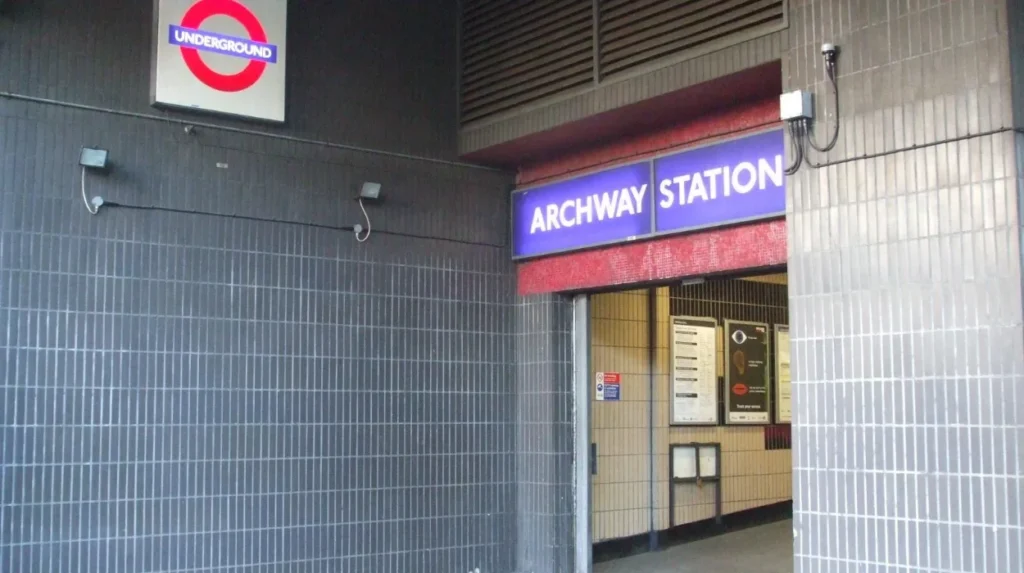
Archway Underground Station is important because it connects North London with central London through the Northern line. Its position near Archway’s main shopping area makes it a significant transport interchange for commuters, residents, visitors and people travelling towards Highgate.
Archway Underground Station is one of the neighbourhood’s most important facilities.
The station opened on 22 June 1907 as Highgate Station. It originally served the Charing Cross, Euston and Hampstead Railway, which later became part of the Northern line.
The station’s name changed several times as the Underground network expanded. It became Archway in 1939, reflecting the area’s growing importance as a transport destination.
How Does the Northern Line Connect Archway with London?
The Northern line provides direct connections between Archway and important destinations across central and northern London.
Passengers can use the service to travel towards:
- Camden Town: A major destination for markets, entertainment and cultural attractions.
- Euston: An important national railway interchange.
- King’s Cross St Pancras: A major transport hub serving domestic and international rail passengers.
- Tottenham Court Road: A central London shopping, business and entertainment district.
- Bank: An important financial and commercial centre.
- Charing Cross: A central London destination close to Trafalgar Square and government districts.
- Highgate: A nearby North London destination served by the Northern line.
The Northern line has two central London branches, via Bank and Charing Cross. Archway’s position on the line provides access to both routes, although passengers need to check the destination displayed on the train before boarding.
The Northern line was extended northwards from Archway to East Finchley in 1939. Further extensions connected the network with High Barnet and Mill Hill East.
Why Is Archway Important for Road and Bus Travel?
Archway is also an important road transport junction.
Archway Road, Holloway Road and Highgate Hill provide connections between different parts of North London. The road network supports local journeys, deliveries, commercial transport and access to neighbouring residential districts.
Local bus services provide additional connections for passengers travelling between Archway, Holloway, Highgate and surrounding areas. These services are particularly useful for journeys that do not follow the Northern line’s route.
For domestic business travellers, this combination of Underground and road connections makes Archway a practical location for accessing different parts of the capital.
What Architectural Landmarks Make Archway Distinctive?
Archway’s architectural identity reflects its development across different historical periods. The Highgate Archway viaduct, Archway Tower, Whittington Stone and Victorian-era buildings demonstrate how transport engineering, commercial construction and local heritage shaped the neighbourhood.
Archway contains several buildings and monuments that explain its historical and architectural importance.
Highgate Archway Viaduct
The Highgate Archway viaduct is one of the neighbourhood’s defining structures.
The existing cast-iron arch dates from 1897 and replaced the original John Nash-designed structure of 1813.
Its engineering function was to carry Hornsey Lane across the cutting below. The structure remains a recognisable feature of the local landscape and represents the area’s long relationship with transport development.
Archway Tower
Archway Tower is another prominent landmark.
The building stands approximately 59 metres high and was completed in 1963. Its construction reflects the architectural and commercial changes taking place in London during the twentieth century.
The tower provides a distinctive visual reference point around Archway’s town centre. Its presence also demonstrates how modern commercial development became part of the neighbourhood’s identity.
Whittington Stone
The Whittington Stone is an important heritage monument near Highgate Hill.
Its stone structure and distinctive cat sculpture connect Archway with the historical identity of Richard Whittington.
The monument is particularly relevant to visitors interested in local folklore, medieval London and historic public art.
Archway Tavern and Traditional Streets
Archway’s historic public buildings also contribute to its character.
The Archway Tavern has occupied an important position in the neighbourhood’s commercial and transport history. The original public house dates from the nineteenth century, with the building reconstructed in 1886.
Traditional commercial buildings, residential streets and newer developments demonstrate the different stages of Archway’s urban growth. islingtonhistory.org.uk
These architectural features make the neighbourhood useful for visitors interested in exploring London’s development beyond its central tourist attractions.
How Has Archway Changed Through Urban Regeneration?
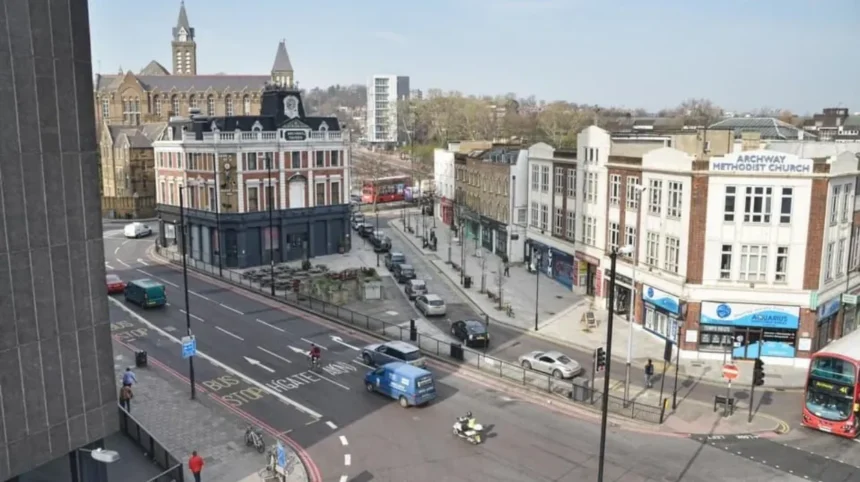
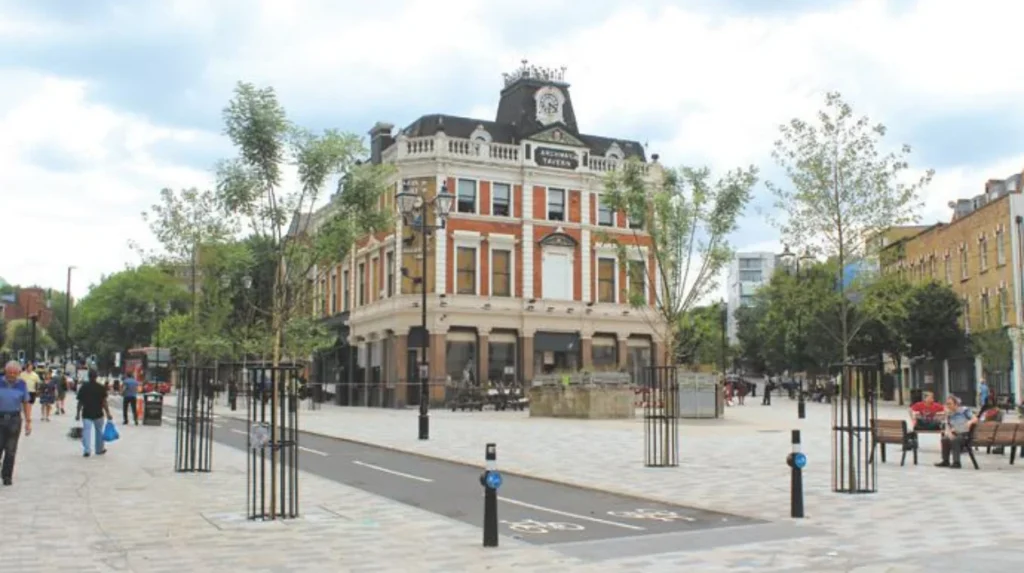
Archway has undergone significant urban regeneration through changes to its road layout, public spaces and pedestrian infrastructure. Islington Council’s transformation of the former gyratory system into Navigator Square has helped create a more accessible and community-focused town centre.
Urban regeneration has become an important part of Archway’s modern development.
For many years, the neighbourhood’s central road layout was dominated by a gyratory system introduced during the 1960s. A gyratory is a road arrangement that directs traffic around a central area using a one-way circulation system.
Although the arrangement supported vehicle movement, it created challenges for pedestrians and divided parts of the town centre.
Islington Council subsequently transformed this road infrastructure through a regeneration project that removed the old gyratory system and introduced Navigator Square.
What Is Navigator Square?
Navigator Square is a public space in the centre of Archway, developed to improve the neighbourhood’s pedestrian environment and support community activities.
The project forms part of Islington Council’s wider objective to create healthier and greener neighbourhoods.
Its main features include:
- Public gathering space: An accessible central area for residents and visitors.
- Community markets: Regular market activities supporting local traders.
- Seasonal events: Summer and Christmas lights festivals that bring visitors into the town centre.
- Cultural activities: Vinyl markets that promote independent record shops, local venues and music businesses.
- Environmental improvements: New trees and additional planting around selected streets and public facilities.
The regeneration programme also introduced wider pavements and additional greenery in parts of Archway.
These improvements support walking and cycling while contributing to the council’s efforts to address air pollution. Islington Council
Why Does Regeneration Matter to Local Businesses?
Improved public spaces influence how people use local shopping areas.
A pedestrian-friendly town centre creates better conditions for people visiting cafés, shops, markets and community venues.
Navigator Square also provides opportunities for independent businesses to participate in local events. Markets and seasonal activities encourage visitors to spend time in the neighbourhood rather than simply passing through on their journeys.
For digital nomads and domestic business travellers, these improvements contribute to a more accessible urban environment. The town centre provides convenient access to local services, food outlets and public transport.
Regeneration also has implications for future property development. Improved public spaces, pedestrian routes and transport access form important considerations in long-term neighbourhood planning.
What Community Facilities and Public Services Make Archway Important?
Archway is an important North London residential centre because it provides access to healthcare, education, libraries, shopping facilities and community spaces. These services support the everyday needs of residents while making the neighbourhood practical for longer visits.
Archway’s importance extends beyond its transport connections and historic buildings. Its community infrastructure supports a substantial residential population and people travelling from neighbouring districts.
Why Is Whittington Hospital Significant?
The Whittington Hospital is one of the neighbourhood’s most important public institutions.
The hospital was originally established as the Holborn Union Infirmary between 1877 and 1879. It subsequently developed into a major healthcare facility serving North London.
Its name reflects the area’s historical association with Richard Whittington.
Today, the hospital forms part of the local healthcare infrastructure. It provides hospital services and supports patients from Archway and surrounding communities.
Its location near Highgate Hill also contributes to the area’s importance as a regional healthcare destination. Archway and Tufnell Park
What Role Does Archway Library Play?
Archway Library is an important community facility managed within Islington’s public library network.
Public libraries provide access to books, educational resources, digital services and quiet study environments.
For residents, students and visitors, libraries offer a useful alternative to commercial workspaces.
Archway Library also contributes to the area’s cultural identity. Its historical connection with local artwork includes a mural depicting Dick Whittington and his cat, unveiled in 1984.
How Do Local Shops Support the Neighbourhood?
Archway’s shopping environment serves residents, commuters and visitors.
The town centre includes everyday retail businesses, food outlets, convenience shops and independent services.
These businesses support local employment and reduce the need for residents to travel into central London for routine purchases.
The presence of independent businesses also contributes to Archway’s neighbourhood identity. Local shops provide services to people living in surrounding areas, including Holloway, Highgate and Tufnell Park.
For visitors, these facilities make Archway a practical destination for everyday shopping, refreshments and access to essential services.
What Green Spaces and Leisure Attractions Are Near Archway?
Archway provides access to several North London outdoor destinations, including Highgate’s green spaces, local walking routes and nearby parks. Its position between residential districts and established open spaces makes it useful for visitors seeking outdoor activities and leisure opportunities.
Although Archway is a built-up urban neighbourhood, its location provides access to important green spaces in surrounding districts.
These outdoor destinations offer opportunities for walking, recreation, exercise and relaxation.
Waterlow Park
Waterlow Park is a historic public park near Archway.
The park is situated in Highgate and provides landscaped gardens, lawns, mature trees and open spaces.
Its elevated setting also provides attractive views across parts of London.
Visitors use the park for walking, outdoor recreation and quiet breaks away from busy roads. Its proximity to Highgate makes it a useful destination for people exploring the wider Archway area.
Highgate Wood
Highgate Wood is an ancient woodland managed by the City of London Corporation.
The woodland provides a natural environment with established walking paths, mature trees and wildlife habitats.
It is particularly relevant for visitors interested in London’s historic landscapes and urban biodiversity.
Highgate Wood also demonstrates the contrast between North London’s developed residential neighbourhoods and its protected natural environments.
Hampstead Heath
Hampstead Heath is another important outdoor destination accessible from Archway.
The extensive open space includes woodland, grassland, ponds and elevated viewpoints.
Parliament Hill is one of its most recognised features, providing views across the London skyline.
For tourists, Hampstead Heath offers a substantial outdoor attraction beyond the traditional central London sightseeing circuit.
Walking Around Highgate Hill
Highgate Hill provides a particularly interesting walking route because of its historical relationship with Archway’s development.
The road connects the neighbourhood with Highgate and passes important landmarks associated with the area’s transport history.
Visitors can explore the Whittington Stone and the historic viaduct while experiencing the steep landscape that influenced the development of local transport systems.
Walking through these streets provides a practical understanding of how geography influenced the growth of North London.
Why Is Archway a Useful Base for Tourists and Business Travellers?
Archway is a useful base for visitors because it combines Northern line connections, local shopping, healthcare facilities and access to North London’s historic attractions. Its position near Highgate and Holloway also supports convenient exploration beyond central London’s main tourist districts.
Archway offers practical advantages for different types of visitors.
Its transport infrastructure supports sightseeing, commuting and business travel, while its residential environment provides access to everyday services.
Why Should Tourists Consider Visiting Archway?
Tourists interested in London’s local history can explore several attractions within and around Archway.
The Highgate Archway viaduct explains the development of nineteenth-century transport engineering. The Whittington Stone provides a connection with London’s medieval history and popular folklore.
Nearby Highgate offers historic streets, traditional architecture and access to outdoor attractions.
Archway also provides access to central London through the Northern line. Visitors can explore the neighbourhood before travelling towards Camden, King’s Cross or other central destinations.
This makes Archway relevant to travellers who want to explore areas beyond London’s most heavily visited tourist locations.
Is Archway Suitable for Digital Nomads?
Digital nomads are people who use digital technology to work remotely while travelling or living in different locations.
Archway provides several practical facilities for this audience.
Its transport connections support movement between neighbourhoods and business districts. Local cafés and food businesses provide everyday amenities, while Archway Library offers a public study environment.
Remote workers should check individual venue facilities, including Wi-Fi availability, seating policies and opening hours, before planning a working session.
The neighbourhood’s residential character also makes it relevant to people seeking accommodation outside central London.
Why Is Archway Convenient for Business Travellers?
Business travellers often require reliable transport, food outlets and access to essential services.
Archway provides these facilities within a connected North London location.
The Northern line offers access to central commercial districts, while local roads and buses support journeys to surrounding business and residential areas.
Whittington Hospital and nearby community services also contribute to the area’s wider infrastructure.
For visitors attending meetings elsewhere in London, Archway provides an alternative to staying directly within expensive central business districts.
However, accommodation prices and journey times depend on the specific property, destination and travel period.
Explore More Area Guide
The Telegraph Ranks Six Top Secondary Schools in North London 2026
How Holloway Reflects Islington’s Urban Character and Development
What Is Archway’s Future Importance for North London?
Archway’s future importance depends on continued investment in public spaces, sustainable transport, community facilities and local businesses. Its existing infrastructure and strategic location provide a foundation for supporting residential growth, economic activity and improved urban accessibility.
Archway’s development remains connected to wider changes across North London.
The neighbourhood has already experienced major changes in transport infrastructure and public-space design. Further improvements to pedestrian facilities, cycling routes and environmental quality remain important considerations for its future.
Will Sustainable Transport Influence Archway’s Development?
Sustainable transport is an important consideration for London’s long-term urban planning.
Archway’s Northern line station provides an established public transport connection. Its bus network and road infrastructure also support local journeys.
Future improvements to walking and cycling facilities can strengthen the neighbourhood’s accessibility.
The transformation of the former gyratory into Navigator Square demonstrates how transport planning can prioritise pedestrians and community activities alongside road movement.
How Will Public Spaces Shape Archway?
Public spaces influence how residents and visitors experience urban neighbourhoods.
Navigator Square provides an example of how previously traffic-dominated areas can become community-oriented environments.
Regular markets, cultural events and seasonal celebrations support local participation and encourage visitors to explore the town centre.
Continued investment in planting, public seating, accessible pavements and community facilities can strengthen this role.
Why Will Archway Remain Important for Local Communities?
Archway’s established residential character provides an important foundation for its future.
Healthcare facilities, public transport, libraries, local shops and nearby green spaces support everyday life.
The neighbourhood also benefits from its connections with Highgate, Holloway and Tufnell Park. These relationships strengthen its position within the wider North London urban network.
For residents, the combination of essential services and transport accessibility supports daily activities. For visitors, the same facilities make Archway a practical destination for exploring London’s northern districts.
Its future importance therefore extends beyond individual regeneration projects. Archway functions as a residential neighbourhood, transport interchange, local commercial centre and gateway to North London’s historic attractions.
Why Does Archway Matter in North London?
Archway is important because its history, geographical position and transport infrastructure have shaped its development into an established North London neighbourhood.
The Highgate Archway viaduct established its historical identity as an important transport route. The opening of Archway Underground Station in 1907 strengthened its connections with central London. Landmarks such as the Whittington Stone and Archway Tower reflect different periods of its architectural and cultural development.
Modern regeneration has introduced Navigator Square, improved pedestrian facilities and created additional opportunities for community activities.
The presence of Whittington Hospital, Archway Library, local businesses and nearby green spaces further strengthens the neighbourhood’s importance.
For tourists, Archway provides access to historic landmarks and neighbouring attractions. For residents, it offers essential services and transport connections. For digital nomads and business travellers, it provides a practical location with links to central London.
These combined characteristics make Archway an important part of North London’s history, infrastructure and continuing urban development.
Where is Archway located in North London?
Archway is located in the London Borough of Islington, North London. It sits between Holloway, Highgate and Tufnell Park, providing convenient connections to surrounding residential and commercial districts.