Barnet, in North London, contains historic churches, Georgian houses, traditional cottages, former coaching inns and architectural landmarks protected for their special historic or architectural interest. These buildings form an important part of the borough’s heritage, connecting modern suburban London with medieval settlements, historic transport routes and centuries of residential development.
- What Does Listed Building Status Mean in Barnet?
- What Are the Different Listed Building Grades in Barnet?
- Which Historic Buildings in Monken Hadley Have Listed Status?
- Is the Parish Church of St Mary the Virgin listed?
- Why is Hadley House listed?
- Is the stable block at Hadley House listed separately?
- Which cottages and houses on Hadley Green Road are listed?
- Which Other Types of Historic Buildings Are Listed Across Barnet?
- What do historic residential buildings reveal?
- Why are historic institutional and religious buildings important?
- Are walls, gates and stable buildings listed too?
- How Can You Check Whether a Barnet Building Is Nationally Listed?
- What Is the Difference Between Listed Buildings and Locally Listed Buildings in Barnet?
- How Does Listed Status Affect Building Alterations and Restoration in Barnet?
- Which changes require listed building consent?
- Why are traditional materials important during restoration?
- Does listing protect the building’s surroundings?
- How Can Visitors Explore Barnet’s Listed Buildings and Historic Streets?
- What can you see around Hadley Green Road?
- What historical events shaped Monken Hadley?
- Can visitors enter Barnet’s listed buildings?
- Why Does Listed Building Protection Matter for Barnet’s Future?
The London Borough of Barnet maintains information about statutory listed buildings, while Historic England records nationally protected heritage assets on the National Heritage List for England. These official records help visitors, residents, property owners and researchers identify protected buildings and understand why their preservation matters.
Notable examples include the Parish Church of St Mary the Virgin in Monken Hadley, Hadley House and the Church Cottages on Hadley Green Road. Their official records document architectural features, historical associations and legal protection. Other listed buildings across Barnet reflect the area’s development from historic villages into a substantial part of Greater London.
What Does Listed Building Status Mean in Barnet?
A listed building in Barnet is a structure recognised for its special architectural or historic interest and entered on the National Heritage List for England. Its designation provides statutory protection under the Planning (Listed Buildings and Conservation Areas) Act 1990.
Listed status identifies buildings considered important enough to preserve for future generations. The designation applies across England, including the London Borough of Barnet, and is administered nationally through the statutory listing system.
Historic England advises the government on the identification and protection of historic buildings. The Secretary of State for Culture, Media and Sport is responsible for making listing decisions. Barnet Council uses the official records when determining planning applications that affect listed buildings and their settings.
The designation recognises more than famous monuments. Ordinary-looking cottages, boundary walls, former stables and historic residential terraces also receive protection when they possess sufficient architectural or historical significance. Their value often lies in their original construction, surviving details, association with an important person or contribution to a historic streetscape.
For example, Church Cottages at 1, 2 and 3 Hadley Green Road are Grade II listed. Historic England identifies them as mid-19th-century yellow-stock-brick cottages with tiled roofs and distinctive window and doorway arrangements. Their inclusion also reflects their group value within the historic surroundings of Monken Hadley.
Listed status does not automatically mean a building is open to visitors. Many protected properties remain private homes, places of worship or commercial premises. Visitors should respect access restrictions and view private buildings from public spaces.
What Are the Different Listed Building Grades in Barnet?
England has three statutory listing grades: Grade I, Grade II and Grade II. Grade I identifies buildings of exceptional interest, Grade II covers particularly important buildings, and Grade II recognises nationally important buildings of special architectural or historic interest.**
The grading system indicates the relative importance of a building within England’s architectural heritage. All three grades receive statutory protection, although Grade I and Grade II* properties represent a smaller proportion of listed buildings.
What does Grade I mean?
Grade I is reserved for buildings of exceptional interest. Across England, this category includes nationally significant religious, residential and civic architecture.
A Grade I designation indicates an exceptionally high level of heritage significance. Visitors researching Barnet should check the current Historic England register rather than assume that a visually impressive building holds this grade.
What does Grade II* mean?
Grade II* applies to particularly important buildings of more than special interest. Barnet has notable examples in Monken Hadley, including Hadley House and the Parish Church of St Mary the Virgin.
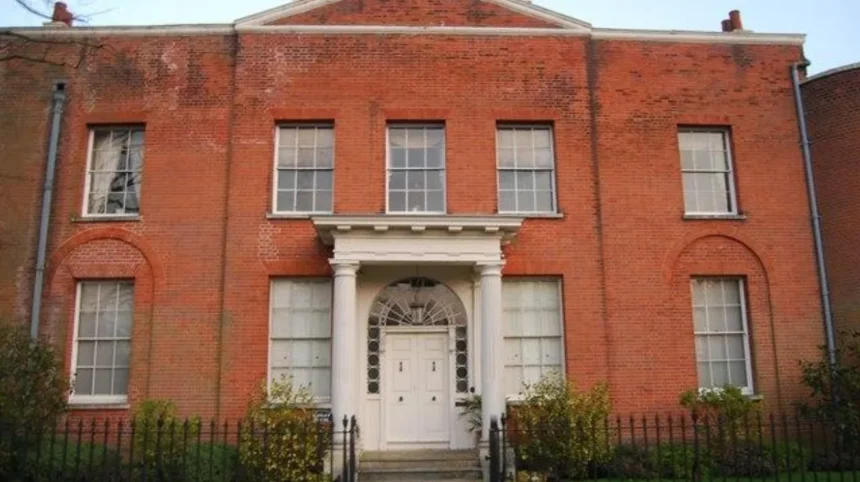
Historic England records Hadley House as Grade II*, with its listing dating from 18 July 1949. The record describes a large red-brick house built around 1760, featuring a central pediment, sash windows, stone dressings and a porch with fluted Doric columns.
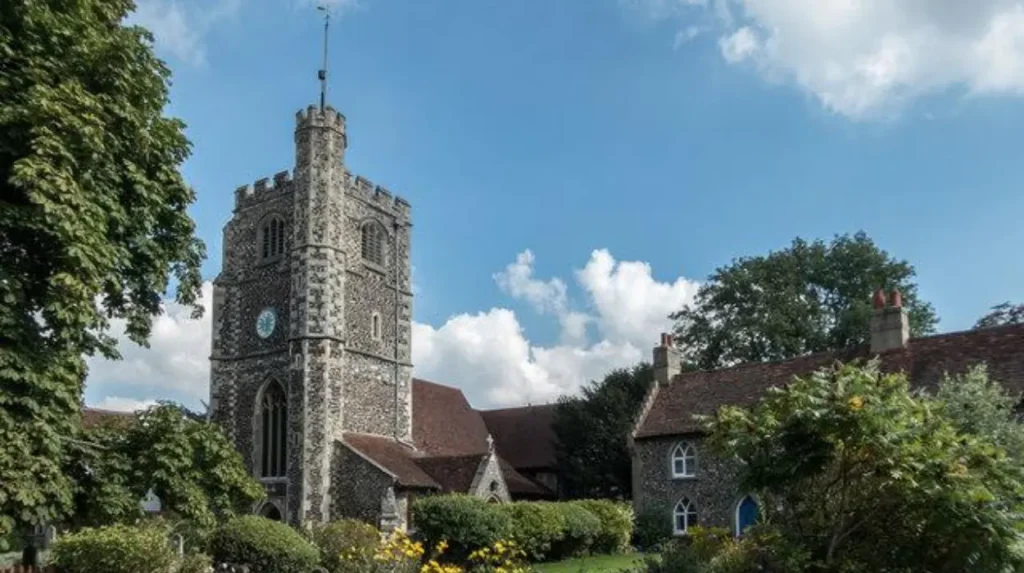
The Parish Church of St Mary the Virgin also holds Grade II* status. Its official record identifies a tower dated to approximately 1494, a hammerbeam roof and historic monuments within the church and churchyard.
What does Grade II mean?
Grade II is the most common listing category in England. It covers buildings of special architectural or historic interest that warrant statutory protection.
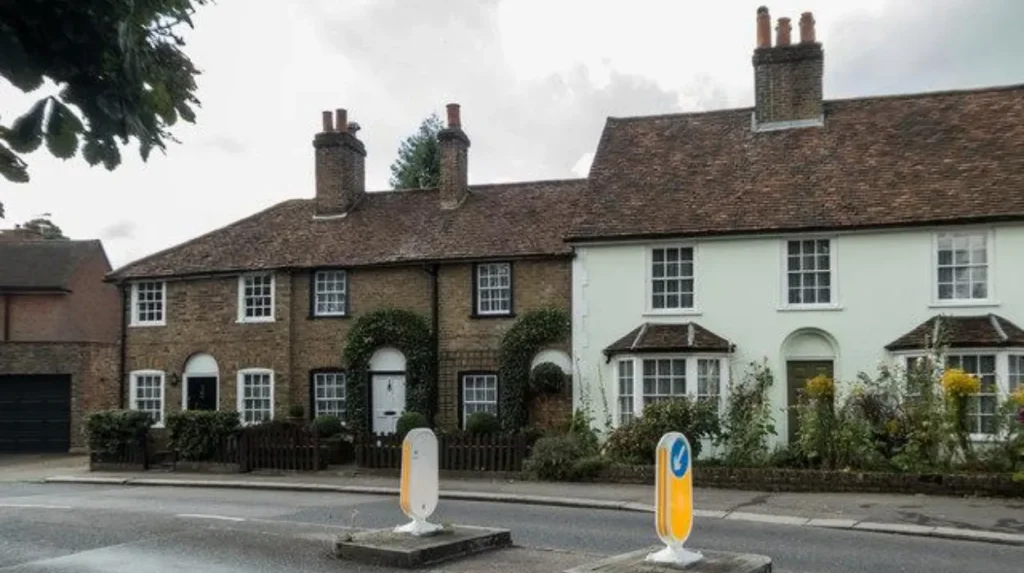
Barnet’s examples include Church Cottages and Church View on Hadley Green Road. Church View, comprising Nos. 1 and 2, is recorded as a late-17th- or early-18th-century house with a tiled roof, central chimney stack and later projecting bay windows.
The grade does not make these buildings unimportant. Grade II properties contribute significantly to historic streets, village centres and conservation areas.
Which Historic Buildings in Monken Hadley Have Listed Status?
Monken Hadley contains a concentration of nationally listed historic buildings, including St Mary the Virgin church, Hadley House, its stable block, Church Cottages and Church View. These buildings illustrate the area’s religious, domestic and architectural history across several centuries.
Monken Hadley lies in the north-eastern part of Barnet, close to the boundary with the London Borough of Enfield and Hertfordshire. Its historic character includes winding roads, traditional buildings, mature trees and open common land.
Barnet Council identifies the parish church as a focal point of the Monken Hadley Conservation Area. The historic settlement developed around routes connecting London with destinations farther north, making its surviving buildings particularly valuable for understanding the area’s past.
Is the Parish Church of St Mary the Virgin listed?
The Parish Church of St Mary the Virgin, on Hadley Green Road, is Grade II* listed. Historic England records its first listing date as 18 July 1949 and identifies the church as a significant historic building within Monken Hadley.
The church’s tower is dated to approximately 1494. Its architectural features include flint and ironstone construction, a four-bay nave and a hammerbeam roof. The building also contains stained glass and monuments associated with earlier periods.
The churchyard contributes to the site’s historic significance. Historic England records tombs associated with figures including the novelist William Makepeace Thackeray, the writer Hester Chapone and physician John Monro.
The church stands near historic roads and open green space, making its exterior and surroundings useful starting points for visitors exploring Monken Hadley’s heritage. Access to the interior depends on the church’s opening arrangements and services.
Why is Hadley House listed?
Hadley House is a Grade II* listed residential building on Hadley Green Road. Historic England dates the principal house to around 1760 and describes its red-brick construction, formal façade, sash windows, pediment and entrance porch.
Its architecture reflects the Georgian period, when symmetry, carefully proportioned windows and classical decorative elements were prominent in substantial British houses. The building’s scale and surviving architectural details contribute to its significance.
Historic England also records an association with L. C. Tennyson d’Eyncourt. The property is part of a wider historic setting that includes a stable block and garden wall, both separately identified in the official listing records.
Hadley House is a private property rather than a general visitor attraction. Its exterior and surrounding historic streetscape provide the appropriate focus for public heritage exploration.
Is the stable block at Hadley House listed separately?
The stable block adjoining Hadley House is separately listed at Grade II*. Historic England dates it to approximately 1760, contemporary with the main house, and describes a red-brick structure with tiled roofs, two storeys and a central archway beneath a clock tower.
Historic stables help explain how large houses operated before motor transport became widespread. They accommodated horses and associated activities while forming part of the property’s overall architectural composition.
The separate listing recognises the stable block’s contribution to the historic group. It also demonstrates that heritage protection applies to important ancillary structures, not only to principal houses.
Which cottages and houses on Hadley Green Road are listed?
Hadley Green Road includes several listed residential buildings, including Church Cottages and Church View. These properties preserve architectural details from earlier periods and contribute to the historic character of Monken Hadley.
Church Cottages, Nos. 1–3, date from the mid-19th century. Their two-storey yellow-stock-brick elevations and tiled roofs reflect traditional residential construction. Historic England notes their distinctive doorways and window arrangements.
Church View, Nos. 1 and 2, is older. Its official description identifies it as a much-altered house dating from the late 17th or early 18th century. A large central chimney stack and later bay windows form part of its surviving character.
These properties demonstrate why a heritage walk should include groups of buildings rather than focus exclusively on prominent landmarks. Traditional cottages, historic houses and church buildings collectively preserve the appearance and development of an older settlement.
Which Other Types of Historic Buildings Are Listed Across Barnet?
Barnet’s statutory heritage includes more than churches and large houses. Listed properties across the borough include traditional cottages, historic residential buildings, former institutional buildings, boundary structures and other features that document local development and architectural change.
The borough covers a wide area containing former villages, historic town centres and suburban neighbourhoods. Each locality has developed at a different pace, so its listed buildings reflect different periods and functions.
What do historic residential buildings reveal?
Historic houses and cottages show how building materials, domestic layouts and architectural styles changed over time. Georgian houses often feature symmetrical façades and sash windows, while Victorian properties commonly display varied brickwork, decorative window surrounds and more elaborate detailing.
Hadley House illustrates Georgian design through its formal red-brick façade and classical entrance. Church Cottages represent a more modest mid-19th-century residential form. Both have statutory protection, despite their differences in scale and architectural treatment.
Historic residential buildings also help explain the growth of settlements along established roads. Their position, scale and relationship with neighbouring properties provide evidence of how people lived and how communities changed.
Why are historic institutional and religious buildings important?
Religious and institutional buildings often preserve evidence of a community’s social history. Churches, chapels, former schools and charitable buildings can document changing patterns of worship, education, welfare and local administration.
St Mary the Virgin provides a clear example of the importance of religious architecture in Barnet. Its medieval tower, later alterations and historic monuments record successive phases of use and restoration.
Other historic buildings across the borough should be checked individually through Historic England’s official register. A building’s age or traditional appearance alone does not establish statutory listing.
Are walls, gates and stable buildings listed too?
Yes. Listing can cover structures that contribute to the architectural or historic interest of a principal building or historic setting. Examples include garden walls, stable blocks, gates and other associated features.
The garden wall associated with Hadley House is separately recorded by Historic England as Grade II. The listing describes a late-18th-century red-brick wall approximately eight feet high and 50 feet long.
Such features help explain historic property boundaries, estate layouts and the relationship between buildings and their surroundings. Their significance often depends on their original materials, position and association with a larger historic group.
This wider approach to listing prevents heritage research from overlooking smaller structures that contribute to a place’s character.
How Can You Check Whether a Barnet Building Is Nationally Listed?
Use Historic England’s National Heritage List for England to check a building’s official name, address, listing grade, entry number and designation history. Barnet Council’s statutory listed buildings information provides additional borough-level guidance and access to local heritage records.
The official records are the most reliable starting point for confirming a building’s status. Street names, historic property names and modern addresses sometimes differ, so checking more than one identifier improves accuracy.
How do you search Historic England’s register?
Start with the National Heritage List for England and search using the building’s name, street address or locality. Open the matching entry and verify the statutory address and London Borough of Barnet location.
A useful entry provides the building’s heritage category, grade, listing date and unique list entry number. The official description identifies architectural features and explains the building’s historical significance.
For example, Hadley House has the list entry number 1078824, while St Mary the Virgin church has the entry number 1078819. These numbers identify their official records and distinguish them from similarly named properties.
Historic England’s records also identify the scope of protection. Unless the entry specifies otherwise, listing includes the designated structure and fixed objects, as well as qualifying structures and objects within its curtilage. The legal definition of curtilage depends on the property’s circumstances and the relevant historic relationship.
How can Barnet Council’s heritage records help?
Barnet Council publishes information about statutory listed buildings and provides access to its local heritage resources. Its website is useful for understanding conservation policies and identifying buildings that contribute to the borough’s historic character.
The council’s statutory listing information complements Historic England’s national register. The local authority also provides information about conservation areas, which protect the character and appearance of places with special architectural or historic interest.
When researching a property, compare the official listing entry with the council’s conservation-area information. This approach helps distinguish a nationally listed building from a property that lies within a conservation area but does not hold individual statutory listing status.
What Is the Difference Between Listed Buildings and Locally Listed Buildings in Barnet?
Statutory listed buildings receive legal protection under national legislation, while locally listed buildings are recognised for their contribution to local heritage without receiving the same statutory listing protection. Barnet Council maintains a Local Heritage List alongside the national statutory register.
The distinction matters because the terms describe different forms of heritage recognition. A building on Barnet’s Local Heritage List is not automatically a nationally listed building.
What is Barnet’s Local Heritage List?
Barnet’s Local Heritage List identifies buildings and structures that contribute to the borough’s historic character and local identity. The council states that the list was approved by its Policy and Resources Committee on 6 January 2020, with further additions approved on 13 December 2022.
The council organises its local list into four downloadable documents. These include a street index and sections covering different parts of the borough. Searching by street name helps users locate entries relevant to a particular neighbourhood.
Local heritage recognition provides an additional layer of information for planning and conservation decisions. It helps identify buildings whose importance is primarily local rather than at the national level.
Does a locally listed building have the same legal protection?
No. Barnet Council explains that buildings on the statutory list receive protection beyond normal planning control, whereas locally listed buildings do not receive that same statutory protection. Local heritage status still informs planning decisions and helps the council assess a property’s contribution to the area’s character.
Owners should verify the exact designation before planning alterations, extensions or demolition. A building without individual statutory listing can still be affected by other planning controls, including conservation-area rules.
The correct approach is to check both the National Heritage List for England and Barnet Council’s Local Heritage List rather than treating the terms as interchangeable.
How Does Listed Status Affect Building Alterations and Restoration in Barnet?
Listed status affects alterations that change a building’s special architectural or historic character. Listed building consent is generally required for works that would affect that character, including certain internal alterations, external changes and modifications to protected structures within the building’s curtilage.
The legal framework aims to protect the features that make a listed building significant. These features include historic materials, original layouts, architectural detailing and relationships between the main building and associated structures.
Which changes require listed building consent?
Consent requirements depend on the nature and effect of the proposed work. Alterations to historic windows, doors, roofs, staircases, fireplaces or internal layouts often require careful assessment when they affect a building’s special interest.
Even work that appears minor can alter an important historic feature. Replacing original windows with unsuitable modern units, removing historic joinery or changing a traditional façade can affect the architectural character that justified listing.
Owners should contact Barnet Council’s planning and conservation service before starting work. They should not assume that ordinary planning permission, permitted development rights or building regulations approval replace listed building consent.
Unauthorised work affecting a listed building can lead to enforcement action and other legal consequences. Early advice helps owners establish the relevant permissions and identify appropriate conservation methods.
Why are traditional materials important during restoration?
Traditional materials help preserve the appearance and physical performance of historic buildings. Brickwork, lime-based mortars, timber windows, roof tiles and historic plaster each behave differently from many modern alternatives.
For example, repairs to older brick buildings require attention to mortar composition and moisture movement. An unsuitable hard cement mortar can damage softer historic bricks by changing how moisture moves through the wall.
The correct restoration method depends on the building’s age, construction and significance. A conservation professional can assess the existing materials and specify repairs that retain important historic fabric.
Does listing protect the building’s surroundings?
The setting of a listed building can influence how proposals are assessed. New construction, extensions, landscaping or changes to neighbouring sites can affect important views, historic relationships and the building’s overall character.
Listing also includes certain qualifying structures and fixed features associated with the designated property, subject to the legal rules governing the entry and curtilage. The precise scope must be established from the official record and the circumstances of the site.
These protections help maintain the relationship between historic buildings and their surroundings, rather than treating each structure as an isolated object.
Explore More Area Guide
Period Homes in Barnet: Historic Houses in North London
Camden’s Most Oversubscribed Primary Schools Revealed for 2026
How Can Visitors Explore Barnet’s Listed Buildings and Historic Streets?
Visitors can explore Barnet’s architectural heritage by walking through Monken Hadley, viewing listed buildings along Hadley Green Road and examining the historic setting around St Mary the Virgin church. Public access varies, so private properties should be viewed only from permitted public areas.
Monken Hadley provides a practical starting point because its listed buildings sit within a recognisable historic settlement. The area combines traditional houses, cottages, a historic church and open green spaces.
What can you see around Hadley Green Road?
A walk along Hadley Green Road provides opportunities to view the exterior architecture of Hadley House, Church Cottages, Church View and the Parish Church of St Mary the Virgin. Their different dates and building styles reveal how the settlement developed over several centuries.
Look for variations in brickwork, roof forms, window proportions, entrance details and the arrangement of buildings along the road. These features help distinguish Georgian domestic architecture from older houses and later cottages.
The route also illustrates group value: individual buildings contribute to the character of the wider streetscape. Visitors should avoid entering private grounds or photographing residents through windows.
What historical events shaped Monken Hadley?
Monken Hadley’s historic landscape reflects its position near important routes between London and the north. Barnet Council records the area’s association with the Battle of Barnet in 1471, a major engagement in the Wars of the Roses.
The council’s conservation-area account also describes the historic Great North Road and the role of coaching traffic in the area’s development. Before road realignments changed the route, Hadley Green formed part of a busy corridor for travellers moving between London and destinations farther north.
This context explains why the area’s heritage includes both prominent buildings and traditional roadside properties. Historic houses and cottages formed part of a settlement shaped by transport, local trade and residential life.
As you explore the modern streetscape, you are crossing a landscape shaped by centuries of change. Read the full to understand the area’s origins and how its historic settlements developed.
Can visitors enter Barnet’s listed buildings?
Not every listed building operates as a tourist attraction. Some are places of worship with scheduled services, while others remain private homes or properties used for commercial or institutional purposes.
Check the relevant organisation’s official website for opening hours, services, tours and access arrangements before travelling. Viewing a building from a public road does not grant permission to enter its grounds or interior.
Visitors can still learn a great deal by examining the exterior architecture, reading official listing descriptions and using council conservation-area information to understand the historic setting.
Why Does Listed Building Protection Matter for Barnet’s Future?
Listed building protection preserves significant architecture, records local history and supports informed planning decisions. In Barnet, maintaining historic churches, houses, cottages and associated structures helps retain evidence of earlier settlement patterns while guiding sensitive adaptation for future generations.
Barnet continues to function as a modern London borough, with homes, businesses, transport links and community facilities. Its historic buildings connect that contemporary environment with earlier periods of religious life, domestic architecture, travel and urban growth.
Protection does not prevent every change. It establishes a framework for assessing proposed work and balancing present-day needs with the significance of historic fabric. Suitable repairs, sensitive adaptation and informed ownership help keep historic buildings in use.
The distinction between statutory listing, local heritage listing and conservation-area designation is essential to this process. Each provides different information and controls, so property owners and developers must establish the applicable status before making decisions.
Historic England’s national register and Barnet Council’s heritage pages provide the starting points for reliable research. Their records allow visitors to verify individual designations, understand architectural features and identify the historic places that contribute to Barnet’s distinctive character.
For anyone researching which Barnet buildings have listed status, the clearest approach is to begin with verified entries, explore the historic streets around Monken Hadley and treat each building as part of a wider architectural and historical landscape.
Which buildings in Barnet have listed status?
Notable listed buildings in Barnet include Hadley House, the Parish Church of St Mary the Virgin, the stable block at Hadley House, Church Cottages and Church View in Monken Hadley.