Barnet, in North London, offers a varied collection of period homes, historic streets and architecturally distinctive residential neighbourhoods. From the Arts and Crafts houses of Hampstead Garden Suburb to the traditional cottages of Mill Hill and the historic village character of Monken Hadley, the borough preserves residential architecture from different stages of London’s development.
- What Are Period Homes in Barnet?
- Which Barnet Neighbourhoods Have the Best Concentration of Period Homes?
- Why Is Hampstead Garden Suburb Famous for Period Homes?
- Where Can You Find Traditional Cottages and Historic Houses in Mill Hill?
- What Makes Monken Hadley a Historic Residential Neighbourhood?
- Where Are the Historic Residential Streets of Totteridge?
- Where Can You Explore Victorian and Edwardian Houses in Finchley?
- What Period Homes Can You Find in Golders Green?
- How Can You Identify the Architectural Period of a Barnet House?
- What Is the Difference Between a Listed Building and a Conservation Area?
- How Can You Research the History of a Period Home in Barnet?
- How Can Visitors Explore Barnet’s Period Homes Responsibly?
- Why Do Barnet’s Period Homes Matter to the Future of North London?
The best places to explore period homes in Barnet include Hampstead Garden Suburb, Monken Hadley, Mill Hill, Totteridge, Finchley Church End, Hendon and Golders Green. Each neighbourhood reflects a different period of architectural and urban history, including traditional village development, Victorian expansion, Edwardian planning and early twentieth-century suburban design. Barnet Council recognises these historic environments through designated conservation areas, character appraisals and heritage protection policies.
For visitors, these neighbourhoods provide opportunities to explore historic streets, traditional building materials, landscaped residential roads and the relationship between older settlements and modern London. Residents and prospective homebuyers also gain a clearer understanding of the architectural character that distinguishes different parts of the borough.
What Are Period Homes in Barnet?
Period homes in Barnet are residential buildings associated with identifiable historical architectural periods, including Georgian, Victorian, Edwardian and early twentieth-century design. They include traditional cottages, Victorian terraces, detached villas and Arts and Crafts houses, with architectural details reflecting the period in which each property was built.
A period home is generally understood as a property that retains characteristics associated with an earlier architectural era. The term does not automatically mean that a building is legally listed or protected. Its historical interest depends on factors such as its age, design, materials, original features and relationship with its surroundings.
Barnet’s residential architecture developed over several centuries. Older settlements contained cottages, farmhouses, estate buildings and larger private residences. During the nineteenth century, improved transport connections and London’s outward expansion encouraged more extensive residential development. The late Victorian and Edwardian periods introduced new housing forms, including suburban villas, terraced properties and planned residential streets.
Twentieth-century development added further architectural variety. Hampstead Garden Suburb, for example, was developed between 1907 and 1938 and combines planned neighbourhood design with architectural influences from the Arts and Crafts movement and Neo-Georgian tradition.
Period homes in Barnet therefore represent more than individual buildings. They also reveal how residential architecture responded to changing household needs, transport infrastructure, landscape design and planning principles.
Which Barnet Neighbourhoods Have the Best Concentration of Period Homes?
Hampstead Garden Suburb, Monken Hadley, Mill Hill and Totteridge are among Barnet’s strongest destinations for exploring historic residential architecture. Finchley Church End, Golders Green and Hendon Church End also contain historic streetscapes and buildings that reflect the borough’s architectural development.
The London Borough of Barnet identifies 16 conservation areas on its conservation-area information page. These areas are recognised for their special architectural or historic interest and include neighbourhoods with different building traditions.
Hampstead Garden Suburb is particularly associated with planned early twentieth-century housing, green spaces and Arts and Crafts influences. Monken Hadley preserves the character of an older village settlement, while Mill Hill combines cottages, institutional buildings and historic residences along The Ridgeway.
Totteridge is known for its historic village character and relationship with surrounding open land. Finchley Church End contains buildings connected with an older settlement, while Golders Green illustrates the development of residential North London during the twentieth century.
The most suitable area depends on the period and building style being explored. Visitors interested in coherent architectural planning should begin with Hampstead Garden Suburb. Those seeking traditional village streets and older houses should consider Monken Hadley or Mill Hill.
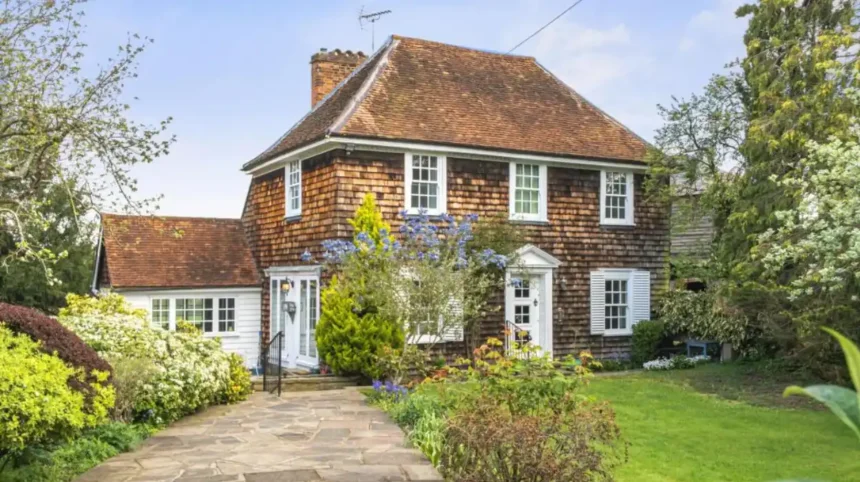
Why Is Hampstead Garden Suburb Famous for Period Homes?
Hampstead Garden Suburb is famous for its planned residential layout, Arts and Crafts influences, Neo-Georgian houses and carefully integrated green spaces. Developed between 1907 and 1938, it offers one of Barnet’s clearest examples of early twentieth-century suburban architecture and landscape planning.
The suburb was developed on a greenfield site in the south of Barnet. Its layout was designed to integrate housing, open spaces and community facilities rather than treating residential buildings as isolated properties. The existing woodland and agricultural landscape influenced the arrangement of streets and green areas.
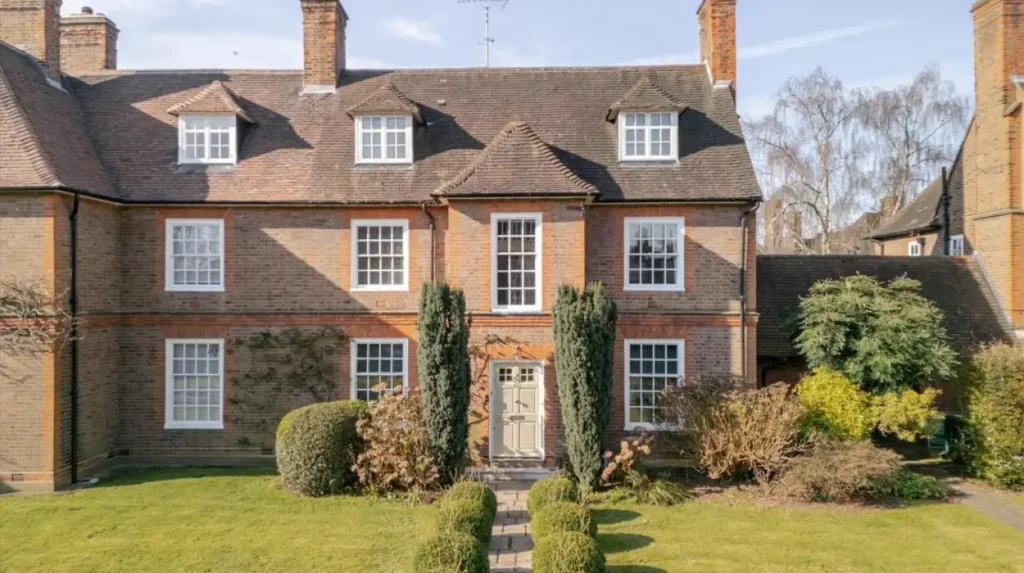
Its architecture combines several related traditions. Arts and Crafts houses often feature carefully composed brickwork, traditional materials, prominent rooflines and restrained decorative details. Neo-Georgian properties draw on the proportions and symmetry of Georgian architecture, using features such as sash windows, cornices, chimneys and balanced façades.
The result is a neighbourhood in which individual homes contribute to a consistent streetscape. Differences in house size and detailing remain visible, but the overall design maintains architectural harmony.
Barnet Council states that the Hampstead Garden Suburb conservation area covers approximately 1,009 acres, including roughly 136 acres of open space. The council designated the conservation area in 1968 and subsequently extended it to include Golders Green Crematorium.
Which streets are useful starting points?
The council publishes separate character appraisals for several parts of Hampstead Garden Suburb, including Central Square, the Artisans’ Quarter, Meadway and the Great Wall, Rotherwick Road, Brooklands and the Holms, and Ingram Avenue. These documents help visitors identify the architectural characteristics of different sections of the suburb.
Central Square provides a useful starting point for understanding the relationship between residential architecture and planned public space. Other sections reveal variations in house design, rooflines, brickwork, boundaries and garden layouts.
Visitors should treat the suburb as a residential neighbourhood. Exploring from public pavements allows people to appreciate the architecture without entering private gardens or disturbing residents.
Where Can You Find Traditional Cottages and Historic Houses in Mill Hill?
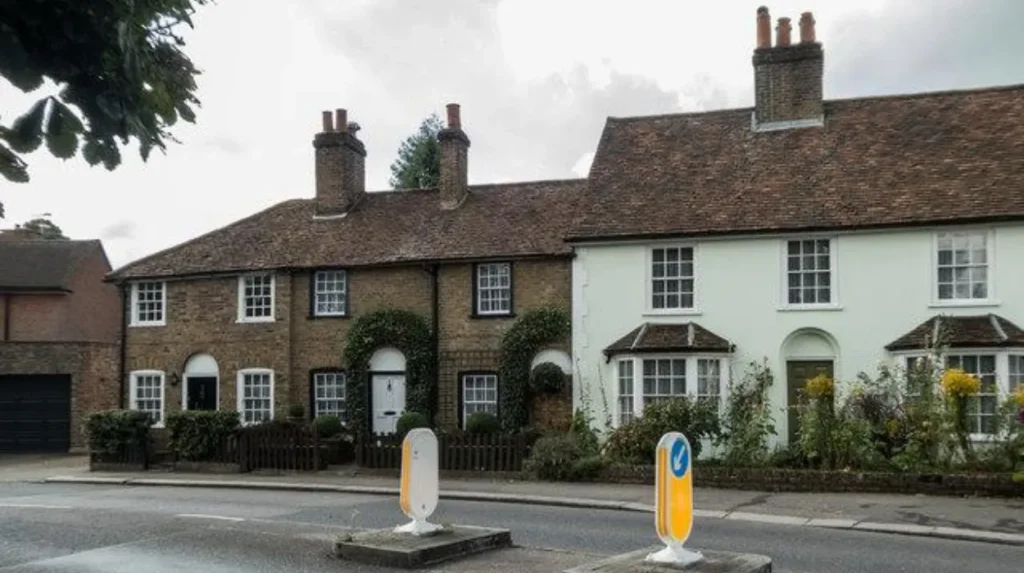
Mill Hill is a strong destination for traditional cottages, older houses and historic institutional buildings, particularly along The Ridgeway and around its historic settlement clusters. Its architecture reflects the area’s former village character and the development of substantial residences in a countryside setting.
The Mill Hill conservation area covers approximately 152 hectares in north-west Barnet. It extends along the elevated route known as The Ridgeway, with views towards Green Belt countryside. The council identifies approximately 260 houses in the conservation area, including brick and weatherboard cottages alongside larger institutional buildings.
Traditional cottages are an important feature of Mill Hill’s historic character. Brick-built properties reflect established local construction traditions, while weatherboarded buildings provide a different external finish. Their scale and placement help distinguish older residential clusters from later suburban development.
The Ridgeway is particularly useful for understanding how residential buildings developed along a historic route. Smaller groups of cottages appear near the western end of The Ridgeway, around the junction with Hammers Lane and near Mill Hill High Street. Another cluster is located around Highwood Hill.
Older residences also survive within larger institutional sites. The council identifies Littleberries, now incorporated into St Vincent’s, and Belmont House, which forms part of Belmont School, as examples of older buildings embedded within later developments.
Mill Hill suits visitors who want to explore traditional residential architecture alongside a landscape that retains a comparatively rural character. The combination of older houses, open views and historic routes distinguishes it from more densely built parts of North London.
What Makes Monken Hadley a Historic Residential Neighbourhood?
Monken Hadley is a historic village area in Barnet known for its established settlement character, traditional buildings and relationship with Hadley Common. Its streets provide an opportunity to explore the architectural character of an older North London settlement rather than a neighbourhood created primarily through modern suburban expansion.
The Monken Hadley conservation area is among the historic areas recognised by Barnet Council. Conservation-area designation identifies places where the overall character of buildings, streets, spaces and their historic relationships merits preservation or enhancement.
The village setting is an important part of Monken Hadley’s identity. Traditional buildings should be considered alongside the street pattern, boundaries, open spaces and relationship between the settlement and its surroundings. This wider context helps explain why historic residential areas are not assessed solely by the age of individual houses.
Visitors exploring Monken Hadley should pay attention to the scale of older buildings, traditional façades, roof shapes and the way properties relate to the village street. Historic buildings and their surroundings contribute collectively to the area’s appearance.
Monken Hadley is also relevant to the wider history of Barnet. The borough’s landscape includes evidence of earlier settlement, historic routes and major events, including the Battle of Barnet in 1471. Historic England’s Barnet heritage collection provides further information about listed buildings and historic sites across the area.
The village is a suitable destination for people interested in traditional architecture and historic settlement patterns. It also demonstrates how older residential communities retain a distinct identity within the modern London urban area.
Where Are the Historic Residential Streets of Totteridge?
Totteridge is an important Barnet destination for exploring historic village architecture, older residential properties and the relationship between houses and open land. Its conservation area protects a distinctive local character, making the neighbourhood relevant to visitors interested in traditional homes and established residential landscapes.
Totteridge developed as a village settlement before the expansion of modern suburban London transformed much of the surrounding area. Its historic character is associated with the relationship between residential buildings, roads, mature greenery and the surrounding landscape.
The conservation-area approach considers the wider setting of buildings as well as individual architectural features. This matters in Totteridge because the experience of its older properties depends partly on their position within the landscape and the character of the surrounding streets.
Visitors should look for changes in building scale, traditional façades, established garden boundaries and the way houses sit back from roads. These details help distinguish older village development from later housing estates.
Totteridge is also a useful location for understanding the variety of historic residential environments in Barnet. Its character differs from the formal planning of Hampstead Garden Suburb and the cottage clusters of Mill Hill.
For architectural exploration, a walk through the publicly accessible streets offers a practical way to observe the neighbourhood. Check Barnet Council’s Totteridge conservation-area information before visiting for the relevant boundaries and character guidance.
Where Can You Explore Victorian and Edwardian Houses in Finchley?
Finchley offers opportunities to explore historic residential architecture through its older settlement areas, conservation districts and established streets. Finchley Church End and Finchley Garden Village are recognised conservation areas, providing useful starting points for examining buildings and streetscapes associated with North London’s residential development.
Victorian architecture developed during the reign of Queen Victoria, from 1837 to 1901. Edwardian architecture generally refers to the period associated with Edward VII, from 1901 to 1910, although architectural styles and building programmes frequently extended beyond those dates.
Victorian houses commonly feature brick façades, bay windows, decorative brickwork, pitched roofs and relatively narrow plots. Edwardian houses often feature wider plans, larger windows, more generous entrance halls and decorative details influenced by Arts and Crafts design. These are broad tendencies rather than rules for every property.
Finchley developed through successive stages of suburban growth. Older settlement centres retained historic buildings while transport improvements and expanding London housing demand encouraged development in surrounding areas.
Finchley Church End is a useful place to investigate the historic relationship between a settlement centre and its residential surroundings. Finchley Garden Village provides a separate architectural context for understanding planned housing and neighbourhood design.
Not every older-looking property in Finchley is Victorian or Edwardian. Building dates should be checked through historical maps, local records or property documentation before a particular architectural period is assigned.
For visitors, Finchley’s main value lies in the opportunity to compare different stages of suburban development within one borough. Its historic areas provide a useful contrast with the more formally planned streets of Hampstead Garden Suburb.
What Period Homes Can You Find in Golders Green?
Golders Green combines historic residential development with the architectural character of early twentieth-century North London. Its conservation area provides a useful setting for examining the relationship between suburban housing, local shopping streets and the expansion of residential neighbourhoods during the modern period.
Golders Green became an increasingly important residential area as London’s built-up area expanded northwards. The growth of transport connections and local services helped support housing development and a more established suburban community.
The Golders Green conservation area lies in the southern part of Barnet, close to Hampstead Garden Suburb. The council’s heritage information identifies its relationship with the wider historic environment of the borough.
Visitors interested in period homes should examine the relationship between individual properties and their streets. Building setbacks, front gardens, boundary walls, window designs and roof forms help explain the architectural character of a residential area.
Golders Green also offers an opportunity to compare housing with nearby Hampstead Garden Suburb. The two areas developed within a related period of North London’s expansion, but Hampstead Garden Suburb is particularly associated with a planned layout and a carefully integrated landscape.
The distinction is important for architectural research. A period property does not necessarily belong to a formally planned neighbourhood, and a coherent streetscape does not mean every house was built in the same year.
Golders Green is therefore a useful destination for understanding how residential architecture developed alongside local commercial centres and the changing needs of a growing population.
How Can You Identify the Architectural Period of a Barnet House?
You can identify a Barnet house’s likely architectural period by examining its construction materials, windows, roof, façade, entrance and relationship with neighbouring buildings. Comparing these features with historical maps and conservation-area appraisals provides stronger evidence than relying on appearance alone.
Several architectural features help distinguish common residential periods.
Georgian properties
Georgian architecture is associated with the period from 1714 to 1830. Typical features include balanced façades, symmetrical window arrangements, sash windows and restrained decorative details. Surviving examples require individual verification because later alterations often change the appearance of older buildings.
Victorian houses
Victorian residential architecture covers a long period of urban and suburban expansion. Common features include bay windows, brick façades, decorative masonry, pitched roofs and chimney stacks. The size and ornamentation of Victorian houses vary according to their date, location and original purpose.
Edwardian homes
Edwardian houses frequently feature wider frontages, larger windows, decorative brickwork and designs influenced by Arts and Crafts architecture. Some have timber details, tiled entrance features or varied roof forms.
Arts and Crafts and Neo-Georgian houses
Arts and Crafts architecture emphasises traditional materials, craftsmanship and carefully considered detailing. Neo-Georgian architecture draws on Georgian proportions and features, including sash windows, cornices and prominent chimneys.
Hampstead Garden Suburb provides examples of both traditions. Barnet Council’s published character appraisals document architectural details, including rooflines, brickwork, window styles and decorative features.
These characteristics are useful indicators, but none proves a building’s age on its own. The most reliable assessment combines architectural observation with documentary evidence.
What Is the Difference Between a Listed Building and a Conservation Area?
A listed building is individually recognised for special architectural or historic interest, whereas a conservation area protects the character of a wider place. In Barnet, both designations support the management of historic buildings, streets and settings, but their legal controls and practical implications differ.
Listed-building status applies to a particular building or structure entered on the National Heritage List for England. Historic England advises on the national register, while listing decisions are made through the relevant government process.
A conservation area covers a wider geographical setting. It recognises that the historic character of a neighbourhood can depend on the combined contribution of buildings, street patterns, open spaces, trees and boundaries.
A historic house within a conservation area is not automatically a listed building. Likewise, a listed building can stand outside a conservation area.
The Planning (Listed Buildings and Conservation Areas) Act 1990 provides the main legislative framework for listed buildings and conservation areas in England. Listed-building consent is generally required for works that affect the special architectural or historic character of a listed building. Conservation-area controls apply to particular types of development, including certain demolition and tree works, while additional restrictions can apply where Article 4 Directions remove specified permitted development rights.
These distinctions matter to homeowners, prospective buyers and visitors. Anyone planning alterations to a historic property should check its individual status, the applicable conservation-area rules and the need for planning permission or other consent before work begins.
Barnet Council publishes conservation-area boundaries, character appraisals and information about listed buildings. These records provide the most appropriate starting point for checking a property’s heritage status.
How Can You Research the History of a Period Home in Barnet?
The most reliable way to research a period home in Barnet is to combine council heritage records, Historic England listings, historical maps and property documents. These sources help establish a building’s age, architectural significance, original surroundings and subsequent changes without relying solely on visual estimates.
Start with Barnet Council’s conservation and heritage pages. If the property stands in a conservation area, consult the relevant character appraisal and boundary map. These documents explain which architectural details and landscape features contribute to the area’s special character.
Next, check the National Heritage List for England if the property appears to have individual historic significance. A statutory listing provides information about the designated building and the features that contribute to its special interest.
The council’s Local Heritage List is also useful. It records buildings and other heritage assets considered locally important, including properties recognised for their age, architectural merit, landmark qualities or contribution to a group of buildings. Local listing does not provide the same statutory protection as national listing.
Historical maps and archive photographs can help establish when streets appeared and how properties changed over time. Property deeds, historic directories and building records can provide further evidence where they survive and are accessible.
As you explore Barnet’s residential streets, you are also encountering the borough’s wider development. Read the full [Insert Anchor Text for Barnet History Article Here] to understand how historic settlements, transport connections and suburban expansion shaped the places where period homes stand today.
This historical context helps explain why architectural styles vary so widely across the borough. A cottage near an older village centre reflects a different development process from a house built as part of an organised early twentieth-century suburb.
Explore More Area Guide
Camden’s Most Oversubscribed Primary Schools Revealed for 2026
Barnet Historic Buildings: Landmarks Across North London
How Can Visitors Explore Barnet’s Period Homes Responsibly?
Visitors can explore Barnet’s period homes by following publicly accessible streets, visiting historic village centres and consulting official conservation-area maps. A respectful walking route allows people to appreciate architectural details, landscaped streets and historic surroundings while protecting residents’ privacy and avoiding access to private property.
Hampstead Garden Suburb, Mill Hill and Monken Hadley are useful starting points because each offers a different architectural context. Visitors can plan separate walks rather than attempting to cover the entire borough in one visit.
A practical approach is to choose one neighbourhood and research its historic features beforehand. Barnet Council’s conservation-area appraisals identify significant buildings, streets, landscape features and architectural characteristics. These records help visitors understand what makes each location distinctive.
Photography from public pavements is generally a straightforward way to document façades and street layouts. Visitors should avoid photographing people through windows, entering private gardens or obstructing entrances.
Historic neighbourhoods also require consideration of accessibility. Older streets have different pavement widths, gradients and crossing arrangements. Check the walking route before setting out, particularly when visiting areas with uneven surfaces or limited pedestrian space.
Public transport and local walking routes can be combined to explore different parts of Barnet. The best itinerary depends on the neighbourhood selected and the amount of time available.
For residents and prospective homebuyers, the same approach provides a useful introduction to the borough’s housing character. Architectural observation, supported by official heritage records, helps distinguish historic interest from assumptions based on appearance alone.
Why Do Barnet’s Period Homes Matter to the Future of North London?
Barnet’s period homes contribute to local identity, architectural diversity and the historic character of North London. Their continued preservation depends on understanding original building features, managing alterations appropriately and recognising the relationship between individual houses and the wider streetscape.
Historic residential buildings provide evidence of how Barnet developed from older settlements into a large London borough. Traditional cottages, Victorian houses and Edwardian suburbs reflect different patterns of housing demand, construction methods and urban planning.
Their architectural significance also extends beyond individual properties. A street’s character often depends on consistent rooflines, traditional materials, garden boundaries, mature trees and the relationship between houses and public spaces.
Conservation policies help local authorities manage changes that affect this historic environment. Listed-building controls protect the special interest of designated buildings, while conservation-area policies address the wider character of neighbourhoods. Local heritage listing recognises additional buildings of local significance.
Preservation does not mean that every historic building must remain unchanged. Historic properties continue to serve as homes and community buildings, and their long-term use requires appropriate maintenance and carefully considered improvements. Owners must establish which permissions apply before undertaking controlled works.
For visitors, these neighbourhoods offer a way to understand North London’s architectural development through its surviving buildings. For residents, they provide a connection with the history of the places where they live.
Barnet’s period homes are best understood as part of a wider historic landscape. Hampstead Garden Suburb demonstrates planned suburban design, Mill Hill retains traditional cottage clusters, and Monken Hadley illustrates the character of an older village settlement. Together, these areas reveal the architectural variety that makes Barnet an important destination for exploring historic residential North London.
Where can you find period homes in Barnet?
You can find period homes in Hampstead Garden Suburb, Monken Hadley, Mill Hill, Totteridge, Finchley Church End and Golders Green. These neighbourhoods feature historic cottages, Victorian houses, Edwardian properties and Arts and Crafts architecture.