Cricklewood blends rich history, diverse culture, and modern regeneration in the heart of North London. Spanning the boroughs of Barnet, Brent, and Camden, this vibrant area offers something for everyone from history buffs to families.
Cricklewood’s Historic Roots
Cricklewood emerged as a small settlement by 1294 at the junction of Cricklewood Lane and Edgware Road, a key Roman route later known as Watling Street. By the 1750s, the Crown pub served coach travelers amid pleasure gardens and scattered cottages, evolving into a rural hamlet with villas like Rockhall Lodge by the 1860s. Railways transformed it: Childs Hill and Cricklewood station opened in 1868, sparking suburban growth with worker housing like the listed Railway Cottages built in 1881.
Industrial booms followed. Handley Page Aircraft set up in 1912, pioneering early flights from Cricklewood Aerodrome, while the site later became Cricklewood Studios, Britain’s largest film studio in 1920 for silent-era Stoll Pictures. Smith’s Industries employed 8,000 from 1937-1978 making clocks and aircraft parts, and Bentley Motors headquartered here until 1931. Farms like Cowhouse (closed 1932) and Westcroft (horse rest home until 1935) gave way to housing.
Key Landmarks and Attractions
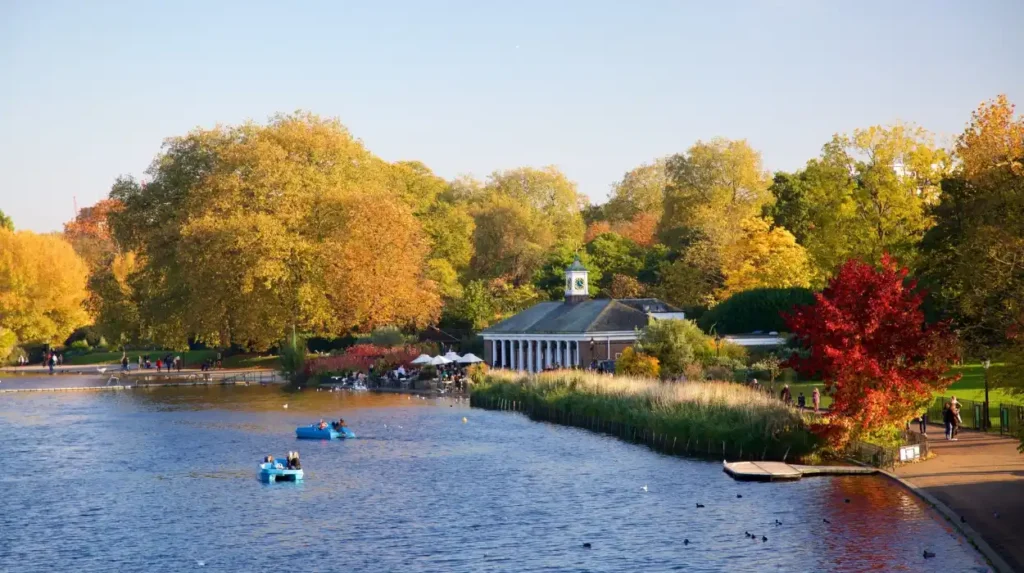
The Crown, a Grade II-listed Victorian terracotta gem rebuilt in 1889 and now Clayton Crown Hotel, stands as Cricklewood Broadway’s icon with Flemish Renaissance style and ornate gables. Gladstone Park, 86 acres on the northwest edge, features gardens, sports pitches, a pond, café, and views of Wembley Stadium and the Shard; Mark Twain praised nearby Dollis Hill House in 1900.
Conservation areas shine: Mapesbury Estate (1895-1905) boasts semi-detached homes named after college fellows like Chichele Road, while Cricklewood Railway Terraces preserve Victorian worker cottages. Mapesbury Dell, a resident-managed park since 2000, hosts carol services and stays open daily. Cricklewood Pumping Station (1905) doubled as Titanic’s engine room in the 1997 film. Churches like St Agnes’ Roman Catholic (1883) and Cricklewood Baptist (1907, Byzantine style) reflect community heritage.
Vibrant Community and Demographics
Cricklewood’s wards show diversity: Cricklewood ward has 10,721 residents (48.8% male), with 24.3% under 18 and 65.7% working-age; ethnic groups include 43% White, 18% Asian, 14% Black, 9% Arab. Cricklewood & Mapesbury ward totals 14,149, with 49% female, similar age splits, and 49% White, 19% Asian, 14% Black. A strong Irish community thrives alongside Middle Eastern, African, and aspiring middle-class residents.
Schools serve families well. Nearby Outstanding-rated St Luke’s CofE Primary and St Mary’s Kilburn CofE Primary excel, with Good secondaries like La Sainte Union Catholic and St Augustine’s Federated Schools. St Agnes’ Catholic Primary adjoins its church, catering to the Catholic population.
Everyday Amenities and Lifestyle
Cricklewood Broadway buzzes with shops replacing Victorian villas by 1900, now a retail hub boosted by £1.67 million from the Mayor’s Outer London Fund in 2012 for high street revival, festivals, and jobs. The rebuilt bus garage (code W, 2010) anchors transport, with routes to Oxford Street and Brent Cross.
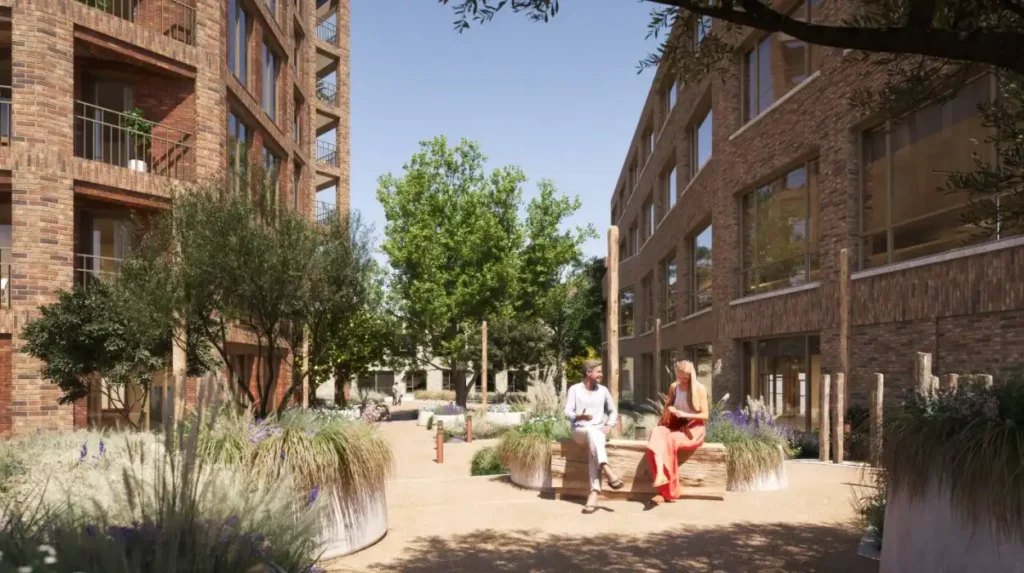
Housing mixes late-Victorian, Edwardian, and 1930s styles. Average sold prices hit £752,681 last year: flats £485,688, semis £1,000,616, terraces £895,087. Regeneration like Brent Cross Cricklewood (£4.5 billion) promises 7,500 homes, commercial space, and Brent Cross West Thameslink station (opened 2023). Commuters love Thameslink to St Pancras (10 minutes), Jubilee line at Willesden Green/Kilburn (Zone 2), and Overground at Brondesbury.
Dining draws crowds with global flavors reflecting diversity. Community groups like Cricklewood Town Team (at Ashford Place) and residents’ associations (Mapesbury, NW2) foster events via Creative Cricklewood’s open mics and Clitterhouse Farm restoration.
Famous Faces and Cultural Impact
Notables hail from here. Zadie Smith set White Teeth‘s opening in Cricklewood; Alan Coren celebrated it in Cricklewood Tapestry. Simon Pegg and Nick Frost bonded here in the 1990s; Phil Lynott lived in the late 1970s; Oliver Sacks grew up on Mapesbury Road. Others: Ken Livingstone, Tamsin Greig, Róisín Murphy, Ching He Huang.
Pop culture nods abound: The Goodies setting, Eric Morecambe’s
“life’s not Hollywood, it’s Cricklewood,”
Joe Strummer’s “Willesden to Cricklewood,” John Betjeman’s poem praising The Crown and trams. A lynx dubbed “Beast of Barnet” roamed in 2001 before zoo capture.
Why Cricklewood Endures
Cricklewood thrives on evolution—from Roman paths to aviation hub, film mecca, and now regeneration hotspot. Affordable relative to central London, green spaces, and connectivity make it ideal for North London living. Festivals like Silk Road and winter events knit the community, ensuring its timeless appeal.