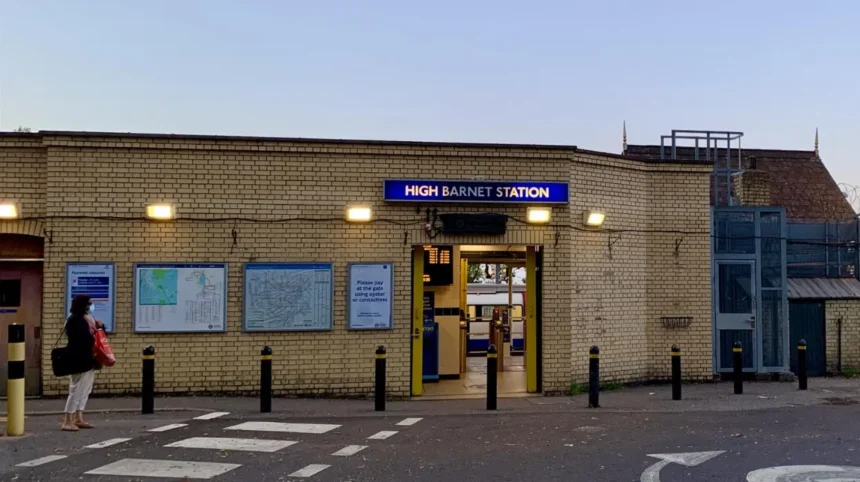
Barnet is a historic market town and suburban district located 11 miles north-northwest of Charing Cross in North London. Situated within the London Borough of Barnet in Travelcard Zone 5, High Barnet sits at an elevation of 427 feet above sea level on a ridge overlooking the London Basin. Reaching Barnet from Central London requires navigating London’s integrated public transport network, which includes 3 primary transport modes: London Underground trains, National Rail commuter services, and Transport for London buses. The area encompasses 4 distinct geographic sub-districts: High Barnet (Chipping Barnet), New Barnet, East Barnet, and Friern Barnet. Each sub-district connects to Central London through dedicated rail, road, and bus corridors. Central London serves as the primary origin point for northbound travellers, with major terminus hubs including King’s Cross Station, St Pancras International, Euston Station, Moorgate Station, and Charing Cross Station.
- What Is the Fastest Way to Travel from Central London to High Barnet via Underground?
- How Do National Rail Services Connect Central London to New Barnet Station?
- What Are the Most Direct Driving Routes and Road Networks to Barnet?
- How Can Travellers Use Bus Services for Budget and Overnight Journeys to Barnet?
- How Has Transport Infrastructure Historically Connected Central London and Barnet?
- What Are the Specific Travel Options for Digital Nomads and Business Travellers?
- How Do Fares, Oyster Cards, and Contactless Payments Compare Across Travel Modes?
- What Are the Future Transport Developments Impacting Travel to Barnet?
What Is the Fastest Way to Travel from Central London to High Barnet via Underground?
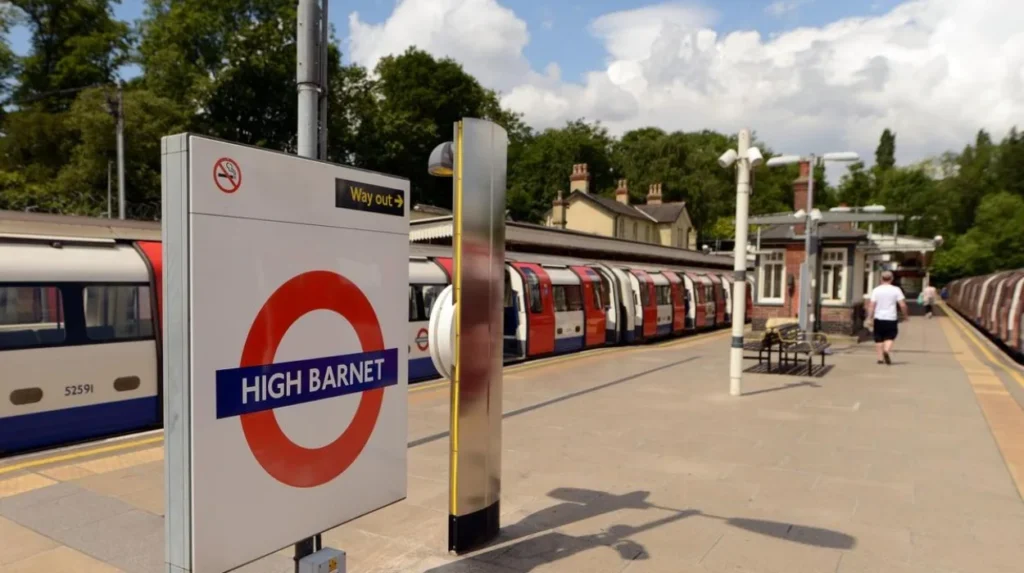
Taking the London Underground Northern line High Barnet branch from Central London hub stations such as Kings Cross St Pancras, Euston, or Charing Cross provides a direct 30-to-35-minute journey covering 11.5 miles into Zone 5, operating at 3-to-6-minute intervals.
The London Underground Northern line serves as the primary rapid transit artery between Central London and High Barnet Station. High Barnet Station functions as the northern terminus of the High Barnet branch of the line. Underground services depart from 2 Central London underground branches: the Bank branch (serving London Bridge, Bank, Moorgate, and Old Street) and the Charing Cross branch (serving Waterloo, Charing Cross, Leicester Square, Tottenham Court Road, and Euston). Both branches converge at Camden Town Station before continuing northbound towards High Barnet. Travellers boarding at Central London stations must select trains clearly marked with the destination “High Barnet.” Trains terminating at Edgware or Mill Hill East do not reach High Barnet Station without an interchange.
The travel time from Central London underground platforms to High Barnet varies depending on the station of origin. Journeys departing from Euston Station require 27 minutes across 10 intermediate stops. Departures from King’s Cross St Pancras require 29 minutes across 11 intermediate stops. Departures from Charing Cross Station take 35 minutes across 14 intermediate stops. Services operate continuously from 05:30 to 00:30 Monday through Saturday, with reduced Sunday hours running from 07:00 to 23:30. During peak weekday hours (07:30 to 09:30 and 16:30 to 18:30), train frequencies reach 20 trains per hour, providing an average head interval of 3 minutes. Off-peak service frequencies maintain 10 to 12 trains per hour, representing an average wait time of 5 to 6 minutes.
The Northern line route passes through 3 intermediate fare zones: Zone 1 (Central London), Zone 2 (Camden Town and Kentish Town), Zone 3 (Archway and East Finchley), Zone 4 (Finchley Central and Woodside Park), and Zone 5 (Totteridge & Whetstone and High Barnet). High Barnet Station features step-free access from street level to train platforms via ramped access ways.
The physical infrastructure of High Barnet Station includes 3 passenger platforms and an adjacent train stabling depot built by the Great Northern Railway in 1872. Passengers travelling with heavy luggage, wheelchairs, or bicycles access street level through the main ticket hall situated on Barnet Hill (A1000 road). The station connects directly to local transport networks via a dedicated bus interchange outside the station entrance.
How Do National Rail Services Connect Central London to New Barnet Station?
Great Northern operates direct suburban rail trains from Moorgate and London King’s Cross to New Barnet Station on the East Coast Main Line, taking 20 to 29 minutes across 10 miles with train departures running every 30 minutes daily.
National Rail commuter train services provide a high-speed surface railway alternative to the London Underground network for travellers reaching eastern areas of Barnet. New Barnet Station operates as a key stop on the East Coast Main Line, positioned 9.2 miles north of London King’s Cross. Train operations on this corridor fall under the management of Govia Thameslink Railway, operating under the Great Northern brand. Great Northern runs Class 717 electric multiple unit trains configured for high-capacity suburban transport. These trains feature open gangways, real-time visual information displays, air conditioning, and full wheel-chair accessibility.
Services originate from 2 Central London terminus stations: Moorgate Station in the City of London financial district and London King’s Cross Station in North-Central London. Trains departing Moorgate run along the Northern City Line via Highbury & Islington and Finsbury Park before joining the East Coast Main Line fast and slow tracks. The nonstop service duration from London King’s Cross to New Barnet Station spans 20 minutes. Suburban stopping services departing Moorgate reach New Barnet in 29 minutes, serving 7 intermediate stations: Old Street, Essex Road, Highbury & Islington, Drayton Park, Finsbury Park, Harringay, Hornsey, Alexandra Palace, Bowes Park, Palmers Green, Winchmore Hill, Enfield Chase, Gordon Hill, Oakleigh Park, and New Barnet.
Great Northern timetables mandate departures every 30 minutes during off-peak periods and weekends, increasing to 6 trains per hour during peak weekday commuter periods. In addition to Great Northern routes, Thameslink operates regional passenger trains from St Pancras International that stop at Oakleigh Park Station and New Barnet Station during specific peak hours, connecting Barnet to South London destinations such as Farringdon, Blackfriars, and London Bridge.
New Barnet Station resides in Transport for London Travelcard Zone 5. The station interface features ticket vending machines, automated ticket barriers, passenger information screens, and step-free access to Platform 1 (southbound) and Platform 2 (northbound) via footbridge elevators. Passengers transferring from New Barnet Station reach Chipping Barnet town centre by walking 0.8 miles west up Station Road (A110 road) or by boarding local Transport for London feeder bus lines, including route 84, route 107, and route 326.
What Are the Most Direct Driving Routes and Road Networks to Barnet?
Driving from Central London to Barnet via the A1 road, A1000 High Road, or A41 North Western Avenue covers 11.5 to 15 miles in 35 to 65 minutes, depending on traffic density and Congestion Charge zone boundaries.
Driving by motor vehicle from Central London to Barnet requires negotiating primary arterial roads that form London’s radial highway network. Drivers select between 4 major road corridors: the A1 road (Archway Road and Great North Road), the A1000 road (High Road Finchley), the A41 road (Finchley Road and Hendon Way), and the M1 motorway (originating at Staples Corner). The geographic distance between Central London (Charing Cross) and High Barnet measures 11.5 miles along the shortest surface street alignment. Vehicle travel times range from 35 minutes during early morning or late evening hours to 65 minutes during peak morning and evening traffic congestion windows.
The standard driving route begins in Central London along the A400 road (Tottenham Court Road and Camden Road) before joining the A1 road at Holloway. The A1 highway proceeds north through Archway, expanding into a dual carriageway through Highgate and East Finchley. At the Apex Corner roundabout in Mill Hill, drivers branch northeast onto the A1090 road or continue along the A1000 High Road straight through Whetstone directly into Chipping Barnet High Street. The A1000 corridor follows the alignment of the historical Great North Road, providing direct access to commercial premises, residential areas, and historical landmarks.
Drivers originating in the West End or Westminster frequently utilize the A41 road corridor. The A41 runs north from Marylebone Road past Lord’s Cricket Ground, continuing as Finchley Road through Swiss Cottage, Hendon, and Waylands. At the Fiveways Corner interchange in Hendon, traffic merges onto the A1 northbound toward Barnet or joins the M1 motorway northbound, exiting at Junction 2 (Barnet by-pass) onto the A1 road.
Motor vehicle operations in Greater London are subject to strict environmental and traffic compliance regulations. Driving out of Central London triggers the London Congestion Charge zone fee of £15.00 daily if vehicles operate within the designated central boundary between 07:00 and 18:00 Monday through Friday, or 12:00 to 18:00 Saturday and Sunday.
Furthermore, the entire borough of Barnet falls within Transport for London’s Ultra Low Emission Zone (ULEZ). Vehicles that do not meet minimum emissions standards (Euro 4 petrol standards for light vehicles or Euro 6 diesel standards) incur a daily charge of £12.50 when driven within the ULEZ boundary.
Parking in High Barnet is managed through local authority pay-and-display bays, controlled parking zones (CPZ), and off-street car parks, including the High Barnet Station Car Park (525 spaces) and The Spires Shopping Centre Multi-Story Car Park (450 spaces).
How Can Travellers Use Bus Services for Budget and Overnight Journeys to Barnet?
London Bus route 263 and night bus route N20 link Central London transit hubs like Archway Station and Trafalgar Square directly to High Barnet Station, taking 50 to 90 minutes for a flat London Bus rate of £1.75.
Transport for London operates red double-decker bus services that connect Central London and inner North London suburbs directly to Barnet. Bus transit provides a low-cost, high-frequency transport alternative that runs 24 hours per day. Buses operate under a fixed-fare pricing framework across the entire Greater London bus network, removing zone-based distance charges. Passengers paying with contactless payment cards or Oyster cards pay a flat fare of £1.75 per journey.
The primary daytime bus line running towards Barnet is London Bus Route 263. Route 263 originates at Highbury Barn / Archway Station in North London and runs northbound along High Road Finchley (A1000), serving 4 key commercial centers: East Finchley, Finchley Central, Whetstone, and High Barnet. Route 263 terminates at Barnet Hospital. The total journey time from Archway Underground Station to High Barnet Church spans 45 to 55 minutes depending on traffic conditions. Buses run at frequencies of every 8 to 12 minutes from 05:00 to 00:30 daily.
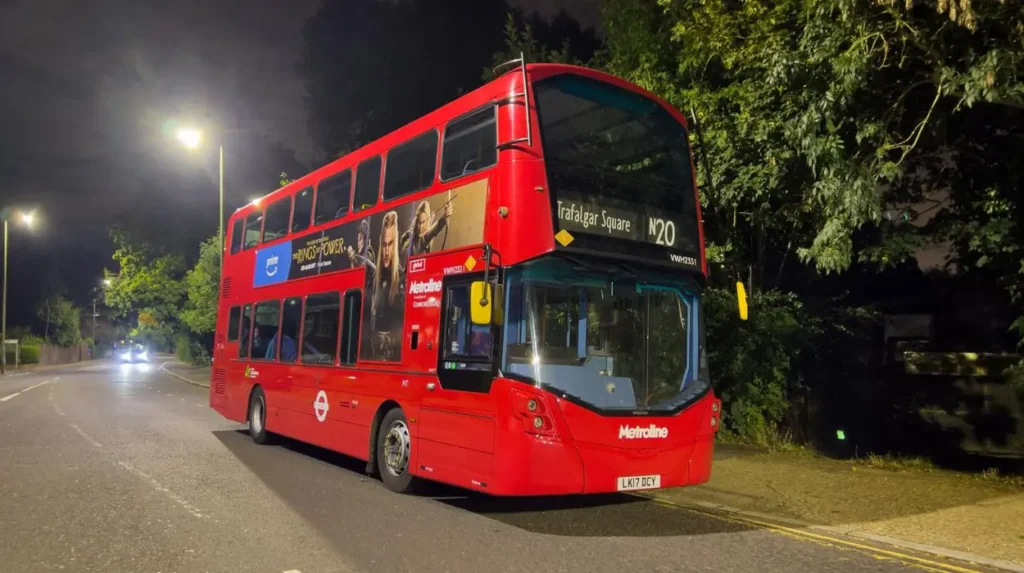
Overnight transit between Central London and Barnet is handled by London Night Bus Route N20. Route N20 originates in Central London at Trafalgar Square (Charing Cross) and travels north via Tottenham Court Road, Euston Station, Camden Town, Highgate, Archway, Finchley, and Whetstone, terminating at Barnet Hospital. Route N20 provides direct night service when standard Underground trains are not operating. The route covers 12.8 miles in 52 to 60 minutes. Buses run every 30 minutes on Sunday through Thursday nights, and every 15 minutes on Friday and Saturday nights.
Transport for London enforces the Hopper Fare system on all bus routes. The Hopper Fare allows passengers to make unlimited bus and tram transfers within 60 minutes of their initial touch-in for a single £1.75 fare. A traveller boarding a daytime bus in Central London (such as Route 24 or Route 29) can change onto Route 263 at Archway Station without incurring an additional fare charge, provided the transfer occurs within the 60-minute timeframe.
How Has Transport Infrastructure Historically Connected Central London and Barnet?
Barnet developed as a vital staging post along the historic Great North Road during the 12th century, evolving through 19th-century railway expansion by the Great Northern Railway and 1939 Northern Heights Underground integration into a modern commuter hub.
The transport connections linking Central London to Barnet originated in the medieval era. Barnet’s geographical position on a ridge 11 miles north of the City of London established the town as a natural first-stage stopping point for horse-drawn coaches traveling north from London to York and Edinburgh along the Great North Road. By the 18th century, turnpike trusts modernized the road surfaces along Barnet Hill, installing tollgates to collect funds for road maintenance. Over 150 stagecoaches passed through Chipping Barnet High Street daily during the coaching peak in 1830, supporting dozens of local coaching inns and stable facilities.
The arrival of steam-powered railways in the mid-19th century transformed travel patterns across North London. The Great Northern Railway opened New Barnet Station (originally named Barnet Station) on August 7, 1850, as part of its main line construction from London King’s Cross to Peterborough. This line reduced journey times between Barnet and Central London from 2 hours via stagecoach to under 35 minutes via steam locomotives. Suburban residential development accelerated around New Barnet as suburban commuters settled near the new rail corridors.
In 1872, the Edgware, Highgate and London Railway (operated by the Great Northern Railway) constructed a branch line running from Finchley to High Barnet, bringing rail service directly into Chipping Barnet town centre. As you explore the modern site, you are crossing land with a deep heritage. Read about the full [Insert Anchor Text for History Article Here] to understand its origins.
The London Passenger Transport Board (LPTB) incorporated the High Barnet railway branch into the London Underground network under the ambitious Northern Heights Plan announced in 1935. Electrification of the track took place between 1937 and 1940. Tube train passenger services commenced on April 14, 1940, linking High Barnet directly to Central London via electric Northern line trains.
The introduction of 1938 Tube Stock electric trains eliminated the need to change engines at Finchley, integrating Barnet into London’s unified mass transit grid. Subsequent suburban development throughout the post-WWII era transformed Barnet from an isolated Hertfordshire market town into an integral North London residential borough.
Explore More Area Guide
Why Is Barnet One of the Greenest Areas in North London? Parks and Nature
Man Arrested for Murder After 15-Year-Old’s Fatal Stabbing in Wood Green
What Are the Specific Travel Options for Digital Nomads and Business Travellers?
Digital nomads and business travellers access Wi-Fi enabled Thameslink trains, quiet off-peak Northern line carriages, and flexible Zone 5 pay-as-you-go daily fare capping limits of £13.90 to balance remote work productivity with highly cost-effective London suburban transit options.
Digital nomads, remote workers, and domestic business travellers require reliable transit infrastructure equipped with connectivity, comfort, and predictable scheduling. Travelling between Central London and Barnet offers multiple remote-work integration benefits across different transport networks.
National Rail services operated by Thameslink and Great Northern cater specifically to business travellers requiring mobile connectivity. Great Northern Class 717 trains operating from Moorgate and Thameslink Class 700 trains operating from St Pancras International provide complimentary onboard Wi-Fi, 4G/5G mobile signal passthrough, electronic seat reservation systems, and at-seat power sockets.
The 20-minute travel duration from London King’s Cross to New Barnet Station allows business passengers to maintain remote digital workflows uninterrupted. New Barnet Station features dedicated passenger waiting rooms equipped with charging benches and high-speed mobile coverage.
For digital nomads seeking workspace environments upon arrival, Chipping Barnet features 3 public workspace categories: local independent coffee shops along High Street, public library study facilities at Barnet Library (Church Passage), and dedicated co-working offices near High Barnet Station.
Transport for London provides continuous 4G and 5G mobile data connectivity across the subterranean Northern line network, including deep-level platform tunnels at Euston, King’s Cross, and Moorgate. Remote workers can receive emails, stream audio, and conduct messaging sessions during their Underground commute.
Business travellers managing flexible travel itineraries take advantage of Transport for London pay-as-you-go capping rules. Using a single contactless debit/credit card or Oyster card automatically caps total daily travel expenditures across Zone 1 to Zone 5 at £13.90. This cap allows unlimited transfers between Northern line Underground trains, National Rail suburban trains, and Transport for London buses within a single 24-hour travel window (04:30 to 04:29 the following day). Off-peak hours offer quiet train carriages, making hours between 09:30 and 16:00 optimal for remote workers commuting between Barnet and Central London co-working hubs.
How Do Fares, Oyster Cards, and Contactless Payments Compare Across Travel Modes?
Transport for London caps daily Zone 1 to 5 contactless and Oyster card fares at £13.90 for peak and off-peak travel, whereas single Tube fares cost £3.50 off-peak or £5.30 peak compared to standard bus fares of £1.75.
Fares for journeys between Central London (Zone 1) and Barnet (Zone 5) are calculated based on travel mode, distance, time of day, and payment method. Transport for London (TfL) divides fare structures into 2 operational categories: Peak fares and Off-Peak fares. Peak fares apply Monday to Friday between 06:30 and 09:30, and between 16:00 and 19:00 (excluding public holidays). Off-Peak fares apply at all other times, including weekends and public holidays.
Payment methods determine the ticket price paid by passengers. TfL accepts 4 primary payment instruments: Contactless bank cards (Visa, Mastercard, American Express), Mobile device payments (Apple Pay, Google Pay, Samsung Pay), Smart Oyster Cards, and Paper Single Tickets. Using contactless or Oyster cards yields significant cost savings compared to purchasing paper tickets at station vending machines.
A single Underground journey on the Northern line from Central London (Zone 1) to High Barnet (Zone 5) using a contactless card or Oyster card costs £5.30 during Peak hours and £3.50 during Off-Peak hours. Purchasing a paper single ticket for the same journey costs £6.70 regardless of the time of travel.
National Rail journeys on Great Northern from Moorgate or King’s Cross to New Barnet (Zone 5) cost £5.30 Peak and £3.50 Off-Peak when using pay-as-you-go contactless cards, aligning directly with London Underground pricing under the integrated TfL fare structure.
Transport for London enforces automatic daily and weekly fare capping for contactless and Oyster card users. Daily fare capping sets a maximum spending limit on pay-as-you-go travel within a single day.
For travel across Zones 1 to 5 (encompassing all routes between Central London and High Barnet or New Barnet), the daily cap is £13.90 for both Peak and Off-Peak usage. Weekly capping operates on a Monday-to-Sunday cycle, capping total Zone 1 to 5 travel expenses at £69.60.
Bus travel remains the most economical mode of public transport, charging a flat rate of £1.75 per single journey regardless of distance or time of day, with a separate daily bus and tram fare cap of £5.25.
| Travel Mode | Origin / Destination | Payment Method | Peak Single Fare | Off-Peak Single Fare | Daily Fare Cap (Zone 1–5) |
|---|---|---|---|---|---|
| London Underground | Zone 1 to High Barnet (Zone 5) | Contactless / Oyster | £5.30 | £3.50 | £13.90 |
| London Underground | Zone 1 to High Barnet (Zone 5) | Paper Single Ticket | £6.70 | £6.70 | No Cap Available |
| National Rail | Moorgate to New Barnet (Zone 5) | Contactless / Oyster | £5.30 | £3.50 | £13.90 |
| TfL Bus Service | Central London to Barnet | Contactless / Oyster | £1.75 | £1.75 | £5.25 (Bus only) |
What Are the Future Transport Developments Impacting Travel to Barnet?
Future transport enhancements focus on Northern Line Signal Modernisation under Transport for London, step-free access station retrofits, digital signaling upgrades along the East Coast Main Line, and complete transition to zero-emission electric bus fleets across outer North London.
Transport infrastructure connecting Central London and Barnet is undergoing continuous modernization to improve system capacity, reduce journey times, and decrease carbon emissions. Transport for London (TfL), Network Rail, and local government authorities are executing several strategic transit initiatives targeting outer North London transport links.
The London Underground Northern line is benefitting from ongoing modernisations within TfL’s rail signaling upgrade framework. The implementation of Communications-Based Train Control (CBTC) systems enables automated train operation (ATO) along the High Barnet branch.
This digital signaling technology replaces traditional fixed-block signaling, allowing trains to travel closer together safely. The CBTC system increases Northern line capacity by 20 percent, expanding throughput from 24 trains per hour to up to 30 trains per hour along core branches, reducing peak-hour passenger platform congestion at Euston, King’s Cross, and Camden Town.
Network Rail is deploying the East Coast Digital Programme (ECDP) across the East Coast Main Line corridor serving New Barnet Station. The ECDP replaces 100-year-old conventional lineside signals with European Train Control System (ETCS) digital in-cab signaling.
ETCS transmits continuous speed and safety data directly to the train driver’s cab display screen. This technology reduces signal-related delay incidents by 40 percent, improves schedule reliability for Great Northern and Thameslink trains, and increases overall line capacity for commuter trains traveling between London King’s Cross, Moorgate, and New Barnet.
Environmental transit initiatives focus on replacing internal combustion engine buses with zero-emission battery-electric vehicles (BEVs). Transport for London has committed to transitioning the entire London bus fleet to zero-emission standards by 2030.
Bus routes serving Barnet, including Route 263 and Route 134, are migrating to high-capacity electric double-decker buses powered by pantograph and depot plug-in charging systems. These vehicles reduce tailpipe carbon emissions, lower ambient noise pollution along the A1000 High Road corridor, and enhance ride smoothness for leisure travellers and local residents commuting between Central London and Barnet.
What is the fastest way to travel from Central London to Barnet?
The fastest way to reach Barnet from Central London is by the Northern line or Great Northern rail services. Direct Underground journeys to High Barnet typically take around 30 minutes, while trains to New Barnet from King’s Cross can take as little as 20 minutes.