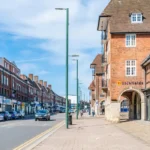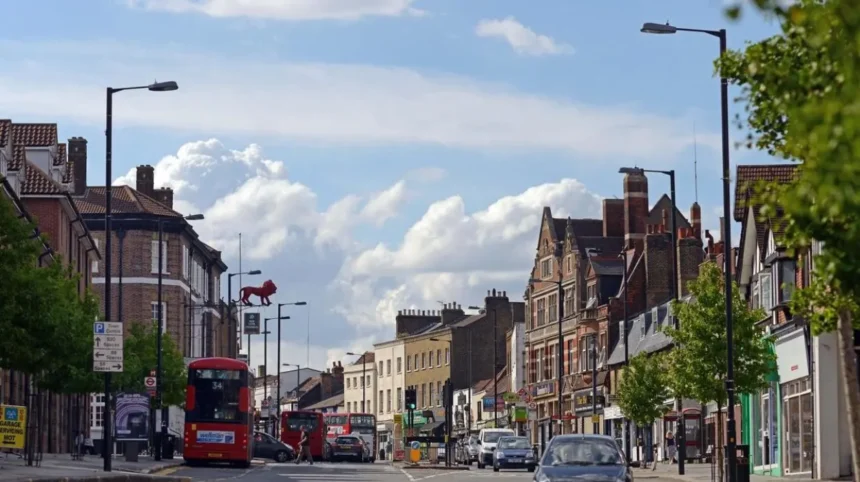
Barnet is a North London borough with a strong combination of transport connections, historic sites, museums, parks, shopping areas, family attractions and local food venues. It sits within Greater London while retaining distinct suburban centres such as High Barnet, Finchley, Hendon, Mill Hill and Edgware.
- Is Barnet a good location for a short London break?
- How is Barnet connected to central London?
- What historical attractions can you visit in Barnet?
- What museums are worth visiting during a short Barnet break?
- Can you enjoy parks and outdoor spaces during a short Barnet trip?
- Are there family-friendly attractions in Barnet?
- What can you do in Barnet when the weather is poor?
- Is Barnet suitable for food and dining during a short break?
- Can Barnet provide a relaxing alternative to central London?
- How many days do you need to explore Barnet?
- What could a two-day Barnet itinerary look like?
- Is Barnet good for a weekend London trip?
- Is Barnet suitable for digital nomads and business travellers?
- Is Barnet expensive compared with central London?
- What type of traveller is Barnet best suited to?
- What should you consider before booking a short Barnet break?
- Is Barnet suitable for a short London break overall?
For travellers planning a short London break, Barnet offers a different experience from staying in the central tourist districts. Its attractions are spread across several neighbourhoods, while the Northern line and National Rail services provide practical connections into central London.
The borough also has substantial green space. Barnet Council describes its parks and open spaces as including formal parks, wild landscapes, Green Belt areas and leafy river valleys. Its parks directory currently lists 160 parks and open spaces, giving short-break visitors considerable choice for outdoor activities.
Is Barnet a good location for a short London break?
Barnet is suitable for a short London break because it combines convenient transport, historic attractions, museums, green spaces, family activities and local shopping within Greater London, while providing access to central London through the Northern line and National Rail.
Barnet works particularly well for visitors who want access to London without spending their entire trip in the busiest central districts. The borough covers a large area in North London, so the experience differs considerably between High Barnet, Finchley, Hendon, Mill Hill, Edgware and surrounding neighbourhoods.
The main advantage is variety. A two- or three-day visit can include heritage attractions, aviation history, parks, theatres, independent businesses, restaurants and shopping.
Transport is another major factor. High Barnet is served by the Northern line, while New Barnet has Great Northern and Thameslink services. Mill Hill Broadway and Hendon provide additional Thameslink connections.
This means Barnet is not isolated from the main London visitor network. Travellers can stay in North London and travel towards central destinations during the same short break.
How is Barnet connected to central London?
Barnet has strong public transport connections to central London, with High Barnet served by the Northern line and New Barnet, Hendon and Mill Hill Broadway providing National Rail connections for different London destinations.
High Barnet Underground Station is on the Northern line. Transport for London timetable information shows direct services from High Barnet towards central stations including Camden Town and Euston. A sample timetable places High Barnet to Euston at roughly 28 minutes, although actual journey times vary by service and operating conditions.
The Northern line gives short-break visitors a straightforward route towards several major London areas. Camden Town, for example, is directly accessible without an interchange from High Barnet.
New Barnet station provides Great Northern and Thameslink services. Its station facilities include a ticket hall, waiting room, car park and passenger help points.
Barnet Council’s economic strategy also identifies the borough’s Northern line and Thameslink infrastructure as important connections to central London. The document records journey times of 30 minutes or less on the Northern line from relevant Barnet centres and identifies Thameslink services from Hendon and Mill Hill Broadway as fast central London connections.
For a short stay, this transport structure is important because visitors can divide their time between Barnet attractions and central London sightseeing.
Which Barnet station is best for visitors?
High Barnet is particularly useful for visitors focusing on historic Barnet, while New Barnet serves National Rail passengers and Mill Hill Broadway is practical for visitors exploring Mill Hill and western parts of the borough.
High Barnet station sits on Barnet Hill and has ticket facilities, toilets, Wi-Fi, a waiting room and a car park. TfL also lists several bus routes serving the station, including routes 34, 107, 234, 263, 307, 326, 384, 389, 606 and 634.
The best station therefore depends on accommodation and itinerary rather than one universal choice.
What historical attractions can you visit in Barnet?
Barnet has a substantial historical character shaped by medieval settlement, the Battle of Barnet, historic houses, old estates and local heritage institutions, giving short-break visitors opportunities to explore North London’s development beyond its modern suburban identity.
Barnet’s historical importance is closely associated with the Battle of Barnet, fought in 1471 during the Wars of the Roses. The battle was one of the major military confrontations of the period and is an important part of the area’s heritage identity.
Barnet’s historic environment extends beyond the battlefield. High Barnet contains older buildings and a long-established town centre, while other parts of the borough preserve historic estates, gardens and institutional buildings.
For visitors interested in understanding why the borough looks the way it does today, local history provides useful context. The modern transport network, town centres and residential areas developed across landscapes that previously contained farms, estates, villages and rural routes.
As you explore the modern town, you are crossing land with a deep heritage. Read about the full to understand its origins.
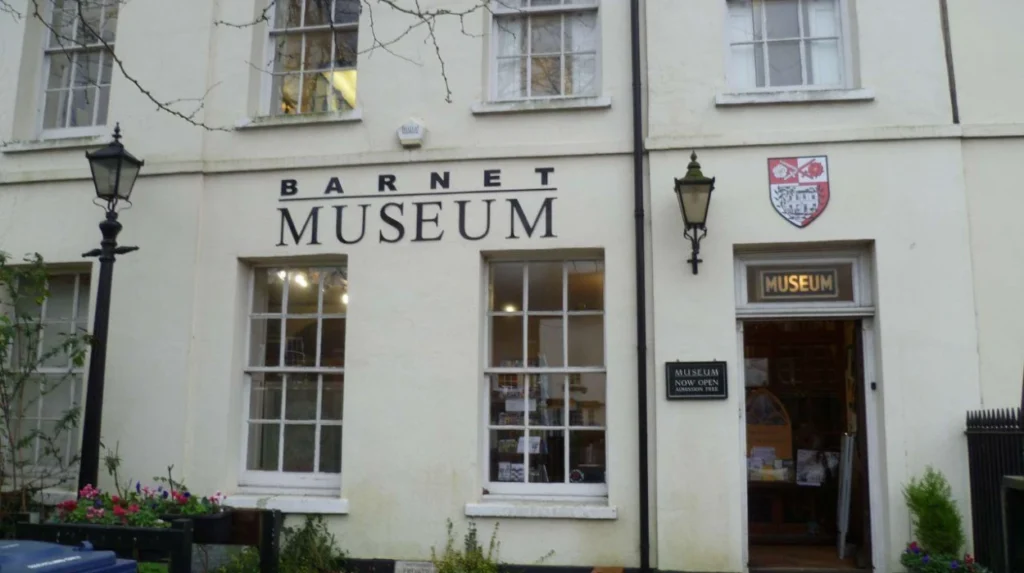
Barnet Museum is another relevant heritage attraction. Visit London’s Barnet sightseeing guide identifies Barnet Museum alongside the Royal Air Force Museum London, Stephens House and Gardens and other local attractions.
What museums are worth visiting during a short Barnet break?
Barnet offers museum experiences that suit different interests, with the Royal Air Force Museum London providing a major aviation attraction and Barnet Museum offering local historical context for visitors exploring North London’s heritage.
The Royal Air Force Museum London in Colindale is one of the strongest attractions for a short Barnet itinerary. The museum houses a collection of more than 100 aircraft, alongside aviation and wartime memorabilia. It covers aviation history from early flight through modern aircraft.
The museum is open daily from 10:00 to 18:00, with last admission at 17:30 according to its visitor information. General admission is free, although individual activities and facilities can have separate arrangements.
Its location also makes it useful for visitors travelling through Colindale. The nearest Underground station is Colindale, while Mill Hill Broadway provides another rail option.
Barnet Museum provides a different type of experience. Instead of concentrating on national aviation history, it focuses on the local area and its historical development.
For a short break, combining one large attraction with one smaller local museum creates a balanced itinerary. Visitors can then use remaining time for parks, food, shopping or central London.
Can you enjoy parks and outdoor spaces during a short Barnet trip?
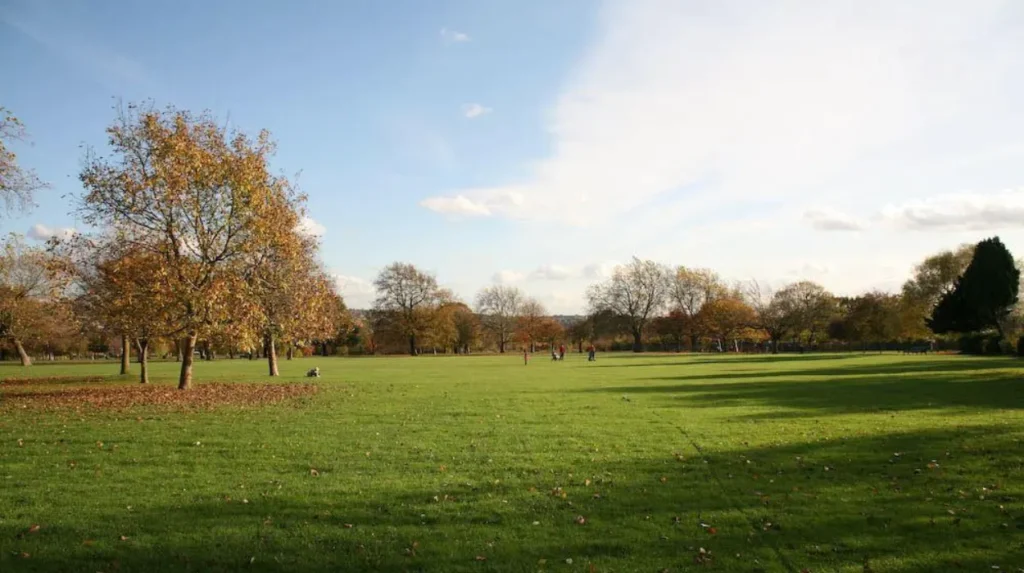
Barnet is highly suitable for outdoor breaks because the borough has 160 listed parks and open spaces, including formal gardens, playing fields, nature-focused areas and green spaces across locations such as High Barnet, Mill Hill, Hendon and Finchley.
Green space is one of Barnet’s defining visitor advantages. Barnet Council describes the borough as containing formal parks and gardens, wild landscapes, Green Belt areas and leafy river valleys.
The council’s parks directory lists 160 locations. Examples include Barnet Hill open space, Barnet Gate Wood, Bethune Nature Reserve, Mill Hill Park, Hendon Park, Sunny Hill Park and Bittacy Hill Park.
This gives short-break visitors options beyond traditional sightseeing.
What is available at Hendon Park?
Hendon Park provides gardens, sports facilities, children’s play areas, an outdoor gym, tennis courts, a café and wildlife interest. It is served by buses and Hendon Central Underground Station on the Northern line.
The park also has historical connections. Barnet Council records that the land was originally part of a medieval estate known as the Steps Fields. Hendon Council opened the park to the public in 1903, and the site became part of the London Borough of Barnet in 1965.
What can visitors do at Mill Hill Park?
Mill Hill Park combines green space with sports and recreation. Facilities include gardens, tennis courts, an outdoor gym, children’s play areas, a café, football facilities, cricket, basketball and wildlife interest.
Mill Hill Broadway station provides a Thameslink connection, making this area practical for visitors using National Rail.
Are there family-friendly attractions in Barnet?
Barnet provides several family-friendly attractions, including aviation museums, children’s farms, outdoor recreation, theatres, adventure activities and accessible playgrounds, giving families practical choices for short stays across different ages and weather conditions.
Family visitors have several options across the borough. Visit London’s Barnet guide lists the Royal Air Force Museum London, Belmont Children’s Farm, Go Ape Cockfosters, Chickenshed Theatre, Phoenix Cinema and other leisure attractions.
The Royal Air Force Museum is particularly useful when weather conditions are unsuitable for outdoor sightseeing because its principal collections are indoors. Its aircraft collection provides a substantial educational experience alongside historical displays.
Belmont Children’s Farm provides another family-oriented option. Outdoor parks also give families space for walking, play and recreation.
Barnet Council’s parks programme includes Fair Play Barnet, described as an accessible and inclusive playground designed for children and adults.
Families planning a short break should therefore avoid treating Barnet as a destination that depends entirely on good weather. The borough has indoor and outdoor attractions.
What can you do in Barnet when the weather is poor?
Rainy-day visitors can use Barnet’s museums, cinema, theatre, restaurants, cafés, shopping facilities and indoor leisure attractions, creating a practical itinerary that does not depend entirely on parks or outdoor sightseeing.
The Royal Air Force Museum provides a major indoor attraction with more than 100 aircraft and extensive aviation collections.
Artsdepot provides an arts and cultural venue in North Finchley. Chickenshed Theatre offers another performing arts option, while Phoenix Cinema provides a cinema experience. Visit London lists these venues among Barnet’s attractions.
Shopping also provides a weather-resistant activity. Brent Cross Shopping Centre is another established attraction in the borough, alongside restaurants and leisure venues.
A practical rainy-day itinerary can therefore combine one museum or cultural venue with lunch, shopping and an evening performance or film.
Is Barnet suitable for food and dining during a short break?
Barnet has a broad local food offer spanning restaurants, cafés, pubs and specialist dining areas, giving visitors opportunities to eat locally without travelling into central London for every meal during a short North London stay.
Food is an important practical consideration because accommodation location and evening dining influence the convenience of a short break.
Visit London’s Barnet listings include restaurants such as Bang Bang Oriental and other dining venues. The guide also identifies traditional British restaurant options and food destinations across the borough.
Hendon, Finchley, High Barnet, Mill Hill and surrounding centres each have different commercial identities. This allows visitors to choose food near their accommodation or close to an attraction.
A short-break visitor does not need to build every meal around central London. Eating locally reduces unnecessary journeys and leaves more time for sightseeing.
For visitors seeking cultural variety, North London’s restaurant scene also adds another dimension to Barnet’s appeal.
Can Barnet provide a relaxing alternative to central London?
Barnet provides a quieter suburban base than many central London districts while remaining inside Greater London, making it suitable for visitors who want green space, local neighbourhoods and easier downtime between major sightseeing activities.
Central London is dominated by major visitor landmarks, dense pedestrian areas, commercial streets and large transport interchanges. Barnet has a different urban structure.
The borough contains established town centres alongside residential neighbourhoods, parks and open spaces. Barnet Council specifically identifies its parks, Green Belt and river valleys as important components of the borough’s environment.
This distinction matters for travellers who do not want every hour of a short break to involve major tourist attractions.
Visitors can spend a morning at a museum, an afternoon in a park and an evening at a local restaurant. They can then travel into central London for selected attractions instead of using the centre as their base for the entire trip.
How many days do you need to explore Barnet?
Two days are sufficient for a focused Barnet visit, while three days provide more time for museums, heritage sites, parks, family attractions, shopping, dining and a central London excursion without an overloaded schedule.
A one-day visit works for a focused attraction. The Royal Air Force Museum, for example, provides enough content for a substantial sightseeing session.
A two-day break provides a better balance. One day can focus on High Barnet’s heritage and local environment. Another can cover a museum, park, family attraction or cultural venue.
A three-day break allows visitors to add central London sightseeing. The Northern line makes this practical from High Barnet, with direct services towards areas such as Camden Town and Euston.
The appropriate duration therefore depends on whether Barnet is the main destination or a North London base for exploring London more widely.
What could a two-day Barnet itinerary look like?
A two-day Barnet itinerary can combine High Barnet heritage, local green space, a major museum, family attractions, shopping and dining, while leaving enough time for transport between different parts of the borough.
Day one: High Barnet and local heritage
Begin in High Barnet and explore the historic town area. Use the local environment to understand the borough’s long development.
Continue with a park or open space. Barnet Council’s parks directory provides multiple options, including Barnet Hill open space and other nearby green areas.
Spend the afternoon at Barnet Museum when opening arrangements align with your visit.
Finish with an evening meal in High Barnet or another nearby town centre.
Day two: Aviation, culture and recreation
Use the second day for the Royal Air Force Museum London in Colindale. The museum’s collection of more than 100 aircraft makes it a major attraction rather than a brief stop.
Afterwards, choose a nearby park, shopping destination or dining venue.
Families can substitute another attraction such as Belmont Children’s Farm, while visitors interested in performing arts can consider Artsdepot or Chickenshed Theatre.
This itinerary keeps travel within North London while providing different types of experiences.
Is Barnet good for a weekend London trip?
Barnet is well suited to weekend travel because its combination of transport connections, museums, parks, heritage attractions, family activities, shopping and dining creates enough variety for a structured two- or three-day London break.
A weekend visitor has limited time, so transport efficiency matters. High Barnet’s Northern line connection reduces the need for complicated journeys into central London. National Rail stations provide additional routes from other parts of the borough.
Barnet also provides enough local attractions to prevent a weekend itinerary from becoming dependent on central London.
Visitors can choose between history, aviation, parks, culture, shopping and family entertainment. This broad choice makes the borough suitable for couples, families, solo travellers and domestic business travellers extending a work trip.
Is Barnet suitable for digital nomads and business travellers?
Barnet suits digital nomads and business travellers who need access to London while valuing local cafés, transport connections, green spaces and quieter downtime, with Northern line and National Rail services supporting movement between Barnet and central business districts.
Business travellers can use Barnet as a base when meetings take place in North London or central London.
High Barnet provides a direct Northern line route towards Euston and other central stations. New Barnet provides Great Northern and Thameslink services, while Mill Hill Broadway and Hendon offer additional Thameslink options.
For digital workers, the practical advantages include cafés, restaurants, public transport and parks. Green spaces also provide options for breaks between work sessions.
Barnet is not primarily marketed as a business district, so travellers should select accommodation based on proximity to their workplace, station and reliable workspace.
Is Barnet expensive compared with central London?
Barnet offers a range of accommodation, food and leisure choices, but prices vary by neighbourhood, property type, season and proximity to transport, so visitors should compare current rates rather than assume the borough is uniformly cheaper than central London.
Accommodation pricing changes significantly across London. A short-break visitor should compare the total cost rather than only the nightly room rate.
Transport costs also matter. A cheaper room farther from a station can create additional journey time and local travel costs.
Barnet’s large geographic area makes location especially important. High Barnet, Finchley, Hendon, Mill Hill and Edgware have different transport patterns and attraction clusters.
The most cost-effective arrangement depends on the visitor’s itinerary. Someone spending most of the trip in central London benefits from a convenient Tube connection. Someone focusing on Barnet attractions benefits from accommodation closer to those attractions.
What type of traveller is Barnet best suited to?
Barnet is particularly suitable for families, heritage visitors, aviation enthusiasts, outdoor travellers and visitors seeking a North London base, while its transport links also support couples, solo travellers, digital workers and business travellers.
Families benefit from parks, playgrounds, museums, children’s attractions and indoor venues.
History enthusiasts benefit from Barnet’s local heritage and connections with the Wars of the Roses.
Aviation enthusiasts have an especially strong reason to visit because of the Royal Air Force Museum London’s large aircraft collection.
Outdoor travellers benefit from the borough’s extensive park network. Barnet Council currently lists 160 parks and open spaces.
Travellers who prioritise central London nightlife and major landmarks can still use Barnet as a base because of the Northern line. However, they should select accommodation close to a suitable station to minimise travel time.
Explore More Area Guide
How to Plan a Low-Cost Trip to Barnet, North London 2026
What to Pack for a Barnet Trip: Seasonal Guide
What should you consider before booking a short Barnet break?
Before booking, check the exact neighbourhood, nearest station, attraction opening times, accommodation location, transport requirements and planned activities, because Barnet covers a large geographic area and attractions are distributed across different town centres.
The first consideration is location. Barnet is not a compact destination where every attraction sits within a short walking distance.
The second consideration is transport. Check whether accommodation is closer to High Barnet Underground Station, New Barnet, Mill Hill Broadway, Hendon or another transport hub.
The third consideration is attraction availability. Museums, theatres and family venues operate according to their own schedules. Confirm current opening times before travelling.
The fourth consideration is itinerary balance. Combining indoor attractions with parks and local sightseeing creates greater flexibility.
The fifth consideration is central London travel. If your itinerary includes Westminster, the South Bank, the West End or other central destinations, check the complete journey rather than relying solely on a map distance.
Is Barnet suitable for a short London break overall?
Barnet is a strong option for a short London break when visitors want North London heritage, museums, parks, family attractions, local dining and practical transport to central London without staying in the centre itself.
Barnet’s suitability comes from its combination of accessibility and variety. The Northern line connects High Barnet with central London, while National Rail provides additional routes from stations including New Barnet, Hendon and Mill Hill Broadway.
The borough also has substantial green infrastructure. Barnet Council lists 160 parks and open spaces, ranging from formal parks to nature-focused areas and open landscapes.
Its visitor attractions include the Royal Air Force Museum London, Barnet Museum, Artsdepot, Belmont Children’s Farm, Chickenshed Theatre, Phoenix Cinema, Go Ape Cockfosters and Stephens House and Gardens.
For a two- or three-day trip, that combination creates a practical itinerary. Visitors can explore Barnet itself, use its parks and cultural attractions, and travel into central London when required.
The best reason to choose Barnet is therefore not a single landmark. It is the combination of North London accessibility, local heritage, substantial green space, family attractions, cultural venues and direct connections towards central London.
Is Barnet good for a short London break?
Yes. Barnet is suitable for a short London break because it offers historic attractions, museums, parks, family activities, restaurants and convenient transport connections to central London.