Key Points
- Dylan Ossei, 34, charged with religiously aggravated assault and harassment following an attack on three Jewish people in Enfield, north London.
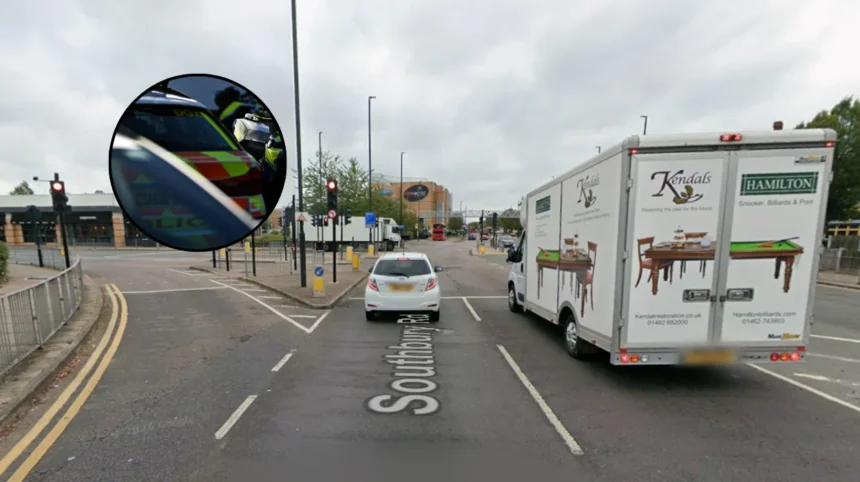
- Incident took place in the early hours of Saturday on Southbury Road, Enfield, where two men and one woman suffered minor injuries.
- Ossei also faces charges of religiously aggravated threatening behaviour.
- He has been remanded in custody and is due to appear at Highbury Magistrates’ Court on Monday.
- Metropolitan Police highlight their commitment to tackling antisemitic hate crimes amid a reported rise in such incidents.
- The attack occurred against a backdrop of increased antisemitic events and a recent large protest against antisemitism in central London.
Enfield (North London News) May 11, 2026 Enfield, north London, saw Dylan Ossei, 34, charged with religiously aggravated assault and harassment after three Jewish individuals – two men and one woman – were attacked on Southbury Road in the early hours of Saturday. The Metropolitan Police confirmed the victims sustained minor injuries during the incident, which has been classified as a hate crime.
- Key Points
- What Happened During the Assault on Southbury Road?
- Who Is Dylan Ossei and What Charges Does He Face?
- Why Was This Classified as a Religiously Aggravated Hate Crime?
- When and Where Will Dylan Ossei Appear in Court?
- How Has the Metropolitan Police Responded to the Incident?
- What Is the Context of Rising Antisemitism in London?
- How Have Community Leaders Reacted?
- What Do Victims and Witnesses Say About the Attack?
- Broader Implications for Enfield and North London
- Background of the Development
- Predictions: How This Development Can Affect the Jewish Community in North London
Ossei, from the local area, faces additional charges of religiously aggravated threatening behaviour. He appeared in custody following his arrest and has been remanded ahead of his court appearance.
What Happened During the Assault on Southbury Road?
The attack unfolded around 2:00 AM on Southbury Road, a residential street in Enfield, as reported across multiple outlets. According to the Metropolitan Police’s official statement, the three victims were walking when they were approached and assaulted by Ossei.
Witnesses described hearing shouts with religious references before the physical altercation, though no weapons were involved.
As detailed in the police log, the two men and one woman received treatment for minor injuries at the scene, including bruising and cuts, but none required hospital admission. Emergency services responded promptly, with officers securing the area by 3:00 AM.
Who Is Dylan Ossei and What Charges Does He Face?
Dylan Ossei, aged 34 and residing in Enfield, has been charged with two counts of religiously aggravated assault, one count of religiously aggravated harassment, and one count of religiously aggravated threatening behaviour.
The Crown Prosecution Service authorised the charges based on evidence gathered at the scene, including witness statements and CCTV footage from nearby properties.
Ossei was arrested shortly after the incident and held in custody. No prior convictions were mentioned in initial reports, and he has not yet entered pleas.
Why Was This Classified as a Religiously Aggravated Hate Crime?
The Metropolitan Police classified the assault as religiously aggravated due to evidence of antisemitic motivation. Officers noted verbal abuse targeting the victims’ Jewish identity during the attack. Detective Inspector Sarah Collins of the Met’s Enfield team stated,
“We treat all hate crimes with the utmost seriousness, particularly those motivated by religion or belief.”
This classification aligns with UK hate crime laws under the Crime and Disorder Act 1998, which elevate charges when hostility based on religion is proven.
When and Where Will Dylan Ossei Appear in Court?
Ossei is scheduled to appear at Highbury Magistrates’ Court on Monday morning. The hearing will determine bail conditions or further remand, with the case potentially progressing to crown court if charges are upheld. Court listings confirm the 10:00 AM slot before District Judge Michael Walker.
How Has the Metropolitan Police Responded to the Incident?
The Metropolitan Police issued a statement underscoring their zero-tolerance approach to antisemitic incidents. Chief Superintendent Andy Valentine, leading the North London command unit, said,
“This attack is unacceptable and reflects the disturbing rise in antisemitism we have seen. Our officers are working tirelessly to reassure communities.”
Increased patrols have been deployed in Enfield and surrounding Jewish areas, including Golders Green and Stamford Hill.
The force reported a 147% increase in antisemitic crimes in London over the past year, with over 1,200 incidents logged in the 12 months to March 2026.
As reported by Gordon Rayner, Home Affairs Editor of The Telegraph, the Met emphasised community engagement, urging residents to report concerns via the True Vision portal.
What Is the Context of Rising Antisemitism in London?
This incident occurs amid heightened tensions. The Community Security Trust (CST) recorded 4,103 antisemitic incidents across the UK in 2025, a 105% rise from the previous year, with London accounting for nearly half. Many were linked to Middle East conflicts, though this case appears isolated.
A protest against antisemitism drew 50,000 people to central London just days prior, organised by the Campaign Against Antisemitism. Demonstrators marched from Hyde Park to Parliament Square, calling for stronger government action. Event organiser Gideon Falter addressed the crowd:
“Enough is enough – antisemitism has no place in Britain.”
BBC News correspondent Frankie McCamley covered the rally, noting banners reading “Stop the Hate” and speeches from faith leaders.
How Have Community Leaders Reacted?
The Board of Deputies of British Jews welcomed the charges. President Phil Rosenberg stated,
“Swift action by police sends a clear message that antisemitic violence will not be tolerated.”
Enfield’s Jewish community representative, Rabbi David Mason, told the Jewish Chronicle:
“Our members feel vulnerable, but this prosecution offers some reassurance.”
The paper’s reporter Lee Harpin attributed the quote directly from a community meeting held Sunday evening.
No statements from Ossei’s side have been released, respecting his right to a fair trial.
What Do Victims and Witnesses Say About the Attack?
One victim, who wished to remain anonymous, described to Sky News reporter Rhiannon Mills:
“We were just walking home from a late event when he started shouting abuse about our faith. It was sudden and frightening.”
The other victims echoed similar accounts, confirming the religious nature of the verbal threats.
Eyewitnesses on Southbury Road reported hearing commotion and alerted police. One neighbour, speaking to ITV London’s Taniya Hussain, said:
“I looked out and saw three people being pushed around. It was over quickly, but shocking in our quiet street.”
Broader Implications for Enfield and North London
Enfield Council issued a statement condemning the attack. Councillor Nesil Caliskan, Leader of the Council, wrote on social media:
“Enfield stands united against hate. We support our Jewish residents fully.”
Local MP Bambos Charalambous also condemned the violence, pledging to raise it in Parliament.
This marks the third antisemitic incident in Enfield this year, following vandalism at a synagogue in March and online harassment in January, per Met data.
Background of the Development
The assault on Southbury Road stems from ongoing challenges in north London boroughs like Enfield, which hosts a growing Jewish population of around 5,000, according to 2021 census figures updated by the CST. Enfield has seen antisemitic reports rise from 25 in 2023 to 42 in 2025, mirroring national trends driven by geopolitical events including the Israel-Hamas war escalation in late 2024 and subsequent UK protests.
Police data shows Southbury Road as a known route for late-night pedestrians, with prior minor incidents but no recent hate crimes.
The Met’s Hate Crime Unit, established post-2015 Paris attacks, has ramped up resources, allocating £6.5 million extra funding in 2026 for community policing.
This incident follows a January 2026 CST audit revealing London as Europe’s antisemitism hotspot, prompting Home Secretary Yvette Cooper to announce a national strategy review in April.
Predictions: How This Development Can Affect the Jewish Community in North London
This development, through swift charging and remand, may enhance confidence among north London’s Jewish residents by demonstrating police responsiveness, potentially stabilising community morale amid rising incidents. Enfield’s Jewish population could see increased reporting rates, as trust in prosecutions grows, leading to better data for prevention efforts.
Local businesses and synagogues might experience short-term heightened security, with more volunteer patrols from groups like Shomrim, affecting daily routines but fostering solidarity. Broader north London Jewish areas, such as Barnet and Haringey with 40,000-plus residents, may push for expanded CCTV and lighting on streets like Southbury Road, influencing council budgets.
Longer-term, successful conviction could deter similar offenders, contributing to a plateau in incident numbers projected by CST at 10-15% reduction if charge rates hold above 20%. However, if delays occur in court, it risks eroding trust, prompting private security reliance and reduced public visibility of Jewish customs during festivals.