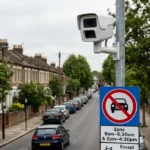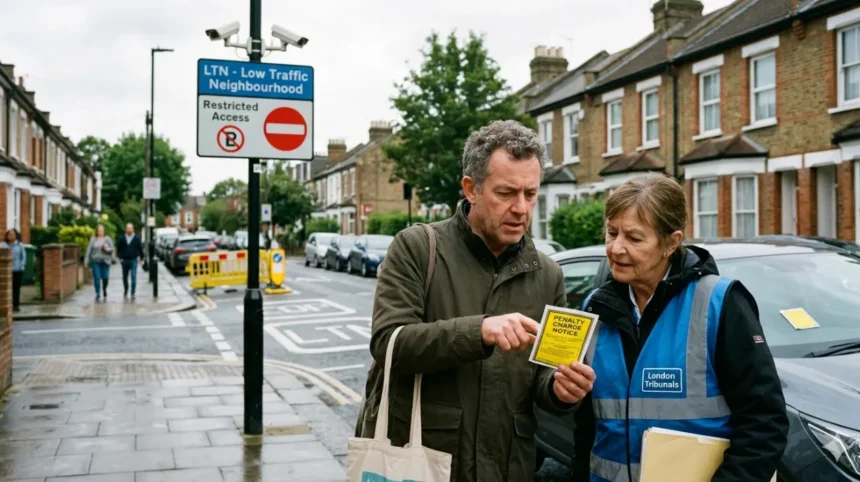
Yes, a North London LTN parking fine can be appealed through the formal PCN process. The usual route is to challenge the notice with the council first, then appeal to the London Tribunals if the council rejects the case.
- What is an LTN parking fine in North London?
- Can a North London council PCN be challenged?
- How does the appeal process work?
- What evidence helps most?
- Which North London boroughs use LTNs?
- What deadlines apply in North London?
- Why do North London LTN appeals succeed?
- What happens if the appeal fails?
- What does this mean for North London drivers?
What is an LTN parking fine in North London?
An LTN parking fine is usually a Penalty Charge Notice, or PCN, issued after a vehicle enters or crosses a Low Traffic Neighbourhood restriction. In North London, boroughs such as Islington, Camden, Haringey, Hackney, Barnet, and Brent use LTNs and traffic filters to reduce through-traffic on residential streets.
Low Traffic Neighbourhoods are traffic management schemes that limit motor vehicles from using quiet local roads as shortcuts. Transport for London describes LTNs as schemes that change access and movement patterns, while government guidance says the signs used for these restrictions must comply with the relevant traffic sign rules.
Can a North London council PCN be challenged?
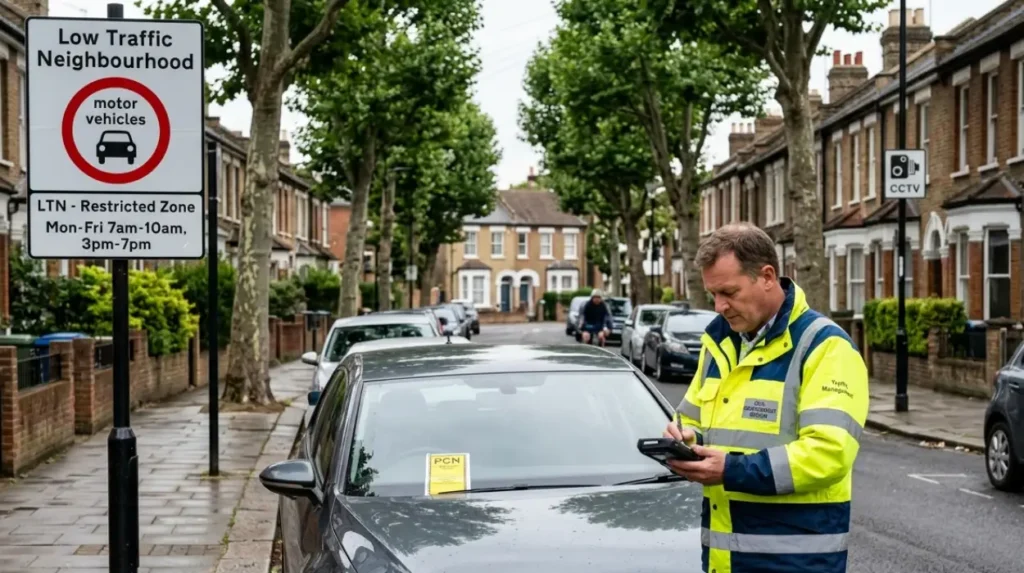
A North London council PCN can be challenged in most cases, including PCNs issued for moving traffic contraventions linked to LTNs. Government guidance confirms that motorists can challenge penalty charge notices and that the process starts with a formal representation to the issuing authority.
The council then decides whether to accept or reject the challenge. If the council rejects it, it issues a Notice of Rejection, and that document opens the route to an independent tribunal appeal.
How does the appeal process work?
The process begins when the PCN is served. Government guidance says the motorist normally has 28 days to challenge the notice, and many PCNs allow discounted payment during the early challenge period if the case is rejected.
If the council refuses the challenge, the next step is an appeal to the London Tribunals. London Tribunals is the independent body that hears London PCN appeals, and it requires the appellant to submit evidence and arguments against the council’s case.
What evidence helps most?
Evidence is the key to a strong North London LTN appeal. London Tribunals says the appellant should provide all relevant material, because the adjudicator decides the case on the evidence from both sides.
The most useful evidence usually includes:
- Photos of the filter, signs, and road layout at the North London location.
- A copy of the PCN, Notice to Owner, and Notice of Rejection.
- CCTV, dashcam, or still images showing the vehicle’s route.
- Any proof of exemption or local dispensation, such as a borough-specific permit or disability exemption.
Signage is especially important in LTN cases. Government guidance on implementing LTNs says traffic signs must be properly prescribed, which means a challenge often turns on whether the restriction was clearly signed before the vehicle entered the area.
Which North London boroughs use LTNs?
Several North London boroughs use LTNs, traffic filters, and controlled access streets. Islington, Camden, Haringey, Hackney, Barnet, and Brent all have roads where drivers face PCNs if they pass through restricted points without permission.
These schemes are designed to reduce rat-running and improve local street conditions. In practice, they create a common type of appeal: a driver says the restriction was unclear, while the council says the signs, camera footage, and filter layout were lawful and visible.
What deadlines apply in North London?
Deadlines are strict. Government guidance says you normally have 28 days to challenge a PCN and 28 days to appeal after a Notice of Rejection.
Missing a deadline can lead to escalation. London Tribunals says late appeals need a valid reason before they are considered, and councils can escalate unpaid cases through further enforcement stages if no action is taken.
Why do North London LTN appeals succeed?
North London LTN appeals succeed when the legal and factual evidence shows the council did not prove the contravention. That often happens where the sign was obscured, the road markings and entry point were confusing, the camera evidence was incomplete, or the PCN wording contained an error.
Some appeals also succeed when the driver had a valid exemption or the council did not apply its own published policy correctly. For example, Lambeth publishes a dispensation process for some disabled motorists in its traffic filter scheme, and similar local rules exist in some London boroughs.
Explore More Help & Resources
How to appeal a “MIL” permit parking fine in Islington
How to report dangerous pavement parking in Barnet
What happens if the appeal fails?
If the appeal fails, the full penalty becomes payable. London Tribunals’ decision is binding on the council, and the motorist must then pay within the period stated in the tribunal outcome or the case can move to the next enforcement stage.
If the motorist ignores the notice after rejection, the council can issue a Charge Certificate and then take further enforcement action. Government guidance explains that these later stages increase the amount owed and make the dispute harder to reverse.
What does this mean for North London drivers?
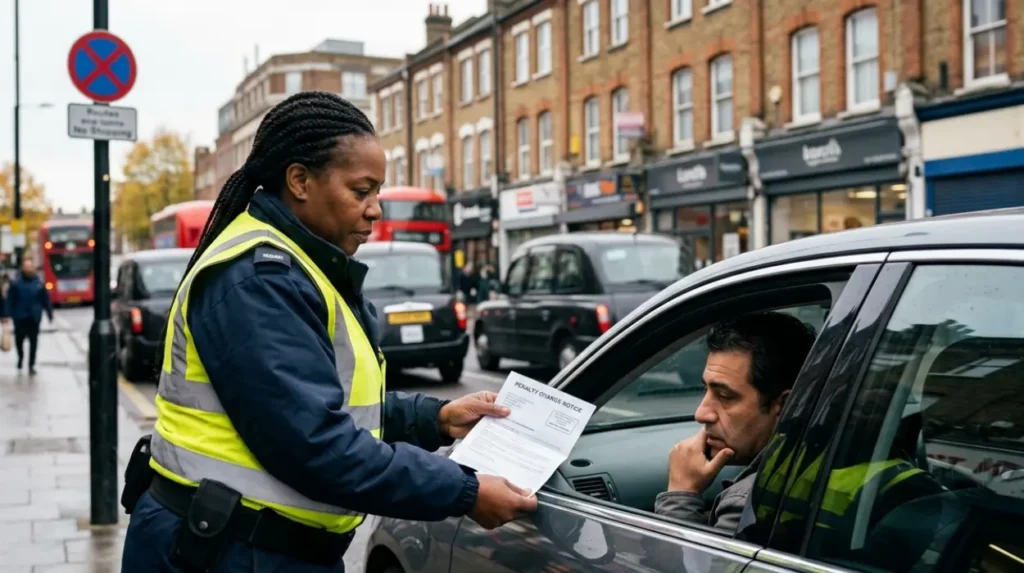
North London drivers should treat an LTN PCN as a legal notice, not a routine parking ticket. The safest response is to check the location, photograph the signs, keep every letter, and challenge the notice within the deadline if the restriction was unclear or the vehicle had an exemption.
A North London parking fine appeal works best when it is specific, evidence-led, and supported by the actual sign position, council documents, and the local borough rules. That approach gives the strongest chance of success at council stage and at London Tribunals.
What is bin contamination?
Bin contamination happens when incorrect, dirty, wet, or hazardous materials are placed into the wrong waste or recycling bin, making the contents unsuitable for safe or efficient recycling.