Fuel vouchers help low‑income households in North London pay for gas, electricity, and sometimes pre‑payment meters without repaying the money. These vouchers usually come as:
- What fuel vouchers are and how they work
- Which North London families can get fuel vouchers
- Borough‑level thresholds and restrictions
- Who operates fuel‑voucher schemes in North London?
- How to apply for fuel vouchers in North London
- Example pathways in key North London boroughs
- Typical amounts and value of vouchers in North London
- Alternative support options if you cannot get fuel vouchers
- Long‑term steps to reduce fuel‑poverty risk in North London
- How fuel‑voucher schemes are changing and what this means for North London
- PayPoint or PayPoint‑compatible vouchers for top‑up meters.
- Electricity‑top‑up cards or digital codes.
- Pre‑paid gas or electricity credit via a local retailer or supermarket.
In North London boroughs such as Barnet, Enfield, Camden, Haringey, Islington, and Hackney, fuel voucher schemes are mostly run through local councils, charities, the Fuel Bank Foundation, and partners like food banks and community hubs.
What fuel vouchers are and how they work
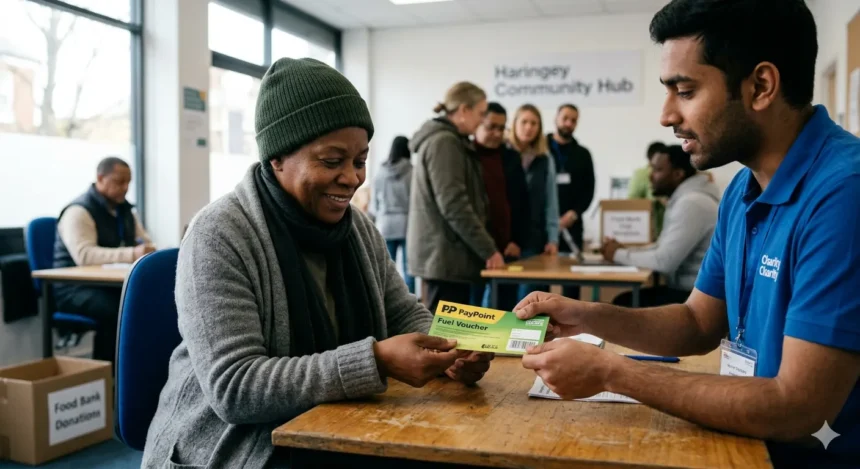
Fuel vouchers are short‑term grants that give a set monetary value in gas or electricity to a household, usually issued as a voucher code or physical voucher redeemable at a PayPoint, Payzone, or local shop.
Fuel vouchers differ from regular energy‑bill support because they are:
- Non‑repayable grants rather than loans.
- Often tied to a specific crisis (e.g., imminent disconnection, very low meter credit, or recent benefit sanction).
- Time‑limited, typically covering 1–4 weeks of usage.
In North London, most schemes use the national Fuel Bank Foundation network, which works through:
- Local charities.
- Foodbanks and community hubs.
- Council‑funded hardship funds.
When a household qualifies, the issuing body sends a voucher via:
- SMS or email (digital code).
- Physical voucher booklet.
- Direct top‑up to a smart meter or pre‑payment key.
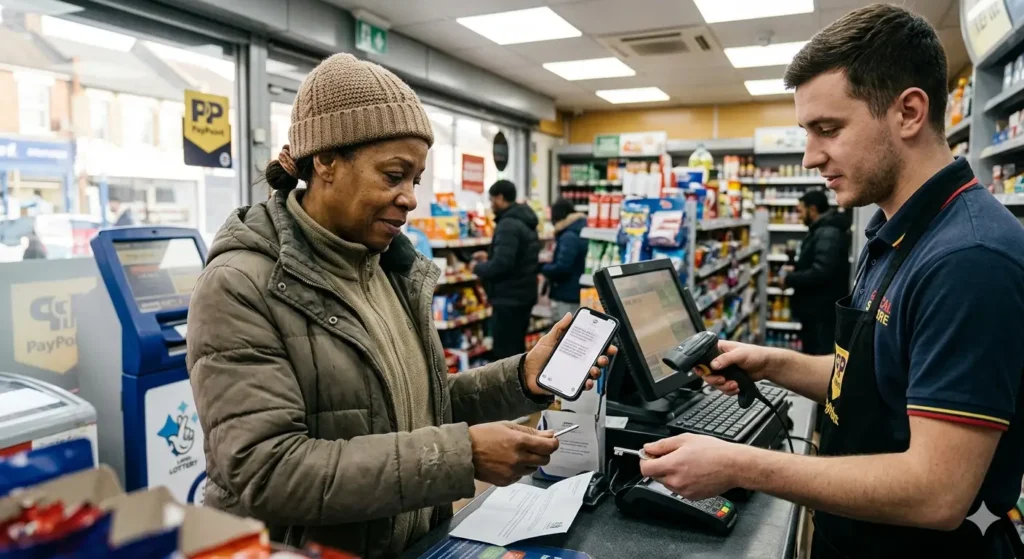
Those vouchers are then redeemed at:
- PayPoint shops (convenience stores, some supermarkets).
- Payzone outlets (larger newsagents and supermarkets).
Which North London families can get fuel vouchers
Fuel vouchers in North London are usually for low‑income households facing a short‑term fuel‑poverty crisis, including recipients of benefits, pre‑payment‑meter users, and those referred by a frontline organisation such as a foodbank or council‑funded support hub.
Eligibility criteria common across North London boroughs include:
- Living in the borough (or using a local foodbank or hub).
- Using a pre‑payment meter or topping‑up meter, or having very low credit.
- Being on a low income or receiving one or more means‑tested benefits (for example, Universal Credit, Income Support, Pension Credit, or Housing Benefit).
Additional triggers may be:
- Recent benefit sanction or delay.
- Sudden income loss (redundancy, reduced hours).
- Medical conditions that increase heating needs (chronic illness, elderly, very young children).
Some schemes cap support per household:
- One voucher per household in a given period.
- A maximum value per voucher (often between £25 and £50, though some boroughs target higher support in winter).
Borough‑level thresholds and restrictions
Each North London borough may set slightly different rules. Typical variables include:
- Barnet and Camden: Use council‑funded hardship funds and the Fuel Bank system; referrals usually come via Citizens Advice, food banks, or council‑run advice centres.
- Enfield: Works via the Fuel Bank hosted through North Enfield Foodbank, with vouchers issued to those in “crisis need” facing fuel‑poverty risk.
- Haringey: Uses the Compassionate Communities Hub and other council‑supported hardship gateways for emergency fuel‑top‑up vouchers.
Households that rent from private landlords, housing associations, or live in supported housing can still qualify if they are responsible for paying their own gas or electricity.
Who operates fuel‑voucher schemes in North London?
In North London, fuel‑voucher schemes are mainly run by local councils, the Fuel Bank Foundation, Citizens Advice, large food banks, and some community‑hub charities that distribute vouchers funded by central or local government hardship budgets.
Key operator types (with examples) are:
- Local councils and their hardship funds
- Fuel Bank Foundation network partners
- Citizens Advice and other advice charities
- Citizens Advice Barnet, Camden, and Islington can refer households to council hardship funds or local Fuel Bank‑linked schemes.
- They also help with back‑bill arrears, benefit checks, and signposting to other grants.
- Compassionate Communities and community‑hub providers
- National payment‑platform providers
How to apply for fuel vouchers in North London
To get fuel vouchers in North London, most households must be referred or self‑referred through a local council‑funded hardship fund, a Fuel Bank‑linked foodbank, or a community hub; the process usually involves a brief form, proof of need, and sometimes a short waiting period.
A typical application flow is:
- Check your borough and beneficiary type
- Identify which borough you live in (e.g., Barnet, Enfield, Camden, Haringey, Islington, Hackney).
- Decide whether you will approach your council hardship team, a local foodbank, or a community hub first.
- Find the correct gateway
- Submit an application or request a referral
- Provide basic information and proof of need
- Typical information requested includes:
- Name, address, and postcode.
- Council tax band and tenure (rented, shared ownership, etc.).
- Energy‑supplier details and meter type (pre‑payment, smart, credit).
- Proof of need may include:
- Typical information requested includes:
- Wait for approval and voucher issuance
- Redeem the voucher
- Take the voucher code or physical voucher to a PayPoint, Payzone, or designated shop.
- The clerk will enter the code or scan the voucher, then top up your meter or card.
Example pathways in key North London boroughs
- Enfield:
Clients are referred to the Fuel Bank via North Enfield Foodbank; once accepted, they receive up to two weeks of gas or electricity usage via vouchers issued within 24 hours. - Haringey:
Households can apply online via the Compassionate Communities Hub or call the hub; they may then receive a fuel‑top‑up voucher or be directed to another local scheme. - Camden / Barnet / Islington:
Residents typically contact Citizens Advice or a council‑run hardship‑fund helpline; advisers check eligibility and, if eligible, submit a hardship‑fund request that may include a fuel‑top‑up.
Typical amounts and value of vouchers in North London
Fuel vouchers in North London commonly range from about £25 to £50 per household per crisis event, with some schemes issuing higher amounts during winter months or when the recipient has a medical need or very low meter credit.
Common patterns:
- Per‑voucher values:
- Many schemes cap one voucher at £49 per household, allowing only one voucher per period.
- Some phone‑based or hub‑based schemes offer smaller amounts (for example, £25–£35) if the crisis is less severe or if funds are limited.
- Frequency limits:
- One voucher per household during a defined period (for example, 3–6 months).
- Repeat emergencies may require re‑assessment by a caseworker or social worker.
- Winter‑boost bands:
- During cold‑weather periods (December–February), councils may increase the value or number of vouchers per household, subject to budget.
- Combined support:
- Some hardship‑fund applications bundle a fuel voucher with:
- A small grocery‑top‑up.
- A digital device or broadband support voucher.
- Cash welfare grant (e.g., £50–£100) for immediate needs.
- Some hardship‑fund applications bundle a fuel voucher with:
These amounts are not guaranteed every year; they depend on the council’s Household Support Fund allocation and local partner budgets.
Alternative support options if you cannot get fuel vouchers
If you cannot access fuel vouchers in North London, you can still reduce your energy‑bill burden through council hardship funds, the Warm Home Discount, the Winter Fuel Payment, debt‑relief schemes, and benefit‑top‑up from Universal Credit or local welfare assistance.
Key alternatives include:
- Council hardship and welfare‑assistance funds
- Many North London boroughs run additional hardship funds that pay:
- Small cash grants for bills.
- Direct payments to energy suppliers with the customer’s consent.
- These funds are often targeted at vulnerable groups (families with children, disabled people, older adults).
- Many North London boroughs run additional hardship funds that pay:
- National Warm Home Discount
- A government‑run scheme that gives eligible households a one‑off £200 discount on electricity bills between October and March.
- Eligibility usually requires:
- Being on a low‑income benefit (e.g., Pension Credit, Guarantee Credit, or being identified as “core‑group” by an energy supplier).
- Winter Fuel Payment
- Debt‑relief and pre‑payment‑meter support
- Energy‑bill‑prepayment and budget‑tariff schemes
- Local charities and food banks
- Even if a foodbank cannot issue a fuel voucher, it may:
- Provide food parcels, freeing up money for energy bills.
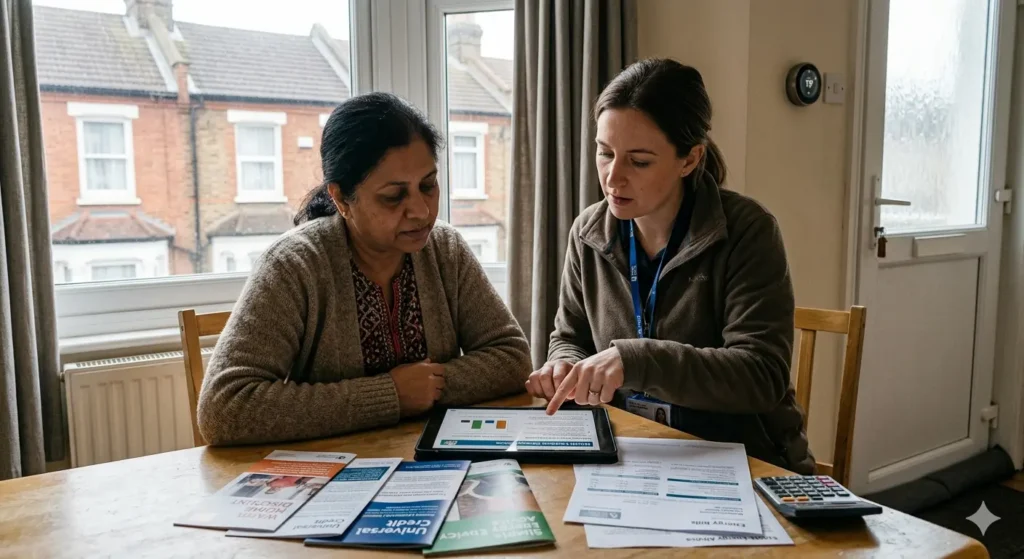
- Refer you to a Citizens Advice Bureau or council‑funded advice service.
- Even if a foodbank cannot issue a fuel voucher, it may:
Long‑term steps to reduce fuel‑poverty risk in North London
To reduce the risk of needing fuel vouchers in future, North London households can switch to cheaper tariffs, apply for all eligible benefits, improve home insulation, and use energy‑efficient appliances and heating routines.
Specific actions include:
- Switch energy suppliers and tariffs
- Claim all benefits and discounts
- Check eligibility for:
- Universal Credit.
- Housing Benefit or Council Tax Reduction.
- Pension Credit and the Warm Home Discount.
- Healthy Start and Cold Weather Payments.
- Check eligibility for:
- Improve home energy efficiency
- Adopt lower‑cost heating habits
- Use pre‑payment‑meter‑management tools
- Some pre‑payment meters allow:
- Pre‑payment‑meter customers can also switch back to a standard credit meter if their credit history improves.
How fuel‑voucher schemes are changing and what this means for North London
Fuel‑voucher schemes in North London are evolving under pressure from rising energy prices, shrinking household‑support budgets, and a shift toward digital‑voucher platforms and integrated hardship‑fund systems.
Recent trends include:
- More digital‑only vouchers
- Tighter caps and more means‑testing
- As the central government renews the Household Support Fund on a short‑term basis, councils face tighter budgets and may:
- Limit voucher value per household.
- Prioritise medically vulnerable households or those with children.
- As the central government renews the Household Support Fund on a short‑term basis, councils face tighter budgets and may:
- Integration with other hardship support
- Fuel‑top‑up vouchers are increasingly bundled with:
- Food parcels or grocery top-ups.
- Cash‑welfare grants.
- Digital‑inclusion or childcare‑support vouchers.
- Fuel‑top‑up vouchers are increasingly bundled with:
For North London families, this means:
- Applying earlier in a crisis (not waiting until the meter is completely empty).
- Keeping records of benefits, meter‑photos, and hardship letters ready to upload.
- Staying in contact with your local advice centre or foodbank, because the criteria can change each council year.
By combining timely fuel‑voucher access with long‑term tariff choices and benefit claims, North London households can reduce their exposure to fuel poverty while still having a safety‑net for sudden crises.
How can North London families get fuel vouchers?
North London families can apply for fuel vouchers through their local council, usually via the Household Support Fund. Contact your borough council (e.g. Barnet Council or Haringey Council), or ask support services like Citizens Advice or Age UK for a referral. Eligibility typically depends on low income, benefits, or financial hardship.