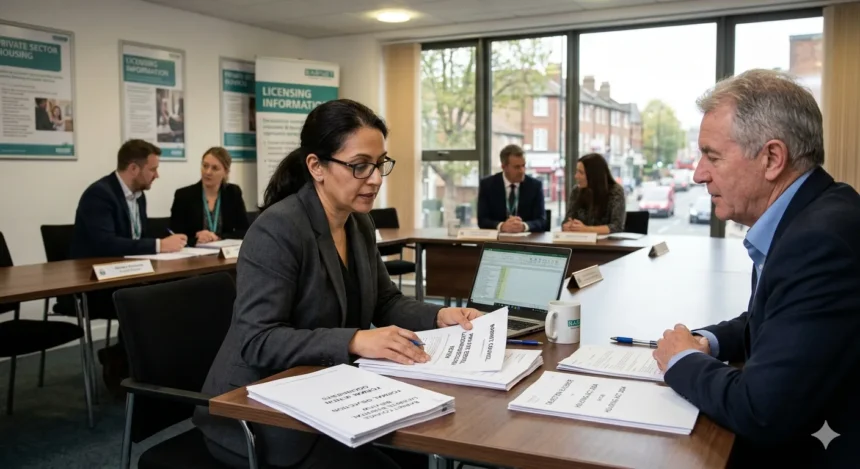
If you live or let a property in the London Borough of Barnet, you can object to certain private rental licensing decisions by Barnet Council through a formal, time‑limited process. This includes challenging decisions to refuse, vary, or revoke a licence, as well as objecting to conditions, financial penalties, or rent‑repayment orders linked to the council’s private‑sector housing licensing regimes.
- What is Barnet’s private rental licensing?
- Who can legally object to Barnet licensing decisions?
- When can you object in Barnet?
- What does “objecting” mean legally in Barnet?
- Can you object before a licence is refused?
- 1. Check what type of decision you are objecting to
- 2. Gather evidence and legal grounds
- 3. Submit the appeal within the time limit
- 4. Prepare for a tribunal hearing
- Can tenants object to a Barnet licence decision?
- What happens if Barnet refuses to change its decision?
- Practical examples of objecting in North London
- Statistics and real‑world context for Barnet licensing
- How to reduce the need to object in the future
Objecting correctly means acting quickly, using the right statutory route, and presenting clear evidence that the council’s decision is legally flawed, disproportionate, or factually wrong. This guide explains what Barnet’s private rental licensing system covers, who can object, the legal routes available, and how to lodge and support an objection in North London-specific terms.
What is Barnet’s private rental licensing?
Barnet private rental licensing is the council’s system for requiring landlords to hold a licence on certain privately rented homes, usually Houses in Multiple Occupation (HMOs) and, in some areas, all private rented properties. Under the Housing Act 2004, Barnet may run mandatory HMO licensing, additional HMO licensing across the whole borough, and selective licensing covering defined wards where standards in the private rented sector are below minimum levels.
Mandatory HMO licensing in Barnet applies to properties occupied by five or more people who form more than one household, such as shared houses, converted flats, or mixed self‑contained and non‑self‑contained accommodation. Additional licensing expands this to many HMOs with three or more unrelated people sharing facilities, even if they do not meet the five‑person threshold in the mandatory scheme.
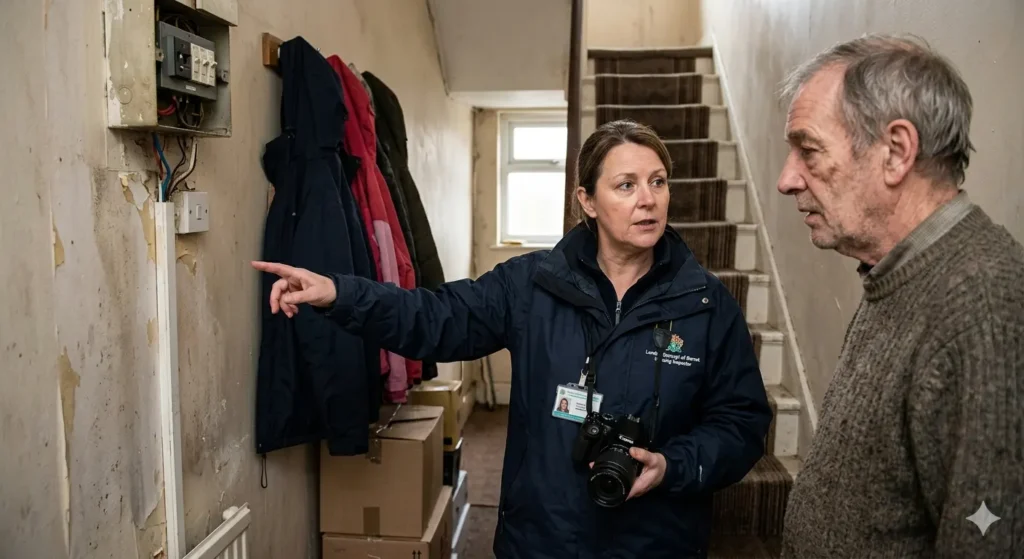
Who can legally object to Barnet licensing decisions?
Landlords, letting agents, and, in some cases, tenants can object to Barnet Council’s private rental licensing decisions if those decisions directly affect their rights or interests. For example, a landlord who has had a licence refused, varied, or revoked can object; an agent managing the property may also object if the conditions materially change how the property can be managed.
Tenants can object indirectly by triggering or supporting enforcement action, such as reporting an unlicensed HMO or unsafe conditions, which may lead to a licence review or enforcement notice. Barnet also operates a Housing and Environmental Health team that investigates complaints; outcomes of these investigations can generate licence‑related decisions that are themselves appealable on the usual statutory grounds.
When can you object in Barnet?
You can object whenever Barnet Council:
- Refuses to grant a mandatory or additional HMO licence.
- Refuses to renew or varies conditions on an existing licence.
- Revokes a licence, or imposes conditions that restrict how you let or manage the property.
- Issues a financial penalty, rent repayment order, or improvement/prohibition notice under the Housing Act 2004.
Objections are not a general forum to complain about rent or tenancy terms; they are targeted challenges to the council’s exercise of its licensing powers under statutory schemes. If Barnet introduces selective licensing for specific North‑London wards, the same objection routes apply to the refusal of a selective licence or its conditions.
What does “objecting” mean legally in Barnet?
Legally, objecting in Barnet usually means appealing to a statutory tribunal or, in some cases, challenging a decision through judicial review in the High Court. For most day‑to‑day licensing disputes—licence refusals, revocations, conditions, financial penalties, or rent repayment orders—objection is framed as an appeal to the First‑tier Tribunal (Property Chamber), formerly known as the Residential Property Tribunal.
Appeals under the Housing Act 2004 are tightly timed: you normally have 28 days from the date Barnet serves its decision notice to submit an appeal form and supporting evidence. If the council refuses a licence, imposes a heavy penalty, or tries to revoke a licence, you must treat the decision‑notice date as your starting clock and file within that window.
Can you object before a licence is refused?
You cannot usually “object” to Barnet’s licensing rules themselves, but you can influence upcoming schemes through the council’s statutory consultation process. Barnet has run consultations on borough‑wide additional licensing and selective licensing for wards like Colindale North, Colindale South, Burnt Oak, and ten further wards, each giving residents and landlords a finite period (often 12 weeks) to submit written objections or representations.
These objections are non‑statutory but can shape the council’s final decision on whether to adopt or modify a scheme. If you believe selective licensing will unfairly hit small landlords, student‑letting blocks, or specific North‑London areas such as Mill Hill or Edgware, you must respond in writing during the consultation window, citing practical impacts and evidence of compliance.
1. Check what type of decision you are objecting to
Barnet can reach different types of licensing decisions, and each has slightly different appeal routes. Common types include:
- Refusal or variation of a mandatory or additional HMO licence.
- Revocation of a licence after inspections or enforcement.
- Imposition of financial penalties or rent repayment orders under Part 4 of the Housing Act 2004.
Start by reading the decision notice carefully; it will state whether the decision is appealable, to which tribunal, and by what date. If the notice is unclear, contact Barnet’s HMO Licensing Team at 020 8359 5355 or hmos@barnet.gov.uk for clarification before time runs out.
2. Gather evidence and legal grounds
Before submitting an objection or appeal, you must identify strong legal or factual grounds. Typical grounds include:
- The council misapplied the licensing criteria (for example, treating a six‑person property as an HMO when it meets sui‑generis thresholds but not the HMO definition).
- The council failed to follow its own published minimum standards or statutory guidance.
- The decision is disproportionate, such as refusing a licence for a minor technical breach that does not affect safety or management.
Document building‑specific evidence: floor plans, occupancy numbers, fire‑risk assessments, EICR or gas‑safety certificates, and any correspondence with Barnet officers. Photographs showing compliant facilities, shared kitchens, and escape routes strengthen your case if the dispute is about room sizes, facilities, or safety.
3. Submit the appeal within the time limit
For most Barnet licensing decisions, the statutory appeal route is the First‑tier Tribunal (Property Chamber). You must normally:
- Use the official appeal form for the relevant tribunal category (for example, “disputes about licences for houses in multiple occupation” or financial penalties).
- Send the form by post or as an attachment by email to the tribunal within 28 days of the council’s decision notice.
- Include a copy of the decision notice and any grounds of appeal or evidence you want relied upon.
Late appeals may be refused unless you can demonstrate a good reason for the delay, such as a serious illness or postal error, supported by documentary proof. Tribunal staff do not usually accept informal “objections” by email; they require a correctly completed form within the statutory window.
4. Prepare for a tribunal hearing
If the tribunal accepts your appeal, Barnet will be notified and may submit a written response and evidence. You may then be offered a paper determination (decision without a hearing) or a full hearing, either in person or by video. North‑London parties often attend hearings at the London‑based tribunal offices or via remote platforms.
Before the hearing, order a copy of the council’s inspection report, any photographs, and your original licence application. Prepare concise written submissions that link each council allegation to specific evidence (for example, “Barnet claims kitchen is too small; our measured plan shows 6.8 m², above the 6.51 m² minimum for one person”). If you are a landlord in Colindale, Mill Hill, or Edgware, you can highlight local conditions such as property mix, typical occupancy, and compliance history.
Can tenants object to a Barnet licence decision?
Tenants exposed to unlicensed or unsafe HMOs have limited direct objection rights but can trigger council enforcement and, in some cases, challenge rent‑repayment or penalty decisions. If you think your landlord is operating an unlicensed HMO in Barnet, you can report the property to the council’s Housing and Environmental Health team via housingconditions@barnet.gov.uk or the council’s online reporting channels.
If Barnet issues a rent repayment order against your landlord, you may be affected financially, but the decision is appealable primarily by the landlord or agent. As a tenant, you can support a landlord’s objection by providing evidence of accurate occupancy, rent levels, or compliance, typically via witness statements submitted to the tribunal.
What happens if Barnet refuses to change its decision?
If the tribunal upholds Barnet’s original decision, your licence will remain refused, revoked, or conditional, and any financial penalties or rent repayment orders will stand. You may be able to seek a Judicial Review in the High Court if you can show the council made a serious legal error, such as misinterpretation of the Housing Act 2004 or failure to follow statutory consultation requirements.
Judicial‑review claims must usually be filed within three months of the decision, and the threshold for success is high; courts will not simply reweigh the facts but will test whether the council acted lawfully, fairly, and within its powers. Such challenges are best taken with specialist housing or public‑law solicitors, particularly as Barnet’s council officers are experienced in defending licensing decisions.
Practical examples of objecting in North London
In Edgware, a landlord was prosecuted for running an unlicensed HMO accommodating seven people; the council’s enforcement stemmed from inspection findings and triggered a criminal conviction and substantial fines. In that context, the landlord could have objected earlier by appealing any refusal or revocation of a licence, or by challenging Barnet’s grounds for prosecution if the refusal notice itself was flawed.
In Colindale and Mill Hill, selective licensing consultations have drawn mixed responses from landlords and residents worried about additional fees and paperwork. Landlords in these areas have used the consultation phase to object in writing, arguing that many existing landlords are already accredited or compliant and that blanket licensing would not proportionately improve conditions. While these objections are not formal appeals, they set the political context in which Barnet designs and implements schemes.
Statistics and real‑world context for Barnet licensing
Barnet’s HMO licensing regime is one of the more active in London, with hundreds of licences issued and regular enforcement actions. In May 2023, Barnet’s public register listed 970 HMOs licensed under both mandatory and additional schemes, suggesting a substantial, but still incomplete, coverage of the borough’s private‑rented stock.
In 2019, the council reported 635 properties that met the five‑person HMO criteria and 3,836 that would have fallen under the old additional licensing scheme, highlighting the scale of unlicensed stock before scheme renewal. Barnet has issued multiple Penalty Notices and Rent Repayment Orders, with civil penalties carrying sums up to £30,000 per offence and potential repayment of up to 12 months’ rent, underlining the financial risk of non‑compliance and the importance of challenging incorrect decisions.
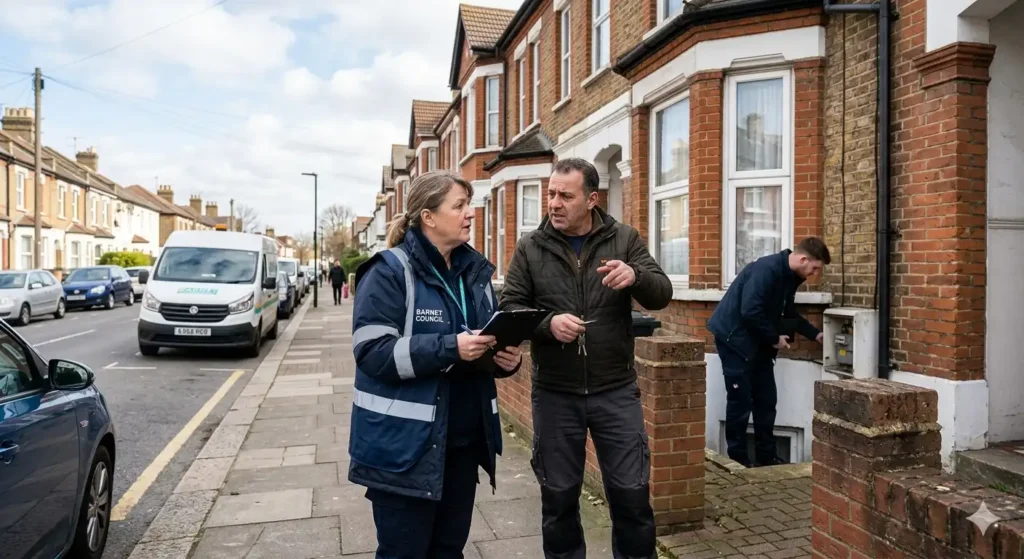
How to reduce the need to object in the future
Landlords in North London can reduce the likelihood of licensing disputes by proactively aligning with Barnet’s published standards and timelines. Key steps include:
- Checking whether your property is a mandatory HMO (five or more people, multiple households) or falls under additional licensing rules.
- Submit applications early, use the council’s downloadable forms, and keep copies of all correspondence.
- Ensuring bedroom sizes, shared facilities, fire‑safety measures, and heating conform strictly to Barnet’s HMO standards.
Accredited landlords enrolled in schemes such as the London Landlord Accreditation Scheme report access to training, guidance, and sometimes discounted licensing fees; Barnet has seen its accredited landlord numbers rise from 580 in 2016 to 1,971 in 2024, indicating a growing base of compliant businesses. Staying accredited and engaging with Barnet’s consultation exercises can help you shape future licensing rules before they become grounds for objection.
For most North‑London landlords and agents dealing with Barnet private rental licensing, the core objection route is a 28‑day appeal to the First‑tier Tribunal (Property Chamber) against a licensing or penalty decision. If the decision is clearly erroneous, you may later seek Judicial Review in the High Court, subject to the three‑month time limit and strict legal error tests.
Consultation objections to proposed licensing schemes (additional or selective) must be lodged during each scheme’s published consultation window, usually about 12 weeks, and do not replace formal appeals against individual licence decisions. By combining early compliance, clear documentation, and timely use of statutory objection routes, you can defend your licensing position in Barnet while protecting your tenancies and income.
Can I rent my house to Barnet Council?
Yes, but your property must meet council standards and licensing rules, which you can challenge during the objection process.