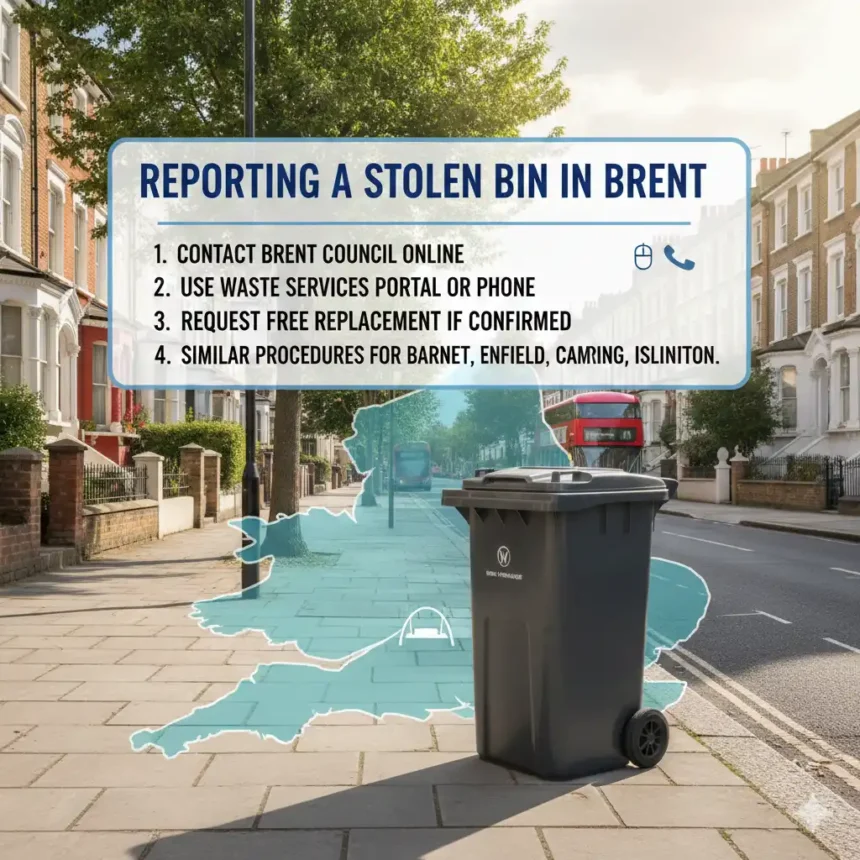
To report a stolen bin in Brent, contact Brent Council online via their waste services portal or by phone to request a free replacement if it’s confirmed as stolen. Local residents in Brent, Barnet, Enfield, Camden, Haringey, and Islington can follow similar council procedures tailored to their borough for quick resolution. This ensures waste collection continues without delay.
Why This Issue Matters to Local Residents
A stolen bin disrupts everyday life for North London residents. Without it, households struggle to store waste properly, leading to overflowing rubbish that attracts pests and creates unhygienic conditions around homes.
In busy areas like Brent and neighbouring Barnet, Enfield, Camden, Haringey, and Islington, reliable bin services keep streets clean and support community wellbeing. Delays in replacement can affect scheduled collections, forcing residents to bag waste temporarily, which risks fines for improper disposal under UK environmental rules.
North London councils prioritise these reports to maintain high standards. Quick action prevents small issues from escalating into neighbourhood blight, helping local residents focus on daily routines rather than waste worries.
Step-by-Step Actions to Solve the Problem
Follow these clear steps to report a stolen bin and secure a replacement efficiently.
- Check your collection area first: Inspect nearby streets, alleys, and shared spaces where the bin might have been moved accidentally during collection rounds. Confirm it’s truly missing by reviewing your council’s collection calendar.
- Gather evidence: Take photos of the empty spot where your bin stood, noting the date, time, and bin type (general waste, recycling, or food waste). This helps councils verify the claim.
- Report online or by phone: Use your local council’s website to submit a replacement request, selecting “stolen bin” as the reason. Provide your full address, postcode, and contact details.
- Confirm details with the council: Specify the bin size (usually 240 litres for houses) and type. Councils like Brent handle this through dedicated waste forms.
- Wait for confirmation: Councils typically acknowledge reports within one to two working days and arrange delivery soon after.
These steps apply across North London boroughs, with minor variations. Barnet Council and others mirror this process for consistency.
Which Council Service Handles It
Brent Council manages stolen bin reports through its Waste and Recycling team. This service oversees all household bin issues, from replacements to collections, ensuring seamless handling.
North London council procedures align closely. In Barnet, residents contact the Environment and Streets service; Enfield uses its Waste Management team; Camden directs to Cleaner Communities; Haringey to Street Services; and Islington to Neighbourhood Services.
Each borough’s waste team acts as the single point of contact. Local residents benefit from these streamlined services, designed under UK local government guidelines for efficiency.
Information or Documents Needed
Councils require basic details to process your stolen bin report swiftly. Start with your full address and postcode to identify your property’s bin entitlement.
Include proof of residency if requested, such as a recent council tax statement or utility bill matching the address. Describe the bin clearly: colour (grey for general waste, blue for recycling), size, and any unique marks like serial numbers or council tags.
No formal police report is mandatory for replacement, though noting it strengthens your case. North London councils keep requirements minimal to encourage prompt reporting from local residents.
Expected Response Time
Brent Council usually responds to stolen bin reports within 48 hours, often emailing confirmation and a delivery date. Replacements arrive within five to ten working days, depending on stock and demand.
Similar timelines apply borough-wide. Barnet and Enfield aim for one-week delivery; Camden, Haringey, and Islington target ten working days maximum. Delays may occur during peak periods like bank holidays, but councils prioritise verified theft claims.
Local residents can track progress via online portals where available. This keeps everyone informed without repeated calls.
What to Do If Follow-Up Is Required
If no response arrives within the expected timeframe, check your spam folder for council emails first. Then, use the original report reference number to follow up via your North London council’s online query form.
Contact the waste team directly if needed, quoting your details. Persistent issues might need escalation to the council’s customer service line, but most resolve at the first stage.
Keep records of all communications. This approach ensures Brent Council and peers address any hiccups efficiently for local residents.
Rights and Responsibilities Under UK Rules
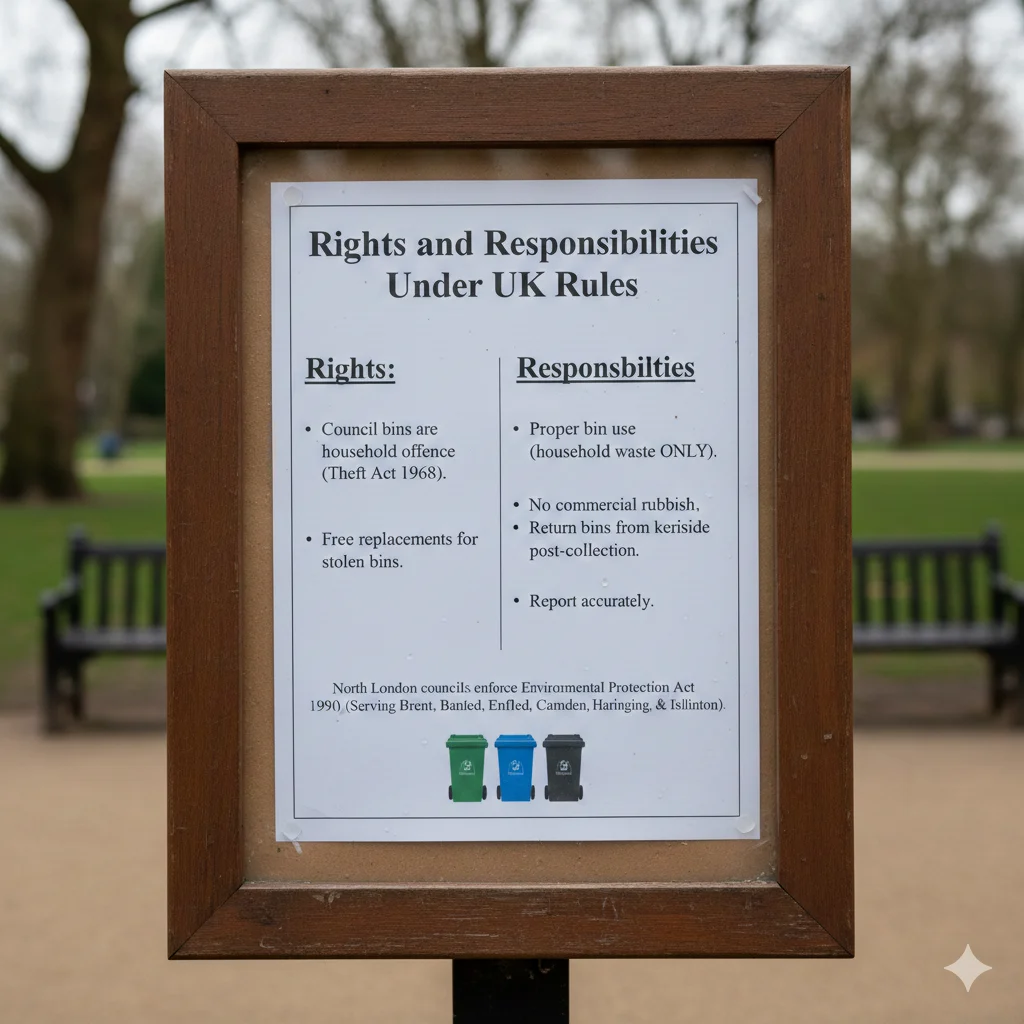
UK law views council-issued bins as household property, making theft a criminal offence under the Theft Act 1968. Residents have the right to free replacements for stolen bins, as outlined in local authority waste management policies.
Responsibilities include proper bin use: only household waste, no commercial rubbish, and returning bins from the kerbside after collection. North London councils enforce this to comply with the Environmental Protection Act 1990, avoiding fines up to £400 for misuse.
Local residents must report accurately to uphold these rights. Councils balance service provision with fair usage, supporting clean communities across Brent, Barnet, Enfield, Camden, Haringey, and Islington.
Practical Tips to Avoid the Problem in Future
Prevent bin theft with simple habits suited to North London living.
Secure bins behind locked gates or in rear gardens overnight, especially in terraced homes common in Brent. Use UV marking pens or council tags to make bins identifiable and less appealing to thieves.
Position bins out for collection only on scheduled days, retrieving them promptly. For flats or shared properties in Camden or Haringey, coordinate with neighbours via communal storage.
Consider wheel locks for high-risk areas in Enfield or Islington. These steps reduce vulnerability while complying with Brent Council guidelines.