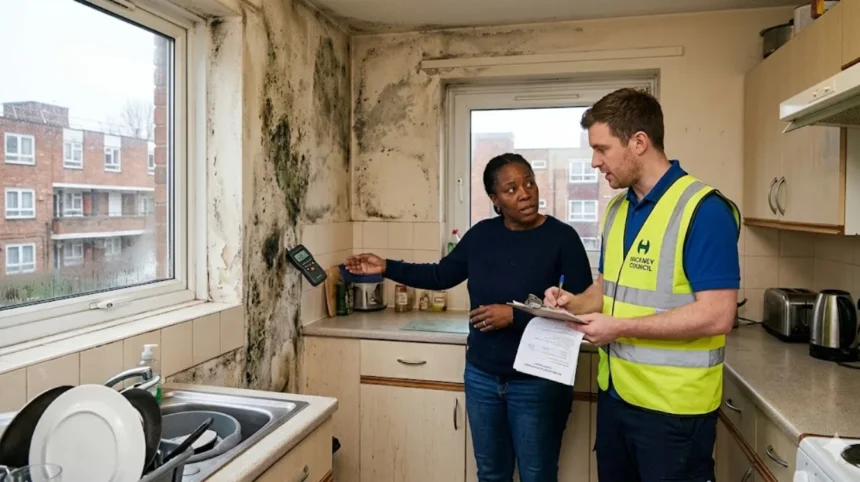
Damp and mould in Hackney Council flat should be reported as soon as you notice it, especially if it is spreading, affecting more than one room, or linked to a leak. Hackney Council provides an online repair route for non-emergency internal repairs, while leaks and other urgent problems should be reported by phone so they can be dealt with quickly.
- Why Damp and Mould Should Never Be Ignored
- What Counts as Damp and Mould
- How to Report Damp and Mould in Hackney Council Flats
- What Information to Include in Your Report
- Online Reporting for Non-Emergency Repairs
- When You Should Phone Instead
- Why Evidence Matters
- What Hackney’s Housing Service Has Said About Damp and Mould
- What Happens After You Report It
- If the Council Does Not Act
- Practical Steps to Take Before the Repair Visit
- Why Clear Reporting Helps Residents
- Common Mistakes to Avoid
- Final Word for Hackney Residents
For residents, the most important thing is to report the problem with clear details, keep evidence, and follow up if the issue is not being fixed properly. Hackney’s housing service has also been the subject of Ombudsman findings and later commitments to faster damp and mould inspections, which makes prompt reporting and documentation even more important.
Why Damp and Mould Should Never Be Ignored
Damp and mould are not just cosmetic issues. They can damage walls, ceilings, furniture, clothing, and flooring, and they can also affect health, particularly for children, older adults, and people with asthma or other breathing conditions. The Housing Ombudsman has repeatedly stressed that social landlords should take a zero-tolerance approach to damp and mould and should identify root causes rather than simply painting over affected areas.
In Hackney, previous Ombudsman findings show why early action matters. In one case, serious delays in dealing with damp, mould, and leaks led to worsening conditions and health and safety concerns for the resident. That history matters because it shows that a report should be treated as a serious housing repair, not a minor household inconvenience.
What Counts as Damp and Mould
Damp usually appears as wet patches, peeling paint, bubbling plaster, condensation on windows, a musty smell, or black spotting on walls, ceilings, or around window frames. Mould is often visible as black, green, or brown growth and commonly appears in corners, behind furniture, around windows, near ceilings, and in bathrooms or kitchens where moisture builds up.
In council flats, damp can come from several causes, including leaks, broken roofs, defective guttering, plumbing faults, poor ventilation, structural problems, or condensation. Hackney Council’s own housing guidance and related reporting pages show that leaks are treated as a priority because they can spread damp into other parts of the property and neighbouring homes.
How to Report Damp and Mould in Hackney Council Flats
If you live in a Hackney Council-managed home, the normal route for non-emergency internal repairs is the Council’s online repairs system, which was launched so residents can report repairs 24 hours a day and book a visit. This is the best option for issues such as visible mould, recurring condensation damage, damaged plaster, or other non-urgent internal defects.
If the damp or mould is being caused by a leak, or if you believe there is an urgent risk to health or your home, you should contact the repairs contact centre directly on 020 8356 3691 rather than waiting for a routine appointment. Hackney has also said that leak reports should be responded to by at least the close of the following day, which makes it especially important to report water ingress as soon as you spot it.
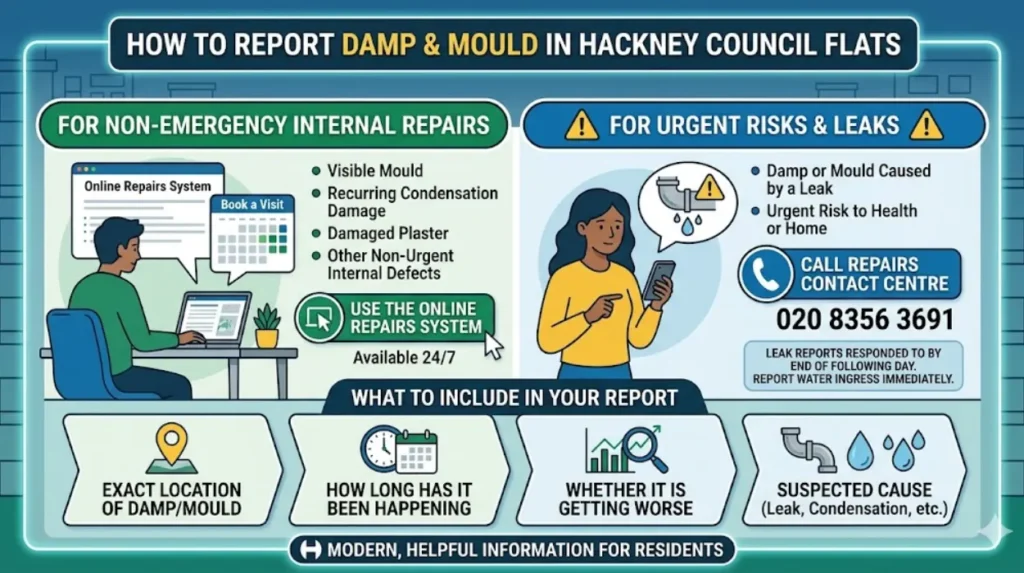
When you make the report, explain exactly where the damp or mould is, how long it has been happening, whether it is getting worse, and whether you suspect a leak, condensation, or another cause. The more precise your description is, the easier it is for the housing officer or repairs team to prioritise the case properly.
What Information to Include in Your Report
A strong report should include your full address, flat number, tenancy details, and contact phone number or email address. You should also describe the affected room or rooms, the size of the problem, whether it returns after cleaning, and whether any furniture, clothing, bedding, or personal items have been damaged.
It helps to mention if the problem is linked to specific times, such as colder weather, heavy rain, showering, cooking, or poor extractor fan performance. If you can, include photographs showing the mould, the surrounding wall or ceiling, and any water staining or peeling paint. Dated photos are especially useful because they help show whether the issue is worsening over time.
If you have a medical condition affected by damp and mould, you should mention that too. Housing landlords and councils are expected to take health impacts seriously, and the Ombudsman has made clear that landlords should communicate clearly and keep residents informed while they investigate and repair the underlying cause.
Online Reporting for Non-Emergency Repairs
Hackney Council introduced a new online system for non-emergency internal repairs, allowing tenants to report problems any time of day and book a visit from a repairs officer. This is useful for damp and mould where the problem is serious but not an immediate emergency, because it creates a record and lets you choose a convenient appointment slot.
The online route is especially suitable when the issue is ongoing rather than sudden, such as persistent mould on window reveals, repeated condensation in the bedroom, or damp patches that have returned after previous cleaning. It also helps create a paper trail, which can matter later if you need to make a complaint or ask for an escalation.
When You Should Phone Instead
If damp and mould are connected to an active leak, immediate water penetration, or something that may cause further damage quickly, call the repairs contact centre on 020 8356 3691. A leak can spread into ceilings, electrics, adjoining flats, and communal areas, so it should not be left until the next available routine appointment.
You should also phone if the problem is affecting a communal area, because Hackney states that requests for repairs to communal areas should be made through the repairs contact centre. In practical terms, this means stairwells, shared corridors, or any shared fabric of the building should be reported directly rather than treated as an ordinary internal flat repair.
Why Evidence Matters
Evidence is one of the most useful things you can gather before and after you report the issue. Take clear photographs or short videos, keep copies of any messages to the council, and note the dates of every contact, visit, and repair appointment.
A short diary can help too. For example, you could record when mould first appeared, how often you cleaned it, whether it returned, whether windows are regularly misting up, and whether the problem gets worse after rain or cooking. This kind of record supports your report and can help show whether the landlord is addressing the underlying cause rather than simply treating the visible surface.
What Hackney’s Housing Service Has Said About Damp and Mould
Hackney Council and related housing updates have signalled that the borough is taking leaks and damp more seriously, including a commitment that leak reports are visited by a plumber by the end of the following day. That kind of response reflects the growing expectation that damp and mould should be treated as a priority repair issue, especially where health or habitability is involved.
The Housing Ombudsman’s 2026 decision concerning Hackney noted commitments to inspect all damp and mould reports within five working days and to get to the root cause of the issue rather than just repainting affected areas. That is an important standard for residents because it reinforces that your report should lead to diagnosis, repair, and prevention, not just a superficial fix.
Hackney has also faced earlier Ombudsman criticism for substantial delays in dealing with damp, mould, and leaks, which makes strong resident follow-up particularly important. If a repair is delayed or the same issue keeps coming back, you should treat that as a sign to escalate and keep detailed records of every response.
What Happens After You Report It
After reporting, the council or repairs team should arrange an inspection or repair appointment, depending on the type of issue. For non-emergency repairs, Hackney’s online system allows residents to choose a visit time, while leaks and urgent matters should be handled more quickly through the contact centre.
At the inspection, the operative should try to identify the root cause. That might mean checking for leaking pipes, roof faults, defective seals, blocked ventilation, window issues, or hidden water penetration. The key point, reflected in Ombudsman guidance, is that damp and mould should be solved at source rather than just masked.
If the first visit does not resolve the problem, keep chasing it. A single clean-up or repaint is not enough if the mould comes back. Persistent reappearance usually suggests the cause has not been fixed, and repeated reporting helps build a stronger case for more thorough action.
If the Council Does Not Act
If you report the issue and nothing happens, or the problem continues after the first repair, you should make a formal complaint through Hackney Council’s complaints process. In Hackney’s complaints framework, stage one responses are issued within 10 working days, and stage two responses within 20 working days.
If you are waiting for a repair and the condition is still getting worse, continue keeping photographs and notes. If the matter is unresolved after the complaint process, the Housing Ombudsman can be a further route for social housing tenants who believe the landlord has not handled the case properly.
Practical Steps to Take Before the Repair Visit
Before the repairs team arrives, make the area as accessible as possible. Move furniture away from the damp wall if you can, so the inspector can see the full extent of the problem. If safe to do so, avoid washing over visible mould with strong paint or stain block, because that can hide the evidence and may not address the cause.
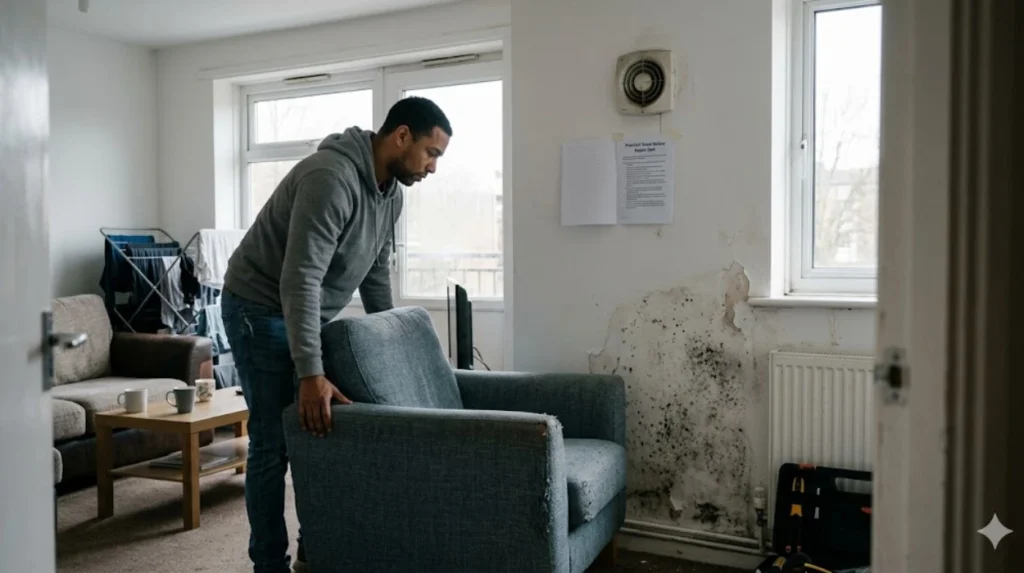
You should also check whether extractor fans are working, whether trickle vents are blocked, and whether clothes are being dried inside with little ventilation. These details matter because condensation can worsen mould growth, but they do not remove the landlord’s responsibility to investigate structural or maintenance causes where present.
Why Clear Reporting Helps Residents
Clear, early reporting protects both your home and your housing record. It creates a timestamped account of when the issue began and how the council responded, which matters if the case becomes protracted or is later reviewed by a complaints team or the Ombudsman.
It also helps the repairs service send the right person. A general repair, a plumbing issue, a leak, and a ventilation problem may all need different trades or inspections. The more accurate your report is, the faster the council can identify whether the issue is urgent, routine, or part of a larger building defect.
Common Mistakes to Avoid
One common mistake is waiting until the mould becomes severe before reporting it. Another is cleaning the visible mould without saving evidence or logging how often it returns. A third is reporting a leak or serious water ingress as a normal repair when it should be treated as urgent.
Residents also sometimes assume that one repair visit means the case is closed. In reality, recurring damp or mould often needs follow-up, and Hackney’s own later commitments show that repeated cases should be monitored more carefully and not just left after a cosmetic treatment.
Final Word for Hackney Residents
If you live in a Hackney Council flat and spot damp or mould, report it immediately through the online repairs system for non-emergencies or call the repairs contact centre on 020 8356 3691 if it is a leak or urgent problem. Keep evidence, stay in contact, and escalate the issue if the underlying cause is not fixed.
Hackney residents should feel entitled to more than a quick wipe-down or repaint. The strongest approach is to report early, document clearly, and insist on a proper repair that deals with the cause as well as the visible mould.