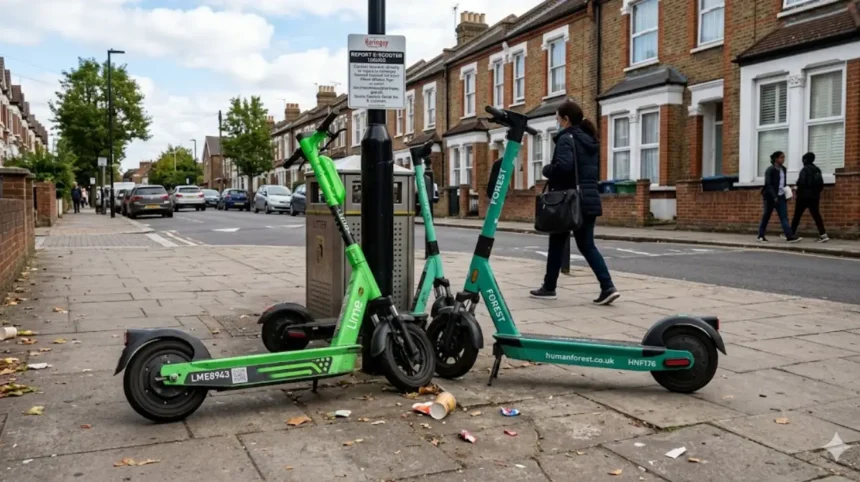
Haringey residents increasingly encounter e-scooter litter cluttering pavements, turning walkways into hazards and eyesores. Learning the proper reporting channels ensures swift council action to restore clean streets in North London.
- Understanding E-Scooter Litter in Haringey
- Why Reporting Matters for Haringey Communities
- Identifying E-Scooter Litter on Pavements
- Step-by-Step Guide to Reporting via Haringey Council
- Using the Love Clean Streets App for Quick Reports
- Handling Operator-Specific Abandoned E-Scooters
- What Occurs After You Submit a Report
- Legal Framework Behind E-Scooter Litter Enforcement
- Preventing E-Scooter Litter in Your Neighbourhood
- Recycling and Environmental Impact of E-Scooters
- Common Challenges and Pro Tips for Effective Reporting
- Broader Context in North London E-Scooter Trends
Understanding E-Scooter Litter in Haringey
E-scooters have surged in popularity across North London boroughs like Haringey since rental schemes expanded in recent years. Abandoned or broken devices from operators such as Lime, Bird, or Forest often end up discarded on pavements in areas like Wood Green, Tottenham, or Crouch End, blocking pedestrian paths and posing trip risks. This litter stems from irresponsible parking, battery failures, or users ditching faulty units, contributing to the borough’s annual fly-tipping costs exceeding £3 million.
Local authorities classify such items as dumped rubbish or obstructive waste, especially when they obstruct public highways. Pavements in Haringey, from busy high streets to quiet residential lanes, bear the brunt, with spikes reported after peak usage hours. Unlike general litter, e-scooters involve electrical components, complicating safe removal and recycling, yet the core reporting process aligns with standard waste protocols.
The issue persists evergreen due to ongoing rental program growth, unaffected by seasonal trends. Haringey Council partners with waste firm Veolia to address these reports efficiently, aiming for removals within 24 hours in many cases. Residents play a pivotal role by documenting and submitting details promptly.
Why Reporting Matters for Haringey Communities
Prompt reporting prevents small issues from escalating into larger public nuisances. Unattended e-scooters attract additional rubbish, vermin, and illegal dumping, degrading neighbourhood aesthetics and property values in vibrant spots like Alexandra Park or the Broadwater Farm area. By acting, residents support council enforcement, which includes fines up to £400 for dumpers and potential court action.
Beyond cleanliness, safety improves as cleared pavements reduce accidents, particularly for vulnerable groups like the elderly or parents with prams navigating Haringey’s uneven sidewalks. Council data shows dumped rubbish strains resources, diverting funds from other services, so collective vigilance fosters a cleaner borough. Environmentally, proper reporting aids recycling of lithium batteries and metals, aligning with Haringey’s sustainability goals.
Communities benefit long-term as repeated reports highlight hotspots, prompting operators to enhance bike-tracking tech or station designs. This proactive stance builds resident-council trust, encouraging broader participation in street upkeep initiatives across North London.
Identifying E-Scooter Litter on Pavements
Spotting e-scooter litter requires attention to telltale signs amid Haringey’s urban bustle. Look for rental-branded devices—often white, black, or neon—with QR codes, serial numbers, or logos from providers like Forest or Lime—left haphazardly against walls, in gutters, or flat on walkways. Damaged units with exposed wires, flat tires, or cracked screens signal abandonment rather than temporary parking.
Distinguish litter from active scooters by checking for locks or operational displays; unlocked, unresponsive ones qualify as waste. In high-traffic zones like Green Lanes or Seven Sisters Road, clusters often form post-commute, while quieter streets in Muswell Hill see sporadic drops. Note surrounding context: accompanying debris like discarded helmets or chargers confirms fly-tipping.
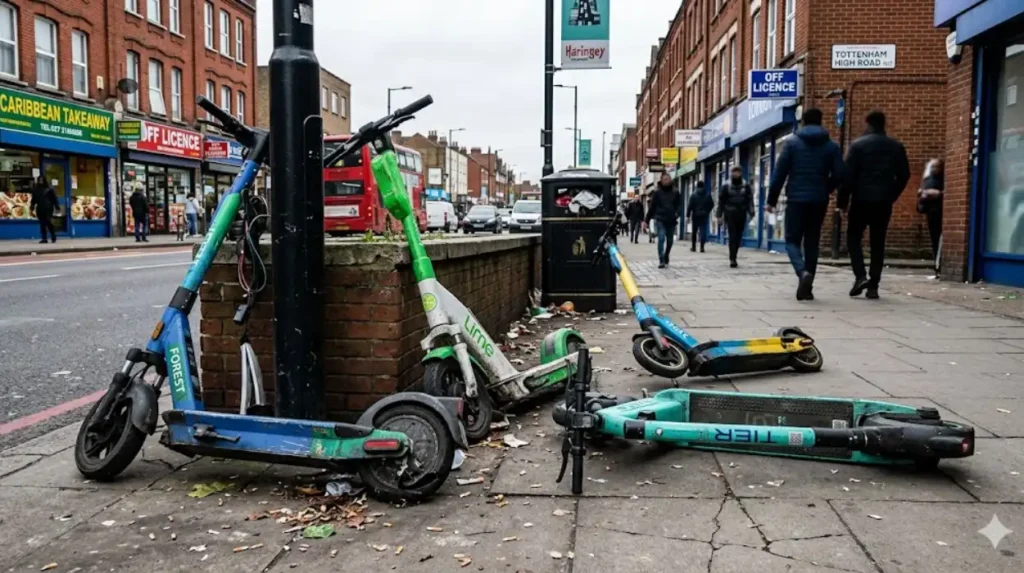
Safety first—avoid touching potentially hazardous items with sharp edges or leaking fluids. Photograph from multiple angles without disturbing the scene to preserve evidence for authorities. This documentation proves invaluable in Haringey’s enforcement process.
Step-by-Step Guide to Reporting via Haringey Council
Haringey Council streamlines reporting through dedicated online portals tailored for street waste. Begin by visiting the official “Report dumped rubbish or fly-tipping” page on haringey.gov.uk, accessible anytime for evergreen convenience. Enter the precise location using postcode, map pin, or coordinates from your phone’s GPS, focusing on pavement specifics like “outside 45 High Road, Wood Green.”
Provide detailed descriptions: note the scooter’s brand via QR scan if safe, count of devices, condition (e.g., “broken wheel, exposed battery”), and any observed dumpers or vehicles. Upload clear photos showing the obstruction and landmarks for quick identification. Submit anonymously if preferred, though registered accounts via My Account yield update emails.
Veolia receives the report immediately, targeting clearance within 24 hours for dumped items. Track progress by noting your reference number or using the Love Clean Streets app, which integrates seamlessly for Haringey users. This method handles most pavement e-scooter cases efficiently.
Using the Love Clean Streets App for Quick Reports
For mobile-savvy North Londoners, the Love Clean Streets app offers an intuitive alternative optimized for Haringey pavements. Download from app stores, register with your postcode, and select “Dumped rubbish” or “Litter” categories upon spotting e-scooter litter. Pin the exact spot on the interactive map, add photos, and describe the issue succinctly.
The app auto-routes to Veolia, promising 24-hour response times, with push notifications or emails on resolution. Its geolocation precision aids council teams navigating Haringey’s dense layout, from Bruce Castle Park vicinity to Lordship Lane. Features like photo timestamps bolster evidence against repeat offenders.
Ideal for on-the-go reporting, this tool empowers residents without desktop access, fostering habitual community monitoring. Haringey encourages its use for all street waste, ensuring e-scooters join general litter in swift removals.
Handling Operator-Specific Abandoned E-Scooters
Many e-scooters belong to rental firms with dedicated recovery systems, accelerating removal in Haringey. Scan the QR code or app-link on the device to access the operator’s reporting form—Forest users select “Report a badly parked eBike” in-app or email cs@humanforest.co.uk. Lime and Bird apps feature “Report broken scooter” options sending GPS data directly.
If unidentifiable, default to council channels, as operators coordinate with boroughs. FixMyStreet platform, used borough-wide, includes an “Abandoned bikes/scooters” category triaging to the responsible company, including details like postcode and coordinates. This London-specific tool bypasses general waste queues for faster operator action.
Document the operator’s serial number or photo for cross-reporting if needed. Haringey’s dockless bike team intervenes for unresolved cases, emailing docklessbikes@haringey.gov.uk with evidence. This dual approach maximizes efficiency on pavements.
What Occurs After You Submit a Report
Post-submission, Haringey Council’s process unfolds methodically to clear pavements. Veolia assesses within hours, prioritizing hazardous or obstructive e-scooters; expect removal in 24 hours, faster for urgent cases during 6:30am-9:30pm operations. Officers may tag sites with crime scene tape or notices, deterring further dumping.
For operator-linked items, firms dispatch retrieval teams, often within hours, recycling components responsibly. Council enforcement scans for offender clues like receipts in fly-tips, issuing £400 fines or pursuing convictions. Registered reporters receive email confirmations upon completion.
Persistent hotspots trigger deeper investigations, including CCTV reviews or partnerships with police. This feedback loop refines Haringey’s strategies, ensuring pavements stay clear long-term.
Legal Framework Behind E-Scooter Litter Enforcement
UK law under the Environmental Protection Act 1990 deems pavement dumping as fly-tipping, punishable by unlimited fines in court or on-the-spot penalties up to £500 for littering. Haringey enforces strictly, raising fines from £80 to £400 to deter e-scooter abandoners. Electrical waste falls under WEEE regulations, mandating proper recycling to prevent battery hazards.
Operators face borough contracts requiring rapid response, with FixMyStreet automating compliance. Witnesses spotting dumpers must provide descriptions, vehicle plates, or timestamps for prosecutions. Haringey’s zero-tolerance stance protects public spaces.
Preventing E-Scooter Litter in Your Neighbourhood
Residents can proactively curb issues by educating users via community notices or social media tags to Haringey Council accounts. Support council campaigns promoting correct parking at designated zones. Organize pavement clean-up events, reporting clusters immediately to build data on hotspots like Northumberland Park.
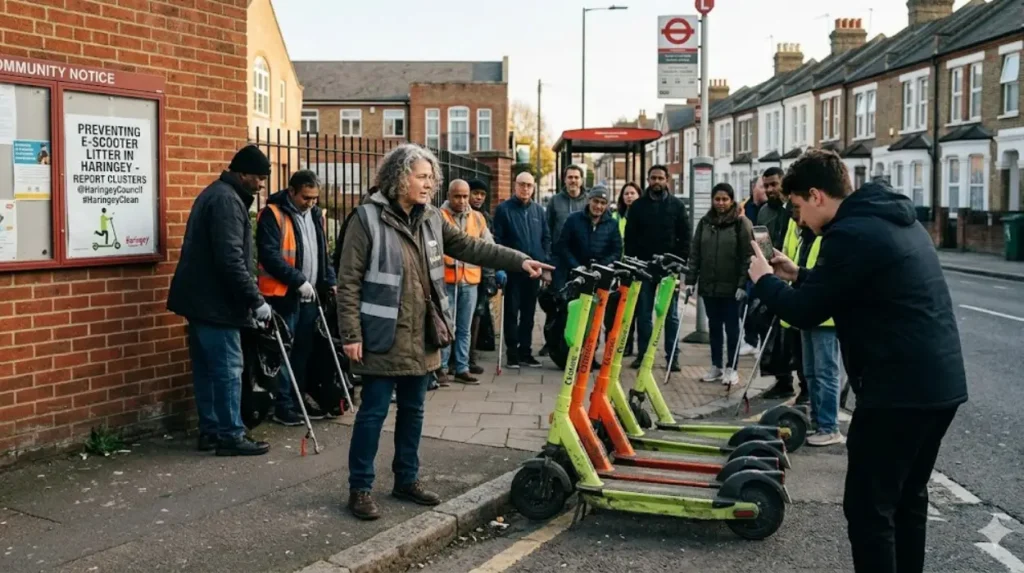
Advocate for more docking stations through local consultations, reducing abandonment incentives. Partner with schools in areas like St Ann’s for awareness drives targeting youth riders. These steps complement reporting for sustained cleanliness.
Recycling and Environmental Impact of E-Scooters
Haringey facilitates small electrical recycling via Veolia collections or designated banks, preventing landfill toxins from scooter batteries. Reported units undergo safe dismantling, recovering lithium and plastics for reuse. This aligns with borough net-zero ambitions, minimizing urban pollution.
Council partnerships ensure operators handle their fleet responsibly, cutting illegal disposals. Resident reports drive this cycle, promoting circular economy principles in North London.
Common Challenges and Pro Tips for Effective Reporting
Delays occur in high-volume periods, so include “pavement obstruction hazard” in descriptions for priority. Vague locations hinder response—use What3Words for precision on Haringey sidewalks. Multiple photos from ground level mimic inspector views.
If no action after 48 hours, follow up with your reference number via council contact forms. For hazardous leaks, flag as “dangerous waste” separately. These tactics ensure reports cut through efficiently.
Broader Context in North London E-Scooter Trends
Haringey mirrors trends borough-wide, with TfL overseeing rental expansions yet struggling with abandonment. Similar reporting via FixMyStreet unifies efforts from Enfield to Islington. Evergreen growth demands vigilant communities.