To report fly-tipping on North London pavements, identify your local council—such as Brent Council, Barnet Council, Enfield Council, Camden Council, Haringey Council, or Islington Council—then submit an online report with the location, description, and photos if safe. Councils typically clear public pavement fly-tips within 1-5 working days.
Fly-tipping blights pavements across Brent, Barnet, Enfield, Camden, Haringey, and Islington, posing risks to residents’ daily lives.
Why This Issue Matters to Local Residents
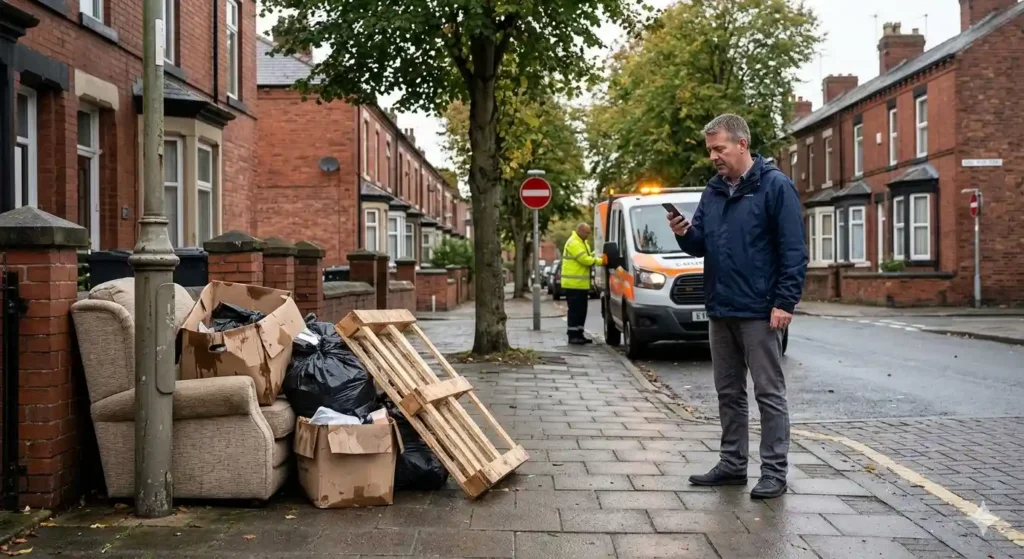
Fly-tipping on pavements creates immediate hazards for pedestrians, especially in busy North London areas. Rubbish piles block pathways, forcing people into roads and increasing accident risks for families, elderly residents, and those with pushchairs.
Unremoved waste attracts vermin and causes unpleasant odours, affecting community wellbeing. For local residents in Brent or Haringey, this undermines the pride in tidy neighbourhoods and can lower property appeal.
Councils invest heavily in clearances, with costs passed indirectly through taxes, making resident reports essential for enforcement.

Step-by-Step Actions to Solve the Problem
Follow these clear steps to report fly-tipping effectively.
- Spot the fly-tip on a pavement and note the exact location, such as a street name or nearby landmark in Camden or Enfield.
- Check if it’s on public land like council pavements; private land requires landowner action.
- Visit your North London council’s website or use the GOV.UK postcode finder to access the reporting form.
- Fill in details: location, waste type (bags, furniture, rubble), size, and date spotted.
- Upload safe photos or videos if available, without approaching hazards.
- Submit the report and note any reference number provided.
- Monitor progress via the council’s online portal if offered.
This process ensures swift council response for pavement issues in Barnet or Islington.
Which Council Service Handles It
Each North London borough has a dedicated team for fly-tipping on public pavements. Brent Council, Barnet Council, Enfield Council, Camden Council, Haringey Council, and Islington Council route reports to their Street Cleansing or Environmental Services departments.
These teams manage public highways and pavements, distinguishing them from housing or private land issues. For example, pavement fly-tips fall under highways maintenance, not parks or estates.
Residents should select “fly-tipping” or “street cleansing” on council forms to reach the right service quickly.
Information or Documents Needed
Councils require precise details to act fast on North London pavement reports.
Provide the full postcode or nearest address, waste description (e.g., black bags, mattresses), and approximate size or volume. Note the date and time spotted, plus any witnessed details like vehicle registration if safe.
Your contact details—name, address, phone, or email—are needed for updates, though anonymous reports are often accepted. Photos strengthen cases but prioritise safety.
No formal documents are required, just accurate observations for Brent Council or Haringey teams.
Expected Response Time
North London councils aim to clear fly-tips from public pavements promptly. Most target removal within 1-2 working days for small piles, extending to 5 days for larger or hazardous waste.
Investigation for enforcement may delay clearance slightly, prioritising evidence gathering. Barnet Council or Camden Council update statuses online where possible.
Weather or high volumes can affect timelines, but reports trigger action logs for accountability.
What to Do if Follow-Up Is Required
If no action follows initial reports, chase progress using your reference number. Contact the same North London council service via their online portal or general enquiries.
Escalate persistent issues by emailing the environmental health team, quoting details. For repeated hotspots in Enfield or Islington, request site visits.
Keep records of all communications to track council efforts effectively.
Rights and Responsibilities Under UK Rules
Under the Environmental Protection Act 1990, councils must investigate fly-tipping on public land like pavements. Residents have the right to report and expect reasonable response times, with updates on actions.
Your responsibility includes providing accurate information without interfering with sites. UK law prohibits handling others’ waste or confronting tippers—leave enforcement to authorities.
Landowners clear private land, but public pavements are council duties. Fly-tippers face fines up to £50,000, supporting community reporting.
Practical Tips to Avoid the Problem in Future
Prevent fly-tipping recurrence on North London pavements through vigilance.
Secure household waste in locked bins to deter opportunistic dumping. Report suspicious activity early, like vans unloading without permission.
Join neighbourhood watch groups in Brent or Haringey to monitor hotspots. Use proper disposal sites for bulky items, avoiding illegal skips.
Support council campaigns promoting legal waste routes, keeping pavements clear for all local residents.
Fly-tipping reports empower North London communities to maintain safe pavements. By acting promptly through Brent Council, Barnet Council, or others, residents contribute to cleaner streets long-term.