You can request a new street tree in North London by contacting the tree or highways team of your local council—such as Brent Council, Barnet Council, or your borough’s equivalent service—and asking them to assess a suitable planting site on the public highway outside your home. The process is usually free for residents, but councils may run sponsored‑tree schemes where you can partly fund a tree in your street.
- Why new street trees matter to North London residents
- How the street‑tree process works
- Step‑by‑step: how to request a new street tree
- Which council service handles street‑tree requests
- Information and documents you may need
- Expected response and planting times
- What to do if follow‑up is required
- Rights and responsibilities under UK rules
- Practical tips to avoid problems in future
This article explains how to request a new street tree across North London boroughs such as Brent, Barnet, Enfield, Camden, Haringey, and Islington, including what to consider, what documentation or information you may need, and what to do if the council does not respond.
Why new street trees matter to North London residents
Street trees make residential roads in North London greener, quieter, and more pleasant to walk or cycle along. They can help reduce air pollution, lower local temperatures, and provide habitat for birds and insects, which is especially valuable in dense urban areas.
For residents in Brent, Barnet, Enfield, Camden, Haringey, and Islington, new trees can improve views from homes, reduce the impact of traffic noise, and increase the attractiveness of the wider neighbourhood. Trees also help manage surface‑water runoff, which can reduce local flooding after heavy rain, and can slightly shade pavements in summer, making walking more comfortable.
How the street‑tree process works
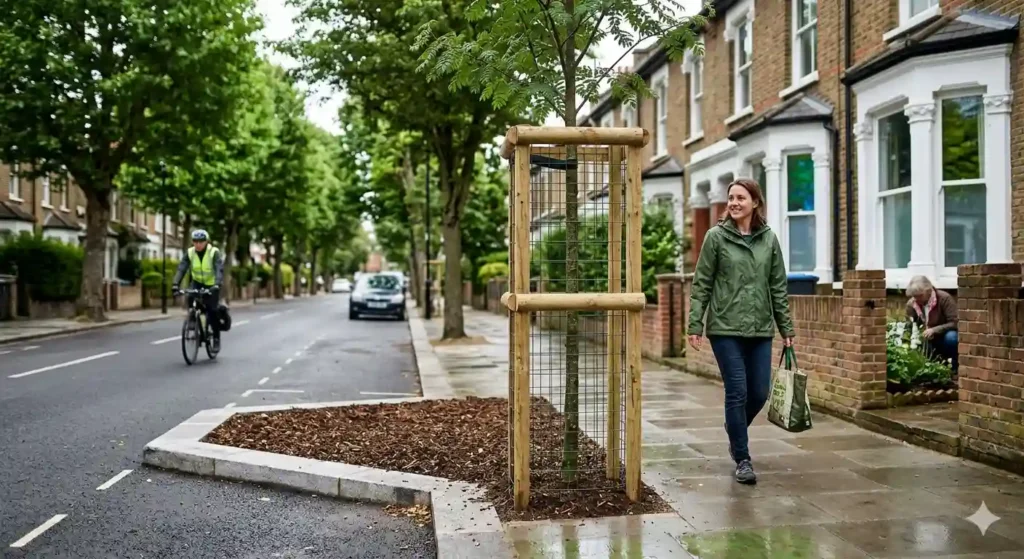
Across North London councils, new street trees are usually planted on the public highway, not on private land such as front gardens, unless the council has a specific scheme for private or semi‑private planting. A council tree officer or highways team typically surveys the pavement, checks for underground services, and selects a suitable species for the location.
Most North London boroughs welcome residents’ suggestions for new street‑tree sites, but the final decision depends on safety, space, and existing infrastructure. If a site is suitable, the council will either add the tree to a general planting programme or, in some boroughs, invite residents to sponsor a tree through a partnership or charity‑led scheme.
Step‑by‑step: how to request a new street tree
Each North London council has its own contact route, but the basic steps are similar.
- Check whether a tree is already planned
- Some boroughs publish future tree‑planting zones or priority areas on their environment or parks pages.
- If your street is already in a planting programme, your request may simply be logged as support rather than triggering a separate assessment.
- Choose a suitable spot
- Look for a clear section of pavement that is not next to existing trees, lamp posts, signs, or underground‑service indicators.
- Allow enough space for the mature tree’s canopy and roots, and avoid blocking sightlines at junctions or wheelchair‑access routes.
- Contact your local council
- In most boroughs you can submit a request via an online form under “trees”, “parks”, “highways”, or “environment”.
- Some areas may ask you to email a dedicated tree or streetscene team, or to call a non‑emergency council line and select the trees or highways option.
- Provide key information
- Include your street address, the nearest postcode, and, if possible, a brief description of where you would like the tree (for example, “opposite number 45” or “between the lamppost and the bus stop”).
- Add any photos of the gap or location if the council allows image uploads, as this helps the officer assess available space and access.
- Wait for an assessment
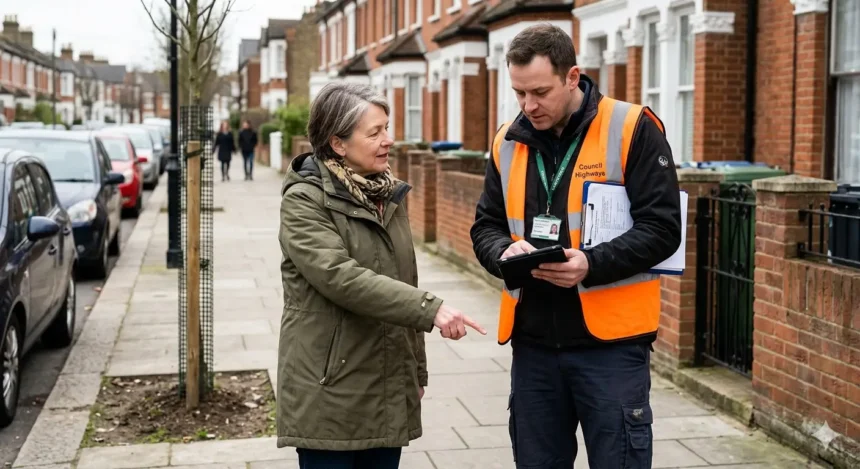
- The council’s tree or highways team will usually inspect the site to check for services, pavement width, overhead wires, and nearby infrastructure.
- If the site is suitable, the tree may be scheduled for planting in the next suitable planting season, which is often autumn‑winter when trees establish better in cooler, wetter conditions.
- Understand sponsorship options if offered
- Some North London boroughs work with charities or “street trees for living”‑style schemes where residents can sponsor a tree by contributing towards the cost.
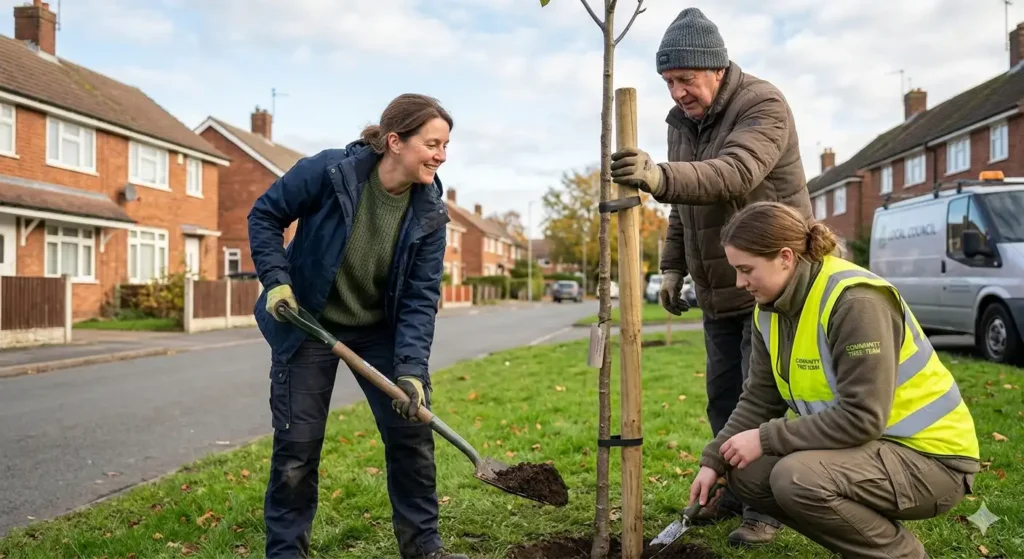
- If your council offers this, you may be asked to pay a fee and agree to help water or monitor the tree for the first couple of years.
Which council service handles street‑tree requests
In North London, most day‑to‑day responsibility for street trees falls under the council’s tree, parks, or highways service, or a combined “environment and streetscene” department.
- Brent Council, Barnet Council, Enfield Council, Camden, Haringey, and Islington all have dedicated tree officers or highways teams that manage public‑space trees and can advise on planting enquiries.
- Some boroughs may also work with the Greater London Authority or London‑wide tree‑planting initiatives, but the first point of contact for a new street tree should be your local North London council.
If you are unsure which service to contact, you can use the council’s main website search and type “request a new street tree” or “tree planting” to find the correct form or contact page.
Information and documents you may need
You will not usually need official documents such as a deed or planning‑permission papers to request a new street tree, but the council will need clear, practical information.
- Address and location details
- Your full street address and postcode.
- A clear description of the proposed planting spot, for example, distances from fixed points like lampposts or kerbs.
- Photographs (if possible)
- Clear photos of the pavement gap or tree pit taken from the road, showing the full width of the footpath and any nearby objects.
- Permission from neighbours (for some schemes)
- In sponsored‑tree or partnership schemes, the council may ask for evidence that nearby residents support the planting, such as a short note or email confirmation.
- If the tree is on private land such as a front garden, you may need written consent from the landowner, but this is less common for public‑highway trees.
Expected response and planting times
Most North London councils aim to acknowledge a street‑tree request within a few working days, then give an indication of whether the site is suitable and whether it can be added to a planting programme.
- Initial response
- You may receive a written or email reply explaining whether the site is suitable, or stating that it will be inspected.
- If the council runs a sponsorship scheme, they may instead send information about how to apply and pay.
- Planting schedule
- Many boroughs plant trees in the cooler months, typically from autumn to early spring, so a request made in summer may not be fulfilled until the following planting season.
- Once planted, new street trees are usually maintained for the first year or two, including watering and pruning, before being folded into the regular maintenance cycle.
What to do if follow‑up is required
If you do not receive a reply within a few weeks, or if a site is rejected without clear reasons, you can follow up politely.
- Re‑contact the council
- Use the same channel you originally used (online form, email, or phone) and quote your original reference number or date of request.
- Ask for a brief explanation of why the site was unsuitable and whether there are alternative locations nearby.
- Involve local groups or councillors
- Local residents’ associations or neighbourhood forums sometimes coordinate tree‑planting campaigns and can raise the issue with councillors or council officers.
- A councillor can often ask the council for a written update without advocating politically, simply to clarify the status of your request.
- Join a sponsorship or community scheme
- If your council has a residents’ tree‑sponsorship scheme, you can convert your request into a formal sponsorship application, which may move your case forward.
Rights and responsibilities under UK rules
Under UK law, local councils are responsible for managing trees on public land, including street trees, and must consider safety, environmental benefits, and equality of access when planning new planting.
- Residents’ rights
- You have the right to ask your council to consider a new street tree, and you can request an explanation if your site is rejected.
- You also have the right to complain through the council’s formal complaints procedure if you feel your request has been ignored or handled unfairly.
- Residents’ responsibilities
- Residents should not plant trees on the public highway without permission, because this can interfere with underground services, drainage, and safe access.
- If you are asked to help water or monitor a sponsored tree, following those agreed responsibilities helps the tree establish and reduces the risk of damage or removal.
Practical tips to avoid problems in future
Requesting a new street tree in North London is usually straightforward, but a few precautions can save time and avoid rejection.
- Check existing plans first
- Look at your council’s environment or parks pages to see if your area is already in a tree‑planting programme or green‑infrastructure scheme.
- Choose realistic spots
- Avoid planting too close to existing trees, driveways, or buggy‑friendly routes, and bear in mind that some species grow very large and may need more space.
- Engage your neighbours early
- Speaking to nearby residents before you submit a request can help if the council later asks for evidence of community support.
- Keep records of communication
- Save copies of emails or form submissions so you can quote dates and reference numbers if you need to follow up.
For residents of Brent, Barnet, Enfield, Camden, Haringey, and Islington, knowing how to request a new street tree makes it easier to help shape greener, more pleasant streets without breaching UK rules or local planning constraints.
How much does it cost to plant a tree in the UK?
Planting a tree in the UK typically costs between £100 and £500 through local councils, but it’s often free if you request a street tree via your North London council, as they usually cover planting and maintenance.