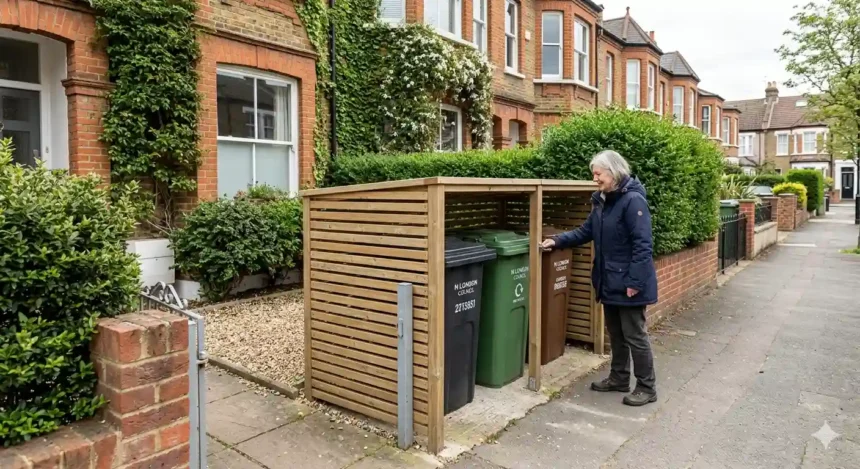
Secure your bins in small front gardens using discreet screens like slatted wooden panels or evergreen hedges that comply with council height limits. Position them against a boundary wall or fence for stability, ensuring easy access for collection crews. This keeps them tidy, safe, and legal across North London boroughs.
- Why This Issue Matters to Local Residents
- Step-by-Step Actions to Solve the Problem
- Which Council Service Handles It
- Information or Documents Needed
- Expected Response Time
- What to Do If Follow-Up Is Required
- Rights and Responsibilities Under UK Rules
- Practical Tips to Avoid the Problem in Future
- Understanding Local Challenges
- Legal Framework Basics
- Selecting Materials Wisely
- Installation Essentials
- Council Engagement Process
- Long-Term Maintenance
Why This Issue Matters to Local Residents
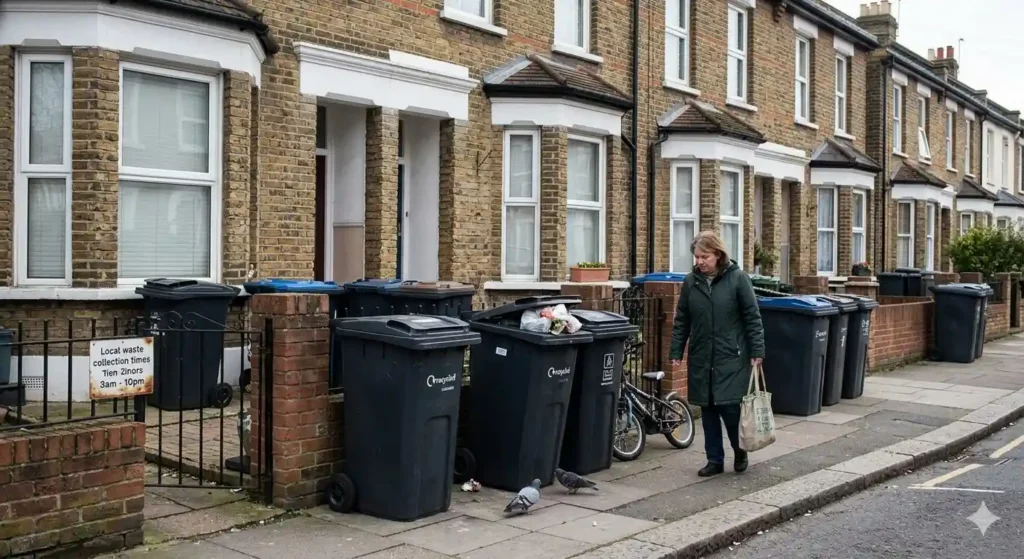
Small front gardens are common in North London boroughs like Brent, Barnet, Enfield, Camden, Haringey, and Islington. Wheelie bins left visible can make streets look cluttered and attract pests, affecting kerb appeal and neighbourly relations. Securing bins properly prevents theft, overturning by wind or animals, and fines for improper storage under local bylaws.
Residents often face space constraints due to terraced homes and conservation rules. Exposed bins in these compact areas reduce property value perceptions and create safety hazards, especially for families with children or mobility needs. Addressing this enhances community pride and aligns with North London councils’ emphasis on neat streetscapes.
Step-by-Step Actions to Solve the Problem
Start by assessing your front garden layout to identify secure spots away from paths.
- Measure the space: Ensure bins fit snugly without blocking pavements or entrances; standard wheelie bins are about 180cm tall and 55cm wide.
- Clear the area: Remove weeds or debris to create a stable base, using gravel or paving slabs for drainage.
- Choose screening: Opt for slatted fence panels (under 2m high) or trellis topped with climbers that match your home’s style.
- Install fixings: Bolt screens to existing walls or posts with council-approved anchors; avoid permanent structures without permission.
- Test accessibility: Roll bins out easily on collection day and secure lids with bungee cords.
- Maintain regularly: Check for damage after storms and repaint wood annually.
These steps take under a weekend and cost £50-£200, depending on materials. They ensure bins stay hidden yet accessible.
Which Council Service Handles It
Each North London council has a dedicated waste or environmental services team for bin storage queries. Brent Council manages this via its Waste and Cleansing department, while Barnet Council directs residents to Environmental Services. Enfield Council’s Street Scene team oversees front garden compliance.
Camden Council uses its Cleaner Greener Streets service, Haringey Council relies on Waste Management, and Islington Council handles it through Neighbourhood Services. Contact your local council’s website search for “bin storage guidance” or “front garden waste rules” to find the right department. These teams advise on legal setups without site visits unless reported.
Information or Documents Needed
Provide your full address, including postcode, when seeking council advice. Note the number and type of bins (e.g., black general waste, green recycling) and garden dimensions.
Sketch a simple plan showing bin positions relative to boundaries and paths. Include photos of the current setup and proposed screens. If in a conservation area—common in Camden or Islington—mention any listed status or Article 4 directions. No formal ID is required for initial guidance, but planning applications need proof of ownership like a council tax bill.
Expected Response Time
Councils typically reply to online queries within 10 working days. Phone lines offer same-day advice during office hours (Monday-Friday, 9am-5pm).
Complex cases, like planning permission for enclosures, take 8 weeks for decisions. Urgent issues, such as bins causing hazards, prompt faster action—often within 48 hours. North London councils prioritise resident feedback, but peak times (pre-holidays) may extend waits slightly.
What to Do If Follow-Up Is Required
If no response arrives after 10 days, resubmit via the council’s online portal with your original reference number. Escalate politely by emailing the department head, referencing UK public sector complaints procedures.
Request a site visit if screens need approval; attend to discuss options. Track progress through your council’s online account. If unresolved after 25 working days, use the Local Government Ombudsman as a free next step—no cost to residents.
Rights and Responsibilities Under UK Rules
Under the Environmental Protection Act 1990, residents must store bins to prevent nuisance like odours or vermin. Councils enforce Clean Neighbourhoods legislation, fining up to £500 for persistent issues, but offer guidance first.
You have rights to reasonable adjustments for disabilities via Equality Act 2010 requests. Responsibilities include not obstructing highways (Highways Act 1980) and gaining planning permission for structures over 1m in front gardens. Complying avoids enforcement notices; councils must justify actions proportionately.
Practical Tips to Avoid the Problem in Future
Position bins sideways in corners to minimise visibility. Use lockable bin straps or chains anchored to ground spikes for security.
Plant low-maintenance evergreens like box or lavender around bases for natural screening—trim yearly. Choose lightweight composite panels that weather well in UK rain. Schedule collections by confirming dates via council apps to keep gardens bin-free longer.
Paint screens in neutral tones matching your fence. For terraces, coordinate with neighbours for shared solutions. These habits keep small front gardens neat year-round.
In North London’s dense streets, how to secure bins in small front gardens becomes a daily concern for Brent, Barnet, Enfield, Camden, Haringey, and Islington residents. Visible wheelie bins not only detract from home pride but also risk council fines or neighbour disputes under local bylaws. This guide delivers practical, legal steps tailored to these boroughs, empowering you to hide bins effectively with screens, hedges, or enclosures.
Understanding Local Challenges
Terraced homes dominate North London, leaving minimal front garden space—often under 2m deep. Wheelie bins, mandated for kerbside collection, dominate these areas, exposed to wind, foxes, and passers-by. Brent Council and Barnet Council stress tidy storage to maintain street harmony, while Enfield and Camden enforce rules in conservation zones.
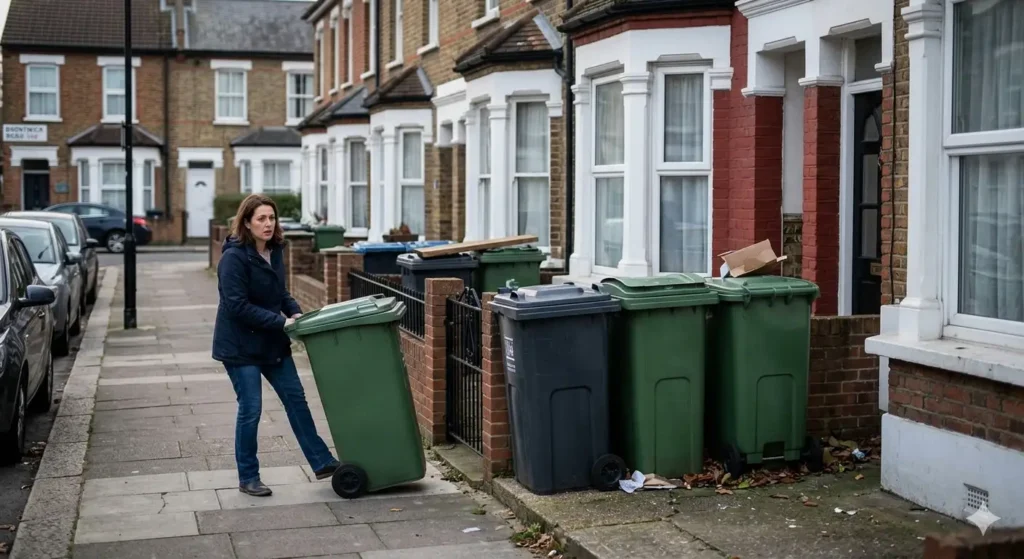
Unsecured bins invite issues: theft of recycling contents, animal scavenging, or toppling onto paths, posing trip hazards. For families in Haringey or Islington, this compromises safety and aesthetics amid rising property values.
Legal Framework Basics
UK planning law (Town and Country Planning Act) limits front boundary heights to 1m without permission. Higher screens require council nod, especially in Article 4 areas curbing “permitted development.” Waste regulations demand accessible, hygienic storage—no overflows or street intrusion.
Councils like those in North London promote voluntary compliance, issuing warnings before fines. Residents’ rights include free advice; responsibilities cover prompt action on notices.
Selecting Materials Wisely
Opt for breathable slatted wood or metal mesh—avoids damp buildup unlike solid panels. Trellis with ivy or clematis blends naturally, complying with Barnet Council’s heritage guidelines. Pre-made bin stores from timber suit small spaces, foldable for flexibility.
Avoid plastic sheds; they clash visually and degrade quickly. Budget options start at £30 for hurdles, scaling to £150 for custom frames.
Installation Essentials
Site bins 30cm from walls for airflow. Secure with non-rust fixings; gravel bases prevent sinking. In Camden’s steep streets, level with slabs.
Test-roll bins weekly. For Enfield’s windy exposures, add weights inside lids.
Council Engagement Process
Submit queries via borough portals—Brent’s “Report It” form, Haringey’s My Haringey account. Expect tailored plans, like Islington’s bin store templates.
Planning apps cost £258 but often waive for minor screens. Appeals succeed if evidence shows neighbour benefits.
Long-Term Maintenance
Annual wood treatments fend off rot. Prune plants to 1.8m max. Rotate bins post-collection to deter foxes.
Community groups in Barnet share bulk-buy screens, cutting costs. Apps track collections, minimising garden exposure.
By implementing these, North London local residents transform eyesores into seamless features. How to secure bins in small front gardens need not overwhelm—simple, compliant tweaks yield lasting tidiness.
Where should you put bins in a small front garden?
Place bins in a discreet, easy-access spot—ideally along a boundary wall, fence line, or tucked beside the house—so they’re secure, out of sight from the street, and still accessible for collection day.